Did you know that improperly sterilized beauty tools are responsible for over 100,000 skin infections annually in the United States? Behind the gleaming surfaces and soothing music of your favorite salon lies a critical battlefield against microscopic threats.
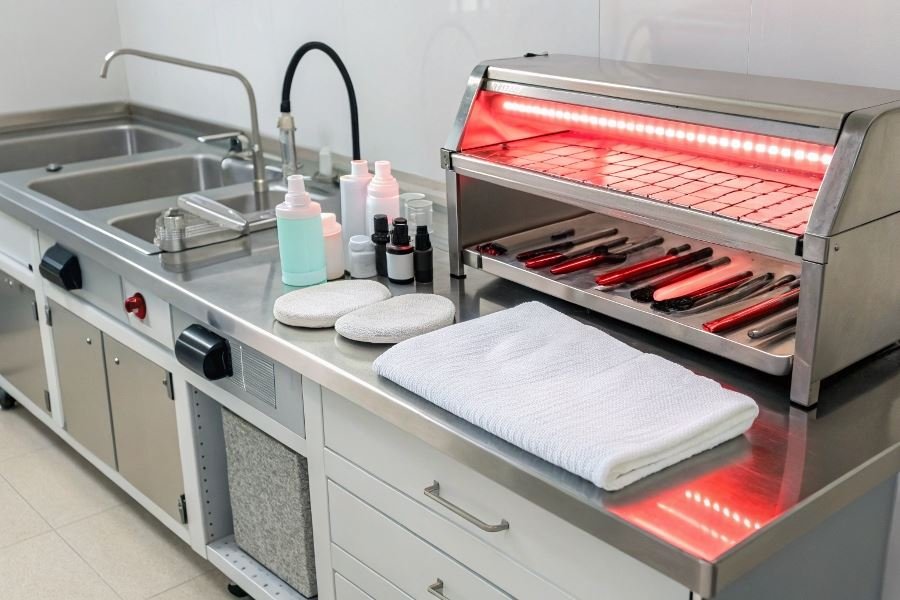
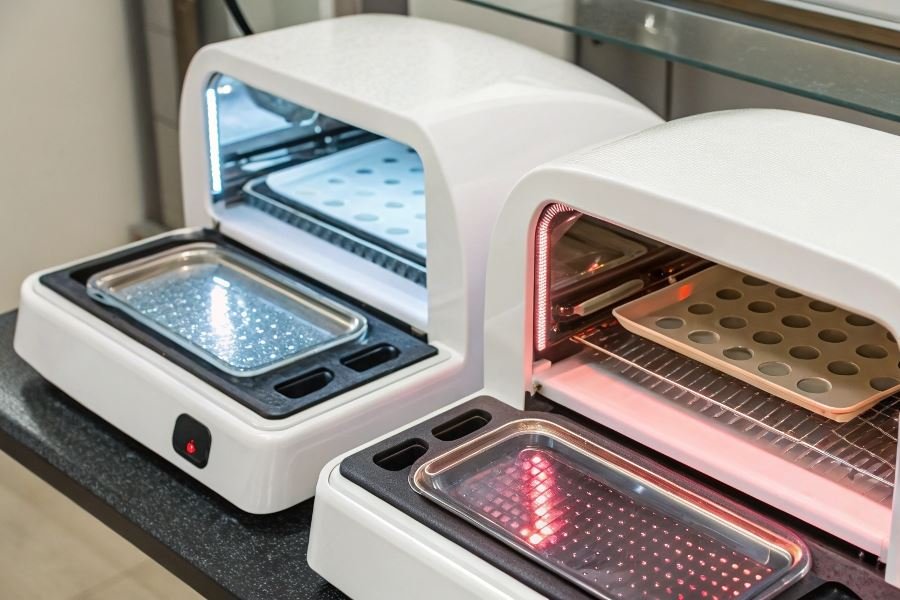
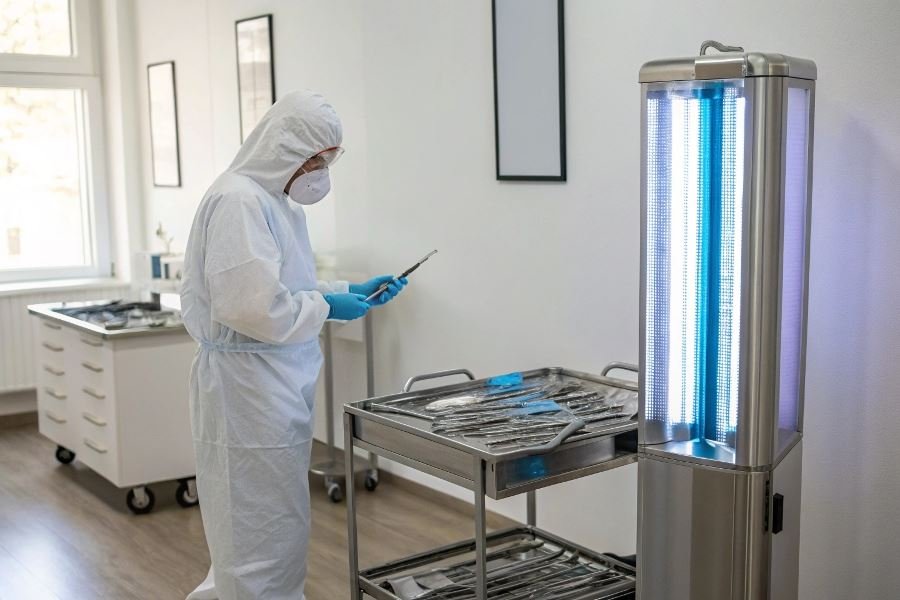
Infrared sterilization represents one of the most effective weapons in this battle. Unlike traditional heat methods, infrared sterilization uses electromagnetic radiation to penetrate tools at the molecular level, destroying pathogens without damaging sensitive equipment. The Russian SanPiN (Sanitary and Epidemiological Rules and Norms) requirements establish comprehensive guidelines that have influenced sterilization standards worldwide, including in American beauty establishments.
The regulatory framework: More than just recommendations
The regulatory framework for beauty salon sterilization isn’t merely bureaucratic red tape—it’s a vital safety net. These standards mandate specific temperature thresholds (typically 180-220°F), exposure durations (usually 15-30 minutes), and maintenance protocols that ensure consistent pathogen elimination.
“Proper sterilization isn’t just about compliance—it’s about protecting your clients and your business reputation.”
When compliance fails: The steep price of cutting corners
The consequences of non-compliance extend far beyond potential fines of 5, 000−25,000. Salons face possible license revocation, devastating lawsuits, and irreparable reputation damage. In 2022, a high-profile case resulted in a $1.2 million settlement after improper sterilization led to a bacterial outbreak affecting 37 clients.
For salon owners, understanding these requirements isn’t optional—it’s essential business intelligence that protects both clients and livelihoods. The investment in proper infrared sterilization equipment and training pays dividends in client trust and business longevity.
Technical Excellence: SanPiN Standards for Infrared Sterilization
When it comes to client safety in beauty salons, nothing matters more than proper sterilization. The infrared sterilization method has gained significant traction in recent years, offering efficient pathogen elimination while preserving tool integrity. However, meeting the exacting requirements of SanPiN for infrared sterilization in beauty salons demands meticulous attention to equipment specifications, operational parameters, and documentation procedures.
Equipment That Meets the Mark
Beauty professionals can’t afford to cut corners on sterilization equipment. SanPiN regulations mandate that all infrared sterilizers must carry appropriate certification from recognized health authorities. These certifications verify that devices can consistently reach and maintain the temperatures necessary for complete microbial elimination.
Key certification requirements include:
- UL (Underwriters Laboratories) or equivalent safety certification
- FDA Class II medical device registration for sterilization equipment
- Electromagnetic compatibility certification
- Technical passport with detailed specifications
The infrared sterilizer’s chamber must be constructed from materials that can withstand repeated heating cycles without degradation—typically medical-grade stainless steel with specialized coatings. Quartz elements are preferred for their durability and consistent heat distribution, with a minimum expected operational lifespan of 5,000 hours.
The Science of Sterilization Parameters
Effective infrared sterilization isn’t just about having the right equipment—it’s about operating it correctly. SanPiN guidelines establish precise parameters that must be followed without exception.
Temperature requirements stand as the most critical factor. Infrared sterilizers must reach and maintain temperatures between 320°F (160°C) and 375°F (190°C), depending on the specific tools being sterilized. This temperature range ensures the destruction of all pathogens, including highly resistant bacterial spores.
| Tool Type | Required Temperature | Minimum Duration |
|---|---|---|
| Metal implements | 340°F (171°C) | 30 minutes |
| Glass items | 320°F (160°C) | 40 minutes |
| Ceramic tools | 350°F (177°C) | 35 minutes |
| Heat-resistant plastics | 300°F (149°C) | 45 minutes |
Intensity requirements are equally important. SanPiN standards specify that infrared radiation must be delivered at wavelengths between 750-1400nm, with power density between 10-15 W/cm². This ensures penetration to all surfaces without damaging the tools themselves.
Documentation: The Paper Trail of Protection
Perhaps the most overlooked aspect of SanPiN compliance is the rigorous documentation required for every sterilization cycle. This isn’t just bureaucratic busywork—it’s an essential safety measure that creates accountability and verifiability.
Required documentation includes:
- Sterilization logs with date, time, temperature, duration, and operator identification
- Equipment maintenance records showing regular calibration (minimum quarterly)
- Temperature verification using independent chemical indicators
- Batch processing records with unique identifiers for traceability
Modern Tuttnauer and Midmark sterilizers feature built-in printers and digital logging capabilities that simplify this process while reducing human error.
Verification procedures must include both internal monitoring (using the sterilizer’s built-in sensors) and external validation (using chemical indicator strips that change color when proper sterilization parameters are achieved). For highest-risk procedures, biological indicators containing bacterial spores provide definitive proof of sterilization efficacy.
By adhering to these exacting SanPiN standards, beauty professionals demonstrate their commitment to client safety while protecting themselves from potential liability. The investment in proper equipment, training, and documentation pays dividends in client trust and regulatory compliance.
Mastering SanPiN Compliance for Infrared Sterilization
Infrared sterilization has revolutionized sanitation protocols in beauty salons, offering efficient pathogen elimination without harsh chemicals. However, maintaining compliance with SanPiN requirements demands more than just purchasing equipment—it requires a comprehensive management system that ensures consistent safety standards.
Building a qualified sterilization team
Staff competency forms the foundation of effective sterilization protocols. Beauty professionals handling infrared sterilization equipment must complete specialized training that covers:
- Fundamental principles of infrared technology and its germicidal mechanisms
- Equipment operation procedures specific to manufacturer guidelines
- Recognition of sterilization failure indicators
- Troubleshooting common equipment malfunctions
- Documentation requirements for compliance verification
Annual certification renewal is mandatory for all staff members involved in sterilization procedures. This continuous education approach ensures technicians remain current with evolving best practices and regulatory updates.
Many salon owners report significant improvements in compliance rates after implementing quarterly in-house refresher sessions. These micro-training events—typically lasting just 30-45 minutes—help reinforce proper techniques and address any procedural drift that naturally occurs over time.
Quality control that guarantees results
Infrared sterilization effectiveness hinges on systematic testing protocols. The cornerstone of quality assurance involves:
| Testing Protocol | Frequency | Documentation Required |
|---|---|---|
| Biological indicators | Weekly | Test results with date, time, operator |
| Temperature verification | Daily | Temperature logs with calibration dates |
| Visual inspection | Before each use | Equipment condition checklist |
| Cycle time verification | Monthly | Time logs with operator signature |
The difference between adequate and exceptional sterilization often comes down to consistency in these verification processes.
Salons should establish clear failure response protocols. When tests indicate incomplete sterilization, all potentially affected tools must be reprocessed, and the equipment should undergo immediate maintenance inspection. This zero-tolerance approach to quality control failures protects both clients and the business reputation.
Documentation systems that withstand scrutiny
Record-keeping represents the most frequently cited deficiency during SanPiN inspections. Successful salons implement comprehensive documentation systems that include:
- Equipment maintenance logs showing regular servicing according to manufacturer specifications
- Staff training certificates and continuing education records
- Daily operation logs documenting each sterilization cycle
- Temperature and quality control test results organized chronologically
- Incident reports for any sterilization failures or equipment malfunctions
Digital record management systems have become increasingly popular, with cloud-based solutions offering advantages in accessibility and backup security. However, many inspectors still expect printed records during site visits, making hybrid systems practical for most establishments.
Preparation for inspections should be ongoing rather than reactive. Monthly internal audits using the actual SanPiN inspection criteria help identify compliance gaps before they become violations. This proactive approach transforms inspections from stressful events into routine verifications of already-established excellence.
By implementing these comprehensive management practices, salon owners not only achieve SanPiN compliance but also build client trust through demonstrable commitment to safety standards. The investment in proper training, testing, and documentation ultimately protects both public health and business reputation.
Discover comprehensive SanPiN infrared sterilization requirements for beauty salons. Learn essential equipment specifications, operational parameters, and compliance protocols to ensure safety standards and avoid legal penalties in your salon business.
Discover comprehensive SanPiN infrared sterilization requirements for beauty salons. Learn essential equipment specifications, operational parameters, and compliance protocols to ensure safety standards and avoid legal penalties in your salon business.