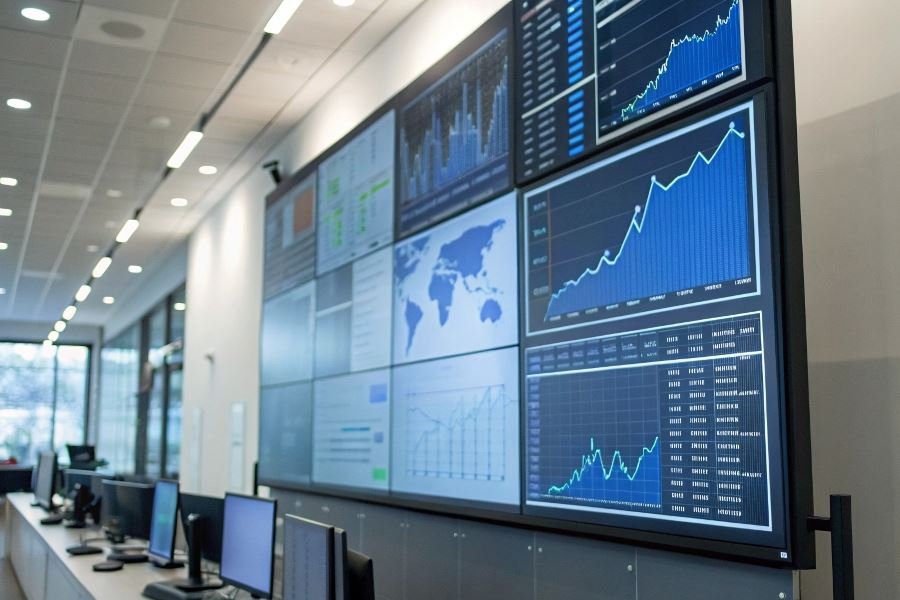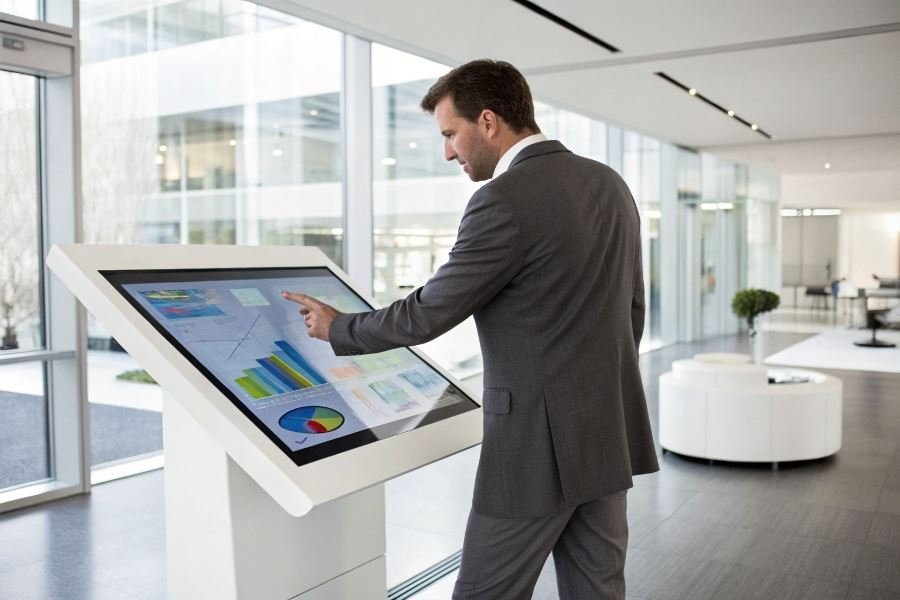
Ever walked past a static poster and wished you could just tap it for more details? That wish has become reality. Interactive information displays have transformed from science fiction concepts to everyday tools that respond to our touch, voice, and even gestures.
The journey of interactive displays began in the 1970s with the first touchscreens, but today’s systems bear little resemblance to those primitive ancestors. Modern interactive information systems combine high-definition displays, multi-touch capabilities, and intelligent software that adapts to user behavior. They’ve become the digital concierges of our physical spaces—informing, guiding, and engaging us in ways traditional signage never could.
The market for these systems is experiencing explosive growth, with adoption rates climbing 27% annually across retail, healthcare, education, and transportation sectors. What’s driving this surge? The perfect storm of decreasing hardware costs, more intuitive interfaces, and consumers who increasingly expect digital interaction in physical spaces.
At their core, today’s interactive information systems consist of three key components:
- Hardware layer – The physical display, touch sensors, and processing units
- Software interface – The programming that determines functionality and user experience
- Content management system – The backend that allows for remote updates and analytics
These components work in concert to create experiences that don’t just display information—they invite participation. The static, one-way communication of yesterday has evolved into dynamic, two-way conversations between businesses and their audiences.
The Game-Changing Power of Interactive Displays
When a customer approaches an interactive information display, something remarkable happens. Their passive shopping experience transforms into an active journey of discovery. These dynamic touchpoints aren’t just flashy tech—they’re revolutionizing how businesses connect with audiences while delivering measurable returns on investment.
Interactive information displays have fundamentally changed the landscape of customer engagement across retail, healthcare, education, and corporate environments. The advantages extend far beyond the wow factor, creating meaningful interactions that drive business outcomes through enhanced engagement, operational efficiency, and remarkable adaptability to diverse settings. The technology behind these systems continues to evolve, offering increasingly sophisticated ways to capture attention and deliver information precisely when and where it’s needed.
Engagement That Sticks
Interactive displays don’t just attract eyeballs—they create memorable experiences that translate to information retention. The psychology is straightforward: active participation leads to deeper processing.
The numbers tell the story:
- Users retain up to 75% more information when engaging with interactive content versus passive viewing
- Dwell time increases by an average of 34% when touchscreen options are available
- Purchase intent rises by 29% following meaningful interactive experiences
The Elo TouchSystems research confirms what many retailers already know intuitively—when customers physically interact with information, they form stronger connections with brands and products.
“The difference between telling and involving is the difference between forgetting and remembering.”
Operational Efficiency That Pays Dividends
Interactive displays deliver impressive ROI through multiple efficiency channels:
Reduced staffing requirements – A single well-designed kiosk can handle the informational workload of 2-3 staff members during peak hours.
Decreased print costs – Digital content updates eliminate recurring printing expenses for businesses that previously relied on physical signage and brochures.
Data-driven optimization – Modern systems from providers like Samsung include analytics that track user interactions, enabling continuous refinement.
| Efficiency Factor | Traditional Approach | Interactive Display |
|---|---|---|
| Content Updates | 3-5 days | Immediate |
| Annual Print Costs | $5,000-15,000 | $0 |
| Staff Time Saved | 0 hours | 15-20 hours/week |
| Customer Data Collected | Minimal | Comprehensive |
Adaptability Across Environments
The versatility of interactive displays represents perhaps their most compelling advantage. The same core technology can be tailored to vastly different settings:
Retail environments benefit from product finders and inventory checks that empower customers while reducing abandoned purchases due to information gaps.
Healthcare settings utilize interactive wayfinding to reduce missed appointments by 17% according to LG Business Solutions implementation data.
Corporate lobbies transform from passive waiting areas to engagement opportunities through interactive brand storytelling and visitor management systems.
Educational institutions leverage these systems for everything from campus tours to interactive learning modules that accommodate different learning styles.
The adaptability extends to form factors as well—from massive video walls to tablet-sized countertop displays—ensuring the technology fits both the physical space and use case requirements.
This remarkable flexibility explains why the interactive display market continues to expand across sectors that seemingly have little in common beyond their need to communicate effectively with their audiences.
The Intelligent Touch Behind Modern Displays
Gesture Recognition Transforms User Experience
Interactive displays have evolved far beyond simple touch functionality. Today’s systems recognize complex multi-touch gestures that mirror natural human movements. Users can pinch to zoom, swipe between screens, and rotate objects with intuitive hand motions that feel second-nature. The Microsoft Surface Hub exemplifies this evolution with its ability to distinguish between 20 simultaneous touch points, allowing multiple users to interact without interference.
The precision has reached remarkable levels—modern displays can detect pressure sensitivity within 1mm accuracy, distinguishing between a light tap and deliberate press. This enables applications to respond differently based on interaction intensity, creating a more nuanced user experience.
The difference between yesterday’s resistive screens and today’s capacitive multi-touch systems is like comparing a typewriter to a modern word processor—technically similar in purpose but worlds apart in capability.
Content Management That Works While You Sleep
The backend systems powering interactive displays have become sophisticated command centers. Modern Content Management Systems (CMS) allow administrators to:
- Schedule content deployment across multiple displays simultaneously
- Target specific demographics with customized messaging
- Update information in real-time from anywhere with internet access
- Monitor display performance and user engagement metrics
Remote updating capabilities have transformed maintenance protocols. Software updates, security patches, and content refreshes can be pushed to hundreds of displays across different locations with a single command. This dramatically reduces operational costs while ensuring consistent messaging.
| Feature | Traditional Signage | Modern Interactive Displays |
|---|---|---|
| Content Updates | Manual, on-site | Remote, instant |
| Downtime | Hours/days | Minutes |
| Deployment Cost | High (labor-intensive) | Low (automated) |
| Content Flexibility | Static | Dynamic, responsive |
The Connected Display Ecosystem
The true power of modern interactive displays emerges through integration with broader technology ecosystems. These displays now function as nodes in complex networks rather than standalone units.
Integration with Internet of Things (IoT) platforms allows displays to respond to environmental triggers. A retail display might adjust content based on foot traffic patterns detected by in-store sensors, or a museum exhibit could activate when visitors approach.
Artificial intelligence transforms passive screens into proactive information hubs. The Samsung Flip incorporates AI that can analyze user behavior patterns to predict information needs and present relevant content before it’s requested.
Data analytics integration creates a feedback loop that continuously improves effectiveness. Displays collect interaction data, analytics platforms process this information, and content strategies evolve based on concrete performance metrics rather than assumptions.
What makes today’s interactive displays revolutionary isn’t just their touch capabilities—it’s their ability to touch back through intelligent systems that learn, adapt, and anticipate user needs.
These advanced functionalities have transformed interactive displays from simple information delivery tools into sophisticated communication platforms that bridge the physical and digital worlds with unprecedented effectiveness.
Discover how interactive information displays revolutionize customer engagement with touch capabilities, remote management, and IoT integration. Learn implementation strategies and future trends for maximizing your business technology investment.
Discover how interactive information displays revolutionize customer engagement with touch capabilities, remote management, and IoT integration. Learn implementation strategies and future trends for maximizing your business technology investment.