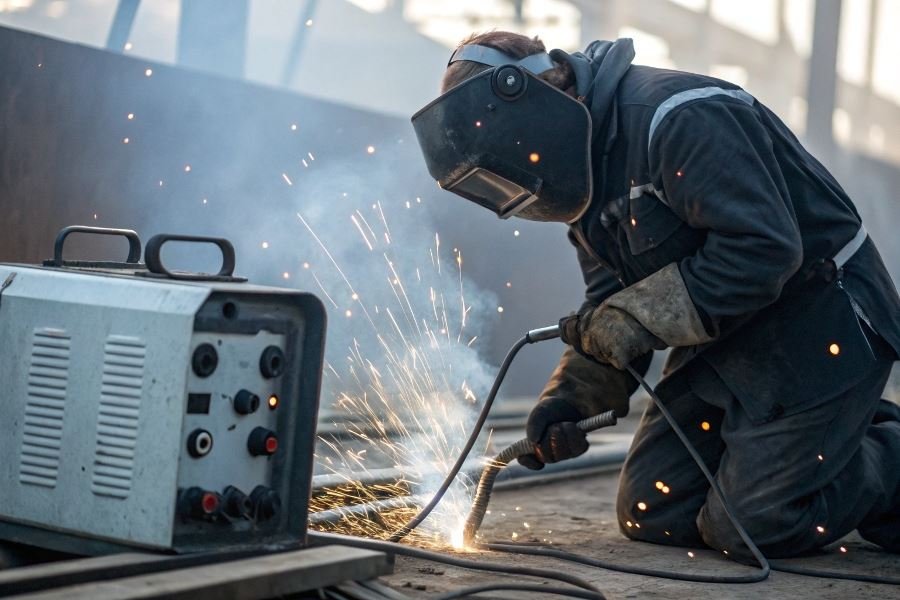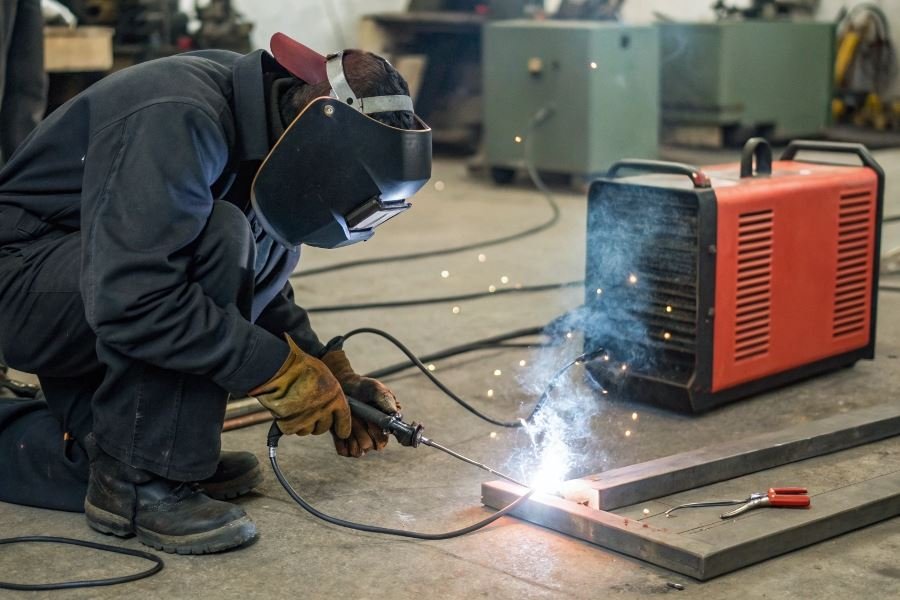
The spark that changed everything wasn’t just in the weld—it was in the machine itself.
When the first electric arc welding machines emerged in the late 1800s, they were massive transformer-based units that required multiple people just to move them. Fast forward to today, and welders can carry professional-grade equipment under one arm. This remarkable transformation didn’t happen overnight, but rather through a technological revolution that fundamentally changed how we harness electrical power for welding.
From industrial giants to portable powerhouses
The welding landscape was dominated by transformer technology for nearly a century after Nikolai Benardos and Stanisław Olszewski patented the first electric arc welding method in 1887. These machines were reliable workhorses—simple in design but tremendously heavy due to their copper windings and iron cores.
The game-changer arrived in the 1970s when inverter technology began making inroads into welding. By using advanced electronics to convert and control power at high frequencies, inverter welders could achieve the same output with dramatically smaller transformers.
The fundamental divide
Transformer welders operate on a straightforward principle: they directly convert line voltage (typically 120V or 240V) to welding voltage using electromagnetic induction through copper windings. Simple, robust, and time-tested.
Inverter welders, by contrast, employ a sophisticated multi-step process:
- Convert AC input to DC
- Chop this DC into high-frequency AC (up to 100,000 Hz)
- Transform this high-frequency current
- Convert back to DC for welding
This complexity yields remarkable benefits: machines that are up to 80% lighter while delivering more precise arc control and often better energy efficiency.
Choosing your champion
When deciding between these technologies, consider these critical factors:
- Portability needs: Will you weld in a fixed shop or need to move between locations?
- Power availability: Limited to household circuits or have access to industrial power?
- Budget constraints: Initial investment vs. long-term operational costs
- Welding precision: Are you working on critical applications requiring exact control?
- Durability concerns: Will your equipment face harsh conditions or rough handling?
The right choice isn’t universal—it’s about matching technology to your specific welding demands and working environment.
The Ultimate Showdown: Inverter vs Transformer Welders
Power efficiency that impacts your bottom line
When comparing welding technologies, power efficiency stands as a critical differentiator. Transformer-based welders typically operate at 60-70% efficiency, while inverter models achieve an impressive 80-90% efficiency rating. This translates to approximately 20-30% lower electricity consumption with inverter technology—a difference that compounds with every project.
The debate around inverter vs transformer welding machines: which is better often centers on this efficiency gap. For professionals running multiple welding stations or completing large-scale projects, the reduced power consumption of inverter units can save hundreds of dollars annually on utility bills.
A typical 200-amp transformer welder draws around 50-60 amps from your power supply, while an equivalent inverter model might require only 35-45 amps. This difference becomes particularly significant when operating from generators or limited power sources.
Portability and workspace considerations
| Feature | Transformer Welders | Inverter Welders |
|---|---|---|
| Weight | 70-300+ lbs | 10-50 lbs |
| Footprint | Large (20″+ square) | Compact (12″ or less) |
| Transportability | Requires wheels/lift | Often shoulder-carried |
| Power input flexibility | Limited | Multi-voltage capable |
Transformer welders contain large copper windings and iron cores, resulting in substantial bulk. A standard 200-amp transformer unit weighs approximately 100-150 pounds, while an equivalent inverter might weigh just 30-40 pounds. This weight difference fundamentally changes how and where these machines can be deployed.
Arc performance and weld quality
Inverter technology provides superior arc control through advanced electronics that adjust power output thousands of times per second. This translates to:
- Smoother arc initiation with fewer sticks and spatter
- Finer control over heat input for thin materials
- Enhanced ability to weld out-of-position
- More consistent penetration across varying material thicknesses
Transformer welders deliver reliable, consistent power but lack the precision of inverters. However, their simpler design creates a more forgiving arc characteristic that many traditional welders prefer for structural steel and heavy fabrication.
Durability considerations and maintenance realities
Transformer welders have earned their reputation for ruggedness through decades of service in harsh environments. Their simple construction—essentially copper windings around an iron core—means fewer components to fail.
Inverter units contain sophisticated circuit boards and electronic components that can be vulnerable to:
- Dust and moisture infiltration
- Power surges and unstable input voltage
- Physical impacts and vibration
- Heat damage from extended duty cycles
Modern inverters have improved significantly in reliability, with many professional models offering 3-5 year warranties. However, transformer units still maintain an edge in extreme environments and can often provide 20+ years of service with minimal maintenance.
Cost analysis beyond the price tag
Initial investment for transformer welders typically ranges from 300−1,500, while comparable inverter units cost 500−3,000. This price gap narrows at professional levels but remains significant.
The long-term value equation must consider:
- Energy savings of 20-30% with inverters
- Increased productivity from better arc performance
- Reduced material waste from cleaner welds
- Transportation and setup time differences
- Potential repair costs and downtime
For occasional welders, transformer units offer tremendous value through simplicity and durability. For professionals welding daily, inverters typically deliver superior return on investment through efficiency and performance advantages, despite higher upfront costs.
Making the Right Choice: Inverter vs Transformer Welders
When investing in welding equipment, the transformer versus inverter decision can make or break your projects. After examining the technology, performance characteristics, and practical considerations of both types, it’s time to determine which machine aligns with your specific needs.
Where transformer welders shine
Transformer-based welding machines continue to dominate certain applications despite being the older technology. Their robust construction makes them particularly valuable in:
- Heavy industrial environments where durability trumps portability
- Shipyards and construction sites exposed to harsh weather conditions
- Production facilities requiring continuous operation for 8+ hours daily
- Training environments where machines face frequent abuse from beginners
The simplicity of transformer technology translates to fewer components that can fail, making these machines remarkably resilient. Many transformer welders from the 1980s remain operational today—a testament to their longevity.
The transformer welder’s ability to withstand electrical fluctuations makes it the preferred choice for rural areas with unstable power supplies.
For stick welding with large diameter electrodes (5/32″ and above), transformer machines deliver the consistent amperage needed for deep penetration on thick materials.
When inverter welders take the lead
Inverter technology excels in scenarios requiring:
- Mobility between job sites or working in confined spaces
- Precision welding on thin materials or detailed fabrication
- Multi-process capabilities (TIG, MIG, and stick from one machine)
- Energy efficiency for reducing operational costs
- Advanced features like pulse welding or programmable settings
The digital control systems in inverters allow for unprecedented arc stability when working with aluminum or stainless steel. For professionals in automotive restoration or artistic metalwork, this precision is invaluable.
Making your decision
| Factor | Choose Transformer If | Choose Inverter If |
|---|---|---|
| Budget | Initial cost is primary concern | Long-term efficiency matters |
| Experience | Beginner needing forgiving equipment | Experienced welder requiring precision |
| Project Type | Heavy industrial, thick materials | Varied projects, thin materials |
| Power Source | Unstable power supply | Clean, consistent power available |
| Portability | Fixed workshop location | Multiple work locations |
For beginners, transformer welders offer a gentler learning curve with their more forgiving arc characteristics and simpler controls. The Lincoln Electric AC-225 remains a popular entry point for many welders.
For professionals balancing diverse projects, inverter machines like the Miller Electric Multimatic 220 provide versatility that justifies their higher price tag.
For budget-conscious buyers, consider your long-term plans. While transformer welders cost less upfront, inverters can save significantly on electricity over time—up to 30% in many cases.
The ultimate recommendation isn’t about which technology is superior, but which aligns with your specific welding journey. Many professional shops maintain both: transformer machines for heavy-duty applications and inverters for precision work. As your skills and projects evolve, your equipment needs may expand to include both technologies in your arsenal.
Discover the key differences between inverter and transformer welders to make an informed purchase decision. Compare power efficiency, portability, performance, durability, and cost to find the perfect welding machine for your specific needs and budget.
Discover the key differences between inverter and transformer welders to make an informed purchase decision. Compare power efficiency, portability, performance, durability, and cost to find the perfect welding machine for your specific needs and budget.