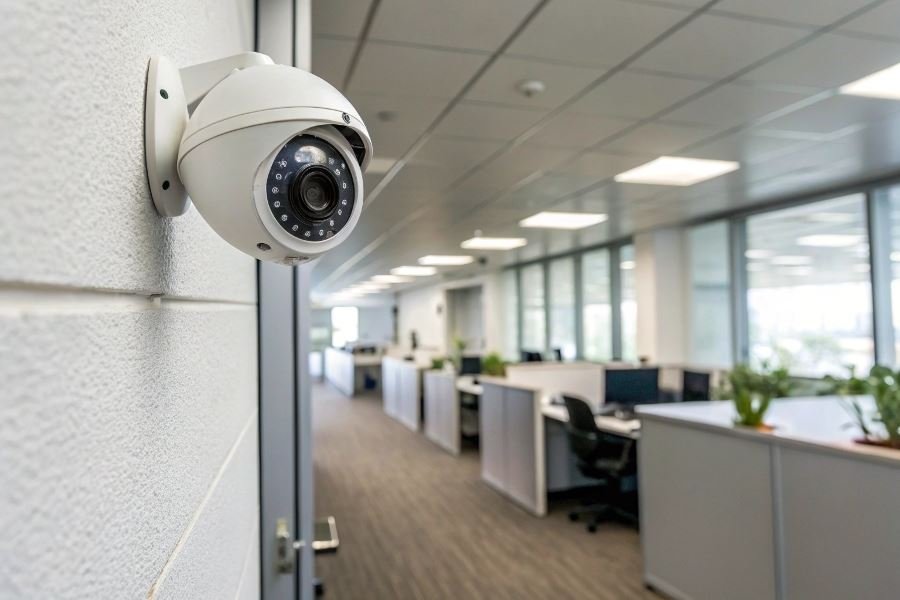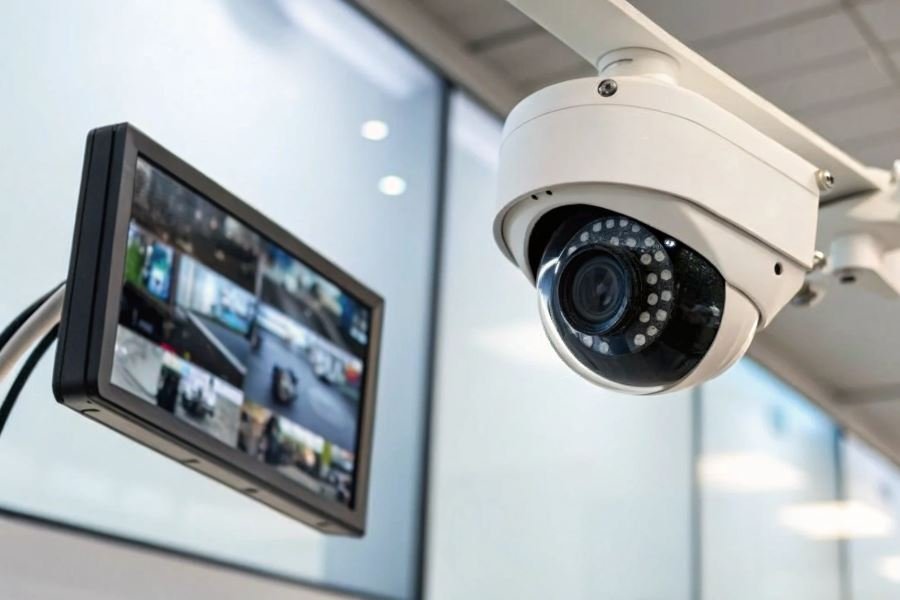
Remember when surveillance footage meant grainy, barely recognizable images that left you squinting at the screen? Those days are rapidly disappearing as modern video surveillance technologies transform how we protect our assets.
The journey from analog to IP cameras represents one of the most significant technological leaps in security. Traditional analog systems, which dominated the market since the 1970s, relied on coaxial cables to transmit continuous video signals to recording devices. The introduction of IP (Internet Protocol) cameras in the late 1990s fundamentally changed the game, bringing digital processing and network connectivity to surveillance.
From fuzzy footage to crystal clarity
The surveillance landscape has undergone remarkable transformation. Analog systems, with their 480-line resolution limitations, have given way to IP cameras capable of delivering 4K ultra-high-definition imagery. This evolution isn’t just about prettier pictures—it’s about actionable intelligence that can make the difference between identifying a threat and missing critical details.
Today’s surveillance marketplace
The current surveillance market reflects this technological shift. While analog systems still maintain a foothold due to their lower initial costs, IP cameras now command over 70% of new installations. This shift reflects growing demand for advanced features like remote access, intelligent analytics, and seamless integration with other security systems.
Making the right choice for your needs
When deciding between these technologies, consider these critical factors:
- Budget reality: Initial investment vs. long-term value
- Installation environment: Existing infrastructure and physical constraints
- Security requirements: Resolution needs, storage capacity, and analytics capabilities
- Scalability: Future expansion possibilities without complete system overhauls
The right surveillance technology ultimately depends on your specific security objectives, technical requirements, and available resources. Understanding the fundamental differences between these systems provides the foundation for making an informed decision that will serve your security needs for years to come.
Technical Showdown: IP vs Analog Surveillance
Resolution Revolution
When examining IP cameras versus analog surveillance systems, the difference in image quality is immediately apparent. IP cameras deliver crystal-clear footage at resolutions starting at 2MP (1080p) and soaring up to 12MP (4K) and beyond. This translates to capturing minute details like facial features or license plate numbers from significant distances.
The fundamental comparison of IP cameras vs analog surveillance technologies reveals a stark contrast in capability. While analog cameras typically max out at 960H resolution (approximately 960×480 pixels), their IP counterparts offer exponentially more detail. This resolution gap becomes critical when footage needs to serve as evidence or when monitoring large areas where zoom functionality matters.
Resolution comparison:
| Camera Type | Typical Resolution Range | Digital Zoom Capability | Color Accuracy |
|---|---|---|---|
| IP Cameras | 2MP-12MP (1080p-4K+) | Excellent | Superior |
| Analog | 420-960 TVL (~0.4MP) | Limited | Good |
The difference becomes particularly striking when viewing footage on larger screens or when digital zoom is required after recording.
Infrastructure Requirements
Cabling and Power Considerations
IP camera systems leverage network infrastructure through standard Ethernet cables, supporting both data transmission and power delivery via Power over Ethernet (PoE). This elegant solution eliminates the need for separate power cables, significantly reducing installation complexity and cost.
Analog systems require:
- Coaxial cables for video transmission
- Separate power cables for each camera
- Video baluns for longer distances
Installation complexity factor: IP systems initially demand more network knowledge but ultimately require less physical cabling, while analog systems are conceptually simpler but more labor-intensive to install.
Scalability That Grows With You
The scalability difference between these technologies is profound. IP systems shine in their ability to:
- Add cameras incrementally without major infrastructure changes
- Support virtually unlimited camera counts through network switches
- Integrate seamlessly with other business systems
Analog systems face inherent limitations with DVR input channels (typically 4, 8, 16, or 32), requiring complete hardware replacements when expansion needs exceed current capacity.
Integration Capabilities
Modern IP surveillance doesn’t exist in isolation—it becomes part of your broader security and business ecosystem. IP cameras integrate with:
- Access control systems from providers like HID Global
- Point-of-sale systems for transaction monitoring
- Building automation platforms
- Artificial intelligence for advanced analytics
This interconnectivity transforms cameras from passive recording devices into active business intelligence tools.
Analog systems, while reliable for basic monitoring, remain largely isolated islands of functionality, requiring additional hardware interfaces for even basic integration attempts.
The technical advantages of IP systems come with higher initial investment costs, but the long-term value proposition—considering scalability, integration capabilities, and future-proofing—makes them increasingly the preferred choice for forward-thinking security implementations.
The Real Cost of Seeing Everything
Total ownership costs beyond the price tag
When comparing IP and analog surveillance systems, sticker price tells only part of the story. While analog cameras typically cost $50-200 per unit versus $100-500+ for IP cameras, the total cost of ownership reveals a different picture.
Analog systems require extensive coaxial cabling—often at $0.50-1.00 per foot plus installation labor—while IP cameras leverage existing network infrastructure or require less expensive Ethernet cabling. For a 16-camera system covering 10,000 square feet, cabling alone can represent a $2,000-5,000 difference.
Storage costs create the most dramatic long-term difference. Analog systems record to DVRs with fixed capacity, typically requiring replacement every 3-5 years. IP systems utilize expandable NVR storage or cloud solutions, offering scalability without complete system overhauls.
| Cost Factor | Analog System | IP System |
|---|---|---|
| Camera Unit Cost | $50-200 | $100-500+ |
| Installation | Higher labor costs | Lower labor costs |
| Cabling | Coaxial ($0.50-1.00/ft) | Ethernet/PoE |
| Storage | Fixed DVR capacity | Expandable NVR/Cloud |
| Maintenance | Higher over time | Lower over time |
| 5-Year TCO | Higher for 10+ cameras | Lower for 10+ cameras |
The crossover point typically occurs at 10-16 cameras, where IP systems begin demonstrating lower total cost of ownership despite higher initial investment.
Security features and vulnerability assessment
The security gap between technologies has widened considerably. Analog systems remain vulnerable to physical tampering and signal interception, with limited encryption capabilities.
IP cameras incorporate multiple security layers:
- End-to-end encryption protecting video streams
- Authentication protocols preventing unauthorized access
- Firmware updates addressing emerging vulnerabilities
- Tamper detection alerting administrators to physical interference
The vulnerability difference became starkly apparent in 2016 when the Mirai botnet exploited thousands of unsecured IP cameras—leading to dramatic security improvements across the industry while analog systems remained largely unchanged.
Modern IP systems from manufacturers like Axis Communications and Hikvision now include advanced security features like HTTPS encryption, 802.1X network access control, and signed firmware updates—security measures impossible to implement in analog technology.
Long-term viability and technological trajectory
Analog surveillance technology has reached its developmental ceiling. Resolution remains capped at approximately 960H (about 700 TVL), and feature innovation has essentially halted as manufacturers focus R&D resources on IP technology.
IP camera technology continues advancing rapidly:
- Resolution increasing from 4K to 8K and beyond
- AI-powered analytics becoming standard features
- Edge computing capabilities reducing bandwidth requirements
- Integration with IoT ecosystems creating unified security platforms
The market has spoken decisively. IP camera shipments surpassed analog in 2015, and the gap widens annually. Major manufacturers have reduced or eliminated analog product lines, focusing instead on IP innovation.
For facilities requiring more than basic monitoring, IP systems represent not just the superior current choice but the only viable long-term investment. The additional upfront cost delivers both immediate capability advantages and protection against technological obsolescence—making IP cameras the clear financial and security choice for forward-thinking organizations.
Discover the definitive comparison between IP and analog surveillance systems for 2025. Explore resolution differences, installation requirements, security features, and cost analysis to determine which technology best fits your monitoring needs.
Discover the definitive comparison between IP and analog surveillance systems for 2025. Explore resolution differences, installation requirements, security features, and cost analysis to determine which technology best fits your monitoring needs.