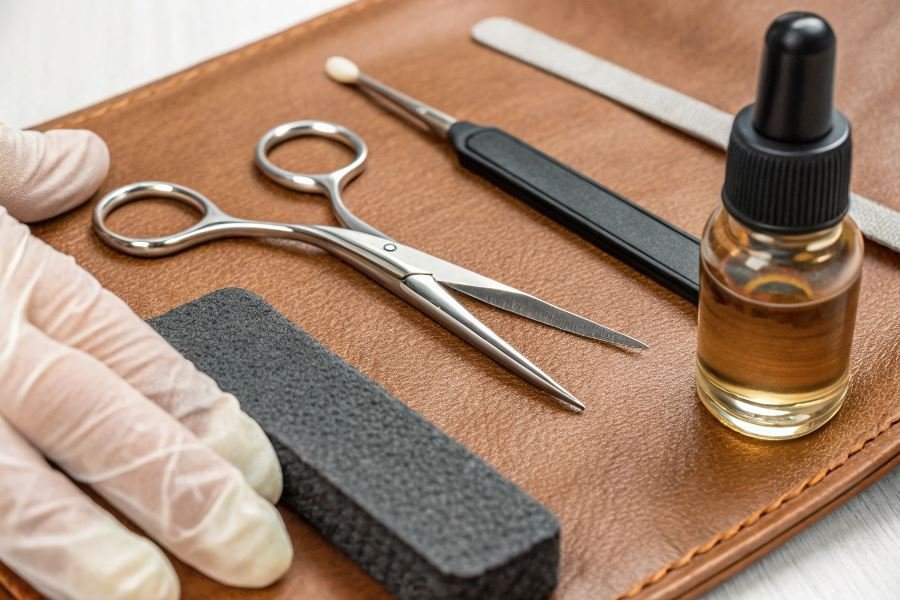
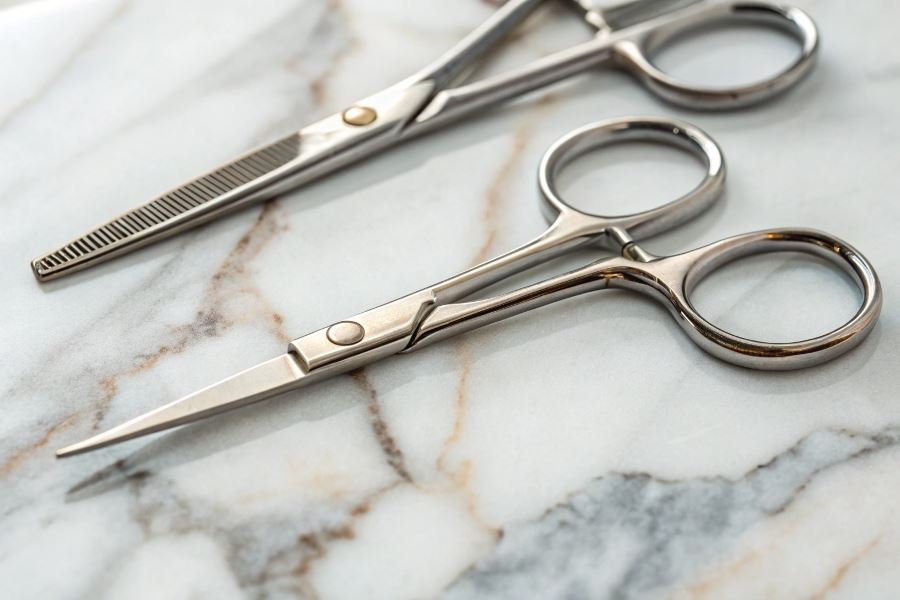
Ever held a pair of scissors that felt like an extension of your hand? The difference between ordinary nail care and a transformative experience often lies in the tool you choose. Behind every precise cut and clean edge is centuries of metallurgical mastery that divides into two distinct schools of thought: Japanese and German craftsmanship.
The lineage of specialized manicure scissors traces back to the 17th century when surgical instrument makers in Solingen, Germany began crafting precision cutting tools. Meanwhile, in Japan, sword-making traditions dating to the Kamakura period (1185-1333) eventually evolved into the creation of fine cutting instruments. These parallel but distinct paths created two philosophies of steel and design that continue to define the market today.
What separates these traditions at their core? German scissors typically feature robust construction with slightly thicker blades forged from ice-hardened stainless steel—built for durability and consistent performance. Their Japanese counterparts, often hand-crafted from high-carbon steel using techniques descended from samurai sword production, offer exceptional sharpness and precision but require more maintenance.
“The scissors you choose aren’t just tools—they’re the difference between frustration and flow in your grooming routine.”
For professionals, this choice impacts everything from hand fatigue during long sessions to the clean edges that define their reputation. For home users, it’s about finding that perfect balance between investment and performance that makes self-care feel effortless rather than obligatory.
The right scissors don’t just cut—they elevate the entire manicure experience from mundane maintenance to mindful ritual.
The Engineering Behind Perfect Cuts
When deciding between Japanese vs German manicure scissors, understanding the fundamental engineering differences reveals why professionals develop strong preferences. These aren’t just cutting tools—they’re precision instruments designed with specific philosophies and metallurgical approaches that directly impact your manicure experience.
Material Composition That Defines Performance
Japanese manicure scissors typically feature harder steel with higher carbon content, often reaching 60+ on the Rockwell hardness scale. This translates to exceptional edge retention and precision cutting. Hitachi steel, renowned in Japanese bladesmithing, creates scissors that maintain their edge through hundreds of cuts.
German scissors, by contrast, utilize softer steel (typically 54-58 Rockwell) with different alloying elements that prioritize durability over ultimate sharpness. Solingen steel, the backbone of German cutting tools since the Middle Ages, offers remarkable corrosion resistance and toughness that withstands drops and impacts that might chip Japanese blades.
The decision between Japanese vs German manicure scissors: what to choose often comes down to your cutting style and maintenance preferences. Japanese scissors reward meticulous care with unmatched performance, while German options forgive occasional neglect.
Ergonomics That Transform Your Technique
| Feature | Japanese Design | German Design |
|---|---|---|
| Handle Style | Offset, minimalist | Symmetrical, contoured |
| Weight | Lighter (15-25g) | Heavier (25-40g) |
| Balance Point | Forward-biased | Center-balanced |
| Finger Rest | Minimal or absent | Pronounced |
Japanese scissors employ a distinctive asymmetrical design that places cutting power in precise finger control rather than hand strength. The lighter weight reduces fatigue during detailed work but demands greater dexterity.
German ergonomics embrace a more substantial feel with pronounced finger rests and thumb grips that stabilize the scissors during use. The additional weight provides momentum that helps power through thicker nails without requiring as much finger pressure.
Cutting Performance and Maintenance Reality
The convex edge common to Japanese scissors creates a slicing action that feels effortless through even the toughest nails. This “hamaguri” edge (named after clam shells) requires specialized sharpening techniques but delivers unparalleled smoothness.
German scissors typically feature a more traditional beveled edge that creates a direct cutting action. While not quite as smooth as their Japanese counterparts, they maintain functional sharpness longer under everyday use conditions.
Maintenance requirements diverge significantly:
- Japanese scissors demand regular oiling, careful storage in protective cases, and professional sharpening every 6-12 months depending on use frequency
- German scissors tolerate occasional cleaning, standard sharpening methods, and more casual storage solutions
The ultimate performance factor may be longevity. With proper care, premium Japanese scissors from makers like Suwada can remain precise for decades, while quality German scissors from Zwilling J.A. Henckels offer excellent value with less demanding maintenance requirements.
The choice ultimately reflects your priorities: uncompromising cutting performance that demands respect, or reliable functionality that withstands the rigors of daily professional use.
Making the Right Cut: Japanese vs German Scissors for Your Needs
Where Japanese scissors truly excel
Japanese manicure scissors represent the pinnacle of precision engineering. Crafted from exceptionally hard steel (typically above 60 HRC on the Rockwell scale), these instruments deliver unmatched sharpness and control for detailed work.
The defining characteristics of Japanese scissors include their convex edge—a sophisticated blade geometry that creates an incredibly thin cutting edge. This design allows for clean, precise cuts even on the thinnest nails and cuticles without causing trauma to surrounding tissue.
Best applications for Japanese scissors include:
- Precision cuticle work requiring surgical-level accuracy
- Asian nail types which tend to be thinner and require gentler handling
- Professional nail technicians performing detailed nail art
- Clients with problematic ingrown nails requiring careful trimming
Seki Edge scissors exemplify this tradition, continuing centuries-old Japanese bladesmithing techniques. Their SS-106 model features hand-finished blades that maintain sharpness through thousands of cuts.
The extraordinary hardness of Japanese steel allows for edges that stay sharper longer but requires proper care to prevent damage.
When German engineering takes the lead
German manicure scissors bring robust reliability to nail care. Manufactured from slightly softer but more flexible steel (typically 54-58 HRC), these instruments offer excellent durability and forgiveness.
German scissors typically feature a flat ground edge—more substantial than the Japanese convex edge but extremely reliable for everyday use. The cutting action feels solid and predictable, with blades that resist misalignment even with regular use.
Ideal applications for German scissors include:
- Thicker, stronger nails requiring more cutting force
- High-volume salon environments where durability is essential
- Users who prefer scissors that require less frequent maintenance
- Beginners who might accidentally drop or mishandle tools
Zwilling J.A. Henckels produces exemplary German scissors with their TWIN® nail scissors demonstrating the perfect balance between precision and resilience.
Investment considerations for quality scissors
| Feature | Japanese Scissors | German Scissors |
|---|---|---|
| Price Range | $75-300+ | $40-150 |
| Edge Retention | Superior (3-6 months) | Good (2-4 months) |
| Maintenance Needs | Higher (regular honing) | Moderate |
| Learning Curve | Steeper | More forgiving |
| Lifetime Value | Exceptional with proper care | Very good |
When evaluating the investment, consider that premium Japanese scissors from brands like Mizutani may cost twice as much as German alternatives, but often deliver 3-4 times the service life when properly maintained.
The value proposition shifts depending on your usage pattern. For professionals performing 20+ manicures weekly, Japanese scissors typically offer better long-term value despite higher initial costs. For occasional home use, German scissors provide excellent performance without requiring specialized maintenance knowledge.
Maintenance costs matter: Japanese scissors often require professional sharpening ($30-50 per service) while many German models can be maintained with simpler tools. Factor these ongoing costs into your decision.
Remember that proper storage—ideally in dedicated cases with protective oils for Japanese models—significantly extends the life of either type, transforming a good tool into a lifetime investment.
Discover the key differences between Japanese and German manicure scissors, from blade construction to ergonomics. Learn which precision tool best suits your needs based on cutting style, maintenance requirements, and value for professional or home use.
Discover the key differences between Japanese and German manicure scissors, from blade construction to ergonomics. Learn which precision tool best suits your needs based on cutting style, maintenance requirements, and value for professional or home use.