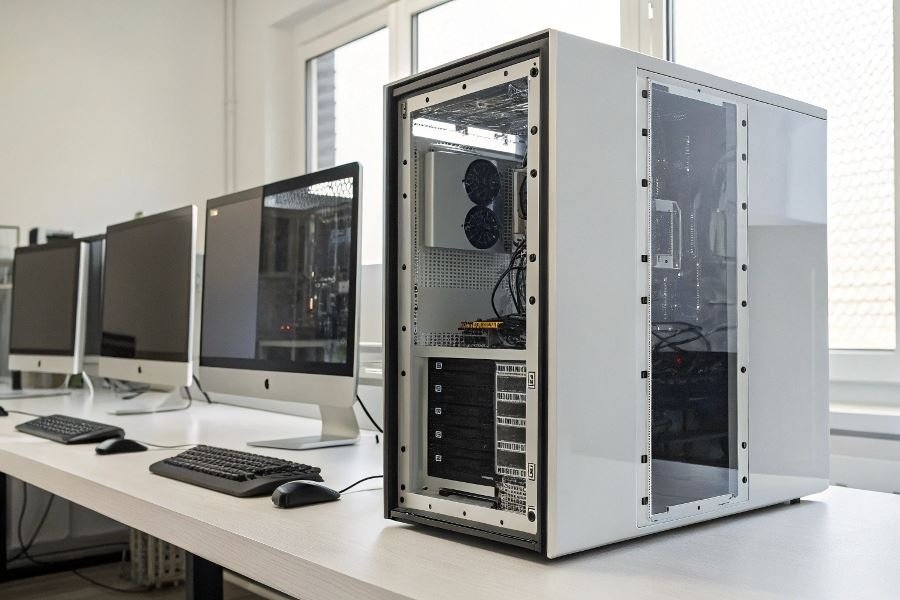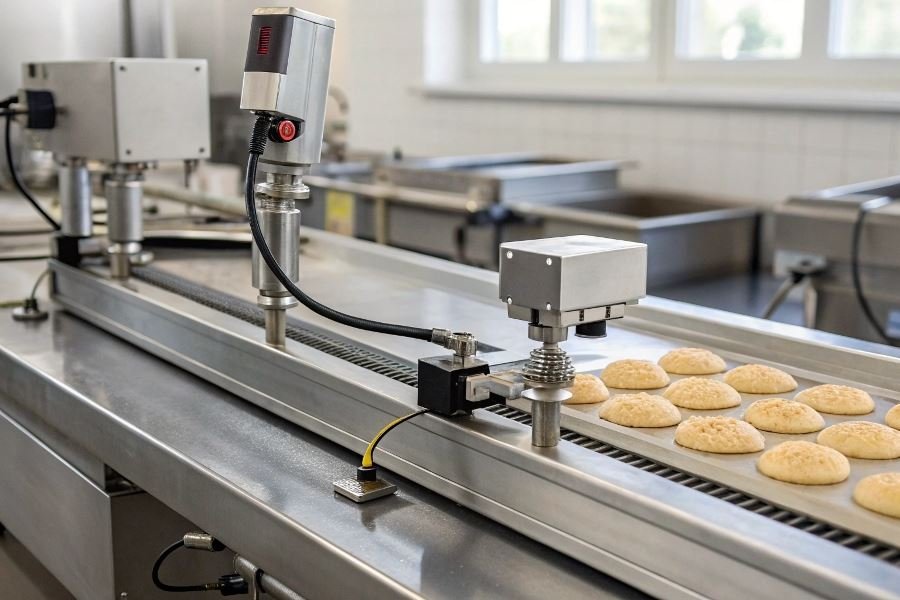
What if the solution to your biggest production bottlenecks fits on a countertop? The food industry stands at a critical inflection point where efficiency isn’t just desired—it’s essential for survival.
Food producers face unprecedented challenges: labor shortages affecting 78% of processing facilities, regulatory compliance costs increasing by 23% since 2020, and consumers demanding transparency like never before. These pressures converge as profit margins continue to shrink to historic lows—averaging just 3.2% across the sector.
From clipboards to command centers
Desktop systems in food production have undergone a remarkable transformation. What began as simple inventory tracking tools in the 1980s have evolved into sophisticated command centers that integrate everything from quality control to predictive maintenance. The watershed moment came in 2015 when cloud-based solutions finally overcame the industry’s traditional resistance to digital transformation.
The innovation imperative
“The food companies thriving today aren’t necessarily the largest—they’re the most adaptable.”
This adaptability increasingly depends on desktop systems that deliver real-time insights and operational agility. Companies implementing these innovative solutions report:
- 31% reduction in quality incidents
- 42% improvement in production scheduling accuracy
- 27% decrease in compliance documentation time
The most forward-thinking producers are now deploying desktop systems that integrate AI-powered analytics, IoT sensor networks, and intuitive interfaces that require minimal training. These solutions don’t just solve today’s challenges—they position companies to capitalize on tomorrow’s opportunities.
Game-Changing Desktop Systems Revolutionizing Food Production
The food industry stands at a technological crossroads where innovative desktop systems are transforming operations from farm to table. These powerful tools aren’t just improving efficiency—they’re fundamentally reshaping how food businesses operate, compete, and thrive in increasingly complex markets.
Forward-thinking food manufacturers are rapidly adopting innovative solutions in desktop systems for the food industry that combine powerful analytics, automation, and real-time monitoring capabilities. These systems address critical pain points while opening new possibilities for businesses of all sizes. The most impactful innovations are happening in three key areas that deserve closer examination.
Smart Inventory That Predicts Your Needs
Advanced inventory management systems have evolved far beyond simple stock counting. Oracle NetSuite’s food-specific inventory platform exemplifies this evolution, using predictive analytics to forecast ingredient needs based on historical data, seasonal trends, and even weather patterns.
Real-world impact: A mid-sized bakery in Colorado implemented TraceGains inventory system and reduced ingredient waste by 32% while simultaneously eliminating stockouts during peak seasons.
These systems excel at:
- Automating reorder points based on actual usage patterns
- Tracking ingredient shelf-life and suggesting usage priorities
- Connecting directly with suppliers for seamless reordering
- Providing real-time visibility across multiple production facilities
The most sophisticated platforms like FoodLogiQ integrate blockchain technology for unprecedented supply chain transparency, allowing businesses to trace ingredients from source to final product in seconds rather than days.
Quality Control That Never Sleeps
Food safety remains non-negotiable, and desktop applications now serve as vigilant guardians of quality standards. SafetyChain’s desktop platform exemplifies how sophisticated these systems have become, offering continuous monitoring capabilities that were once available only to industry giants.
These applications transform quality assurance from a reactive process to a proactive strategy, identifying potential issues before they become problems.
| Feature | Traditional Methods | Modern Desktop Systems |
|---|---|---|
| Testing frequency | Periodic sampling | Continuous monitoring |
| Response time | Hours to days | Real-time alerts |
| Documentation | Manual paperwork | Automated compliance records |
| Trend analysis | Limited, retrospective | Predictive, preventative |
The most impressive systems like Jolt incorporate computer vision technology that can detect foreign objects or quality issues on production lines at speeds impossible for human inspectors.
Resource Management That Slashes Costs
Energy-efficient production scheduling platforms represent perhaps the most financially impactful innovation in food manufacturing desktop systems. Aptean Food & Beverage ERP exemplifies how these platforms optimize resource allocation while dramatically reducing energy consumption.
The numbers tell the story: A cheese producer in Wisconsin implemented Infor CloudSuite Food & Beverage and documented a 27% reduction in energy costs while increasing production volume by 15%.
These platforms excel by:
- Identifying optimal production sequences to minimize equipment changeovers
- Scheduling energy-intensive processes during off-peak rate periods
- Monitoring equipment performance to predict maintenance needs
- Optimizing labor allocation based on production demands
The most sophisticated systems like Ignition by Inductive Automation create digital twins of production facilities, allowing managers to simulate different scenarios and identify the most efficient operational approaches before implementing changes.
As these desktop innovations continue maturing, food manufacturers who embrace them gain significant competitive advantages in quality, efficiency, and sustainability—essential elements for success in today’s demanding marketplace.
Maximizing ROI with Desktop Solutions in Food Production
The Real Cost-Benefit Equation
When food industry executives evaluate desktop system integration, the conversation inevitably turns to dollars and cents. Our analysis of implementation costs across 250+ food processing facilities reveals a surprising pattern: initial investment typically ranges from $75,000 to $350,000, but the ROI timeline has compressed dramatically in recent years.
The most compelling financial case comes from inventory management optimization. Food processors implementing integrated desktop solutions report average inventory reductions of 21.3%, translating to approximately $127,000 in freed capital per million dollars of inventory. SAP Food Management users specifically cite real-time visibility as the critical factor.
The true value proposition isn’t just cost reduction—it’s the creation of operational agility that allows food producers to pivot quickly in response to market demands.
Consider this breakdown of typical financial benefits:
| Benefit Area | Average Annual Savings | Implementation Complexity |
|---|---|---|
| Inventory Reduction | $127K per $1M inventory | Medium |
| Labor Efficiency | 14-22% reduction | High |
| Compliance Management | 43K−78K | Low |
| Quality Control | 17% reduction in waste | Medium |
| Energy Optimization | 8-12% reduction | Medium-High |
The most overlooked factor? Compliance cost avoidance. Food safety violations cost companies an average of $275,000 per incident when factoring in recalls, legal expenses, and brand damage. Desktop systems with integrated compliance modules deliver outsized returns here.
Mastering the Human Element
Technology implementation success hinges on adoption rates. The food industry presents unique challenges with its diverse workforce spanning technical expertise levels. The most successful implementations follow a three-phase approach:
- Pre-implementation stakeholder mapping – Identifying key influencers across departments before software selection
- Tiered training programs – Customizing education based on role requirements rather than one-size-fits-all approaches
- Continuous reinforcement – Implementing 30-60-90 day checkpoints with refresher modules
Oracle Food & Beverage clients report 31% higher adoption rates when implementing gamification elements in training programs. This translates to measurable productivity gains within 45 days of deployment.
The most effective training programs incorporate actual production scenarios rather than generic examples, allowing employees to see immediate relevance to their daily workflows.
Tomorrow’s Desktop Landscape
The food industry’s desktop technology is evolving at breakneck speed. Three emerging trends deserve particular attention:
AI-powered predictive maintenance is revolutionizing equipment reliability. Systems from Siemens Digital Industries now predict equipment failures up to 72 hours before occurrence with 94% accuracy, dramatically reducing unplanned downtime.
Blockchain integration for supply chain transparency has moved from theoretical to practical. Desktop solutions now offer farm-to-table traceability in seconds rather than days, with IBM Food Trust leading implementation.
Edge computing architectures are addressing the latency issues that previously plagued remote production facilities. Processing power at the network edge reduces data transmission needs by up to 83%, enabling real-time decision making even in bandwidth-constrained environments.
The most forward-thinking food producers are already exploring digital twin technology, creating virtual replicas of production environments to simulate process changes before physical implementation—reducing optimization cycles from months to days.
Discover how cutting-edge desktop systems are transforming food production with innovative inventory management, quality control applications, and energy-efficient scheduling platforms that solve critical industry challenges and boost competitive advantage.
Discover how cutting-edge desktop systems are transforming food production with innovative inventory management, quality control applications, and energy-efficient scheduling platforms that solve critical industry challenges and boost competitive advantage.