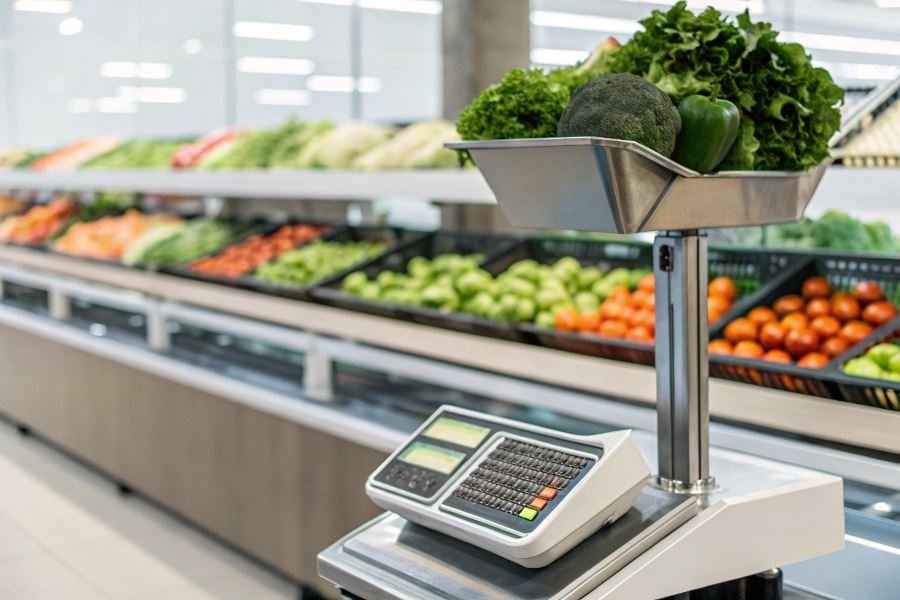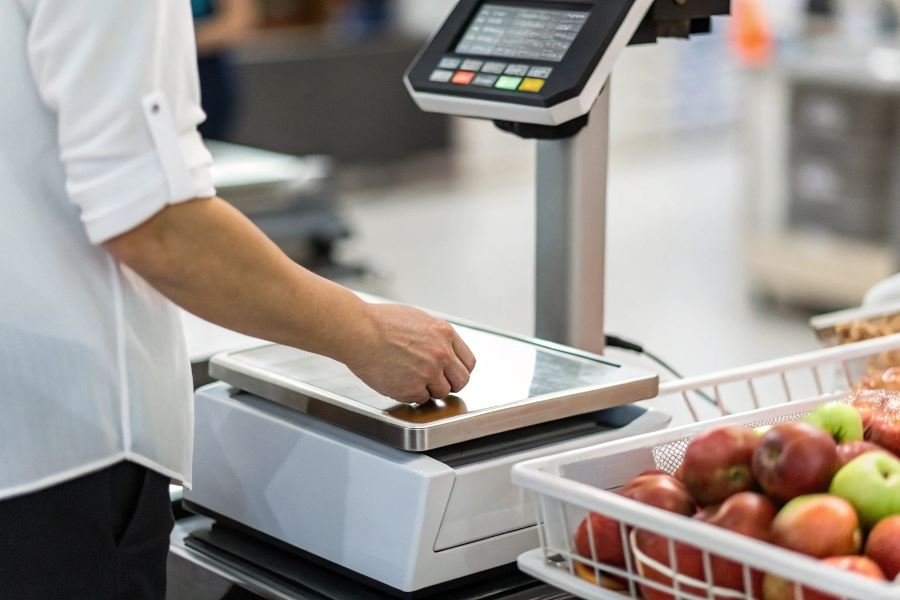
Ever watched a skilled deli operator weigh, price, and label your purchase in one seamless motion? That’s the magic of trading scales with label printing—retail workhorses that silently power thousands of transactions daily across America’s grocery stores, delis, and specialty shops.
Trading scales with label printing are specialized weighing devices that not only measure product weight but also calculate price and print detailed labels—all in one integrated system. Unlike basic scales, these sophisticated instruments serve as critical touchpoints where inventory management meets customer service.
The right scale doesn’t just weigh products—it accelerates your business.
When selecting these essential tools, business owners face a crucial decision that directly impacts operational efficiency, customer satisfaction, and ultimately, profitability. A well-chosen scale reduces checkout times, minimizes errors, and provides valuable sales data that basic models simply can’t deliver.
Key selection factors to consider
The evaluation criteria for trading scales extend far beyond simple weight accuracy. Modern businesses must assess connectivity options, printing speed, label customization capabilities, and software integration potential. The difference between a good scale and the perfect scale might seem subtle on paper but translates to thousands of dollars in operational efficiency over its lifespan.
Whether you’re upgrading existing equipment or outfitting a new location, understanding these fundamental selection criteria will transform what could be an overwhelming technical purchase into a strategic business investment that pays dividends with every transaction.
Technical Essentials That Make or Break Label Printing Scales
When evaluating trading scales with label printing capabilities, the technical specifications ultimately determine whether your investment will streamline operations or become a daily frustration. The right scale transforms pricing, inventory management, and customer experience in retail environments from delis to hardware stores.
Establishing clear criteria for choosing trading scales with label printing starts with understanding your specific operational needs. The market offers diverse options, but success hinges on matching technical capabilities to your business requirements rather than being swayed by flashy features you’ll never use.
Weighing Capacity and Precision That Fits Your Products
The foundation of any scale’s performance lies in its capacity and precision balance. Commercial environments typically require scales ranging from:
- Light-duty (15-30 lbs): Ideal for jewelry, supplements, or specialty foods
- Medium-duty (30-60 lbs): Perfect for standard grocery items, produce sections
- Heavy-duty (60-150+ lbs): Essential for bulk goods, hardware, or industrial applications
Precision requirements vary dramatically by industry. While a jewelry store might require 0.01g precision, a bulk food store might only need 5g increments. The readability (smallest displayed weight increment) directly impacts pricing accuracy and customer satisfaction.
| Industry | Recommended Capacity | Ideal Precision | Typical Verification Division |
|---|---|---|---|
| Jewelry | 6-15 lbs | 0.01-0.1g | e = 0.1g |
| Deli/Produce | 30-60 lbs | 2-5g | e = 2g |
| Bulk Goods | 60-150 lbs | 5-10g | e = 5g |
Selecting a scale with capacity significantly higher than your typical items reduces precision and increases costs unnecessarily.
Label Printing That Communicates Your Brand
Modern label printing capabilities extend far beyond basic weight and price information. Today’s systems offer:
Print quality options ranging from 200 DPI (basic text) to 600+ DPI (logos and barcodes). Higher resolution matters when printing QR codes or detailed branding elements.
Customization flexibility determines whether your labels merely inform or actively sell. Advanced systems allow for:
- Product descriptions and ingredients
- Nutritional information panels
- Preparation suggestions
- QR codes linking to recipes or origin stories
- Promotional messaging and expiration dates
- Store logos and branding elements
Label size versatility is crucial—most systems support standard widths between 40-80mm, but the ability to adjust length on demand saves significant material costs over time.
Connectivity That Future-Proofs Your Investment
The most sophisticated scale becomes a bottleneck if it can’t communicate with your existing systems. Modern connectivity options include:
- Ethernet/LAN connections for centralized database management
- USB ports for manual data transfer and firmware updates
- Wi-Fi capabilities for wireless network integration
- Bluetooth functionality for mobile device pairing
- Cloud connectivity for remote management and reporting
Integration with Square POS or Shopify POS systems eliminates double-entry and pricing errors. The most advanced scales offer API access for custom integration with proprietary inventory management systems.
Data management capabilities determine whether your scale is merely a weighing device or a comprehensive inventory tool. Look for scales offering:
- PLU (Price Look-Up) capacity of at least 10,000 items
- Category management for organized product grouping
- Sales reporting and inventory tracking
- Remote programming capabilities for multi-store operations
The technical specifications of your label printing scale directly impact operational efficiency, customer experience, and ultimately, your bottom line. Prioritizing these criteria ensures your investment delivers value long after the initial purchase.
Sealing the Deal on Trading Scales with Label Printing
The ROI equation that matters
When investing in trading scales with label printing capabilities, the upfront cost is just the beginning of the story. A proper cost-benefit analysis reveals that these systems typically pay for themselves within 12-18 months through labor savings alone. High-end models from manufacturers like Mettler Toledo or DIGI might command 2, 500−5,000, but they deliver measurable returns through:
- Reduced labor costs – automating the weighing and labeling process can save 15-20 hours weekly for a typical retail operation
- Minimized product giveaway – precision weighing reduces overages by up to 2.5%, translating directly to bottom-line improvements
- Error reduction – automated labeling eliminates costly mistakes that lead to reprints, returns, or compliance issues
The true cost of ownership extends beyond the purchase price to include consumables, maintenance, and operational efficiency gains.
Consider this comparison of long-term value:
| Scale Type | Initial Investment | 5-Year Consumable Costs | Labor Savings | Typical ROI Timeframe |
|---|---|---|---|---|
| Basic Model | $1,200-2,000 | $3,000 | Moderate | 18-24 months |
| Mid-Range | $2,500-3,500 | $4,000 | Substantial | 12-18 months |
| Enterprise | $4,000-7,000 | $5,500 | Significant | 8-14 months |
Keeping the scales in your favor
The most sophisticated scale becomes a liability without proper maintenance. Leading manufacturers offer service contracts ranging from 300−800 annually, which typically include:
- Calibration services (quarterly recommended for high-volume operations)
- Preventative maintenance visits
- Priority technical support
- Software updates and security patches
After-sales support quality varies dramatically between manufacturers. Before purchasing, investigate:
- Local technician availability and response times
- Parts availability and shipping timeframes
- Remote diagnostic capabilities
- Training programs for your staff
The Rice Lake Weighing Systems service network, for example, offers same-day emergency service in most major markets—a critical factor when downtime means lost revenue.
Meeting the regulatory bar
Trading scales with label printing must comply with a complex web of regulations that vary by industry and location. Key compliance considerations include:
- NTEP certification – The National Type Evaluation Program certification is essential for legal-for-trade applications in the United States
- FDA requirements – For food labeling, including allergen information, nutritional data, and traceability
- Weights and measures regulations – Local jurisdictions often require annual certification
- Data security standards – Particularly important for scales connected to networks or storing customer information
Non-compliance isn’t merely inconvenient—it can result in substantial fines, product recalls, or business interruptions.
The Bizerba KH II series, for instance, comes pre-configured with templates that meet current FDA labeling requirements, simplifying compliance for food retailers.
When making your final decision, prioritize scales that offer regular firmware updates to adapt to evolving regulations. The regulatory landscape shifts frequently, and your investment should accommodate these changes without requiring complete system replacement.
Discover the top 7 criteria for selecting high-quality trading scales with label printing capabilities. Learn about weighing precision, connectivity options, and ROI considerations to maximize your business efficiency and compliance.
Discover the top 7 criteria for selecting high-quality trading scales with label printing capabilities. Learn about weighing precision, connectivity options, and ROI considerations to maximize your business efficiency and compliance.