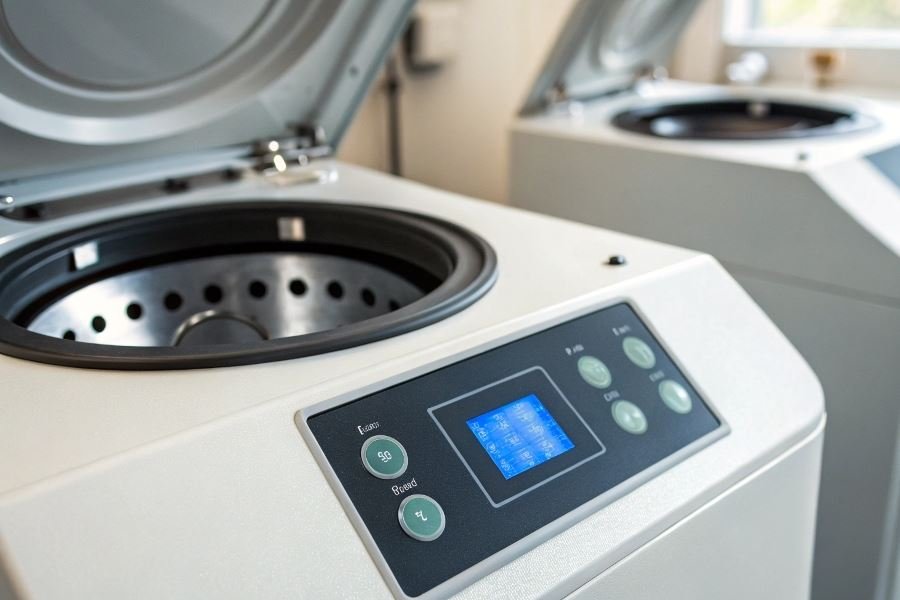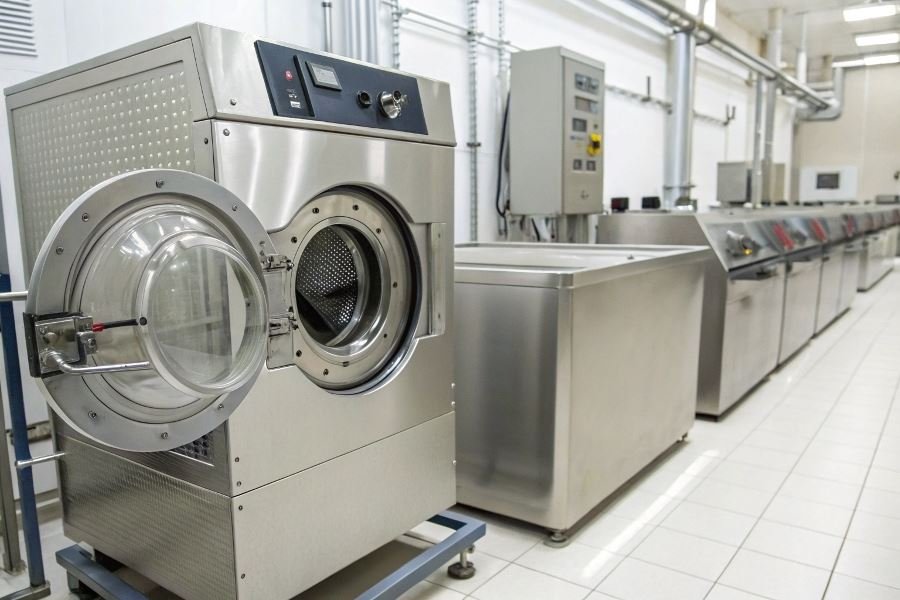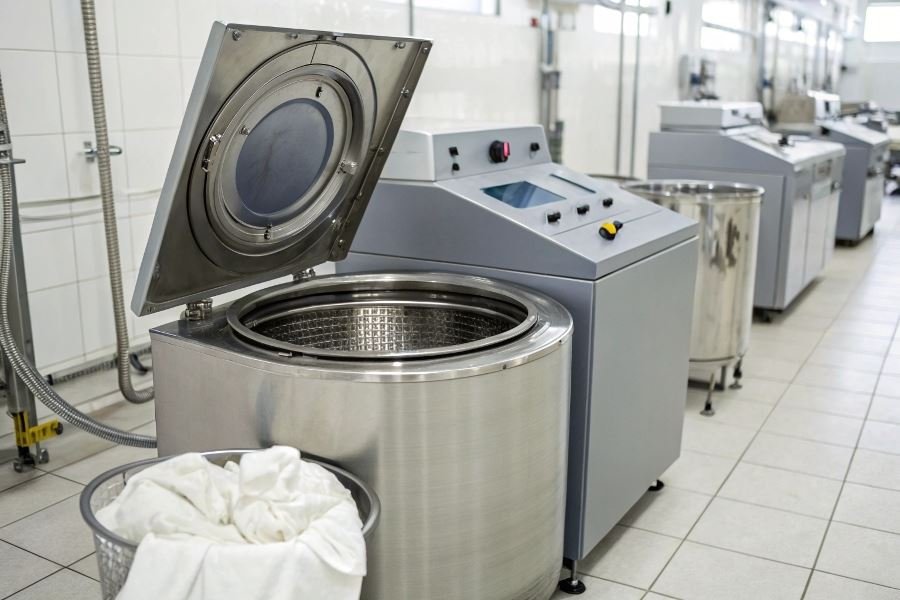
Ever wondered why some commercial laundries process mountains of linens effortlessly while others struggle with backlogs and excessive utility bills? The answer often spins at 1000+ RPM in the corner of the facility: the centrifuge.
Commercial laundry centrifuges represent the unsung heroes of efficient operations, extracting up to 95% of moisture from freshly washed textiles before they enter the drying phase. This critical moisture removal dramatically reduces drying times, energy consumption, and ultimately, your bottom line. A properly selected centrifuge can slash drying energy costs by 30-40% compared to inadequate extraction systems.
The financial impact of centrifuge selection
When evaluating centrifuge options for your laundry operation, you’re not just purchasing equipment—you’re making a strategic decision that will impact operational efficiency for years to come. Consider this: for every 1% improvement in moisture extraction, dryer energy consumption typically decreases by 2-3%. With industrial dryers consuming significant energy, these savings compound dramatically over time.
“The centrifuge is where profitability begins in commercial laundry. Get this decision wrong, and you’re fighting an uphill battle with every load processed.”
The selection process requires careful consideration of capacity requirements, G-force capabilities, basket design, and automation features—all tailored to your specific textile mix and throughput needs. The right centrifuge transforms your operation from merely functional to exceptionally efficient, creating a competitive advantage that pays dividends with every spin cycle.
Technical Parameters That Make or Break Your Laundry Centrifuge
When investing in commercial laundry equipment, the centrifuge stands as the unsung hero of operational efficiency. These powerful machines extract moisture from fabrics through high-speed spinning, dramatically reducing drying times and energy costs. Understanding how to choose a centrifuge for a laundry requires careful consideration of several main parameters that directly impact performance, efficiency, and long-term value.
Capacity that matches your workflow
The first consideration when selecting a centrifuge must be its capacity. Commercial laundries typically measure this in pounds or kilograms of dry weight.
| Laundry Size | Recommended Capacity | Typical Applications |
|---|---|---|
| Small | 15-30 kg (33-66 lbs) | Boutique hotels, small clinics |
| Medium | 30-60 kg (66-132 lbs) | Mid-sized hotels, nursing homes |
| Large | 60-120 kg (132-264 lbs) | Hospitals, industrial laundries |
| Industrial | 120+ kg (264+ lbs) | Cruise ships, large hospitals |
Match your centrifuge capacity to your washer capacity for seamless workflow. Undersized centrifuges create bottlenecks, while oversized units waste energy and floor space. Many operations benefit from multiple smaller units rather than one large centrifuge, providing redundancy during maintenance periods.
Spin speed and G-force: The moisture extraction equation
The effectiveness of a centrifuge is primarily determined by its G-force—the centrifugal force generated during spinning that extracts moisture from fabrics.
Higher G-force means drier fabrics and reduced drying time.
Modern commercial centrifuges typically operate between 300-1200 G, with premium models reaching up to 1800 G. The relationship between spin speed (RPM) and G-force depends on the drum diameter:
| G-Force | Typical Moisture Retention | Impact on Operations |
|---|---|---|
| 300-500 G | 70-80% | Basic extraction, longer drying times |
| 500-800 G | 60-70% | Standard performance |
| 800-1200 G | 50-60% | High performance, significant energy savings |
| 1200+ G | 45-55% | Premium extraction, minimal drying required |
For delicate fabrics, adjustable speed settings provide versatility across different textile types.
Energy efficiency: The hidden cost factor
Energy consumption represents one of the largest operational expenses in commercial laundries. Modern centrifuges from manufacturers like Girbau and Milnor feature advanced motor technology that significantly reduces power requirements.
Look for models with variable frequency drives (VFDs) that optimize energy use based on load size. Premium units can achieve up to 30% energy savings compared to older models.
Energy efficiency ratings should be evaluated alongside:
- Startup power requirements
- Average kWh consumption per cycle
- Standby power usage
- Heat generation (which impacts HVAC costs)
Durability factors that determine lifetime value
The harsh operating conditions of commercial laundries demand equipment built to withstand years of continuous use. Key durability factors include:
-
Structural materials – Stainless steel construction offers superior corrosion resistance compared to painted carbon steel alternatives.
-
Vibration control systems – Advanced shock absorption technology from manufacturers like Pellerin Milnor and Dexter Laundry prevents excessive movement during operation, extending machine life and reducing maintenance.
-
Balance detection systems – Intelligent load balancing technology automatically redistributes uneven loads, preventing damage from imbalance conditions.
-
Bearing quality – Industrial-grade sealed bearings from suppliers like SKF or Timken can double service intervals.
-
Control system protection – Sealed electronics with moisture and vibration isolation prevent premature failure of critical components.
The most durable centrifuges incorporate redundant safety systems that protect both the equipment and operators, including automatic imbalance detection, door interlocks, and emergency stop functions.
When evaluating these technical parameters, remember that the initial purchase price represents only a fraction of the total lifetime cost. A premium centrifuge that extracts more moisture will pay for itself through reduced drying times, lower energy consumption, and extended service life.
Making the Smart Centrifuge Investment for Your Laundry
Selecting the right centrifuge isn’t just about finding equipment—it’s about making a strategic business decision that will impact your laundry operation for years to come. Let’s cut through the noise and focus on what truly matters when finalizing your centrifuge selection.
Beyond the Price Tag: Total Cost of Ownership
The sticker price is just the beginning of your relationship with a centrifuge. Smart laundry operators look at the complete financial picture:
Energy efficiency metrics matter more than ever. A centrifuge that costs $2,000 less upfront but consumes 15% more electricity will drain your profits silently. Modern high-G-force models from brands like Dexter Laundry might command premium prices but can reduce drying times by up to 30%, slashing your utility bills.
The maintenance equation is non-negotiable. Consider these factors:
- Frequency of required service intervals
- Availability and cost of replacement parts
- Technician accessibility in your region
- Warranty coverage (standard 1-year vs. extended 5-year options)
The most expensive centrifuge you’ll ever buy is the one that sits idle during peak business hours.
Water extraction efficiency directly impacts downstream costs. Every additional percentage of moisture removed by your centrifuge means less work for your dryers, extending their lifespan and reducing energy consumption.
Matching Specifications to Your Operation’s Reality
Your centrifuge must align perfectly with your specific business needs:
Volume requirements should drive capacity decisions. A mismatch here creates either bottlenecks or wasted investment:
| Business Type | Daily Load Volume | Recommended Capacity |
|---|---|---|
| Small B&B/Salon | 50-100 lbs | 20-30 lb capacity |
| Mid-size Hotel | 300-500 lbs | 60-80 lb capacity |
| Industrial Laundry | 1000+ lbs | Multiple 125+ lb units |
Space constraints cannot be overlooked. Measure your installation area meticulously, accounting for:
- Door clearance for loading/unloading
- Maintenance access requirements
- Vibration isolation needs
- Utility connection positioning
Specialized fabric handling capabilities become crucial for laundries serving specific industries. Hotels need centrifuges that handle delicate linens, while industrial operations require robust machines for heavy-duty workwear.
Top Performers Across Business Scales
Based on performance metrics, reliability data, and value proposition, these centrifuges stand out in their respective categories:
Small Operations (Under 200 lbs daily):
The Speed Queen SC030 delivers exceptional moisture removal (up to 70%) in a compact footprint. Its 30-lb capacity and 300 G-force extraction come with surprisingly modest power requirements, making it ideal for boutique laundry services.
Medium-Scale Businesses (200-800 lbs daily):
UniMac UC80 offers the perfect balance of industrial durability and operational efficiency. Its programmable controls allow customization for different fabric types, while the 450 G-force extraction significantly reduces downstream drying costs.
Industrial Operations (800+ lbs daily):
The Milnor 42026V8J represents the gold standard for high-volume processing. Its 140-lb capacity, coupled with variable speed drive and 725 G-force extraction, delivers industry-leading performance. The suspended design minimizes vibration issues, extending machine life even under punishing 24/7 operation.
Remember that the perfect centrifuge isn’t necessarily the most expensive or feature-laden model—it’s the one that integrates seamlessly into your specific operation while delivering the lowest total cost of ownership over its lifespan.
Discover the key parameters for selecting the perfect laundry centrifuge for your business. Learn about capacity, G-force, energy efficiency, and durability factors that impact performance and operational costs in commercial laundry operations.
Discover the key parameters for selecting the perfect laundry centrifuge for your business. Learn about capacity, G-force, energy efficiency, and durability factors that impact performance and operational costs in commercial laundry operations.