Ever wondered why professional movers can lift furniture for decades while weekend warriors throw out their backs after one IKEA assembly? The answer often lies in proper lumbar protection—technology that’s evolved from simple back braces to sophisticated armor systems designed to safeguard one of our body’s most vulnerable regions.
Lumbar armor protection refers to specialized equipment designed to shield the lower back area from injury during high-stress activities. These protective systems distribute weight, limit harmful movements, and absorb impact forces that would otherwise strain the complex network of muscles, nerves, and vertebrae in your lumbar region.
The technology has come remarkably far since the first leather back supports used by manual laborers in the early 1900s. Today’s protection systems incorporate advanced materials like carbon fiber composites, memory foams, and even smart fabrics that adapt to body temperature and movement patterns.
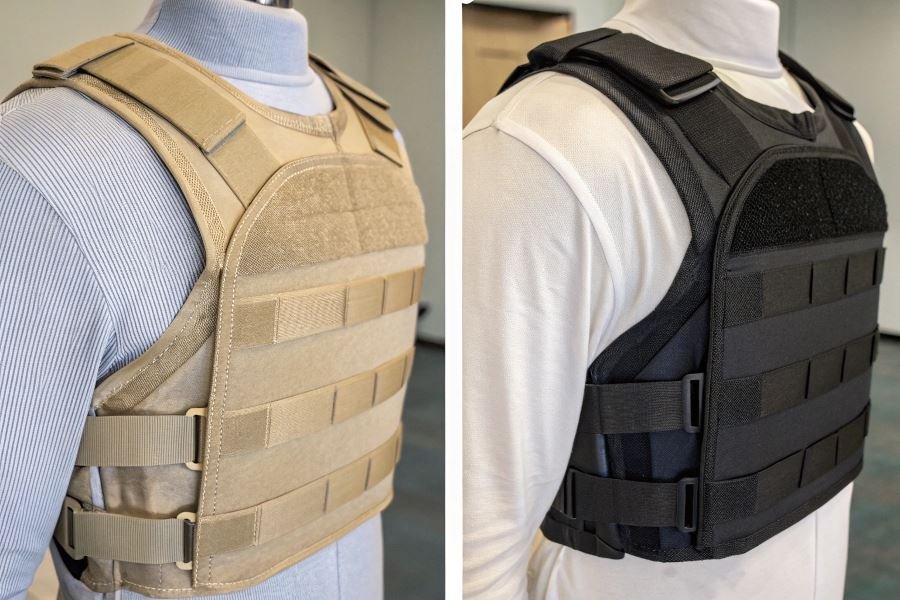
The market has naturally segmented into two distinct categories: light models prioritizing mobility and reinforced versions maximizing protection. Light models typically weigh under 2 pounds and use flexible materials that move with the body—perfect for activities requiring agility. Reinforced models incorporate rigid plates, enhanced stabilization systems, and can weigh up to 5 pounds, offering superior protection for heavy lifting or high-impact scenarios.
The protection spectrum
The choice between light and reinforced protection isn’t merely about comfort—it’s about matching the right tool to your specific risk profile. Construction workers, warehouse staff, and healthcare professionals each face unique lumbar challenges requiring tailored protection solutions.
The right lumbar protection doesn’t just prevent injury—it extends careers and preserves quality of life.
The Ultimate Armor Showdown: Light vs. Reinforced Lumbar Protection
When it comes to safeguarding your lower back, the market offers two distinct paths: light models that prioritize mobility or reinforced options that maximize protection. The comparison of light and reinforced models of lumbar armor protection reveals critical differences that can impact everything from your daily comfort to your survival in high-risk scenarios.
Material Composition: The Science of Safety
Light lumbar protection typically features flexible aramid fibers like Kevlar or Twaron, offering a baseline NIJ Level IIA or II protection. These materials weigh approximately 4-5 pounds and can stop most handgun rounds while maintaining flexibility.
Reinforced models, by contrast, incorporate ceramic plates or polyethylene composites with hardened steel or titanium inserts, pushing protection to NIJ Level III or IV. These systems can weigh 7-12 pounds but offer dramatically improved protection against rifle rounds and fragmentation.
The difference between light and reinforced protection isn’t just about stopping power—it’s about material engineering that balances physics with physiology.
The durability testing reveals another stark contrast: light models typically withstand 3-5 years of regular use before requiring replacement, while reinforced options often maintain integrity for 7-10 years, even under harsh conditions.
Mobility Metrics: Freedom vs. Fortress
The mobility impact analysis shows measurable differences:
| Protection Type | Weight (lbs) | Rotation Limitation | Fatigue Onset (hrs) | Heat Buildup |
|---|---|---|---|---|
| Light Models | 4-5 | 5-10% reduction | 4-6 | Minimal |
| Reinforced | 7-12 | 15-30% reduction | 2-3 | Significant |
Light protection allows for approximately 90-95% of normal lumbar mobility, with users reporting minimal impact on bending, twisting, or prolonged sitting. The weight distribution typically spans a 10-12 inch area across the lower back.
Reinforced systems restrict movement by 15-30%, with the trade-off being substantially increased protection. The weight distribution technology has improved dramatically, with modern systems like the Safariland Matrix incorporating load-bearing harnesses that transfer up to 60% of weight to the hips rather than the spine.
Protection Standards: By the Numbers
The certification landscape reveals critical differences:
Light Protection Certifications:
- NIJ Level IIA-II (stops 9mm, .40 S&W)
- Blunt trauma rating: 25-40mm deformation
- Stab resistance: Often minimal or none
Reinforced Protection Certifications:
- NIJ Level III-IV (stops 5.56mm, 7.62mm rifle rounds)
- Blunt trauma rating: 15-25mm deformation
- Optional multi-threat ratings (ballistic, stab, spike)
The testing protocols themselves tell a story—light armor undergoes 6-shot ballistic testing, while reinforced models must withstand multiple impacts, including armor-piercing rounds, at various angles and environmental conditions.
Value Proposition: Investment Analysis
The price-to-performance ratio evaluation reveals surprising insights. Light protection typically ranges from 200−500, with a protection-to-mobility ratio that favors everyday wear for medium-risk environments.
Reinforced systems command 800−2,500, delivering exponentially higher protection but at significant cost to comfort and mobility. The value calculation shifts dramatically based on threat assessment—for high-risk scenarios, the reinforced option delivers approximately 3x the protection per dollar invested.
The deciding factor? Your specific needs. For those requiring all-day wear with moderate protection, light models offer superior comfort-to-protection ratios. For high-threat environments where maximum protection justifies mobility compromises, reinforced systems deliver unmatched security despite the premium price point.
Your Ultimate Lumbar Armor Selection Guide
Assessing your protection requirements
Choosing between light and reinforced lumbar armor protection starts with an honest evaluation of your personal needs. The right armor balances protection with comfort—a tradeoff that varies dramatically based on your specific situation.
Risk assessment should drive your decision. Consider your daily exposure to potential hazards: Are you occasionally lifting moderate loads, or regularly handling heavy equipment? Do you work in environments with falling objects or impact risks? Document your typical workday, noting moments when your lower back feels vulnerable.
The difference between light and reinforced protection isn’t just about weight—it’s about protection capacity. Light models typically withstand pressures of 15-25 PSI, while reinforced options can handle 40-60 PSI or more.
The most expensive lumbar armor isn’t necessarily the best—it’s the one that matches your actual protection requirements without overburdening you.
Industry-specific recommendations
Different professions demand different protection solutions:
Construction workers benefit from reinforced models with impact resistance and load distribution features. The additional 2-3 pounds of weight pays dividends when working around heavy materials and equipment.
Warehouse personnel often find the sweet spot with mid-range protection that offers flexibility for repetitive movements while still providing substantial support during lifting tasks.
Healthcare professionals typically need lighter models that allow for patient care movements while still protecting during patient transfers.
Craftspeople and artisans require solutions that balance protection with precision movement capabilities.
| Industry | Recommended Type | Key Features |
|---|---|---|
| Construction | Reinforced | Impact plates, 40+ PSI resistance |
| Warehouse | Medium-duty | Flexible side panels, 25-35 PSI |
| Healthcare | Light | Breathable, washable, 15-25 PSI |
| Artisanal | Adaptive | Adjustable support, custom fit |
| Delivery | Hybrid | Weather-resistant, quick-release |
Maintenance and long-term value
The true cost of lumbar armor extends far beyond the purchase price. Reinforced models typically last 3-5 years with proper care, while light models may need replacement after 1-2 years of regular use.
Maintenance requirements vary significantly between models:
- Light models generally feature washable fabrics but may degrade faster with repeated cleaning
- Reinforced models often include removable protection elements that extend lifespan
- Premium options incorporate antimicrobial treatments that reduce cleaning frequency
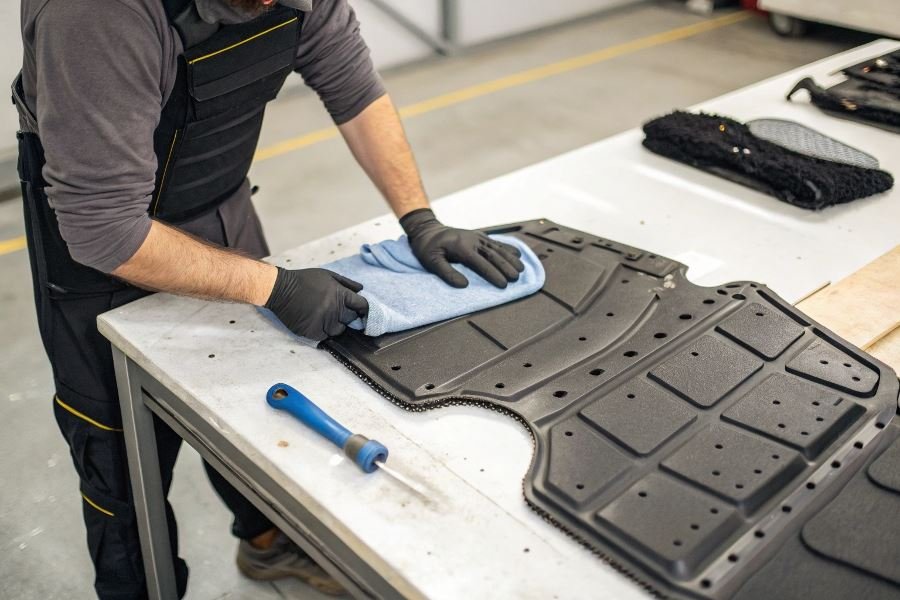
The maintenance equation isn’t just about durability—it’s about downtime. Consider how quickly your protection can be cleaned and returned to service. Some reinforced models include swappable components that eliminate downtime entirely.
When calculating long-term value, factor in these often-overlooked considerations:
- Replacement part availability
- Warranty coverage (particularly for structural components)
- Compatibility with your other protective equipment
- Adaptability as your needs change
The most cost-effective choice balances initial investment against expected lifespan and maintenance requirements. A 200reinforcedmodellastingfouryears(50/year) offers better value than a $75 light model requiring replacement annually—while potentially providing superior protection.
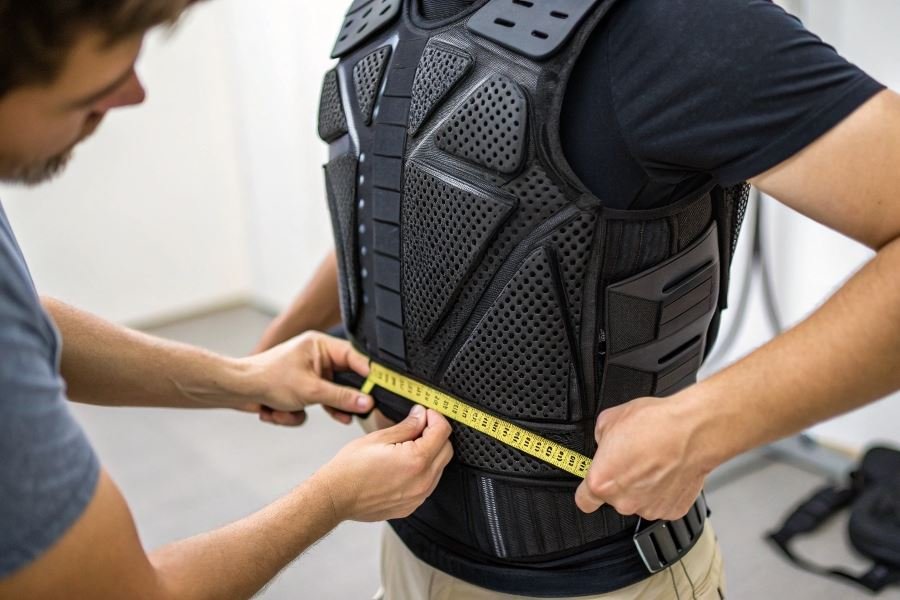
Remember that proper fit dramatically affects both protection level and lifespan. Even the most advanced reinforced armor fails if it shifts out of position during use or causes the wearer to remove it due to discomfort.
Discover the critical differences between light and reinforced lumbar armor protection systems. Our comprehensive comparison examines materials, weight, mobility impact, and protection ratings to help you select the optimal protection for your specific needs.
Discover the critical differences between light and reinforced lumbar armor protection systems. Our comprehensive comparison examines materials, weight, mobility impact, and protection ratings to help you select the optimal protection for your specific needs.