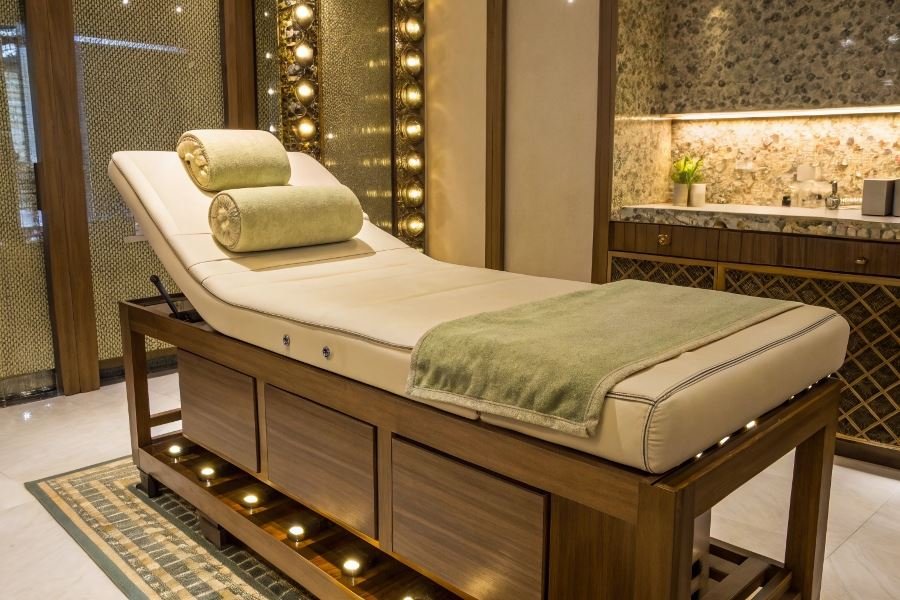
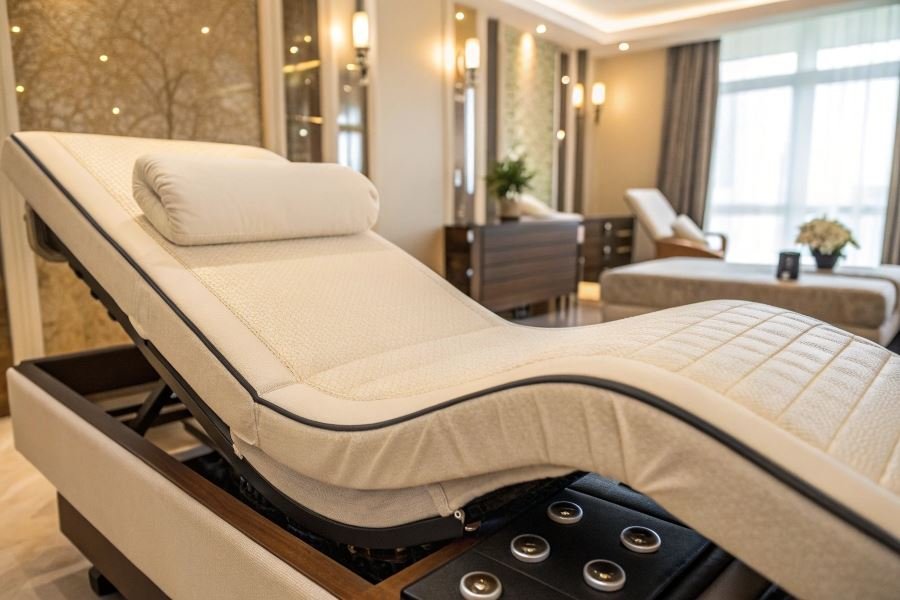
A client lies back on a premium massage bed, tension melting away as the therapist works—this moment of transformation hinges on equipment you might be overlooking.
The difference between a satisfied client who returns monthly and one who never books again often comes down to the quality of your massage bed. While skilled therapists are essential, even the most talented hands can’t overcome the limitations of inadequate equipment. The massage bed serves as the literal foundation of your spa’s success.
When selecting massage beds for your spa, you’re not just purchasing furniture—you’re investing in your business reputation and client outcomes. Premium beds enhance treatment effectiveness by providing proper support for various techniques, from Swedish to deep tissue, allowing therapists to work with precision rather than fighting against equipment limitations.
Client satisfaction skyrockets when comfort meets functionality. The most effective beds feature:
- Ergonomic design that supports both client and therapist
- Adjustable height and positioning for customized treatments
- Durability that withstands thousands of sessions without degradation
Before investing 2, 000−5,000 in a professional massage bed, consider your specific treatment menu, available space, and practitioner needs. Will you offer primarily relaxation massages or specialized therapies requiring specific positioning? Do your therapists vary significantly in height? Will the bed need to accommodate clients of all sizes comfortably?
“The right massage bed pays for itself through improved therapist performance, enhanced client experiences, and extended equipment lifespan.”
Remember that while initial cost matters, the true value emerges through years of daily use—making quality non-negotiable for serious spa professionals.
Essential Features That Define Premium Massage Beds
When investing in professional equipment for your spa business, understanding the core elements that separate exceptional massage beds from mediocre options can dramatically impact both therapist performance and client satisfaction. The foundation of any successful spa treatment begins with the right equipment—equipment that balances durability, comfort, and functionality in perfect harmony.
The process of selecting massage beds for spa treatments involves careful consideration of structural integrity, comfort features, and adjustability options that accommodate diverse treatment protocols. Premium beds distinguish themselves through thoughtful engineering that supports both the practitioner’s workflow and the client’s relaxation experience. Therapists who work with well-designed equipment report less fatigue and greater precision in their techniques, while clients experience deeper relaxation and more effective treatments.
Structural Components That Stand the Test of Time
Frame construction represents the backbone of any quality massage bed. Aircraft-grade aluminum frames offer exceptional strength-to-weight ratios, supporting up to 800 pounds while remaining light enough for mobility. Hardwood frames, particularly those using sustainable maple or beech, provide natural aesthetic appeal with impressive durability.
The stability factor cannot be overstated—even slight wobbling during deep tissue work can compromise treatment quality and client confidence.
Weight capacity specifications typically range from 350 to 1,000 pounds, with premium models featuring:
| Frame Material | Typical Weight Capacity | Durability Features |
|---|---|---|
| Aircraft Aluminum | 550-800 lbs | Rust-proof, lightweight, non-warping |
| Hardwood (Maple/Beech) | 450-650 lbs | Natural vibration absorption, aesthetic appeal |
| Steel | 800-1,000+ lbs | Maximum stability, industrial strength |
Look for reinforced corner brackets, double-stitched upholstery seams, and cable-free height adjustment systems that eliminate potential failure points over years of daily use.
Comfort Elements That Elevate the Experience
The client interface—padding and upholstery—determines how treatments feel regardless of technique quality. Premium beds feature multi-layered memory foam systems with:
- Dual-density construction: Firmer base layer (2-3″ thickness) for support with softer top layer (1-2″ thickness) for comfort
- Small-cell foam technology: Prevents compression fatigue even after thousands of treatments
- Temperature-responsive materials: Adapts to body heat for personalized support
Upholstery quality represents both a comfort and maintenance consideration. Medical-grade vinyl offers exceptional durability with antimicrobial properties, while premium leather provides unmatched luxury but requires more maintenance. The best options feature:
Oil-resistant, waterproof surfaces that withstand sanitizing chemicals without cracking or discoloration—essential for maintaining hygiene standards.
Adjustability That Transforms Possibilities
The difference between basic and exceptional massage beds often comes down to adjustment capabilities that allow therapists to customize the treatment environment.
Height adjustment mechanisms should operate smoothly and quietly, with electric systems offering precise positioning between 23″ and 40″ to accommodate therapists of varying heights. Hydraulic systems provide similar functionality without requiring power sources—ideal for mobile therapists.
Backrest articulation ranges from simple manual adjustments to sophisticated electric systems with memory presets. Premium options offer:
- Pneumatic-assist backrest adjustments (0-80°)
- Sectional positioning for targeted elevation
- Zero-gravity positioning capabilities
Face cradle engineering deserves particular attention, as it directly impacts client comfort during prone positioning. Look for multi-angle adjustments, memory foam cushioning, and quick-release mechanisms that allow seamless transitions between treatment phases.
The most versatile beds incorporate these features while maintaining structural integrity—creating a platform that adapts to virtually any treatment protocol while providing years of reliable service.
The Ultimate Guide to Massage Beds for Spa Treatments
Selecting the right massage bed can transform your spa’s efficiency, therapist satisfaction, and client experience. Let’s dive into the three dominant categories that define the market today, examining their unique attributes and ideal applications.
Stationary massage beds that anchor your practice
Stationary massage beds represent the gold standard for established spa locations. These fixed installations offer unparalleled stability and durability—essential qualities when providing consistent, high-quality treatments day after day.
Key advantages include:
- Superior weight capacity (typically 500-800 pounds)
- Exceptional stability during deep tissue work
- Longer operational lifespan (often 10+ years with proper maintenance)
- Premium aesthetic appeal that enhances room design
The limitations become apparent when considering flexibility. Once positioned, these beds stay put—requiring dedicated treatment rooms with adequate space. They’re also significantly heavier, with premium models often weighing 300+ pounds.
Stationary beds shine brightest in dedicated spa environments where consistency trumps mobility, and where therapists perform multiple treatments daily in the same location.
Portable massage beds for flexibility and adaptation
The portable massage bed category has experienced remarkable innovation in recent years. No longer the wobbly, uncomfortable platforms of yesteryear, today’s portable options offer impressive stability while maintaining their fundamental advantage: mobility.
Modern portable beds deliver:
- Surprising stability (many supporting 400+ pounds)
- Lightweight construction (typically 25-35 pounds)
- Quick setup/breakdown (under 60 seconds for experienced users)
- Compact storage solutions when not in use
These beds from manufacturers like EarthLite and Oakworks have become indispensable for mobile therapists who travel to clients’ homes, hotels, or corporate wellness events. They’re equally valuable for smaller spas with multi-purpose treatment rooms that transform throughout the day.
The trade-off comes in longevity and premium feel—portable beds typically last 3-5 years with regular use, compared to their stationary counterparts.
Electric and hydraulic beds for customization and control
The technological marvels of the massage world, electric and hydraulic beds represent the premium tier of treatment surfaces. These sophisticated platforms offer unprecedented adjustment capabilities that benefit both therapist and client.
Advanced features typically include:
- Height adjustment (reducing therapist strain)
- Section articulation (head, middle, foot)
- Warming elements for client comfort
- Programmable position memory
| Feature | Electric | Hydraulic |
|---|---|---|
| Power source | Electrical outlet | Manual pump |
| Adjustment speed | Rapid (5-10 seconds) | Moderate (15-30 seconds) |
| Noise level | Low-moderate | Very quiet |
| Maintenance needs | Electronic components | Fluid systems |
| Average price range | 2, 000−5,000 | 1, 500−4,000 |
The investment consideration becomes significant—premium models from Living Earth Crafts can exceed $7,000. However, the ergonomic benefits for therapists can dramatically reduce injury and fatigue, potentially extending careers by years.
These beds deliver exceptional ROI for high-volume spas where therapist retention and premium client experiences justify the initial expenditure.
Selecting the right massage bed category requires balancing immediate budget constraints against long-term operational needs, while considering the specific treatments you’ll offer and the environment in which they’ll be performed.
Discover how to select the perfect massage bed for your spa business with our comprehensive guide covering essential features, materials, comfort elements, and top types to enhance treatment quality and client satisfaction.
Discover how to select the perfect massage bed for your spa business with our comprehensive guide covering essential features, materials, comfort elements, and top types to enhance treatment quality and client satisfaction.