Ever wondered why some massage therapists can work for decades while others burn out in just a few years? The difference often lies not in technique, but in the equipment they use daily. A poorly designed massage table can silently sabotage even the most skilled practitioner.
Massage table ergonomics isn’t just industry jargon—it’s the science of creating equipment that works with your body rather than against it. For therapists who perform 15-25 massages weekly, those subtle design differences compound dramatically over time. Research from the American Massage Therapy Association shows that therapists using ergonomically optimized tables report 62% fewer work-related injuries and extend their careers by an average of 7-10 years.
The therapist-client connection
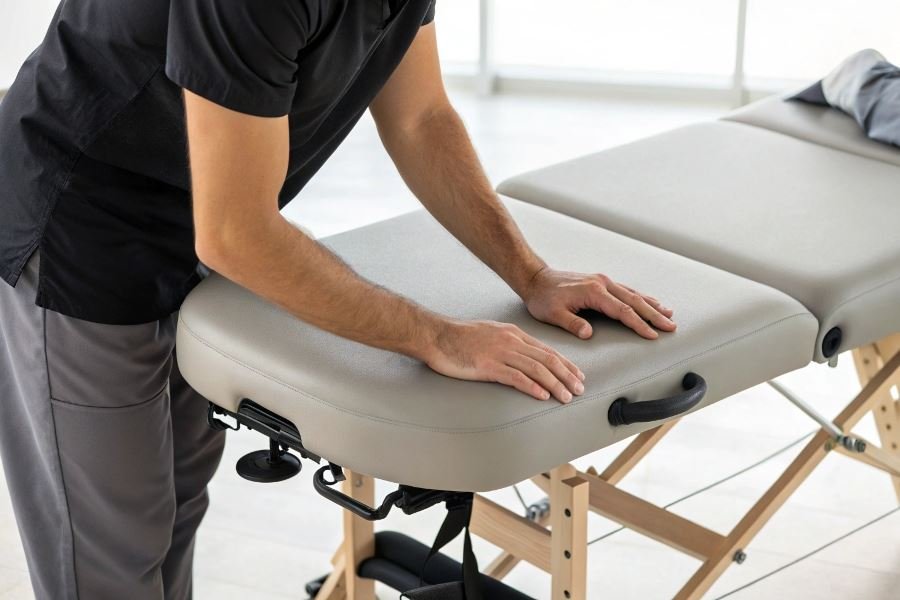
When therapists work comfortably, clients directly benefit. An ergonomically sound table allows practitioners to maintain proper body mechanics, resulting in more consistent pressure, smoother transitions, and deeper focus on the client rather than their own discomfort. This translates to a noticeably better experience for everyone involved.
Critical parameters that define quality
The ergonomic excellence of a massage table hinges on several key factors:
- Height adjustability – The ideal working height prevents back strain and allows proper leverage
- Width and accessibility – Balancing client comfort with therapist reach
- Weight capacity – Supporting clients safely while remaining portable
- Surface density – Firm enough for effective techniques, soft enough for comfort
- Stability – Eliminating wobble and creating confidence during deep work
These parameters aren’t just features on a spec sheet—they’re the foundation of a sustainable practice and the difference between thriving and merely surviving in this physically demanding profession.
The Science Behind Massage Table Ergonomics
When your body hurts after a day of giving massages, it’s not just fatigue—it’s likely poor equipment design. Professional massage therapists perform approximately 20-30 hours of hands-on work weekly, making the ergonomics of the massage table key parameters for comfortable work essential for career longevity. Let’s dive into what truly matters when selecting a table that works with your body, not against it.
Height and Width: The Foundation of Comfort
The perfect massage table height isn’t universal—it’s personal. Research shows optimal table height should position your wrists at a 0-15 degree angle when applying pressure, typically falling between 28-34 inches from the floor.
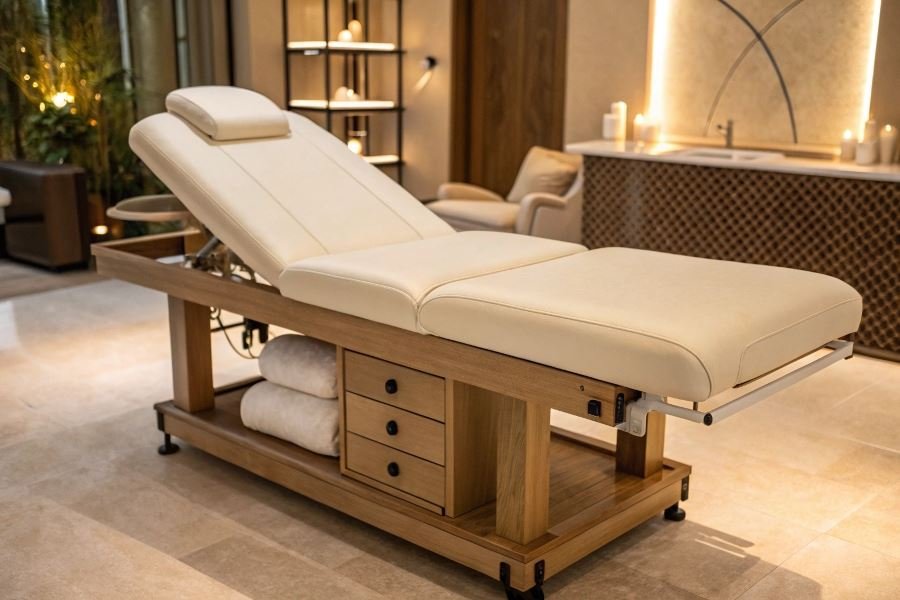
Height adjustment mechanisms matter tremendously. Electric tables offer precision with the touch of a button, while hydraulic systems provide smooth, quiet adjustments without requiring power sources. Manual tables with knob adjustments cost less but require more physical effort to modify.
Width considerations are equally critical:
| Table Width | Best For | Considerations |
|---|---|---|
| 28″ | Therapists with shorter arms | Easier reach across client |
| 30″ | Standard/versatile option | Balance of comfort and reach |
| 32″+ | Larger clients | Requires longer reach for therapist |
The ideal width allows comfortable reach across the client without straining your shoulders or back. Most professionals find 30 inches strikes the perfect balance between client comfort and therapist ergonomics.
Stability and Weight Capacity: Safety First
A massage table that wobbles destroys client confidence faster than anything else. Professional-grade tables should support at least 2.5 times their advertised working weight capacity during static pressure tests.
Working weight vs. static weight is a crucial distinction:
- Working weight: What the table safely holds during active massage (typically 350-550 lbs)
- Static weight: Maximum weight during non-movement (often 1,000+ lbs)
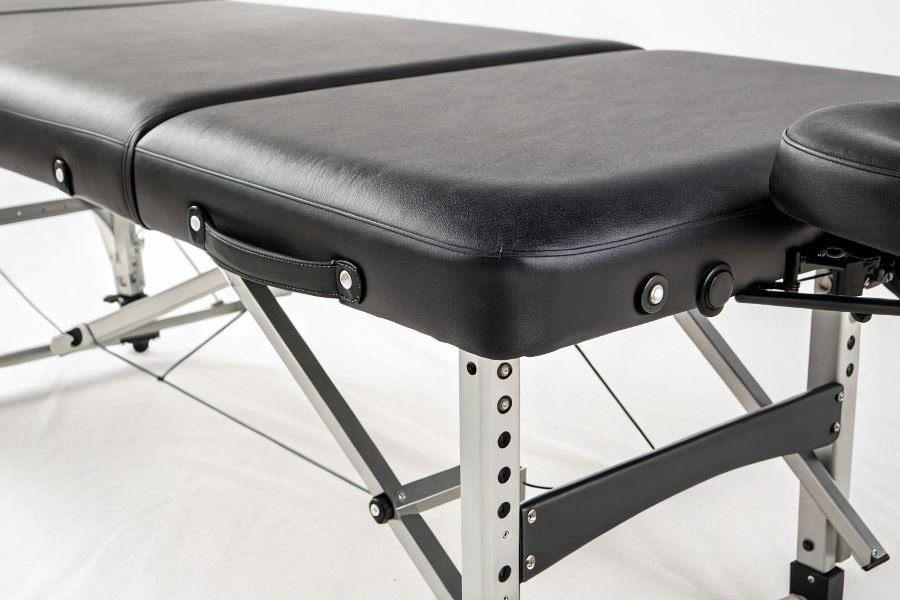
The table’s frame construction directly impacts stability. Aircraft-grade aluminum offers superior strength-to-weight ratios, while hardwood frames from Earthlite or Living Earth Crafts provide exceptional durability with proper care.
Cable systems deserve special attention—they should be aircraft-grade and tested for thousands of tension cycles. Inferior cables can stretch or fail, creating dangerous situations for both client and therapist.
Padding: The Comfort Interface
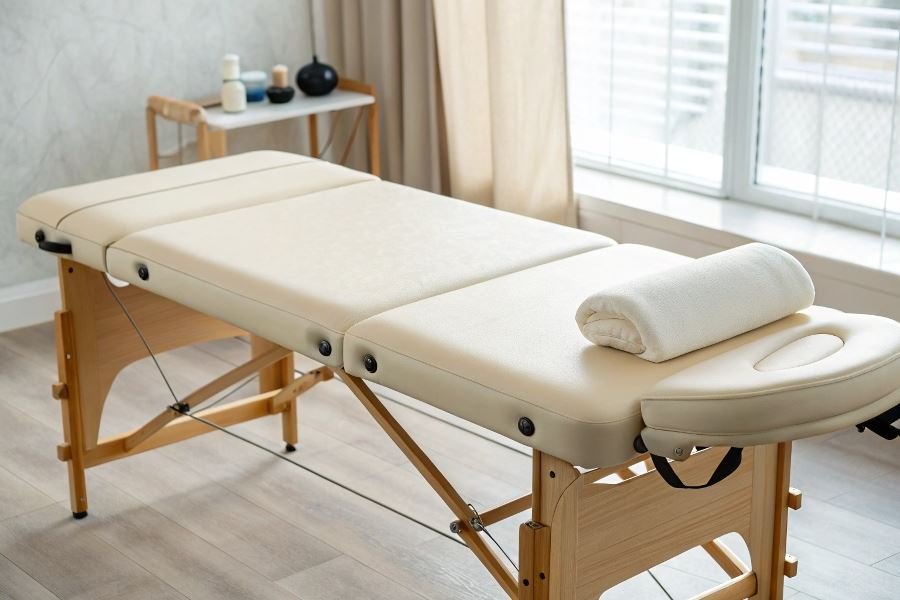
Padding density might be the most underappreciated ergonomic factor. Too soft, and clients sink uncomfortably; too firm, and they feel every pressure point.
The ideal padding specifications include:
- Thickness: 2.5-3 inches for optimal support without excessive sink
- Density: 4-5 lb/cubic foot foam provides ideal resistance
- Layering: Multi-density construction with firmer base and softer top layers
Memory foam has revolutionized the industry, but dual-density systems that combine memory foam with more supportive base layers offer the best of both worlds. Custom Craftworks pioneered this approach with their Aero-Cel system.
Material quality extends beyond foam to coverings. Medical-grade vinyl offers easy cleaning and durability, while newer eco-friendly options like Oakworks PU fabrics provide similar benefits without PVC concerns.
When these ergonomic elements align perfectly, both therapist and client benefit from enhanced comfort, reduced fatigue, and ultimately, better therapeutic outcomes. Your table isn’t just furniture—it’s your most important professional partner.
Advanced Ergonomic Features That Transform Professional Massage Tables
The difference between a good massage session and a transformative one often comes down to the table itself. Professional massage therapists understand that ergonomic excellence isn’t just about client comfort—it’s about practitioner longevity and business sustainability. Let’s explore the cutting-edge features that are revolutionizing the massage experience for everyone involved.
Face Cradle Innovation That Supports Every Client
The face cradle might seem like a simple component, but its design can make or break the entire massage experience. Modern professional tables feature multi-angle adjustable face cradles that accommodate different facial structures and breathing preferences.
The most advanced models offer:
- Infinite positioning rather than preset notches
- Memory foam cushioning that contours to individual facial structures
- Breathing space designs that eliminate sinus pressure
- Quick-release mechanisms for swift adjustments mid-session
Earthlite has pioneered face cradles with 360° articulation, allowing therapists to position the client’s head at precisely the right angle for both comfort and therapeutic access. This seemingly small detail can prevent neck strain that might otherwise cut a session short.
“The face cradle is where clients form their first impression of your professionalism. A poorly designed cradle can create discomfort within seconds, while a premium design allows clients to forget they’re face-down at all.”
Arm Shelf and Bolster Positioning Systems
Client arm positioning represents one of the most overlooked aspects of massage ergonomics. The difference between awkward shoulder tension and complete relaxation often comes down to proper arm support.
Modern tables feature:
- Adjustable arm shelves that move independently of the face cradle
- Contoured armrests that eliminate pressure points
- Integrated bolster systems that can be quickly repositioned
| Bolster Type | Best Application | Key Benefit |
|---|---|---|
| Half-round | Knee support | Reduces lower back strain |
| Full-round | Ankle elevation | Improves circulation |
| Wedge | Pregnancy positioning | Distributes weight evenly |
The Custom Craftworks Solution series offers interchangeable bolster systems that attach directly to the table, eliminating the fumbling and repositioning that interrupts the therapeutic flow.
Portability vs Stability: Engineering the Perfect Balance
For mobile therapists, the weight-to-stability ratio represents the holy grail of table design. Manufacturers have made remarkable advances in creating tables that are both lightweight for transport and rock-solid during treatment.
The latest innovations include:
- Aircraft-grade aluminum frames that reduce weight while maintaining a 600+ pound capacity
- Dual-cable support systems that eliminate wobble
- Quick-lock leg braces that deploy in seconds
- Reinforced corner brackets that prevent torque during deep tissue work
Oakworks has developed proprietary stabilization technology that adds just 2 pounds to their portable tables while increasing stability by 30%, according to their engineering tests.
The most successful portable designs now incorporate strategic weight distribution rather than simply using lighter materials. By placing weight in the table’s center and using lightweight components at the extremities, manufacturers have created tables that feel substantial during use but remain manageable during transport.
For practitioners who split their time between in-home visits and studio work, convertible tables with quick-change leg systems offer the best of both worlds—allowing for a stable stationary setup that can transform into a portable configuration without tools or complicated adjustments.
Discover the essential ergonomic parameters for massage tables that prevent therapist injury and enhance client comfort. Learn about optimal height, width, padding, and advanced features for sustainable bodywork practice.
Discover the essential ergonomic parameters for massage tables that prevent therapist injury and enhance client comfort. Learn about optimal height, width, padding, and advanced features for sustainable bodywork practice.