Ever sliced into a steak that promised heaven but delivered leather? The culprit wasn’t necessarily poor quality meat—just inadequate tenderizing. The right meat tenderizer can transform even budget cuts into restaurant-worthy masterpieces.
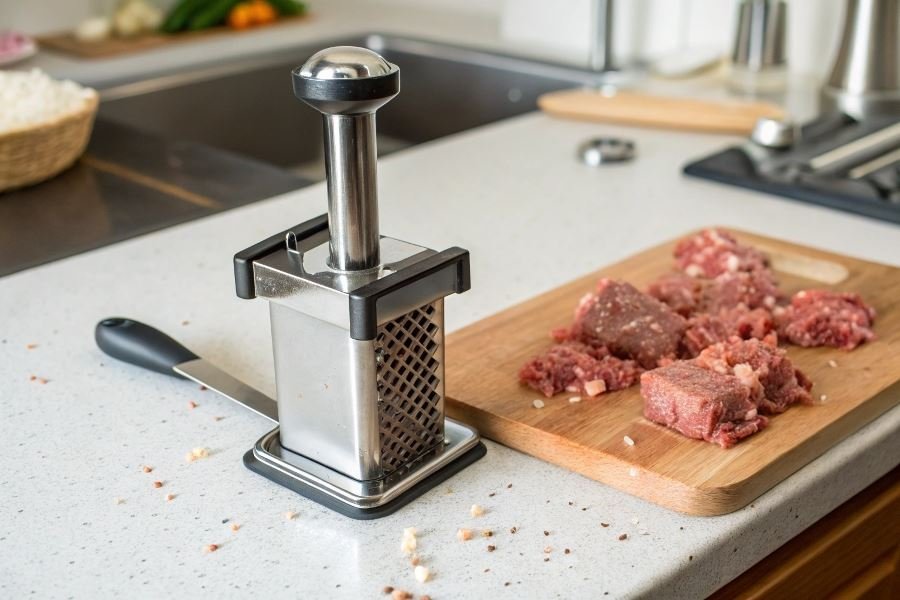
A meat tenderizer is a specialized tool designed to break down tough muscle fibers and connective tissues in meat, making it more tender, flavorful, and easier to chew. Whether mechanical (like mallets and needle tenderizers) or enzymatic (like powders containing papain or bromelain), these kitchen allies work by physically disrupting or chemically dissolving the proteins that make meat tough.
Why tenderizing transforms your cooking
The benefits extend far beyond just texture. Properly tenderized meat:
- Cooks more evenly with better heat distribution
- Absorbs marinades more effectively, enhancing flavor profiles
- Reduces cooking time by up to 30% in some cases
- Makes economical cuts taste premium, saving you $15-30 per meal when compared to premium cuts
Selecting your perfect tenderizer
When evaluating meat tenderizers, consider these critical factors:
“The difference between a good tenderizer and a great one isn’t just in how it softens meat—it’s in how it preserves the meat’s integrity while doing so.”
Look for durability, ease of cleaning, ergonomic design, and compatibility with your preferred cooking methods. The ideal tenderizer should feel like a natural extension of your hand while delivering consistent results across different cuts.
Selecting the Perfect Meat Tenderizer
When transforming tough cuts into tender masterpieces, the right tenderizer makes all the difference. Professional chefs and home cooking enthusiasts alike understand that the tool you select dramatically impacts both the texture and flavor of your meat dishes. Let’s dive into the essential factors that separate exceptional tenderizers from mediocre options.
The process of selecting a meat tenderizer involves evaluating several critical criteria including the mechanical type, construction materials, and ergonomic design. Each element plays a crucial role in determining how effectively the tool will break down muscle fibers without damaging the meat’s integrity or flavor profile.
Mechanical Tenderizer Types
Mallets represent the classic approach—simple yet effective. These hammer-like tools feature either a flat or textured surface that physically breaks down connective tissues through impact. The best mallets offer dual surfaces: a flat side for general pounding and a textured side for deeper fiber penetration.
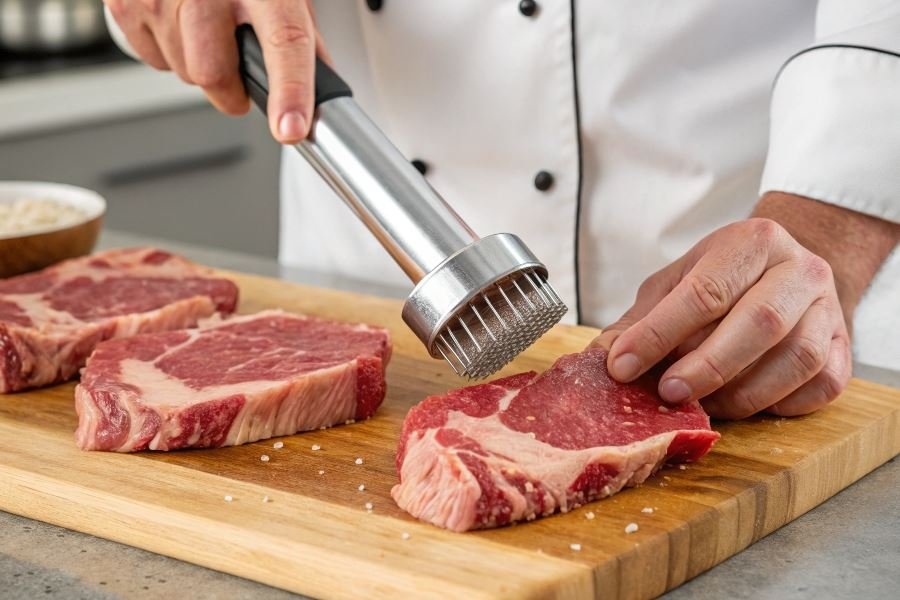
Needle tenderizers employ a different strategy with dozens of sharp stainless steel prongs that pierce meat, creating channels for marinades while severing tough fibers. The Jaccard Meat Tenderizer exemplifies this category with its 48-blade design that penetrates without tearing the meat’s structure.
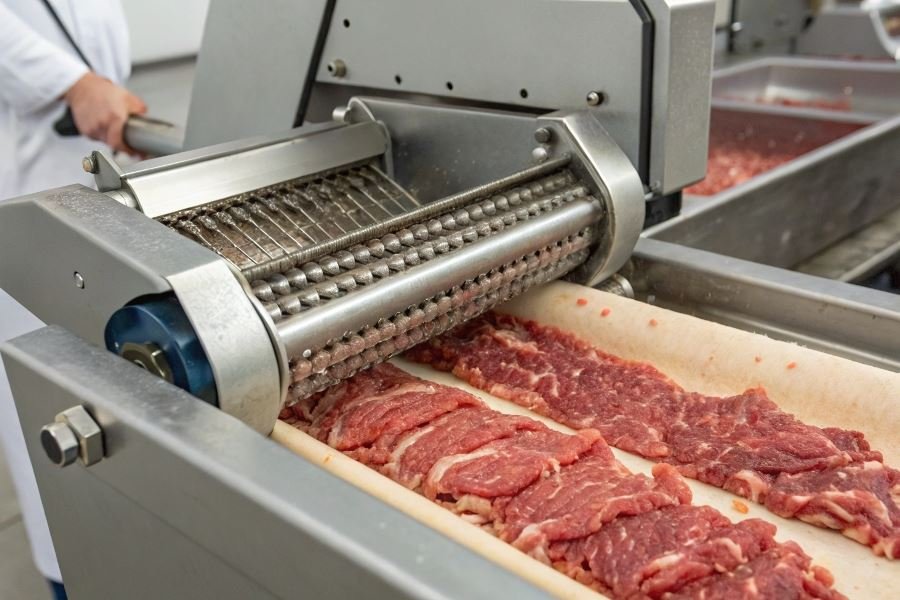
Blade tenderizers take precision to another level with ultra-sharp blades arranged in patterns that cut through connective tissue while preserving the meat’s shape. These tools excel with larger cuts and typically feature safety mechanisms to protect users from the razor-sharp edges.
Material Matters
The construction material of your tenderizer significantly affects its performance, durability, and maintenance requirements:
Stainless steel dominates the premium segment with unmatched durability and hygiene benefits. These tenderizers resist corrosion, don’t retain odors, and withstand high-pressure cleaning. The OXO Good Grips Meat Tenderizer demonstrates how quality stainless steel provides the perfect balance of weight and resilience.
Aluminum offers a lightweight alternative that’s particularly suitable for extended use. While not as durable as stainless steel, high-grade aluminum tenderizers provide excellent value with their reduced arm fatigue and lower price point.
Wooden mallets bring tradition and versatility to the kitchen. Typically crafted from hardwoods like maple or walnut, these tools offer natural antibacterial properties when properly maintained. The aesthetic appeal of wood makes these tenderizers display-worthy, though they require more careful cleaning than their metal counterparts.
| Material | Durability | Weight | Maintenance | Price Range |
|---|---|---|---|---|
| Stainless Steel | Excellent | Heavy | Easy | $20-45 |
| Aluminum | Good | Light | Moderate | $15-30 |
| Wood | Moderate | Medium | High | $12-35 |
Ergonomics and Weight Considerations
Handle design proves crucial during extended use. The best tenderizers feature non-slip grips, often with silicone or rubber overmolding that prevents kitchen accidents even with wet hands. Look for handles with finger indentations that guide proper grip positioning.
Weight distribution determines both effectiveness and user comfort. A well-balanced tenderizer around 10-16 ounces provides enough mass to break down tough fibers without causing user fatigue. Heavier isn’t always better—the design should concentrate mass at the impact point while maintaining maneuverability.
Storage solutions matter in busy kitchens. Premium models like the Rösle Meat Tenderizer include hanging holes or stands that keep these tools accessible while minimizing counter space requirements.
The perfect meat tenderizer combines thoughtful mechanical design, quality materials, and ergonomic considerations that match your specific cooking style. When these elements align, even the toughest cuts transform into restaurant-quality dishes that delight the most discerning palates.
Making the Perfect Meat Tenderizer Choice
When you’ve explored the features, materials, and types of meat tenderizers available, it’s time to make that final decision. The right tenderizer isn’t just about what’s popular—it’s about finding the perfect match for your specific cooking style, maintenance preferences, and budget considerations.
Aligning with your cooking style
The best meat tenderizer is one that complements your cooking habits. Consider these alignment factors:
-
Frequency of use: Daily cooks might benefit from investing in a premium KitchenAid blade tenderizer, while occasional users might find a basic mallet sufficient.
-
Meat varieties: If you primarily work with tougher cuts like brisket or flank steak, a needle tenderizer provides deeper penetration. For thinner cuts like chicken breasts, a textured mallet offers controlled pressure.
-
Preparation methods: Sous vide enthusiasts benefit from needle tenderizers that create channels for marinades, while grill masters might prefer mallets for quick flattening before hitting the flames.
A professional chef I interviewed put it perfectly:
“Your tenderizer should feel like an extension of your cooking philosophy. If you’re methodical and precise, go needle. If you’re bold and expressive, embrace the mallet.”
Maintenance matters
The longevity of your tenderizer depends significantly on proper care:
| Tenderizer Type | Cleaning Method | Storage Recommendation | Maintenance Frequency |
|---|---|---|---|
| Blade/Needle | Dishwasher safe (most models) | Blade guard essential | Inspect needles monthly |
| Mallet | Hand wash recommended | Hang or drawer storage | Check handle tightness quarterly |
| Textured | Dishwasher top rack | Dry completely before storage | Clean crevices after each use |
Stainless steel models from brands like OXO typically require minimal maintenance beyond regular cleaning. However, wooden handles need occasional mineral oil treatment to prevent drying and cracking.
Remember that needle tenderizers require special attention to food safety. Their blades must be thoroughly cleaned after each use to prevent cross-contamination, particularly when working with poultry.
Value assessment beyond price
The price-to-quality ratio extends beyond the initial purchase:
Investment considerations:
- Entry-level mallets ($10-15) offer basic functionality but may lack durability
- Mid-range needle tenderizers ($20-40) balance quality and affordability
- Premium models ($50+) from Wüsthof or Jaccard provide professional-grade performance
Long-term value factors:
- Warranty coverage (look for at least 1-year protection)
- Availability of replacement parts
- Versatility across different meat types
- Construction quality (full-tang handles, seamless design)
The most cost-effective tenderizer isn’t necessarily the cheapest—it’s the one that delivers consistent performance over years of use. A $40 Rösle stainless steel model that lasts a decade provides better value than replacing a $15 model every year.
When making your final decision, prioritize the features that align with your specific cooking needs, maintenance preferences, and quality expectations. The perfect meat tenderizer becomes an invaluable kitchen ally that transforms tough cuts into tender masterpieces with minimal effort and maximum satisfaction.
Discover how to choose the perfect meat tenderizer with our comprehensive guide. Learn about types, materials, and essential criteria to transform tough cuts into tender, flavorful meals. Make an informed purchase for your kitchen arsenal.
Discover how to choose the perfect meat tenderizer with our comprehensive guide. Learn about types, materials, and essential criteria to transform tough cuts into tender, flavorful meals. Make an informed purchase for your kitchen arsenal.