What if a single machine could transform flat metal into virtually any curved shape imaginable? This isn’t science fiction—it’s the everyday reality of modern manufacturing, where universal bending machines have revolutionized how industries create everything from aerospace components to kitchen appliances.
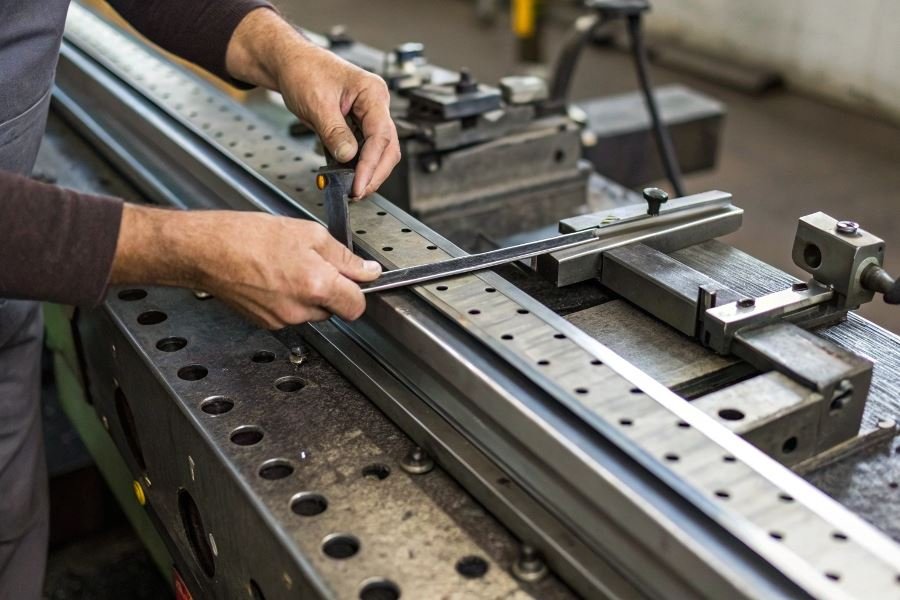
Universal bending machines represent specialized equipment designed to deform metal, plastic, and composite materials into precise curved shapes through controlled force application. At their core, these versatile systems operate on a fundamental principle: applying calculated pressure to specific points on a workpiece until it permanently deforms to the desired angle or radius. Unlike their single-purpose predecessors, universal benders can perform multiple operations—rolling, folding, and forming complex geometries—all within a single setup.
The journey of these remarkable machines traces back to the 1940s, when rudimentary mechanical benders required significant manual intervention. The true breakthrough came in the 1970s with the integration of hydraulic systems, dramatically increasing force capabilities and precision. The digital revolution of the 1990s brought CNC (Computer Numerical Control) technology, transforming bending from an artisanal skill to a programmable science.
Market penetration and industrial adoption
Today’s manufacturing landscape has embraced universal bending across sectors. The automotive industry leads adoption rates at approximately 78%, followed closely by aerospace (72%) and construction (65%). What’s particularly fascinating is the recent surge in small-scale manufacturing operations investing in these machines—a 43% increase since 2020 as prices for entry-level models have become more accessible.
The versatility of universal bending machines continues to expand, though limitations remain in extremely thick materials and certain exotic alloys. Nevertheless, their ability to reduce production time by up to 60% while minimizing material waste makes them indispensable in modern industrial applications.
Core Capabilities That Define Modern Bending Machines
When manufacturing demands flexibility without sacrificing precision, universal bending machines emerge as the industrial workhorses that deliver consistently. These sophisticated systems have revolutionized metal fabrication by combining versatility with technological advancement, creating production efficiencies that specialized equipment simply cannot match.
The landscape of metal fabrication has evolved dramatically, with universal bending machines representing the intersection where capability meets adaptability. Understanding the capabilities and limitations in industrial applications of these machines reveals why they’ve become essential in fabrication shops across America. Their ability to handle diverse projects while maintaining tight tolerances makes them particularly valuable for operations that face varying production demands.
Material Versatility That Spans Industries
Universal bending machines excel in processing multiple material types and thicknesses without requiring extensive retooling. This adaptability translates to significant operational advantages:
- Multi-material processing capabilities allow operators to bend aluminum, steel, copper, and specialized alloys on a single machine
- Thickness range flexibility typically spanning from 0.5mm to 20mm depending on the model
- Reduced setup times between different material jobs, often by 40-60% compared to dedicated machines
The Amada HG Series press brakes exemplify this versatility, handling everything from delicate 0.5mm aluminum components to robust 20mm steel plates without compromising bend quality.
Precision Control Systems That Define Excellence
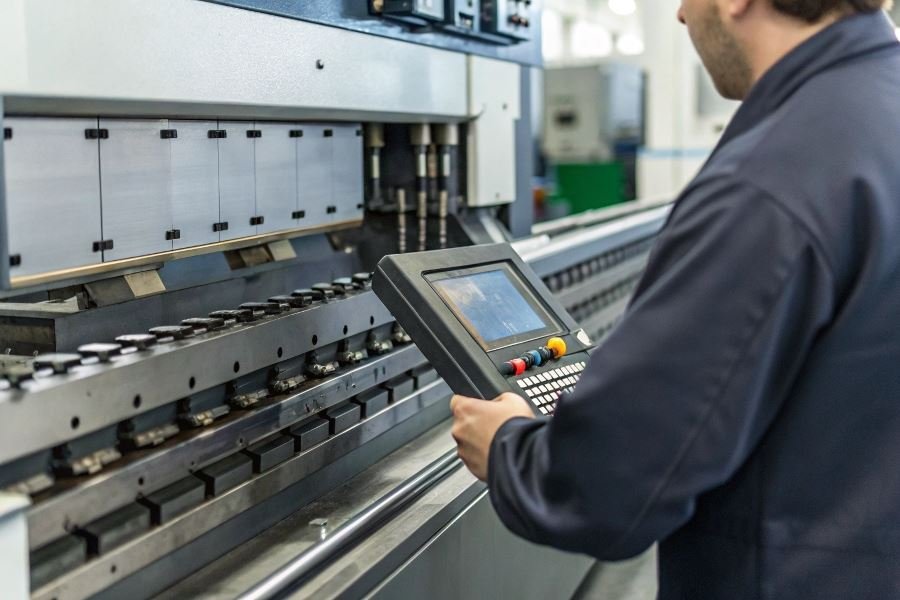
The heart of any universal bending machine lies in its control systems—sophisticated technological ecosystems that ensure repeatability and precision:
| Control Feature | Benefit | Industry Impact |
|---|---|---|
| CNC Programming | Repeatable precision to ±0.01mm | Eliminates costly rework |
| Real-time Force Monitoring | Prevents material springback | Ensures first-part accuracy |
| Automated Angle Measurement | Maintains tolerances across production runs | Reduces quality control overhead |
Modern machines like the Trumpf TruBend series incorporate advanced visual positioning systems that reduce operator error by up to 87%, while simultaneously increasing throughput by nearly 35%.
Three Efficiency Advantages Over Specialized Equipment
When compared to specialized bending equipment, universal machines deliver three distinct competitive advantages:
- Reduced Floor Space Requirements
A single universal bending machine can replace multiple specialized units, reducing floor space requirements by up to 60%. This spatial efficiency translates directly to lower overhead costs and improved workflow.
- Faster ROI Through Versatility
The ability to quickly pivot between different production requirements means universal machines can maintain higher utilization rates. Bystronic users report average utilization increases of 40% compared to specialized equipment.
- Lower Training and Maintenance Costs
With one standardized interface and maintenance protocol instead of several, companies reduce training time by approximately 65% and maintenance costs by nearly 50%. The Ermak CNC Press Brakes exemplify this advantage with intuitive interfaces that flatten learning curves.
These machines represent a significant capital investment—typically between $85,000 and $500,000 depending on capacity and features—but their versatility creates economic advantages that specialized equipment cannot match, particularly for operations with diverse production requirements or fluctuating demand patterns.
The Reality Check on Universal Bending Machines
Universal bending machines have revolutionized metal fabrication, but they aren’t without their limitations. Understanding these constraints is crucial for manufacturers looking to maximize their investment and production capabilities.
When physics fights back
The most significant technical constraints of universal bending machines stem from fundamental physical limitations. Most standard models struggle with material thicknesses exceeding 0.5 inches for steel, with bend radii becoming increasingly problematic as thickness increases. The Trumpf TruBend series, while impressive, still faces challenges when processing high-tensile materials like titanium alloys or hardened steel.
Temperature variation during operation presents another persistent challenge. A mere 15°F fluctuation can cause dimensional variations of up to 0.02 inches—potentially catastrophic for precision components. Advanced systems incorporate thermal compensation algorithms, but these add complexity and cost.
Tooling changeover remains a bottleneck even in automated systems. The average setup time between significantly different bending operations hovers around 45 minutes, creating production gaps that impact overall efficiency.
The physics of metal forming hasn’t changed in centuries—what’s evolved is our ability to push those boundaries through precision engineering and computational control.
The dollars and sense equation
The cost-benefit analysis for universal bending machines varies dramatically across manufacturing scales:
| Production Scale | Initial Investment | ROI Timeline | Best For |
|---|---|---|---|
| Small Shop | $75,000-150,000 | 3-5 years | Versatility, low-volume custom work |
| Mid-Size | $150,000-400,000 | 2-3 years | Mixed production, medium runs |
| Large Industrial | $400,000-1,200,000 | 1-2 years | High-volume standardized components |
For small fabrication shops, the capital investment can be prohibitive. A fully-equipped Amada HG press brake with automation features requires not just the machine cost but also facility modifications, training, and maintenance contracts that can push total implementation costs 30-40% higher than the machine price.
Mid-size manufacturers often find the sweet spot, balancing versatility with throughput. However, they frequently underestimate ongoing costs—tooling for a comprehensive range of bending operations can add $30,000-50,000 in the first year alone.
Tomorrow’s bends today
Emerging technologies are actively addressing current limitations:
Adaptive force control systems are revolutionizing precision. The Bystronic Xpert series incorporates real-time material analysis, adjusting pressure during the bend to compensate for material inconsistencies—reducing springback by up to 80% compared to conventional systems.
AI-powered bend sequencing is eliminating one of the most time-consuming aspects of setup. Machine learning algorithms can now determine optimal bend sequences in seconds rather than the hours previously required for complex parts, reducing programming time by up to 70%.
Hybrid forming technologies combine traditional bending with incremental forming techniques. These systems can achieve geometries previously impossible on standard machines, opening new design possibilities for manufacturers.
The most promising development may be collaborative robotic integration. These systems allow a single operator to manage multiple bending cells simultaneously, addressing the persistent labor challenges facing manufacturing while improving throughput by 40-60% in mixed-production environments.
While universal bending machines face real limitations, the rapid pace of innovation continues to expand their capabilities, making them increasingly indispensable across the manufacturing spectrum.
Explore universal bending machines' industrial applications, from material versatility to automation features. Discover their capabilities, limitations, and cost-effectiveness for manufacturing operations of all scales in today's metal fabrication landscape.
Explore universal bending machines' industrial applications, from material versatility to automation features. Discover their capabilities, limitations, and cost-effectiveness for manufacturing operations of all scales in today's metal fabrication landscape.