
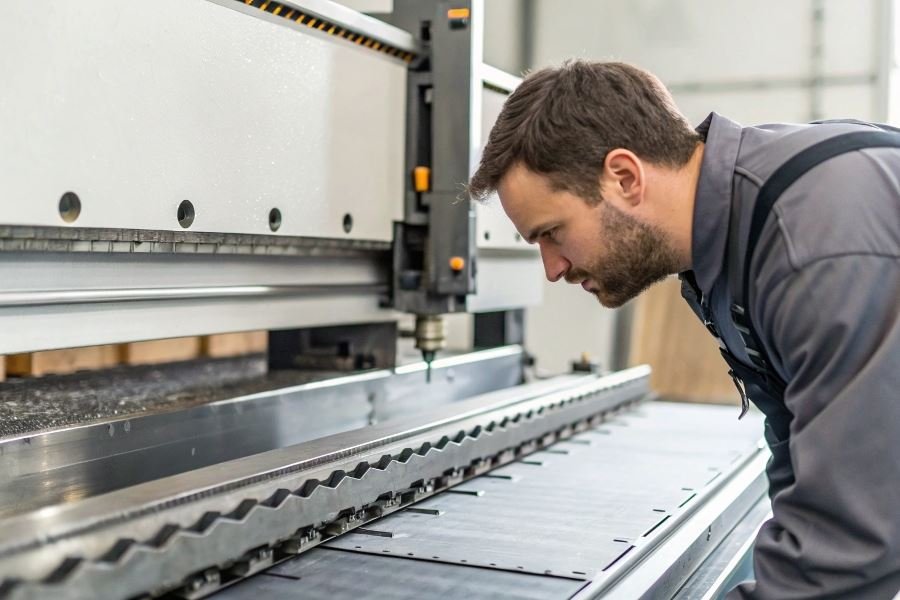
Ever watched a master metalworker slice through steel like it was butter? That’s the power of a quality guillotine shear—a tool that can transform your metalworking projects from frustrating to flawless in one clean cut.
Guillotine shears represent the cornerstone of efficient metal fabrication, designed specifically to deliver straight, precise cuts across sheet metal with minimal distortion. Unlike their handheld cousins, these powerful machines use a blade that descends perpendicular to a fixed cutting surface, creating a shearing action that cleanly separates metal without the warping or edge damage common with other cutting methods.
The market offers three primary categories of these precision cutting tools: mechanical, hydraulic, and pneumatic guillotine shears. Mechanical models excel in high-volume production environments where consistent cutting of thinner materials is required. Hydraulic shears, the workhorses of metal fabrication, deliver exceptional force for thicker materials while offering adjustable rake angles. Pneumatic versions provide rapid cycling speeds ideal for specialized applications where quick, repetitive cuts are essential.
Selecting the right guillotine shear isn’t just about budget—it’s about transformation. The perfect machine matches your specific metal thickness requirements, production volume, and accuracy needs. A mismatch can mean the difference between clean, production-ready pieces and costly material waste, not to mention the potential for workplace inefficiency and safety concerns.
“The quality of your cuts directly impacts every downstream process in metal fabrication. Your guillotine shear isn’t just cutting metal—it’s cutting your path to success or failure.”
When evaluating options, consider not just today’s projects but tomorrow’s ambitions. The ideal guillotine shear grows with your business rather than limiting it.
Technical Essentials That Make or Break Metal Guillotine Shears
When investing in industrial equipment, understanding the technical specifications becomes the difference between a purchase you’ll celebrate for years and one you’ll regret by next quarter. Metal guillotine shears represent a significant capital investment, and knowing how to choose guillotine shears for metal requires focusing on several critical technical criteria that directly impact performance, precision, and longevity.
Cutting Capacity: The Foundation of Performance
The cutting capacity of guillotine shears determines what materials you can process effectively. This specification isn’t just about maximum thickness—it’s about consistent performance across different metal types:
- Mild Steel Capacity: Typically ranges from 0.5mm to 25mm
- Stainless Steel Capacity: Generally 60-70% of the mild steel rating
- Aluminum Capacity: Usually 150-200% of the mild steel rating
Most manufacturers specify capacity in terms of mild steel, so adjust your expectations accordingly when working with other materials. A machine rated for 6mm mild steel might only handle 4mm stainless steel effectively.
| Metal Type  | Capacity Multiplier |
|---------------|---------------------|
| Mild Steel  | 1.0 (reference)   |
| Stainless   | 0.6-0.7       |
| Aluminum   | 1.5-2.0       |
| Copper    | 0.8-0.9       |
Blade Quality: The Cutting Edge of Durability
The heart of any guillotine shear is its blade system. Premium machines feature:
- Material Composition: High-carbon chromium steel (Cr12, SKD-11) or tungsten carbide edges
- Hardness Rating: Look for 58-62 HRC for optimal performance
- Edge Design: Four-sided reversible blades quadruple service life
- Gap Adjustment: Micrometer-precise blade gap settings prevent burrs
Amada and Trumpf lead the industry with blades that maintain edge integrity through thousands of cutting cycles. The initial investment in superior blade technology typically pays for itself within the first year through reduced maintenance and downtime.
Power Systems: Driving Force Behind Precision
The hydraulic or mechanical drive system determines not just cutting force but also cycle time and energy efficiency:
- Hydraulic Systems: Offer variable pressure control, smoother operation
- Mechanical Systems: Provide faster cycle times, often more precise
- Motor Power: Ranges from 5.5kW for light-duty to 75kW for industrial applications
- Energy Efficiency: Modern variable-frequency drives can reduce consumption by 30-40%
For high-volume operations, the Bystronic systems with servo-electric drives deliver exceptional energy efficiency while maintaining cutting force.
Precision Features: Where Accuracy Meets Productivity
The difference between acceptable and exceptional cuts comes down to precision features:
- Backgauge Systems: CNC-controlled positioning with ±0.1mm accuracy
- Squaring Arms: Calibrated supports for consistent alignment
- Angle Control: Digital readouts for blade angle adjustment
- Cut Line Indicators: Laser or LED systems for visual alignment
Premium machines from Durma incorporate touchscreen interfaces with programmable cutting sequences, allowing operators to store and recall settings for different materials and thicknesses.
The most sophisticated systems now include material thickness detection that automatically adjusts blade gap and cutting force, virtually eliminating operator error while maximizing blade life and cut quality.
When evaluating precision features, consider not just the specifications on paper but the real-world repeatability across multiple shifts and operators. The best equipment maintains tolerance even under demanding production schedules.
Practical Considerations for Guillotine Shear Selection
Space planning for your workshop
Guillotine shears demand thoughtful space allocation in your production environment. The footprint varies dramatically—from compact 4-foot benchtop models to industrial behemoths spanning 20+ feet in length. Beyond the machine’s dimensions, you’ll need clearance zones for material handling, operator positioning, and maintenance access.
A typical 10-foot hydraulic shear requires approximately 15×20 feet of floor space when accounting for material staging areas. Remember that ceiling height matters too—many models require 8-10 feet minimum clearance for proper installation and operation.
Pro tip: Map your workflow before purchasing. The ideal setup allows for smooth material flow from storage to shear to next fabrication stage without bottlenecks or awkward material handling.
Safety features that protect your team
Modern guillotine shears incorporate multiple safety systems that have evolved significantly since the basic mechanical guards of earlier decades.
| Safety Feature | Function | Importance |
|---|---|---|
| Light curtains | Creates invisible detection field that stops operation when breached | Critical for high-volume operations |
| Two-hand controls | Requires both hands on controls to activate cutting cycle | Prevents accidental activation |
| Emergency stops | Immediately halts all machine functions | Must be accessible from all operator positions |
| Rear guards | Prevents access to pinch points behind the machine | Required by OSHA standards |
Your machine must comply with ANSI B11.4 safety standards for metal shears in the US market. European-made machines should carry CE certification, indicating compliance with the Machinery Directive 2006/42/EC.
Safety compliance isn’t just about avoiding citations—it’s about protecting your most valuable asset: your team.
Maintenance requirements and operational costs
The true cost of ownership extends far beyond the purchase price. Hydraulic shears typically require:
- Oil changes every 2,000 operating hours
- Blade rotation/replacement after 500-1,000 hours (depending on material)
- Annual hydraulic system inspection
- Regular lubrication of moving components
Mechanical shears generally have lower maintenance requirements but may need more frequent adjustment to maintain cutting accuracy. Energy consumption varies significantly—a 10-foot hydraulic shear might draw 15-30 kW during operation, while mechanical models often consume less power but lack the versatility of hydraulic systems.
Long-term cost consideration: Factor in blade replacement costs, which can range from 500−3,000 depending on length and quality. Premium blades from manufacturers like Amada or Trumpf command higher prices but deliver longer service life and superior edge quality.
Support infrastructure for your investment
The availability of service support and replacement parts can make or break your production schedule when issues arise. Before purchasing, investigate:
- Warranty terms (industry standard is 1-2 years for mechanical components, often less for wear items)
- Local technician availability for your specific brand
- Typical response time for emergency service
- Parts inventory locations and shipping timeframes
- Training options for your maintenance team
The cheapest machine often becomes the most expensive when downtime costs are factored in.
Established manufacturers like Cincinnati and Betenbender maintain extensive parts inventories and service networks throughout North America, while some imported machines may require international shipping for critical components.
When evaluating service agreements, look beyond the hourly rate—travel charges, minimum billing increments, and parts markup policies can significantly impact your total cost of ownership over the machine’s 15-20 year lifespan.
Discover the 7 essential criteria for selecting the perfect guillotine shears for your metalworking projects. Learn about cutting capacity, blade quality, power specifications, and practical considerations to make an informed investment in precision metal cutting equipment.
Discover the 7 essential criteria for selecting the perfect guillotine shears for your metalworking projects. Learn about cutting capacity, blade quality, power specifications, and practical considerations to make an informed investment in precision metal cutting equipment.