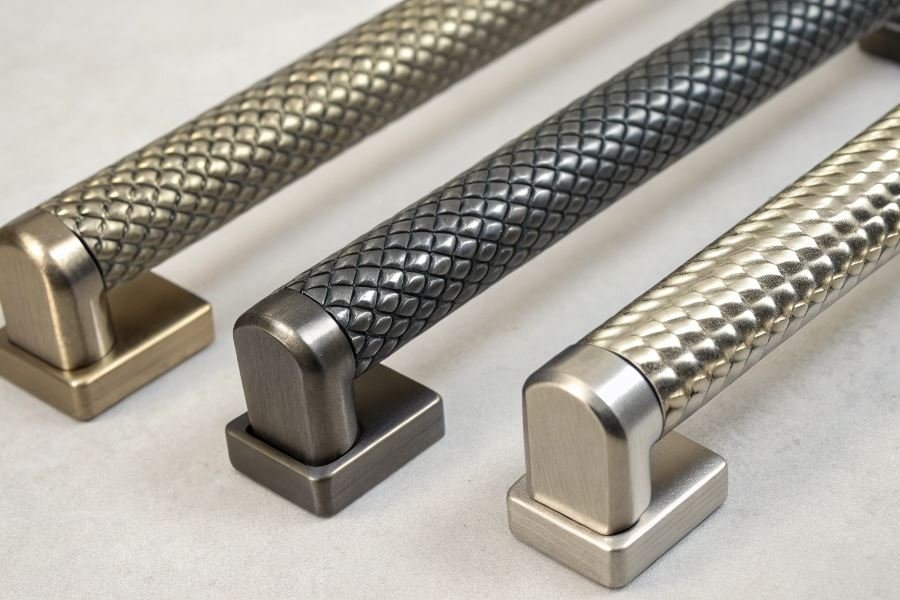
Ever picked up a tool and immediately felt something was off? That subtle discomfort in your grip might be telling you something crucial about the material beneath your fingers. The handle of any manipulator isn’t just a passive component—it’s the critical interface between human intention and mechanical action.
When professionals select handles for their precision tools, they’re faced with a fundamental choice between three titans of the materials world: aluminum, titanium, and steel. Each brings its own distinctive personality to the table. Aluminum whispers of lightness and maneuverability, titanium speaks of strength without burden, while steel declares its unwavering durability and time-tested reliability.
“The right handle material can mean the difference between fatigue after an hour or comfort after a full day’s work.”
The selection process isn’t merely about preference—it’s about performance optimization. Weight considerations become paramount when tools are used for extended periods. Durability requirements vary dramatically between occasional home use and industrial applications. Cost factors range from initial investment to lifetime value, with some materials commanding premium prices but offering exceptional longevity.
Consider this: a titanium handle might cost twice as much as its aluminum counterpart, but could potentially outlast it by decades in corrosive environments. Meanwhile, steel offers unmatched strength at a reasonable price point, though it adds noticeable heft to any tool.
The perfect material choice ultimately depends on your specific application—where will this tool live, how often will it be used, and what stresses will it endure?
The Material Matchup: Choosing Your Perfect Handle
When it comes to handles and manipulators for precision tools and equipment, the material choice can make or break your experience. The debate between aluminum, titanium, and steel isn’t just academic—it directly impacts performance, comfort, and longevity. Let’s dive into the distinctive properties of each material to help you make an informed decision.
For professionals seeking the optimal balance in their tools, understanding materials for handles-manipulators: aluminum, titanium, or steel – what to choose becomes a critical consideration that affects everything from fatigue during extended use to performance in challenging environments. Each material brings its own set of advantages and limitations to the table.
Aluminum: The Lightweight Champion
Aluminum handles have earned their popularity for good reason. At just one-third the weight of steel, they offer significant fatigue reduction during extended use sessions.
Key advantages:
- Exceptional corrosion resistance without additional treatments
- Typically 40-60% less expensive than titanium alternatives
- Natural oxide layer provides self-healing protection
- Excellent thermal conductivity for temperature-sensitive applications
However, aluminum isn’t without limitations. Its lower tensile strength (69,000 psi compared to steel’s 145,000 psi) means it may not stand up to extreme torque or pressure applications. Additionally, while lightweight, it can feel less substantial in hand—a consideration for applications where tactile feedback matters.
Titanium: The Premium Performer
Titanium represents the gold standard for high-performance handles, offering an unmatched strength-to-weight ratio that’s approximately 45% lighter than steel with comparable strength.
The titanium advantage extends beyond mere specifications:
- Exceptional biocompatibility (ideal for medical instruments)
- Superior corrosion resistance in saltwater environments
- Natural vibration dampening properties
- Remarkable temperature resistance (maintains integrity from -330°F to 1,000°F)
The primary drawback? Cost. Titanium handles typically command a 200-300% premium over aluminum alternatives. This positions them firmly in the professional and specialty tool categories where performance justifies the investment.
Steel: The Reliable Workhorse
Steel handles remain the industry standard for applications demanding maximum durability and strength.
| Steel Type | Tensile Strength | Corrosion Resistance | Relative Cost |
|---|---|---|---|
| Carbon Steel | 145,000 psi | Low (requires coating) | $ |
| Stainless 304 | 87,000 psi | High | $$ |
| Stainless 316 | 84,000 psi | Superior | $$$ |
Steel excels in environments where abuse is expected. Its superior impact resistance makes it ideal for hammering applications, pry tools, and heavy-duty manipulators. The substantial weight provides excellent feedback and stability during precision work.
The tradeoffs include:
- Significantly heavier (approximately 2.5x the weight of aluminum)
- Requires maintenance to prevent corrosion (except high-grade stainless)
- Limited thermal insulation properties
- Can become uncomfortable in extreme temperatures
For applications where absolute reliability trumps weight considerations, steel remains the material of choice for professionals who demand tools that won’t fail under pressure.
Material Mastery: Choosing Between Aluminum, Titanium, and Steel for Handles
When selecting materials for handles and manipulators, the difference between optimal performance and constant frustration often comes down to your material choice. Let’s dive into the world of metals to help you make decisions that will serve your specific needs for years to come.
Industry-Specific Material Recommendations
Different industries demand different material properties from their handles and manipulators:
Medical Equipment: Titanium dominates here due to its biocompatibility, lightweight properties, and resistance to sterilization processes. Surgical instruments benefit from titanium’s strength-to-weight ratio and non-magnetic properties.
Food Processing: Stainless steel remains the gold standard, particularly 316-grade, which resists corrosion from acidic foods and sanitizing chemicals. Its non-porous surface prevents bacterial growth—critical for food safety.
Aerospace: Aluminum alloys (particularly 7075-T6) offer the perfect balance of lightweight construction and adequate strength. Every gram matters when fuel efficiency is calculated.
Heavy Machinery: Carbon steel handles provide superior durability and load-bearing capacity when weight isn’t a primary concern. The robustness of steel makes it ideal for environments where handles endure significant stress.
Cost vs. Value Analysis
| Material | Initial Cost | Lifespan | Long-Term Value |
|---|---|---|---|
| Aluminum | $$ | 5-10 years | Good |
| Titanium | 15-25+ years | Excellent | |
| Steel | $$$ | 10-20 years | Very Good |
While aluminum offers the lowest entry point at approximately $5-15 per handle (depending on complexity), titanium commands premium pricing at $25-60+ per unit. However, titanium’s exceptional durability often delivers superior lifetime value despite the higher initial investment.
The true cost equation must factor in replacement frequency, downtime costs, and performance benefits specific to your application.
Maintenance Requirements and Service Life
Aluminum
- Requires regular cleaning to prevent oxidation
- Susceptible to galvanic corrosion when in contact with dissimilar metals
- Typically needs replacement within a decade in high-use environments
Titanium
- Virtually maintenance-free
- Naturally resistant to corrosion in most environments
- Can outlast the equipment it’s attached to
Steel
- Stainless varieties require minimal maintenance
- Carbon steel needs regular protection against rust
- Service life varies dramatically based on environmental exposure
Future Material Trends
The handle manufacturing landscape is evolving rapidly with several emerging technologies:
Metal Matrix Composites combine the best properties of multiple materials—imagine aluminum reinforced with ceramic particles for enhanced wear resistance without significant weight penalties.
Additive Manufacturing is revolutionizing handle design, allowing for complex internal structures that optimize weight distribution and ergonomics while maintaining strength. 3D Systems and other manufacturers are pioneering these techniques.
Smart Materials with embedded sensors are beginning to enter the market, offering real-time feedback on grip pressure, temperature, and usage patterns—particularly valuable in precision applications.
Biomimetic Designs inspired by natural structures are improving ergonomics and reducing material usage while maintaining structural integrity.
The ideal material choice ultimately depends on your specific application requirements, budget constraints, and performance expectations. By carefully weighing these factors against the unique properties of aluminum, titanium, and steel, you’ll select handles that deliver optimal performance throughout their service life.
Discover the optimal material for your handle-manipulators with our comprehensive comparison of aluminum, titanium, and steel. Learn which option delivers the best balance of weight, durability, and cost for your specific application needs.
Discover the optimal material for your handle-manipulators with our comprehensive comparison of aluminum, titanium, and steel. Learn which option delivers the best balance of weight, durability, and cost for your specific application needs.