
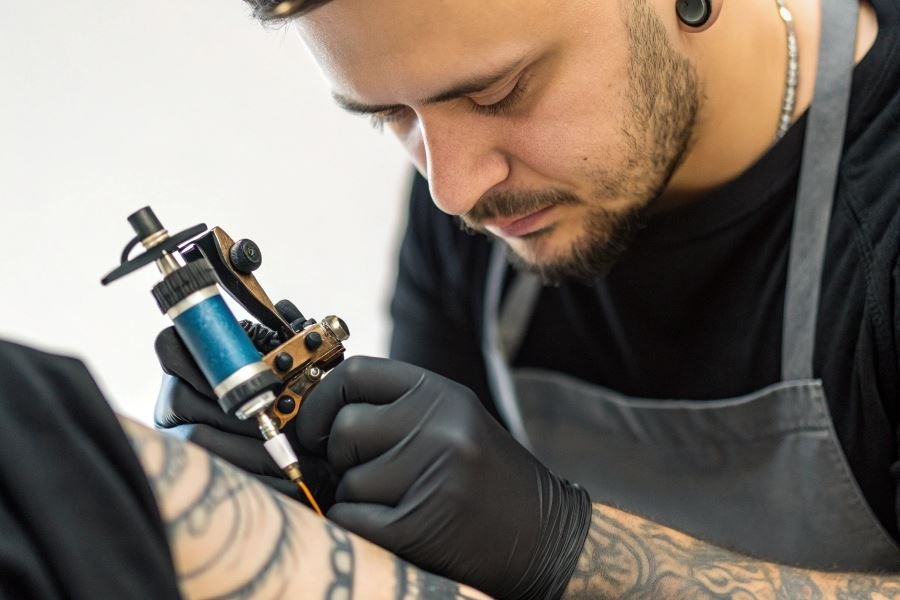
The gentle hum of a tattoo machine has become the soundtrack to an art form that’s transformed from counterculture to mainstream. Behind every masterpiece inked onto skin lies a precision instrument that’s undergone remarkable evolution.
Tattoo machines have traveled an extraordinary journey since Samuel O’Reilly patented the first electric tattoo machine in 1891, adapting Thomas Edison’s electric pen design. What began as a rudimentary vibrating tool has transformed into sophisticated equipment that merges engineering excellence with artistic capability. Today’s professional artists wield machines that would seem like science fiction to pioneers of the craft.
The evolution of the artist’s iron
The transition from coil machines to rotary systems represents perhaps the most significant shift in tattoo technology. Traditional coil machines, with their electromagnetic circuitry, dominated the industry for decades. Their distinctive buzz became synonymous with tattoo culture. However, rotary machines, with their circular motion and reduced vibration, have gained tremendous popularity for their versatility and reduced hand fatigue.
“The machine is merely an extension of the artist’s hand. When it disappears from consciousness during work, you know you’ve found the right one.” – Anonymous master tattoo artist
What professionals demand from their machines
Professional tattoo artists evaluate machines through several critical lenses:
- Weight and ergonomics – Lighter machines reduce hand fatigue during long sessions
- Versatility – Ability to perform various techniques from fine lines to bold shading
- Noise level – Lower noise reduces client anxiety and artist stress
- Maintenance requirements – Ease of cleaning and sterilization
- Power consistency – Reliable performance throughout lengthy sessions
The elite three: 2025’s standout machines
The current landscape features three exceptional machines that have risen above the competition through innovation, reliability, and performance. These machines represent the pinnacle of tattoo technology, each offering unique advantages for different artistic approaches and techniques. From lightweight precision instruments to powerhouse shaders, these top contenders have earned their reputation through consistent excellence in professional studios worldwide.
The Ultimate Precision Tools: Professional Tattoo Machines Compared
When the needle meets skin, there’s no room for compromise. Professional tattoo artists understand that their machine is an extension of their artistic vision—a tool that must perform flawlessly through hours of detailed work. After testing dozens of professional-grade machines and consulting with award-winning artists, we’ve identified the top 3 best tattoo machines for professionals that consistently deliver exceptional results across various tattooing styles and techniques.
FK Irons Spektra Xion: The Lightweight Powerhouse
The FK Irons Spektra Xion has revolutionized the industry with its remarkable balance of power and precision. Weighing just 3.7 ounces, this aircraft-grade aluminum machine delivers performance that belies its featherweight profile.
Key specifications:
- Stroke length: Adjustable from 2.5mm to 4.0mm
- Operating voltage: 6-12V DC
- Motor type: Proprietary Spektra motor
- Weight: 3.7oz (105g)
What truly distinguishes the Xion is its Give technology—a patented system that allows artists to adjust the machine’s give (resistance) without changing voltage. This translates to exceptional control when transitioning between lining and shading within the same session.
“The Xion’s responsiveness makes it feel like the machine anticipates your movements before you make them.”
The machine’s near-silent operation reduces client anxiety while its minimal vibration significantly reduces hand fatigue during marathon sessions. At $785, it represents a serious investment that professional artists consistently report pays dividends in precision and reliability.
Cheyenne Hawk Thunder: Ergonomic Excellence
The Cheyenne Hawk Thunder stands as a testament to German engineering excellence. This machine has been meticulously designed around the artist’s hand rather than mechanical convenience.
Technical capabilities:
- Frequency: Up to 150 hits per second
- Stroke: 3.5mm (fixed)
- Operating voltage: 4-12.5V
- Weight: 4.2oz (119g)
The Thunder’s distinguishing feature is its Safety Membrane System that prevents fluid backflow, dramatically reducing cross-contamination risk. Its brushless DC motor delivers consistent power throughout extended sessions while generating minimal heat.
The ergonomic grip design—featuring a 27mm diameter at its widest point—reduces hand cramping during detailed work. Artists particularly praise the Thunder’s exceptional stability when creating precise lines and its smooth transition to shading work without adjustments.
Bishop Rotary V6: Engineering Masterpiece
The Bishop Rotary V6 represents the pinnacle of American-made tattoo machinery. Hand-assembled in Florida, each V6 undergoes rigorous quality testing before reaching an artist’s hands.
Precision specifications:
- Stroke options: 3.5mm or 4.2mm (interchangeable)
- Motor: Swiss Maxon
- Construction: Aircraft-grade aluminum and stainless steel
- Weight: 4.5oz (128g)
| Feature | Benefit |
|---|---|
| Interchangeable stroke cams | Versatility across tattooing styles |
| Adjustable give settings | Customizable feedback for different techniques |
| Ceramic bearings | Extended machine lifespan and smoother operation |
The V6’s most impressive feature is its RCA connection system that eliminates the traditional clip cord, reducing electromagnetic interference and providing more consistent power delivery. This translates to more predictable needle behavior, especially during detailed color packing.
Artists who specialize in multiple styles particularly value the V6’s adaptability—switching from fine line work to bold traditional pieces requires minimal adjustment. While its $850 price point positions it at the premium end of the market, its exceptional durability and manufacturer’s lifetime warranty make it a sound long-term investment for serious professionals.
Investing Wisely in Professional Tattoo Equipment
When you’re marking skin for a living, your machine becomes an extension of your artistic vision. After exploring the top contenders in professional tattoo equipment, it’s time to synthesize what truly matters for your studio investment.
The elite three at a glance
Let’s cut to the chase with a side-by-side comparison of our professional frontrunners:
| Machine | Weight | Motor Type | Best For | Price Range |
|---|---|---|---|---|
| FK Irons Spektra Xion | 3.7 oz | Direct Drive | Versatility, precision lining | $550-650 |
| Cheyenne Sol Nova | 4.2 oz | DC Motor | Color packing, detailed shading | $750-850 |
| Bishop Rotary V6 | 5.8 oz | Rotary | Bold lines, solid color work | $450-550 |
The Spektra Xion delivers unparalleled balance between weight and performance, making marathon sessions less taxing. Meanwhile, the Sol Nova’s whisper-quiet operation has made it the darling of convention artists working in close quarters. The Bishop V6 remains the tank of the industry—built to withstand years of heavy use while maintaining consistent power delivery.
The economics of excellence
Professional tattoo machines aren’t just purchases—they’re investments with measurable returns. Consider this: a quality machine might cost $300-800 more upfront than budget alternatives, but typically delivers:
- Extended lifespan: 8-10 years of professional use versus 2-3 for lower-tier equipment
- Reduced maintenance costs: Higher-grade components require less frequent replacement
- Client retention: Consistent, superior results bring repeat business
The maintenance equation varies significantly between models. The Spektra Xion requires minimal upkeep—just regular cleaning and occasional O-ring replacement. The Sol Nova demands more frequent attention to its precision components but rewards this care with exceptional longevity. Bishop machines have earned their reputation for being nearly indestructible, though they benefit from annual servicing to maintain optimal performance.
The true cost of a professional tattoo machine isn’t measured at purchase, but across thousands of satisfied clients and years of reliable service.
Matching metal to method
Your artistic specialization should drive your equipment selection. This isn’t just marketing—it’s mechanical reality:
For fine line specialists, the Spektra Xion’s featherweight design and precise needle control allow for the delicate touch needed in microrealism and single-needle work. Artists focusing on Japanese-style pieces often gravitate toward the Cheyenne Sol Nova for its exceptional color saturation capabilities and ability to create smooth gradients across large areas.
Traditional American and bold graphic work finds its perfect companion in the Bishop V6, whose robust power delivery makes short work of thick lines and solid fills. The machine’s stability particularly shines when working on challenging skin types or areas with significant resistance.
Many veteran artists maintain a curated collection of machines, selecting different tools for different aspects of a single piece. This approach—while requiring greater initial investment—ultimately produces superior results and extends the working life of each machine.
The perfect tattoo machine amplifies your existing skills while compensating for weaknesses. By matching your equipment to your artistic DNA, you’re not just buying a tool—you’re elevating your craft and ensuring your vision transfers flawlessly from mind to skin.
Discover the elite FK Irons Spektra Xion, Cheyenne Hawk Thunder, and Bishop Rotary V6 tattoo machines that professional artists trust. Compare performance, ergonomics, and precision engineering to elevate your tattoo artistry.
Discover the elite FK Irons Spektra Xion, Cheyenne Hawk Thunder, and Bishop Rotary V6 tattoo machines that professional artists trust. Compare performance, ergonomics, and precision engineering to elevate your tattoo artistry.