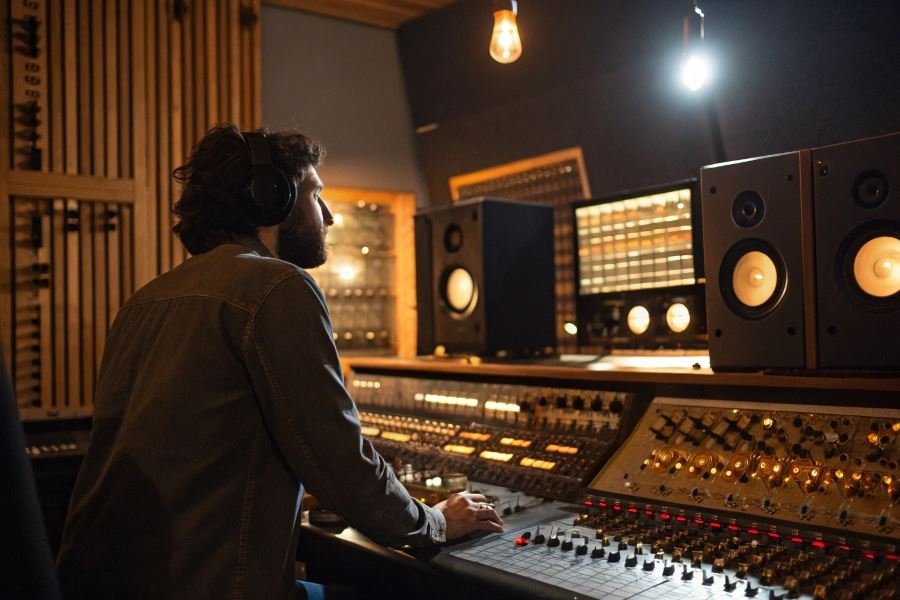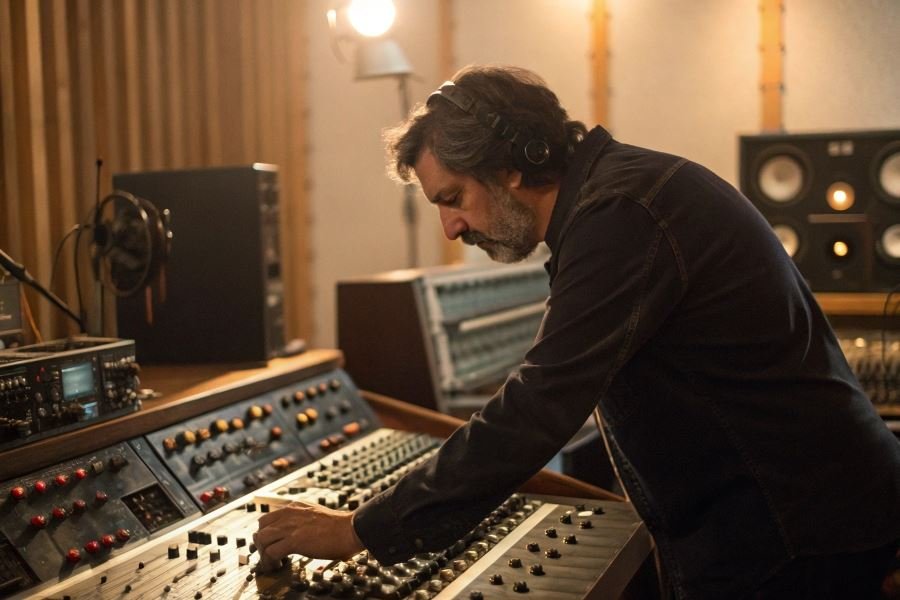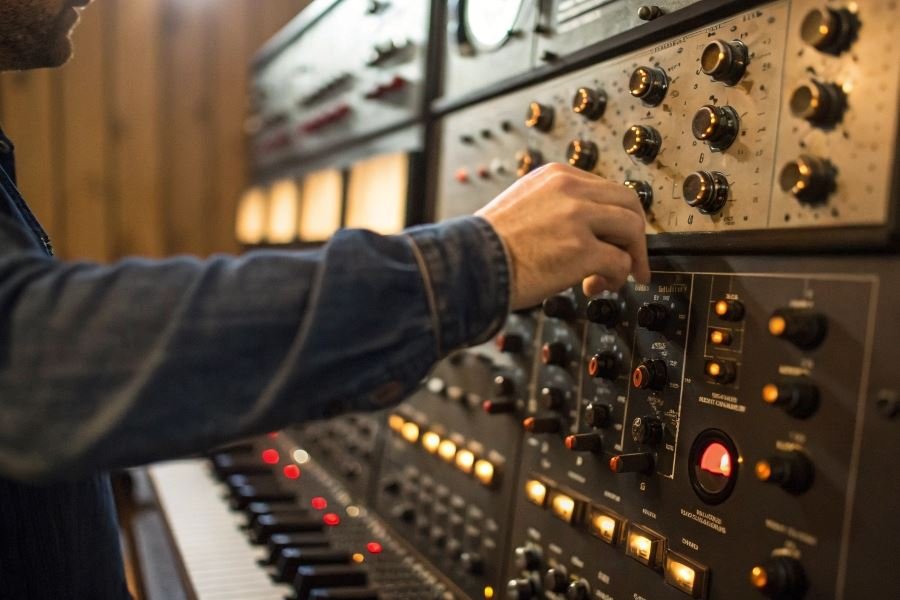
Ever listened back to a recording that sounded thin and lifeless despite using a premium microphone? The culprit might be hiding in plain sight: your preamp. This often-overlooked component is the silent architect behind your sound’s character.
Microphone preamps serve as the crucial first amplification stage in your recording chain. They take the whisper-quiet signal from your microphone (measured in millivolts) and boost it to a usable “line level” that your audio interface or mixer can properly process. But they do far more than just make things louder.
The preamp you select fundamentally shapes your sound’s DNA. It’s like choosing between film stocks in photography—each imparts its own distinct character. Some add warmth and harmonic richness that flatters vocals and acoustic instruments. Others deliver pristine, transparent amplification that preserves every nuance of the original performance.
Home studios typically encounter three main preamp categories:
-
Solid-state preamps – Clean, reliable, and often more affordable, these use transistors for amplification and typically deliver precise, transparent sound.
-
Tube preamps – Beloved for their warm, musical distortion characteristics when pushed, these vintage-inspired designs add harmonics that many describe as “analog magic.”
-
Hybrid preamps – These combine solid-state and tube technologies, offering versatility for different recording scenarios.
Your choice ultimately depends on your recording goals. Are you capturing delicate acoustic performances where transparency is paramount? Or are you seeking to add character to digital recordings? The right preamp doesn’t just amplify—it elevates your entire production.
Essential Factors for Choosing the Perfect Preamp
Selecting the right microphone preamp for your home studio can transform your recordings from amateur to professional-grade. The preamp serves as the crucial first step in your signal chain, amplifying the microphone’s signal to a usable level while preserving its tonal characteristics. Understanding how to choose a microphone preamp for a home studio requires balancing technical specifications with practical considerations like budget and connectivity.
Budget realities that won’t break the bank
When investing in a preamp, the price-to-performance ratio should guide your decision-making process. Entry-level preamps start around $100-200, while mid-range options typically fall between $300-800. High-end boutique preamps can easily exceed $1,000 per channel.
Wisdom nugget: The most expensive preamp isn’t necessarily the best for your specific recording needs. Match your investment to your recording goals.
Budget-conscious producers might consider the Focusrite Scarlett series, which delivers remarkable clarity for the price point. For those with more flexibility, the Universal Audio Apollo series offers exceptional preamps with integrated DSP processing.
Value tip: Many audio interfaces include built-in preamps, potentially saving you money if you’re just starting out.
Technical specifications that actually matter
The technical aspects of preamps determine their performance and suitability for different recording scenarios:
Gain and headroom
Preamps typically offer between 40-70dB of gain. Dynamic microphones and ribbons require more gain (60+dB) than condenser microphones. Insufficient gain results in noisy recordings when you try to amplify them later.
Noise floor considerations
The self-noise of a preamp is measured in equivalent input noise (EIN), typically around -125 to -130dBu. Lower numbers indicate cleaner, more professional recordings.
Frequency response characteristics
A flat frequency response (typically 20Hz-20kHz ±0.5dB) ensures accurate reproduction, while some preamps intentionally color the sound with subtle emphasis in certain frequency ranges.
| Preamp Type | Typical Gain | Noise Floor | Characteristic Sound |
|---|---|---|---|
| Solid State | 45-65dB | -127 to -130dBu | Clean, transparent |
| Tube | 40-60dB | -120 to -125dBu | Warm, harmonically rich |
| Transformer | 45-70dB | -125 to -128dBu | Punchy, with subtle saturation |
Connectivity that plays well with others
Your preamp must integrate seamlessly with your existing studio setup:
Input options: Most preamps offer XLR inputs for microphones, while some include 1/4″ TRS or Hi-Z inputs for instruments.
Output configurations: Common output formats include balanced XLR, 1/4″ TRS, or digital options like AES/EBU or ADAT.
Digital integration: Modern preamps like the Audient iD14 offer USB connectivity, functioning as both preamps and audio interfaces.
Expansion potential: Consider whether you’ll need to expand your channel count in the future. Preamps with ADAT outputs, like the PreSonus DigiMax, allow for easy expansion.
The ideal preamp should complement your microphones and recording style. For versatile home studios, a clean, transparent preamp with moderate coloration options provides the most flexibility. Remember that your preamp choice shapes every recording you make—choose wisely, and your future productions will thank you.
Top Microphone Preamps That Transform Home Studios
Entry-level preamps that punch above their weight
For those just building their first recording setup, the preamp decision can feel overwhelming. Fortunately, several manufacturers have created affordable options that deliver impressive results without breaking the bank.
The Focusrite Scarlett 2i2 stands as perhaps the most popular entry point, and for good reason. Its clean gain structure provides up to 56dB of amplification with remarkably low noise floor measurements. The Air mode adds a subtle high-frequency lift that breathes life into vocals and acoustic instruments—a feature previously found only in much pricier units.
Another standout performer is the PreSonus AudioBox USB 96. What separates this from competitors is its XMAX preamps, which use discrete components rather than cheaper op-amps, resulting in warmer recordings even at this price point. With 48V phantom power and solid metal construction, it’s built to last through countless recording sessions.
The Behringer U-Phoria UMC204HD deserves mention for studios on strict budgets. While Behringer once had a reputation for cutting corners, their MIDAS-designed preamps deliver surprisingly transparent sound reproduction with 48dB of gain—more than enough for most dynamic microphones.
Mid-range preamps that deliver professional results
As your ears develop and projects demand higher quality, mid-range preamps offer substantial improvements in clarity, headroom, and character.
The Warm Audio WA73-EQ stands as a remarkable achievement—a Neve-inspired preamp that captures much of the legendary 1073’s magic at a fraction of the price. With 80dB of gain and custom-wound transformers, it imparts that sought-after thickness to vocals and drums that simply isn’t possible with budget interfaces.
The sonic difference between entry-level and mid-range preamps becomes most apparent when recording dynamic sources like drums and acoustic guitars.
For those seeking versatility, the Universal Audio Apollo Twin X combines exceptional preamp quality with real-time processing through UA’s renowned plugins. The Unison technology allows the preamps to physically reconfigure their impedance and gain staging to model vintage equipment with uncanny accuracy.
The Audient iD14 MKII delivers console-grade preamps derived from Audient’s ASP8024 mixing desk. With 66dB of clean gain and exceptional transient response, these preamps handle everything from ribbon mics to condenser overheads with remarkable transparency.
High-end boutique preamps for specialized applications
When only the absolute finest will do, boutique preamps offer transformative qualities that elevate recordings to commercial release quality.
The Rupert Neve Designs Portico 511 represents the pinnacle of modern preamp design from the mind of the late audio legend himself. Its silk transformer saturation control allows precise tailoring of harmonic content—from pristine clarity to rich, musical distortion that flatters virtually any source.
For those seeking vintage character, the Chandler Limited TG2 recreates the preamps from EMI’s TG12345 console used on countless classic recordings at Abbey Road Studios. Its distinctive midrange presence and controlled low-end make vocals and guitars sit perfectly in dense mixes without additional processing.
The Manley VOXBOX combines a tube preamp with compression, EQ, and de-essing in one channel strip. While expensive, it delivers complete vocal processing chains that have graced countless hit records. The Class A tube design provides that elusive “expensive” sound that budget gear simply cannot replicate.
| Preamp Category | Price Range | Typical Gain | Best For |
|---|---|---|---|
| Entry-level | $150-300 | 45-55dB | Podcasts, demos, learning |
| Mid-range | $500-1200 | 60-70dB | Professional projects, versatile recording |
| High-end | $1500+ | 70-80dB | Commercial releases, specialized applications |
The right preamp doesn’t just amplify your microphone—it shapes your entire sonic signature and can transform good performances into exceptional recordings.
Discover how to select the ideal microphone preamp for your home studio setup. Learn about essential specifications, budget considerations, and top recommendations across price ranges to elevate your recording quality and achieve professional sound.
Discover how to select the ideal microphone preamp for your home studio setup. Learn about essential specifications, budget considerations, and top recommendations across price ranges to elevate your recording quality and achieve professional sound.