When a soldier dons a beret, they’re not simply covering their head—they’re wearing centuries of tradition, honor, and distinctive identity.
The uniform beret stands as perhaps the most recognizable and symbolically charged piece of military headgear in existence. First adopted by French mountain infantry in the 1880s, these wool discs have transformed from practical Alpine headwear into powerful symbols of elite status and organizational identity. The British Special Air Service’s adoption of the sandy beret during North African campaigns in World War II cemented the headwear’s association with specialized military prowess.
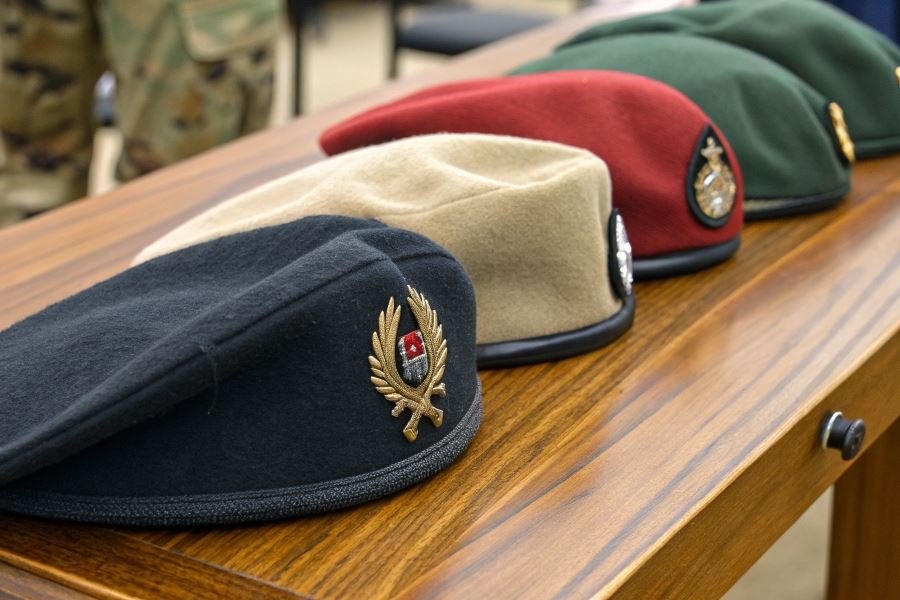
Today’s uniform berets serve as instant visual identifiers across military branches and law enforcement agencies worldwide. The U.S. Army alone utilizes a spectrum of colors—green for Special Forces, tan for Rangers, maroon for Airborne units—each shade carrying distinct meaning and heritage. Beyond military applications, police tactical units, security forces, and even ceremonial guards have embraced the beret’s distinctive profile.
When selecting uniform berets for official use, agencies must balance several critical factors:
- Material quality: Premium wool provides durability while maintaining shape through years of service
- Color consistency: Exact shade matching across batches ensures visual uniformity during formations
- Proper sizing: Accommodating various head shapes while maintaining the distinctive silhouette
- Weather appropriateness: Considering regional climate conditions that affect comfort and practicality
The beret’s enduring appeal lies in its unique ability to simultaneously convey authority, tradition, and specialized capability—all in a compact, instantly recognizable form that transforms the wearer’s entire appearance.
The Definitive Guide to Professional Berets
The world of uniform berets represents a fascinating intersection of tradition, functionality, and symbolic authority. Military and law enforcement agencies worldwide have adopted these distinctive headpieces as essential components of their official attire, with each organization incorporating unique specifications that reflect their values and operational requirements.
Understanding uniform berets: features of selection for different agencies requires attention to subtle details that might escape the casual observer. These seemingly simple garments carry profound significance through their construction, materials, and presentation—each element carefully calibrated to communicate authority while meeting practical field requirements.
Military Beret Excellence: Materials and Meaning
Military berets stand as powerful symbols of elite status and specialized training. The construction typically features premium wool (85-100%) with a leather or synthetic sweatband that ensures comfort during extended wear. This isn’t merely about tradition—wool provides natural water resistance, breathability, and remarkable durability under harsh conditions.
Color coding speaks volumes in military contexts. The iconic green beret of U.S. Special Forces (established in 1952) signifies their exceptional capabilities, while maroon berets typically denote airborne units, and black often represents armor or tank divisions. These color distinctions emerged from practical battlefield identification needs but evolved into powerful symbols of unit pride and heritage.
The flash (colored backing for unit insignia) and proper positioning (right side, with insignia above the left eye) transform these wool circles into powerful symbols of authority and specialized training.
Law Enforcement Beret Standards
Police and security agencies demand berets that balance professional appearance with practical functionality. Their specifications often include:
- Enhanced weather resistance through water-repellent treatments
- Reinforced construction at stress points for extended field use
- Agency-specific color schemes that instantly identify department affiliation
Law enforcement berets typically feature slightly different construction than their military counterparts, with greater emphasis on all-weather performance and quick donning/doffing capabilities. The FBI’s Hostage Rescue Team, SWAT units, and specialized police divisions each maintain distinct beret standards that communicate their unique operational focus.
Quality Indicators for Professional Berets
| Quality Factor | Professional Standard | Amateur Warning Signs |
|---|---|---|
| Material Integrity | 100% wool with tight weave | Synthetic blends with loose fibers |
| Construction | Hand-stitched lining, reinforced band | Machine-stitched throughout, flimsy band |
| Fit and Form | Maintains shape, proper drape | Collapses when worn, inconsistent shape |
The material composition represents the first critical quality indicator. Premium berets use merino or other fine wools that balance durability with comfort. The material should feel substantial without being stiff, with a tight weave that resists pilling even after extended use.
Construction quality provides the second essential benchmark. Professional-grade berets feature reinforced stitching at stress points, properly finished edges, and a sweatband that maintains its integrity through repeated wear and cleaning cycles. The lining should be securely attached without puckering or loose threads.
Finally, proper fit and form distinguish exceptional berets. The headpiece should maintain its distinctive shape while allowing for personalized shaping. The drape should fall naturally to the right side (for most Western military and police units) without excessive material that could interfere with peripheral vision or equipment.
These exacting standards ensure that uniform berets serve their dual purpose: projecting authority while providing practical functionality for professionals who represent the highest standards of service.
Mastering Uniform Berets Across Agencies
When it comes to uniform berets, the difference between looking sharp and looking sloppy often comes down to three critical factors: proper fit, diligent maintenance, and procurement from authorized sources. Let’s dive into the best practices that separate the professionals from the amateurs in the world of agency headgear.
Getting the perfect fit every time
The cornerstone of a professional appearance starts with proper sizing. A correctly fitted beret should sit approximately one inch above the eyebrow and be pulled to the right side (or as specified by agency regulations). The headband should create a comfortable but secure grip around your head without causing pressure points or headaches after extended wear.
To determine your correct size:
- Measure the circumference of your head one inch above your eyebrows
- Compare your measurement to the manufacturer’s sizing chart
- When between sizes, opt for the larger size for comfort
Pro tip: After receiving a new beret, many agencies recommend a “breaking in” period. Soak the beret in lukewarm water, shape it while damp, and allow it to dry on your head for a custom fit that conforms perfectly to your unique head shape.
Extending beret lifespan through proper care
A quality uniform beret represents your agency and can last for years with proper maintenance. The difference between a beret that looks pristine after three years versus three months comes down to these essential care practices:
Cleaning protocol by material type:
| Material | Cleaning Method | Frequency | Special Considerations |
|---|---|---|---|
| Wool | Spot clean, brush gently | As needed | Avoid full immersion |
| Cotton | Hand wash, mild detergent | Monthly | Air dry only |
| Synthetic | Follow tag instructions | Quarterly | May be machine washable |
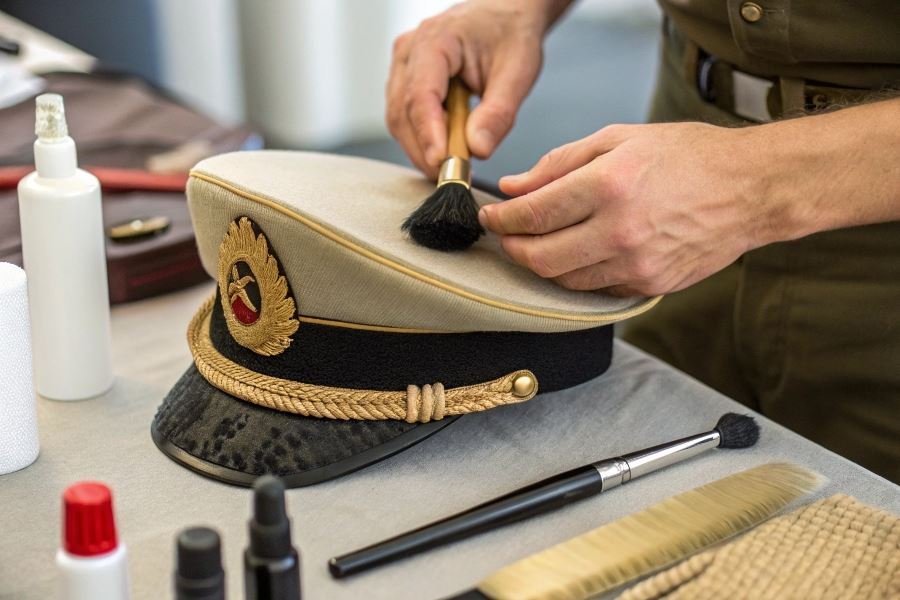
For flash and insignia maintenance, use a soft cloth with brass or metal polish appropriate for the specific material. Remove these elements before cleaning the beret itself whenever possible.
“The condition of your beret speaks volumes about your attention to detail long before you say a word.”
Storage matters significantly—always store your beret on a flat surface or proper form when not in use. Avoid folding or crushing, which can permanently damage the shape and professional appearance.
Navigating procurement channels with confidence
Sourcing official agency berets requires understanding authorized supply chains. Counterfeit or unauthorized berets not only violate regulations but typically fail to meet quality standards.
When procuring replacement berets:
- Verify supplier credentials – Only purchase from manufacturers with current contracts with your specific agency
- Check authentication markers – Official berets contain specific tags, stitching patterns, or embedded verification elements
- Maintain documentation – Keep receipts and authentication paperwork for inspection requirements
For most U.S. agencies, procurement must flow through Defense Logistics Agency channels or agency-specific supply systems. Direct commercial purchases may be authorized in certain circumstances but require verification against current uniform regulations.
The investment in properly sourced berets pays dividends in durability and compliance. While unauthorized sources might offer lower prices, the quality difference becomes immediately apparent in daily wear, weather resistance, and color retention.
By adhering to these best practices for selection, care, and procurement, agency personnel ensure their berets remain a source of pride and professionalism throughout their service life.
Discover the essential features of uniform berets across military and law enforcement agencies. Learn professional selection criteria, quality indicators, and proper maintenance techniques for official headwear that meets agency standards.
Discover the essential features of uniform berets across military and law enforcement agencies. Learn professional selection criteria, quality indicators, and proper maintenance techniques for official headwear that meets agency standards.