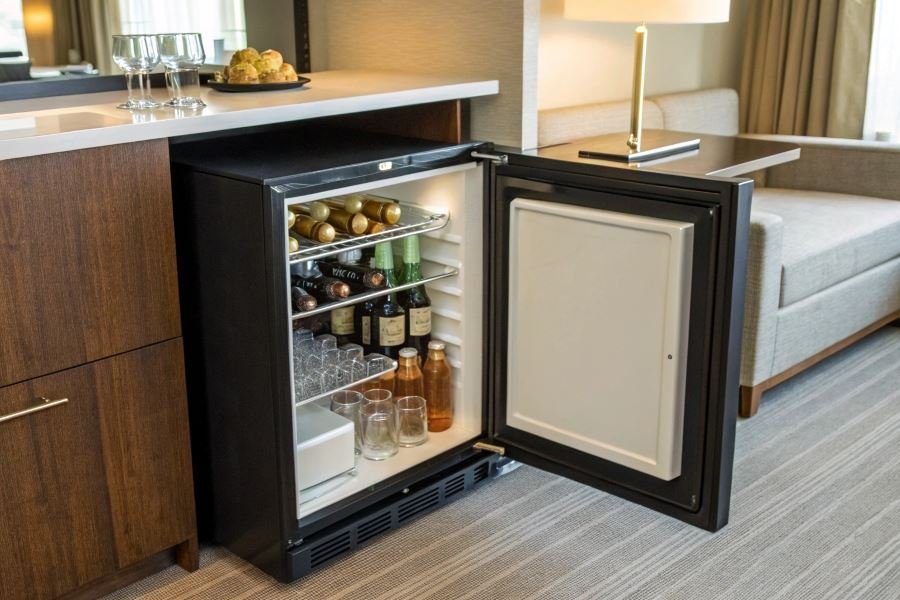
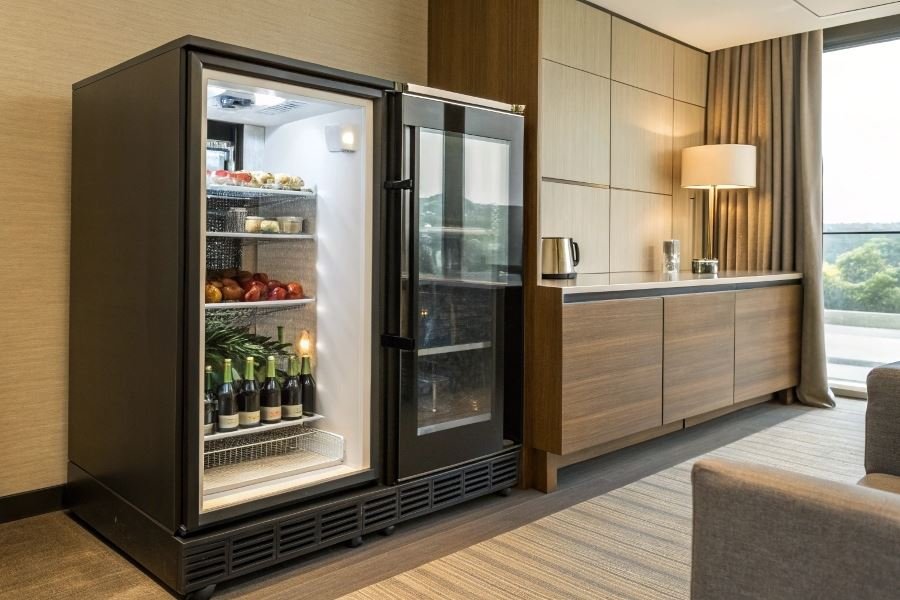
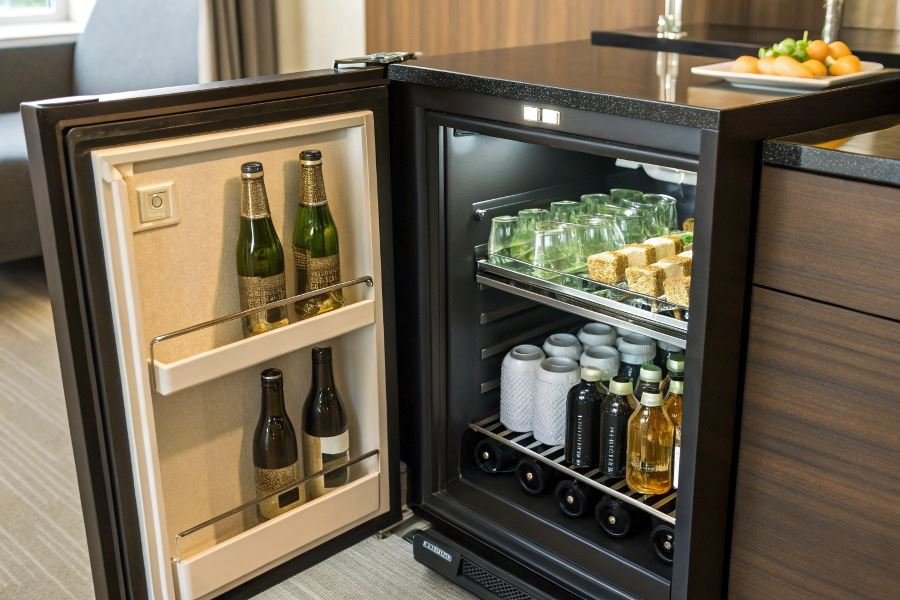
Ever walked into a hotel room and made a beeline for that sleek, compact refrigerator tucked discreetly in the corner? That’s the magic of a well-designed mini-bar – it beckons with promise while taking minimal space. But choosing one for your own space? That’s where the real adventure begins.
Mini-bars aren’t just scaled-down refrigerators; they’re lifestyle enhancers that transform spaces from ordinary to extraordinary. Whether nestled in your home office, entertainment area, or business suite, these compact cooling wonders serve as convenient beverage stations without the commitment of a full-sized refrigerator.
The perfect mini-bar balances two critical elements: volume and functionality. Too small, and you’ll constantly restock; too large, and it dominates your space. The functionality spectrum ranges from basic cooling to sophisticated temperature zones for different beverages, built-in ice makers, and even smart features that track inventory.
“The mini-bar you choose should reflect how you live, not just what you drink.”
Purpose defines performance
For home entertainment, consider how you host: Intimate gatherings might need just 1.5-2.5 cubic feet, while frequent entertainers might require 4+ cubic feet with dual temperature zones for wines and beverages. Business settings often benefit from lockable models with inventory tracking capabilities.
Beyond the basics
Look beyond volume to features that enhance experience: glass doors for visibility, adjustable shelving for flexibility, and energy efficiency for sustainability. The most satisfying mini-bars aren’t necessarily the largest or most feature-laden – they’re the ones perfectly aligned with your specific needs and space constraints.
Finding Your Perfect Mini-Bar: Volume and Capacity Guide
The mini-bar market offers a remarkable range of options, each designed to fulfill specific needs and fit various spaces. When selecting the ideal mini-bar for your environment, volume and capacity requirements stand as critical factors that determine both functionality and satisfaction with your purchase.
Understanding how to choose a mini-bar by volume and functionality requires careful consideration of your specific needs, available space, and intended usage patterns. The right mini-bar should seamlessly integrate into your lifestyle while providing adequate storage for your refreshment needs without overwhelming your space.
Compact solutions: 20-40 liter mini-bars
Small-volume mini-bars pack impressive functionality into modest footprints. These compact units typically hold 6-12 standard beverage cans plus several small bottles or snacks.
Ideal applications include:
- Home office refreshment stations
- Guest room amenities
- Small apartment living spaces
- Bedside convenience in master bedrooms
These space-efficient models often consume less energy (typically 70-90 kWh/year) and can be placed on countertops or tucked under desks. The Dometic HiPro 3000 absorption mini-bar exemplifies this category with its silent operation and modest 30-liter capacity.
Versatile performers: 40-60 liter options
Medium-volume mini-bars offer the sweet spot between capacity and space efficiency. These units typically accommodate 20-30 beverage containers plus several wine bottles and snack items.
These versatile units excel in:
- Family room entertainment areas
- Small vacation rentals
- Home theaters
- Moderate-sized home bars
With energy consumption averaging 100-130 kWh/year, these models balance efficiency with substantial storage. The U-Line ADA24R represents this category well with its 48-liter capacity and adjustable shelving.
Entertainment powerhouses: 60+ liter capacity
Large-capacity mini-bars transform spaces into entertainment hubs. These substantial units can store 40+ beverages plus wine bottles, mixers, and garnish supplies.
Prime placement includes:
- Dedicated entertainment rooms
- Outdoor kitchen areas
- Home bars and lounges
- Small commercial applications
| Capacity Range | Typical Can Storage | Wine Bottle Capacity | Ideal Location |
|---|---|---|---|
| 20-40 liters | 6-12 cans | 1-2 bottles | Bedrooms, offices |
| 40-60 liters | 20-30 cans | 3-5 bottles | Family rooms, dens |
| 60+ liters | 40+ cans | 6+ bottles | Entertainment spaces |
The NewAir AB-1200 exemplifies this category with its impressive 126-can capacity and dual temperature zones for different beverage types.
Calculating your ideal mini-bar size
To determine appropriate mini-bar size, consider these factors:
-
Available space dimensions: Measure width, height, and depth of your intended location, allowing for ventilation clearance (typically 2-3 inches on sides and back)
-
Usage frequency: Daily use requires larger capacity than occasional entertainment
-
Beverage variety: Calculate based on your typical inventory:
- Standard cans: 12 oz (355ml) each
- Wine bottles: Approximately 3.5 inches diameter, 12 inches height
- Mixers and specialty bottles: Various sizes
- Energy considerations: Larger units consume more electricity, typically ranging from 70-200 kWh/year depending on size and technology
Remember that a properly sized mini-bar should be approximately 80% full when stocked, allowing for air circulation and occasional special purchases without overcrowding.
The Ultimate Guide to Mini-Bar Functionality
When selecting the perfect mini-bar for your space, functionality trumps all other considerations. The right cooling technology, temperature control, noise level, and additional features can transform a basic refrigeration unit into an indispensable luxury appliance.
Cooling technologies that define performance
Mini-bars employ three distinct cooling technologies, each with unique advantages:
Compressor systems operate like traditional refrigerators, using refrigerant to remove heat. They cool quickly and maintain consistent temperatures even in warm environments. Danby and Frigidaire offer excellent compressor models that can reach temperatures as low as 34°F.
Absorption systems use heat (typically from electricity or gas) to drive a chemical cooling process. They’re completely silent but cool more slowly than compressor models. Dometic pioneered this technology for hotel mini-bars where noise elimination is critical.
Thermoelectric systems utilize the Peltier effect—applying voltage across joined conductors to create a temperature differential. These systems:
- Operate with zero vibration
- Contain no refrigerants
- Typically cool to 25°F below ambient temperature
- Use approximately 60-75 watts of power
The right cooling technology depends entirely on your priorities: maximum cooling power, silent operation, or energy efficiency.
Temperature control that meets your needs
Modern mini-bars offer varying degrees of temperature control sophistication:
| Control Type | Temperature Range | Precision | Typical Applications |
|---|---|---|---|
| Dial Control | 35-45°F | ±5°F | Basic beverage cooling |
| Digital Thermostat | 34-65°F | ±2°F | Wine and beverage storage |
| Dual-Zone | 40-65°F (upper) / 34-45°F (lower) | ±2°F | Mixed beverage storage |
Premium models from Vinotemp and NewAir feature digital temperature displays accurate to within 1°F, allowing precise storage conditions for temperature-sensitive items like craft beer or wine.
Noise and efficiency considerations
Mini-bar noise levels directly correlate with cooling technology:
- Thermoelectric: 25-30 dB (whisper quiet)
- Absorption: 0 dB (completely silent)
- Compressor: 35-45 dB (refrigerator hum)
Energy efficiency varies dramatically between models. Look for Energy Star certification, which guarantees at least 10% greater efficiency than federal standards. Most efficient mini-bars consume between 200-300 kWh annually, translating to approximately $25-40 in operating costs.
The quietest mini-bars aren’t always the most efficient—absorption models operate silently but typically consume more electricity than well-designed compressor units.
Beyond basic cooling
Today’s premium mini-bars incorporate features that elevate functionality:
Lighting options have evolved beyond basic bulbs. LED systems from U-Line offer adjustable brightness and color temperature, perfect for showcasing premium spirits or creating ambiance.
Shelving configurations now include:
- Adjustable glass shelves
- Door storage systems
- Dedicated wine racks
- Specialized compartments for cans vs. bottles
Smart capabilities represent the cutting edge. Wi-Fi-enabled models from Smeg and LG allow remote temperature adjustment, inventory tracking, and even automatic reordering when supplies run low.
The ideal mini-bar balances cooling performance with the specific features that enhance your particular usage patterns. By understanding these fundamental functionality considerations, you’ll select a unit that delivers exceptional performance for years to come.
Discover how to select the perfect mini-bar based on volume needs and essential features. Learn about size options from compact to spacious, cooling technologies, and smart features to enhance your home or business space.
Discover how to select the perfect mini-bar based on volume needs and essential features. Learn about size options from compact to spacious, cooling technologies, and smart features to enhance your home or business space.