Ever watched a massive concrete truck navigate a narrow residential street, wondering if it would make the turn? Mobile concrete mixers solve that problem—and many more. These compact powerhouses are revolutionizing how we approach construction projects of all sizes.
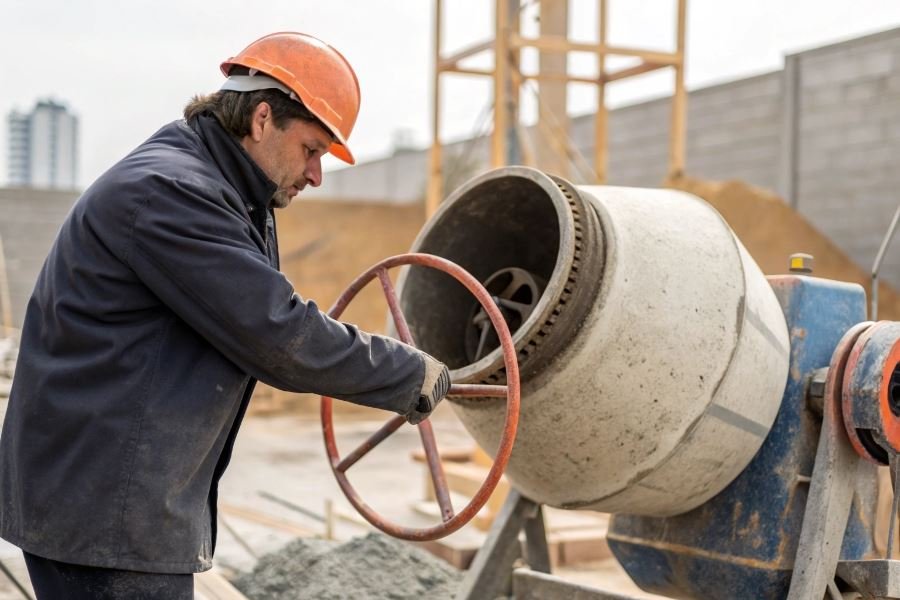
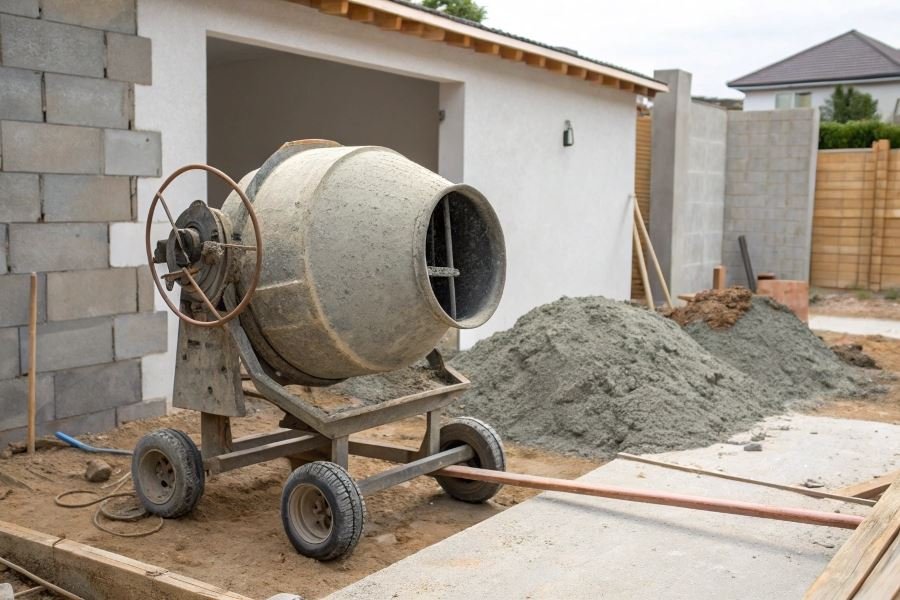
Mobile concrete mixers are self-contained units that combine cement, aggregates, water, and additives on-site to produce fresh concrete exactly when and where it’s needed. Unlike their stationary counterparts, these agile machines bring production directly to the job site, eliminating the race against time that traditionally defines concrete work.
The evolution of these mixers has been remarkable. From basic drum designs introduced in the 1940s to today’s sophisticated computer-controlled systems, the technology has advanced dramatically. The current market offers everything from trailer-mounted units perfect for DIY enthusiasts to truck-mounted behemoths capable of producing 30+ cubic yards per hour.
Where mobile mixers truly shine
These versatile machines excel in three primary scenarios:
- Remote locations where traditional ready-mix delivery isn’t feasible
- Small to medium projects requiring precise amounts of concrete
- Time-sensitive applications where concrete must be produced in controlled batches
“The ability to mix exactly what you need, when you need it, has transformed how we approach residential foundations,” notes one veteran contractor who switched to mobile mixing five years ago.
For renovation projects, infrastructure repairs, and agricultural applications, mobile mixers offer unparalleled flexibility. They’re particularly valuable for projects in environmentally sensitive areas, where minimizing heavy traffic and potential spills is essential.
The Ultimate Mobile Concrete Mixer Breakdown
When job site flexibility meets concrete production, magic happens. Mobile concrete mixers have revolutionized construction projects across America, offering solutions that traditional methods simply can’t match. But are they the right choice for every project? Let’s dive into what makes these portable powerhouses tick.
Mobility Meets Production Power
The primary appeal of mobile concrete mixers lies in their go-anywhere capability. These units bring production directly to your job site, eliminating the logistical headaches of coordinating ready-mix deliveries. Mobile concrete mixers: advantages and disadvantages become immediately apparent when you’re working in remote locations or areas with limited access. The ability to drive up, mix exactly what you need, and pour immediately creates workflow efficiencies that can dramatically reduce project timelines.
Cost savings emerge from multiple angles. First, you’re paying only for the materials you actually use—no more ordering extra to account for setting times or potential delays. Second, you eliminate the premium charges for delivery, especially to remote locations. For smaller projects, this can translate to savings of 15-30% compared to traditional ready-mix solutions.
On-Demand Production Excellence
The “mix as you go” capability represents perhaps the most significant advantage. With a Cemen Tech or Zimmerman mobile mixer, you can:
- Produce multiple mix designs in a single day
- Adjust slump on-site to meet changing requirements
- Mix only what you need, when you need it
- Eliminate waste from unused concrete
This flexibility proves invaluable for projects requiring multiple pours with different specifications or when working in unpredictable weather conditions.
Capacity Constraints and Maintenance Realities
Despite their advantages, mobile mixers come with notable limitations:
| Limitation | Impact | Mitigation Strategy |
|---|---|---|
| Limited capacity (typically 1-12 cubic yards) | Inefficient for large continuous pours | Schedule multiple units or segment pours |
| Higher maintenance requirements | Increased downtime potential | Implement rigorous preventative maintenance |
| Operator expertise needed | Learning curve for quality production | Invest in comprehensive training programs |
The mechanical complexity of these units demands consistent maintenance. Unlike stationary plants with dedicated maintenance teams, mobile units often rely on operator vigilance to prevent costly breakdowns. Hydraulic systems, mixing drums, and water delivery components require regular inspection and service.
The Mobile vs. Stationary Showdown
When comparing mobile mixers to their stationary counterparts, several key differences emerge:
Production volume stands as the most obvious distinction. Stationary plants can produce 50-150 cubic yards per hour, dwarfing the 8-12 cubic yards typical of larger mobile units. For massive infrastructure projects, this production gap becomes critical.
Quality consistency tends to favor stationary plants, which benefit from computerized batching systems and controlled environments. However, modern mobile mixers from manufacturers like Volumech have narrowed this gap significantly with advanced metering and mixing technology.
Operational costs tell a nuanced story. While stationary plants benefit from economies of scale, they require substantial initial investment and ongoing overhead. Mobile units offer lower entry costs and operational flexibility but may prove more expensive per cubic yard for large-volume projects.
The environmental footprint comparison also deserves consideration. Mobile mixers can reduce fuel consumption and emissions by eliminating multiple delivery trucks, particularly valuable for projects in environmentally sensitive areas or congested urban environments.
For contractors balancing diverse project requirements, understanding these tradeoffs becomes essential to making equipment decisions that maximize both productivity and profitability.
Making Smart Choices With Mobile Concrete Mixers
When investing in construction equipment, few decisions impact project efficiency as significantly as your concrete mixing solution. Mobile concrete mixers represent a compelling option for many operations, but maximizing their value requires thoughtful evaluation of your specific needs and implementation of strategic practices.
Matching mixers to your project demands
The perfect mobile mixer for your operation depends on several critical factors:
Project scale and volume requirements determine the ideal mixer capacity. Small residential projects might only need a 1-3 cubic yard mixer, while commercial jobs often require 5+ cubic yards per batch.
Site accessibility considerations should guide your equipment selection. Projects with limited access benefit from compact trailer-mounted units, while open construction sites can accommodate larger truck-mounted systems.
Concrete specification requirements vary dramatically between applications. Projects demanding specialized mixes with precise slump control or admixtures may justify investing in mixers with advanced batching technology and digital monitoring.
The most expensive mixer isn’t always the best choice—the ideal equipment matches your specific workflow, volume needs, and quality requirements.
Budget constraints must be balanced against productivity needs. While purchasing may seem cost-effective for long-term use, leasing offers flexibility for shorter projects without maintenance responsibilities.
Maximizing mobile mixer advantages
Experienced operators consistently achieve better results by implementing these proven practices:
-
Establish rigorous maintenance schedules with daily inspections of mixing drums, hydraulic systems, and water delivery components to prevent costly downtime.
-
Train operators thoroughly on both equipment operation and mix design principles to ensure consistent quality across batches.
-
Optimize material staging by positioning aggregate and cement supplies strategically to minimize loading time between batches.
-
Implement quality control protocols with regular slump testing and strength verification to maintain consistent concrete properties.
| Best Practice | Benefit | Implementation Challenge |
|---|---|---|
| Preventative maintenance | Reduces downtime by 60-70% | Requires disciplined scheduling |
| Operator certification | Improves mix consistency | Initial training investment |
| Material staging optimization | Increases daily output | Requires site planning |
| Quality testing protocols | Ensures specification compliance | Needs testing equipment |
The future of mobile concrete technology
The mobile concrete mixing industry continues to evolve with innovations that promise to address current limitations:
Electric and hybrid power systems from manufacturers like Cemen Tech are reducing emissions and operating costs while maintaining performance standards.
Advanced automation technologies are transforming batch consistency through precise measurement systems and computer-controlled mixing cycles that eliminate human error variables.
Material science advancements are enabling specialty mixes with extended workability times and reduced water requirements, perfectly suited for mobile mixing applications.
Connectivity and telematics integration allows fleet managers to monitor equipment performance, schedule maintenance based on actual usage patterns, and optimize deployment across multiple job sites.
The most forward-thinking contractors are already embracing these innovations, recognizing that early adoption provides competitive advantages in efficiency, quality control, and sustainability compliance.
By carefully evaluating project requirements, implementing operational best practices, and staying informed about emerging technologies, construction professionals can maximize the substantial benefits mobile concrete mixers offer while minimizing their limitations.
Discover the key advantages and limitations of mobile concrete mixers for construction projects. Learn when portable mixers outperform stationary plants, maintenance requirements, and how to maximize efficiency for your specific job site needs.
Discover the key advantages and limitations of mobile concrete mixers for construction projects. Learn when portable mixers outperform stationary plants, maintenance requirements, and how to maximize efficiency for your specific job site needs.