
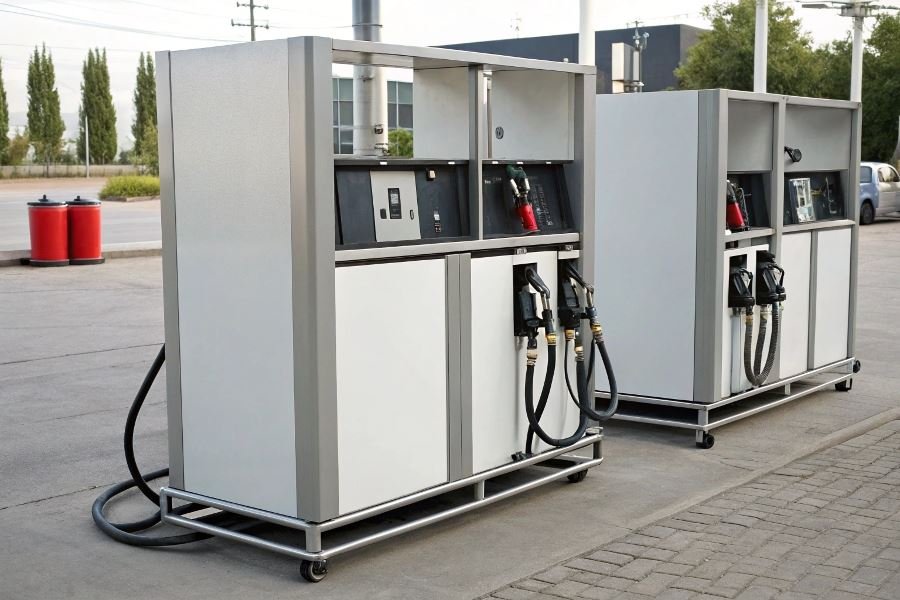
What if you could bring the gas station to your equipment instead of the other way around? That’s exactly what mobile fuel dispensing kits offer—and they’re revolutionizing how businesses handle their fueling operations.
These portable fueling systems are compact, transportable units designed to safely store and dispense fuel wherever your equipment operates. Think of them as your personal gas station on wheels, eliminating those costly trips to fuel depots and keeping your machinery running without interruption.
When evaluating the top mobile fuel dispensing solutions, three critical components demand your attention: the tank (typically ranging from 100 to 1,000 gallons), the pump system (manual or electric), and the dispensing equipment (nozzles, meters, and filtration systems). The best kits integrate these elements with safety features like spill containment, locking mechanisms, and DOT-compliant construction.
Why businesses are making the switch
Mobile fueling delivers immediate ROI through:
- Time efficiency: Eliminate travel time to fueling stations
- Labor optimization: Reduce employee downtime during refueling operations
- Consumption control: Track every gallon with built-in metering systems
- Theft prevention: Secure access prevents unauthorized fuel use
For construction companies, agricultural operations, and fleet managers, these portable systems transform fuel from a logistical headache into a strategic advantage. With fuel costs representing up to 30% of operating expenses for many equipment-intensive businesses, the control and efficiency these kits provide translates directly to improved profitability.
Mobile Fuel Dispensing Kits That Revolutionize On-Site Refueling
When operations demand fuel delivery directly to equipment, having the right mobile dispensing solution becomes critical. The market offers various portable fuel systems designed for specific applications, each with unique features that address particular industry needs. Let’s examine the top three mobile fuel dispensing kits that have proven their worth across different operational environments.
Industry professionals consistently recommend certain mobile fuel dispensing kits based on reliability, flow rate, and durability factors. These portable systems have transformed how businesses manage their fueling operations, eliminating downtime and boosting productivity across construction sites, fleet yards, and emergency response scenarios.
Rugged Performance for Construction and Agriculture
The GasPro Contractor 130G stands as the premier choice for construction sites and agricultural operations. This system combines a 130-gallon DOT-approved tank with a high-performance 20 GPM pump that handles the demanding conditions of work sites.
What separates this unit from competitors:
- Reinforced frame construction withstanding vibration and rough terrain
- Integrated filtration system protecting equipment from contaminated fuel
- Four-point lifting design for easy transport between locations
The automatic shut-off nozzle prevents spills while the digital flow meter tracks every drop dispensed, making it ideal for billing across multiple projects or tracking usage by equipment type.
| Feature | Specification | Benefit |
|---|---|---|
| Tank Capacity | 130 gallons | Full day operation without refills |
| Flow Rate | 20 GPM | Refuels heavy equipment in minutes |
| Power Source | 12V DC / Solar option | Works anywhere without external power |
| Weight (empty) | 315 lbs | Transportable via pickup truck |
Fleet Management Efficiency Champion
Fleet operations require precision, speed, and accountability in their fueling systems. The FleetMaster Pro 250 delivers with its comprehensive tracking capabilities and rapid dispensing technology.
This system features:
- Multi-user authentication with 100 programmable user codes
- Cellular data transmission sending real-time fueling records to management software
- Dual-hose configuration allowing simultaneous diesel and gasoline dispensing
The integrated telematics system automatically records vehicle ID, mileage, gallons dispensed, and operator information with each transaction. This eliminates manual record-keeping while providing fleet managers with actionable data for optimizing fuel consumption.
| Feature | Specification | Benefit |
|---|---|---|
| Tank Capacity | 250 gallons | Serves multiple vehicles before refilling |
| Flow Rate | 25 GPM | Minimizes driver downtime |
| Tracking | Cloud-based software | Automated reporting and analytics |
| Security | Biometric options | Prevents unauthorized access |
Remote Location and Emergency Response Solution
The RapidFuel Commander X represents the premium tier for organizations operating in remote locations or providing emergency services. Engineered for extreme conditions, this system delivers reliability when standard infrastructure isn’t available.
Key advantages include:
- Self-contained power system with generator backup
- Multi-fuel capability handling diesel, gasoline, and kerosene
- Satellite communication option for truly remote deployment
The weatherproof housing protects components in temperatures from -40°F to 120°F, while the military-grade filtration system ensures clean fuel delivery even in dusty or humid environments. For emergency response teams, the quick-deploy design allows setup in under 5 minutes.
| Feature | Specification | Benefit |
|---|---|---|
| Tank Capacity | 190 gallons | Extended operation in isolated areas |
| Flow Rate | 30 GPM | Rapid refueling during critical situations |
| Construction | Aircraft-grade aluminum | Lightweight yet extremely durable |
| Monitoring | Remote tank level sensing | Prevents unexpected empty tanks |
Each of these systems represents the pinnacle of mobile fuel dispensing technology for its specific application, combining durability, efficiency, and specialized features that address the unique challenges of different operational environments.
Making the Smart Investment in Mobile Fuel Dispensing
When selecting from the top mobile fuel dispensing kits, the decision extends far beyond the initial price tag. Let’s break down the critical factors that separate a good investment from a great one, helping you navigate the complexities of cost, compliance, and long-term value.
The true cost equation
Mobile fuel dispensing systems vary dramatically in price points, with entry-level options starting around $2,500 and premium systems reaching $15,000+. However, the sticker price tells only part of the story:
| System Component | Economy Models | Mid-Range | Premium Systems |
|---|---|---|---|
| Pump Flow Rate | 15-20 GPM | 25-35 GPM | 40+ GPM |
| Tank Capacity | 100-200 gal | 300-500 gal | 500-1000+ gal |
| Construction | Powder-coated steel | Galvanized steel | Stainless steel |
| Warranty | 1 year limited | 3-5 years | 5-10 years comprehensive |
| Annual Maintenance | $500-800 | $300-500 | $200-400 |
The total cost of ownership reveals surprising insights. Premium systems from manufacturers like Western Global often deliver lower per-gallon dispensing costs over a 5-year period despite higher upfront investment.
Durability meets performance
The performance-durability matrix determines daily operational efficiency and long-term reliability:
- Pump quality – Industrial-grade pumps from Fill-Rite deliver consistent performance with fewer maintenance issues
- Material construction – Marine-grade aluminum and stainless steel components resist corrosion in harsh environments
- Electronic components – Weather-sealed control systems prevent moisture damage and electrical failures
The difference between 98% and 99.5% uptime might seem small, but translates to approximately 55 hours of additional operational availability annually—critical during peak seasons or emergency situations.
Navigating regulatory waters
Compliance isn’t optional—it’s essential for legal operation and insurance coverage:
- UL/ULC listings for electrical components
- DOT/Transport Canada approvals for mobile units
- EPA Spill Prevention requirements
- NFPA 30/30A fire code compliance
- State/provincial specific regulations
Premium systems from TransCube typically arrive with comprehensive compliance documentation, while economy options may require additional modifications and certifications—adding hidden costs and deployment delays.
Safety as standard
The safest systems incorporate multiple redundant protections:
- Double-walled tank construction with 110% secondary containment
- Automatic shut-off mechanisms
- Spill containment basins
- Lockable equipment access
- Integrated fire suppression connections
These features not only protect personnel and equipment but often translate to insurance premium reductions of 5-15% annually.
The ROI perspective
When evaluating long-term value, consider these key metrics:
- Operational efficiency – Premium systems can reduce fueling time by 30-40%
- Maintenance intervals – Higher quality components extend service intervals from quarterly to semi-annually
- Resale value – Top-tier systems typically retain 40-50% of value after 5 years versus 15-25% for economy models
- Fuel savings – Advanced metering and anti-theft features can reduce fuel loss by 3-5%
For operations dispensing 50,000+ gallons annually, these efficiencies can generate ROI breakeven points in 24-36 months for premium systems, compared to 12-18 months for economy models—but with significantly higher total returns over the equipment lifecycle.
The wisest investment balances immediate budget constraints against long-term operational needs. For high-volume users, premium systems from industry leaders deliver compelling value despite higher initial costs. For occasional or light-duty applications, mid-range options often hit the sweet spot of performance, compliance, and affordability.
Discover the top 3 mobile fuel dispensing kits that boost business efficiency in 2025. Compare premium solutions for construction, fleet management, and remote operations with our expert analysis of performance, safety, and ROI.
Discover the top 3 mobile fuel dispensing kits that boost business efficiency in 2025. Compare premium solutions for construction, fleet management, and remote operations with our expert analysis of performance, safety, and ROI.