
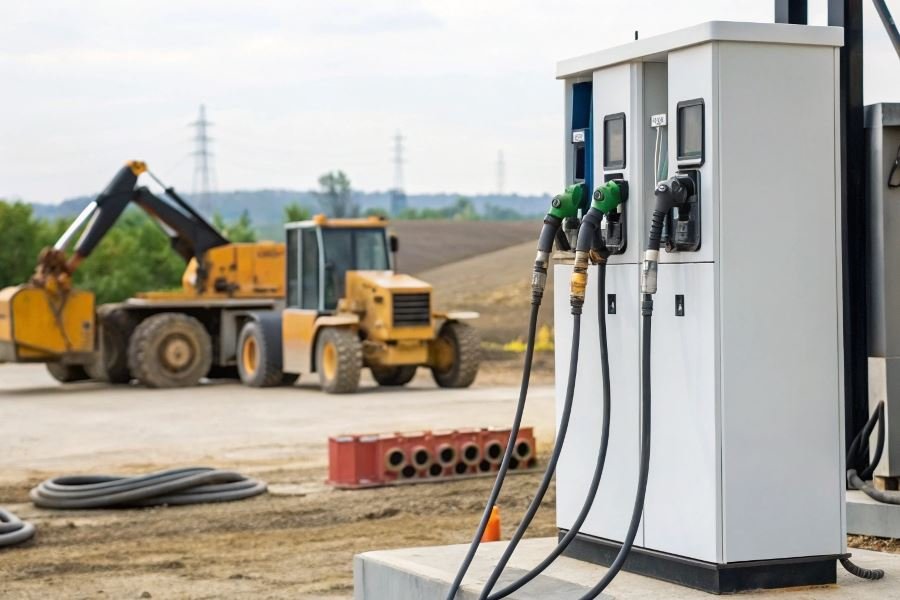
What if your fuel supply could come to you instead of the other way around? Mobile gas stations are revolutionizing how businesses manage their fuel needs, creating efficiency where traditional fueling methods fall short.
Mobile gas stations—compact, transportable fueling systems equipped with tanks, pumps, and dispensing equipment—deliver fuel directly to your commercial fleet or equipment. These versatile units range from trailer-mounted systems to truck-based solutions, eliminating time-consuming trips to conventional gas stations.
“Time is money, and mobile fueling recaptures both. Our construction clients save an average of 45 minutes per vehicle per day.” — Industry expert
The demand for these solutions has surged as businesses recognize their strategic advantages. Construction companies, agricultural operations, and logistics fleets increasingly rely on mobile fueling to maintain productivity during critical operational windows. When equipment sits idle waiting for refueling, profits evaporate.
Selecting the right mobile gas station involves navigating several crucial factors:
Key selection considerations:
- Capacity requirements: Matching tank size to your daily consumption
- Mobility needs: Determining whether you need full portability or semi-permanent placement
- Fuel type compatibility: Ensuring the system handles your specific fuel requirements
- Safety features: Evaluating containment systems and compliance with regulations
- Dispensing efficiency: Assessing flow rates and monitoring capabilities
The right mobile fueling solution transforms from mere convenience into a competitive advantage, turning fuel management from logistical headache into operational strength.
Technical Essentials That Make or Break Mobile Fueling
When evaluating mobile gas stations for commercial applications, the technical specifications ultimately determine your operational success. Fleet managers and construction site operators who’ve invested in the right equipment consistently report 30-40% improvements in operational efficiency. The criteria for selecting a mobile gas station for commercial use must prioritize three critical areas: capacity and flow capabilities, power source efficiency, and compliance with safety regulations.
Fuel Capacity and Flow Rate Dynamics
The heart of any mobile fueling system lies in its storage capacity and delivery speed. Commercial operations typically benefit from tanks ranging from 500 to 5,000 gallons, depending on application scale.
Flow rate capabilities directly impact your refueling timeline:
- Standard pumps: 15-25 gallons per minute
- High-performance systems: 35-50+ gallons per minute
For context, a 40-gallon equipment tank fills in under a minute with high-performance systems versus 2-3 minutes with standard options.
| Operation Type | Recommended Capacity | Optimal Flow Rate |
|----------------|---------------------|-------------------|
| Small Fleet  | 500-1,000 gallons  | 15-25 GPM     |
| Construction  | 1,000-2,500 gallons | 25-40 GPM     |
| Large Fleet  | 2,500-5,000 gallons | 35-50+ GPM    |
The Western Global TransCube and Thunder Creek Equipment mobile units exemplify the balance between capacity and mobility that commercial operations require.
Power Source Architecture and Efficiency
Mobile fueling stations operate on various power configurations, each with distinct advantages for specific commercial environments.
Traditional generator systems remain popular but newer hybrid and alternative options deliver compelling efficiency gains:
Generator-Powered Systems
- Pros: Independent operation, consistent performance
- Cons: Fuel consumption, noise levels, maintenance requirements
Solar-Battery Hybrids
- Pros: 70-80% reduction in operating costs, silent operation
- Cons: Higher initial investment, weather dependency
Vehicle-Integrated Power
- Pros: Simplified logistics, reduced equipment footprint
- Cons: Vehicle must remain on-site, limited power capacity
The Fuelchief mobile solutions with their innovative power management systems demonstrate how modern engineering addresses efficiency challenges in commercial fueling operations.
Safety Systems and Regulatory Compliance
Safety features aren’t merely checkboxes—they’re business protection mechanisms. The mobile fueling industry operates under stringent regulations from multiple agencies including EPA, DOT, and OSHA.
Essential Safety Components:
- Double-walled tank construction with 110% secondary containment
- Automated overflow prevention systems
- Spill containment kits and response protocols
- Fire suppression equipment rated for fuel fires
- Lockable access points and tamper-evident seals
Regulatory compliance varies by jurisdiction, but most commercial operations must adhere to:
- EPA SPCC (Spill Prevention, Control, and Countermeasure) requirements
- DOT hazardous materials transportation regulations
- NFPA 30 and 30A fire codes
- Local air quality management district permits
The Westmor Industries mobile fueling solutions exemplify how manufacturers integrate comprehensive safety systems while maintaining operational efficiency.
When selecting equipment, request documentation of UL listings, compliance certifications, and third-party testing results. These credentials verify that the equipment meets or exceeds industry standards—protecting both your operations and your liability exposure.
Operational Excellence in Mobile Fueling
Mobility that moves with your business
Mobile gas stations revolutionize commercial fueling by bringing the pump to your equipment rather than vice versa. The mobility features directly impact your operational efficiency. Look for units with robust all-terrain chassis systems that can navigate construction sites, agricultural fields, or remote locations. The best mobile stations feature pneumatic tires with deep treads and independent suspension systems that absorb shock on uneven terrain.
Transportation requirements vary significantly between models. Compact units weighing under 2,000 pounds can be towed by standard pickup trucks, while industrial-grade stations may require dedicated commercial haulers. The Western Global FuelCube exemplifies smart design with integrated fork pockets and lifting eyes that simplify loading and unloading processes.
Key mobility consideration: Verify the station’s turning radius and overall dimensions to ensure it can navigate your specific operational environment. A unit that’s perfect for open mining operations may prove impossible to maneuver in tight urban construction sites.
Service accessibility keeps you pumping
Maintenance needs represent the hidden costs of mobile fueling solutions. The most reliable units feature modular components designed for quick replacement rather than complex repairs. Look for stations with easily accessible filters, pumps, and metering systems.
Preventative maintenance schedules vary dramatically between manufacturers. Industry leaders like Westmor Industries design their mobile fueling solutions with 500-hour service intervals, while budget options may require attention every 200 hours of operation.
Service accessibility extends beyond the equipment itself to the manufacturer’s support network. Before purchasing, verify:
- Parts availability and typical delivery timeframes
- Existence of certified service technicians in your operational region
- Warranty terms and exclusions
- Emergency service options
The numbers behind the investment
The cost-benefit analysis for mobile fueling equipment extends far beyond the initial purchase price. A comprehensive return on investment calculation must consider:
| Cost Factor | Typical Range | Impact on ROI |
|---|---|---|
| Initial purchase | 15, 000−75,000 | Primary capital expenditure |
| Fuel savings | 5-15% | Reduced waste and theft |
| Labor efficiency | 30-60 minutes saved per vehicle daily | Significant operational savings |
| Maintenance | 1, 200−3,500 annually | Ongoing operational expense |
| Depreciation | 5-7 year useful life | Tax consideration |
The Thunder Creek Equipment DEF and fuel delivery systems demonstrate impressive ROI metrics, with most customers reporting complete investment recovery within 14-18 months of deployment.
ROI acceleration tip: Track downtime reduction meticulously. When equipment doesn’t need to travel for refueling, the productivity gains often exceed fuel cost savings by 3:1.
For operations consuming over 500 gallons weekly, mobile fueling stations typically deliver 15-20% better return on investment than fixed fueling infrastructure. This advantage increases proportionally with fuel volume and equipment dispersion across multiple locations.
The most successful implementations pair the mobile station with digital fuel management systems that track consumption patterns, automatically generate compliance documentation, and identify potential maintenance issues before they cause operational disruptions.
Discover the top 7 criteria for selecting commercial mobile gas stations that maximize efficiency and ROI. Learn about essential capacity, safety compliance, and operational features to make an informed investment for your business fleet needs.
Discover the top 7 criteria for selecting commercial mobile gas stations that maximize efficiency and ROI. Learn about essential capacity, safety compliance, and operational features to make an informed investment for your business fleet needs.

