Ever walked into a salon on a sweltering summer day only to find it feels like a sauna? Nothing drives clients away faster than uncomfortable temperatures while they’re trying to relax during treatments. For salon owners, maintaining the perfect climate isn’t just about comfort—it’s about business survival.
The temperature challenge in salon environments is uniquely complex. Between heat-generating styling tools, body heat from clients and staff, and the need for consistent comfort throughout service areas, salon cooling demands specialized solutions. The question isn’t simply whether you need cooling—it’s about which system will deliver optimal results for your specific space.
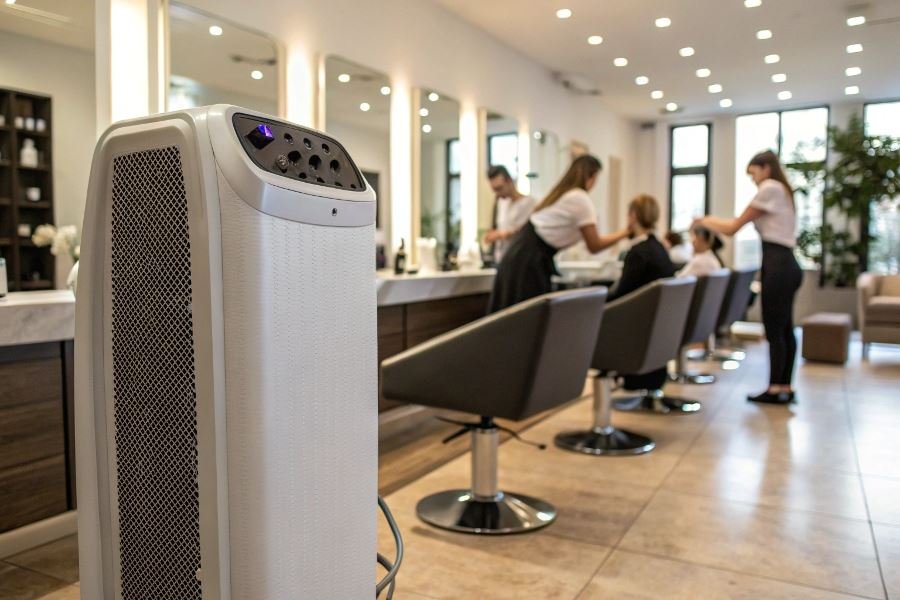
Mobile and stationary air conditioners represent two distinct approaches to salon climate control, each with compelling advantages for small business owners. Stationary systems offer permanent, whole-space cooling with professional installation, while mobile units provide flexibility, lower initial investment, and the ability to target cooling where it’s needed most.
When evaluating your options, several critical factors should guide your decision:
- Square footage and layout: Smaller, compartmentalized spaces often benefit from targeted cooling that mobile units provide
- Installation limitations: Rental properties or historic buildings may restrict permanent modifications
- Budget considerations: Initial costs versus long-term energy efficiency
- Noise levels: Essential for maintaining a relaxing salon atmosphere
- Cooling capacity: Measured in BTUs, this must match your space requirements
The ideal system balances immediate needs with long-term performance, ensuring your clients remain comfortable while your business remains profitable.
The Ultimate Showdown: Mobile vs Stationary AC for Your Salon Space
Installation and space considerations
When equipping your small salon with climate control, the installation process can make or break your decision. Stationary air conditioners require professional installation, including wall modifications and potentially permits. This permanent solution demands dedicated space for both indoor and outdoor units, with the compressor typically mounted on an exterior wall.
For salon owners with limited square footage or rental agreements, mobile air conditioners present a compelling alternative. These wheeled cooling units require only a nearby outlet and window access for the exhaust hose. The flexibility to position mobile units exactly where cooling is needed most gives salon owners tactical control over their environment. Mobile vs stationary air conditioners: which is better for a small salon often comes down to your specific spatial constraints and whether you have the authority to make permanent modifications to your property.
Cooling performance that delivers
The cooling capacity battle reveals significant differences:
| Feature | Mobile AC | Stationary AC |
|---|---|---|
| BTU Range | 8,000-14,000 | 12,000-24,000+ |
| Coverage Area | 150-500 sq ft | 400-1,500 sq ft |
| Cooling Speed | Moderate | Rapid |
| Temperature Consistency | Variable | Uniform |
Stationary systems from brands like Mitsubishi and Daikin deliver superior cooling power with precise temperature control—critical when clients are spending 1-3 hours in your chairs. Mobile units from manufacturers like Whynter can effectively cool smaller spaces but may struggle during extreme heat waves or in salons with high heat-generating equipment.
Energy efficiency and cost implications
The financial equation extends beyond purchase price. Stationary mini-split systems typically cost 1, 500−4,000 installed but operate at 20-30% greater efficiency than their mobile counterparts. This efficiency gap translates to approximately $10-15 monthly savings on utility bills for comparable cooling.
Mobile units priced between 300−700 offer lower initial investment but consume more electricity per BTU of cooling. For seasonal operations or part-time salon spaces, this trade-off might make financial sense despite higher operational costs.
Noise levels and client experience
Client comfort depends heavily on ambient noise levels. Modern stationary systems operate at whisper-quiet 19-30 decibels—comparable to soft breathing. This near-silent operation allows for uninterrupted conversation during styling sessions.
Mobile units generate 50-60 decibels of noise—similar to normal conversation—which can force stylists to speak louder and potentially create a less relaxing atmosphere. This noise factor becomes particularly relevant in salons offering meditation-focused services like scalp treatments or facial therapies.
Maintenance requirements and system longevity
Maintenance needs diverge significantly:
-
Stationary systems require professional filter cleaning twice yearly and professional inspection every 3-5 years, with expected lifespans of 15-20 years.
-
Mobile units need monthly filter cleaning, condensate tray emptying, and typically last 5-8 years before replacement becomes necessary.
For salon owners focused on long-term operations, the extended lifespan of stationary systems represents significant value despite higher upfront costs. Those with shorter planning horizons might find mobile units’ minimal commitment appealing despite more frequent maintenance.
The ideal cooling solution ultimately depends on your salon’s specific circumstances, including space constraints, budget parameters, and client experience priorities.
Making the Smart Climate Choice for Your Salon
When Mobile Air Conditioners Shine
Mobile air conditioning units prove invaluable in specific salon scenarios. First, rental properties with strict modification policies make portable units the only viable option. When landlords prohibit permanent installations or structural changes, a wheeled cooling solution saves the day while keeping your deposit intact.
Second, seasonal businesses or pop-up salon concepts benefit tremendously from portable units. If your salon experiences dramatic seasonal fluctuations or you operate temporary locations for special events, the ability to relocate cooling power precisely where needed creates operational flexibility that fixed systems simply cannot match.
Third, salons undergoing phased renovations find mobile units perfect for maintaining comfort during transitions. Rather than investing in a permanent system that might need relocation during remodeling, a portable unit provides targeted cooling exactly where your stylists and clients gather during construction phases.
When Stationary Systems Deliver Superior Results
Stationary air conditioners dominate in high-traffic salons where consistent cooling across multiple treatment rooms is essential. Split systems or central air deliver uniform temperature control throughout your space, eliminating hot spots that can make certain service areas uncomfortable.
For salons in extremely hot or humid climates, stationary systems offer superior dehumidification capabilities and cooling power. The enhanced BTU capacity of permanent installations handles challenging environments more effectively, maintaining professional comfort even during peak summer months.
Stationary units also excel in noise-sensitive salon environments where the ambient experience matters. While quality portable units have improved, fixed systems typically operate at significantly lower decibel levels—critical when clients seek relaxation during treatments requiring close proximity conversation.
Budget Realities and ROI Considerations
| System Type | Initial Investment | Monthly Operating Cost | Lifespan | Installation Complexity |
|---|---|---|---|---|
| Mobile | 300−700 | 50−100 | 3-5 years | Minimal |
| Stationary | 1, 500−4,000+ | 30−80 | 10-15 years | Professional required |
While mobile units offer lower upfront costs, their total cost of ownership often exceeds stationary systems over a 5+ year period. Portable units typically consume more electricity while cooling less efficiently, creating higher monthly operating expenses despite their lower purchase price.
The ROI calculation shifts dramatically based on property ownership. Salon owners with long-term leases or property ownership generally recoup stationary system investments through energy savings and enhanced client comfort, while short-term operators benefit from the flexibility of portable solutions.
Tailored Cooling Solutions by Salon Profile
For micro salons under 500 square feet, a quality portable unit from Whynter or Black+Decker often provides sufficient cooling without the commitment of permanent installation.
Mid-sized salons with open floor plans typically benefit from mini-split systems like those offered by Mitsubishi Electric or Daikin, which provide zoned cooling without extensive ductwork.
Multi-room salon suites almost universally require central air conditioning systems for consistent temperature management across divided spaces, with brands like Carrier and Trane offering commercial-grade solutions designed for business environments.
The ideal solution ultimately depends on your specific business model. Service-focused salons requiring precise temperature control for treatments like hot waxing or facials benefit from the reliability of stationary systems, while retail-heavy salon concepts with fluctuating floor layouts might leverage the flexibility of portable units to adapt cooling to changing store configurations.
Discover which cooling system best suits your small salon space. Compare installation, efficiency, noise levels, and costs of mobile vs stationary air conditioners to create the perfect environment for your clients and staff.
Discover which cooling system best suits your small salon space. Compare installation, efficiency, noise levels, and costs of mobile vs stationary air conditioners to create the perfect environment for your clients and staff.