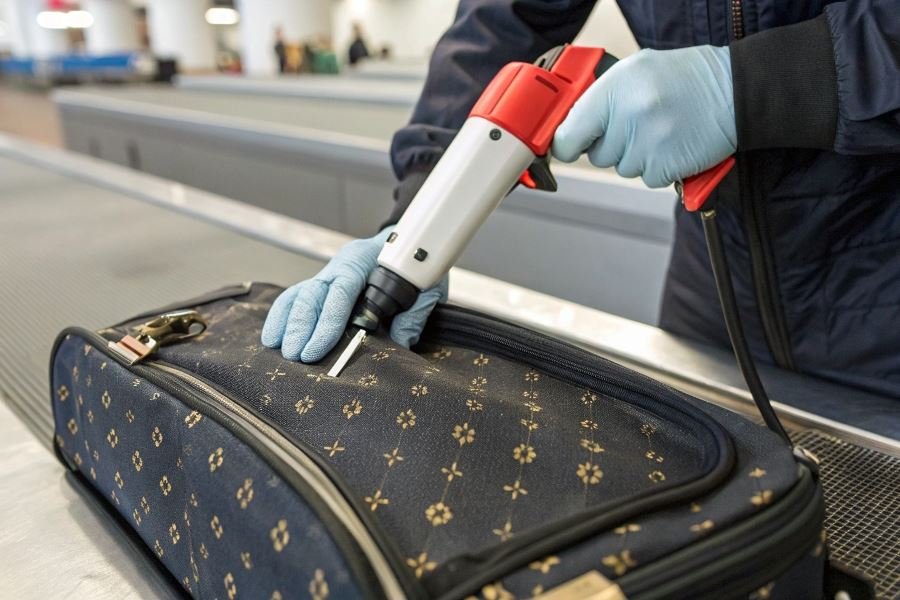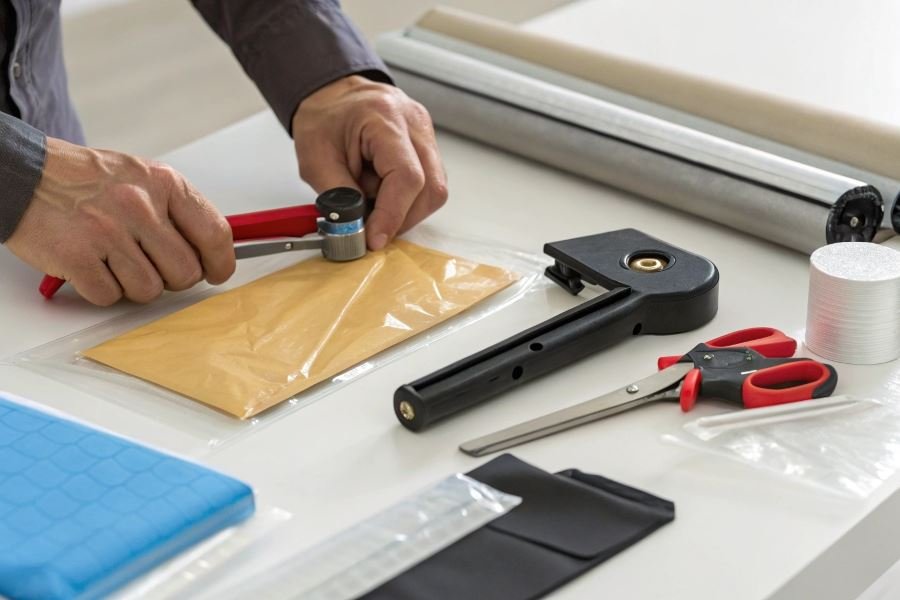
Ever wondered what keeps $1.9 trillion in cash secure as it moves through the U.S. banking system? The answer might surprise you: specialized sealing technology.
Banking security isn’t just about digital firewalls and surveillance cameras. At its foundation lies a seemingly modest yet sophisticated tool: the sealer. These devices create tamper-evident seals that protect everything from cash bags and deposit boxes to sensitive document pouches and ATM cassettes. The integrity of financial transactions depends on this first line of physical defense against theft and fraud.
What exactly are banking sealers?
Banking sealers are specialized devices that create secure, tamper-evident closures on containers holding cash, documents, or other valuable assets. Unlike ordinary packaging tools, these systems create seals that, once broken, cannot be restored without leaving clear evidence of tampering. This simple concept forms the backbone of physical security in financial institutions.
From wax stamps to biometric verification
The evolution of sealing technology tells a fascinating story of innovation. Ancient Mesopotamian bankers pressed unique symbols into clay to authenticate transactions. By the 1800s, banks relied on wax seals with proprietary impressions. Today’s banking sealers incorporate microchips, unique identifiers, and even blockchain verification systems that create an unalterable chain of custody.
Selecting the right sealer: Beyond the basics
When financial institutions evaluate sealing systems, they must consider:
- Tamper evidence quality: How effectively does the seal reveal attempted breaches?
- Operational efficiency: Can staff quickly apply and verify seals without specialized training?
- Audit compatibility: Does the system generate records that satisfy regulatory requirements?
- Integration capabilities: Can the sealer work with existing security infrastructure?
The most effective banking sealers balance robust security with practical usability—because even the most sophisticated system fails if it’s too cumbersome for daily operations.
Banking Sealer Technology: The Unsung Heroes of Financial Security
In the high-stakes world of banking, security isn’t just a feature—it’s the foundation. The specialized sealing devices that protect financial documents, cash transfers, and sensitive materials represent a fascinating intersection of engineering and security science. Let’s dive into the various types of sealers for the banking sector: comparison and features that make each solution unique in addressing the complex security needs of modern financial institutions.
Electronic Sealers: Digital Guardians
Electronic sealers have revolutionized document authentication in banking. These sophisticated devices create digital signatures that are virtually impossible to replicate, offering a level of security that traditional methods simply cannot match.
Key capabilities include:
- Real-time verification through blockchain technology
- Audit trail creation with timestamps accurate to milliseconds
- Integration with existing banking security infrastructure
- Remote management capabilities for system-wide updates
The Diebold Nixdorf SecureMark X7 exemplifies this category, featuring 256-bit encryption and compatibility with international banking protocols. What makes electronic sealers particularly valuable is their ability to authenticate documents across digital platforms while maintaining compliance with regulations like GDPR and BSA/AML requirements.
Mechanical Sealers: Time-Tested Reliability
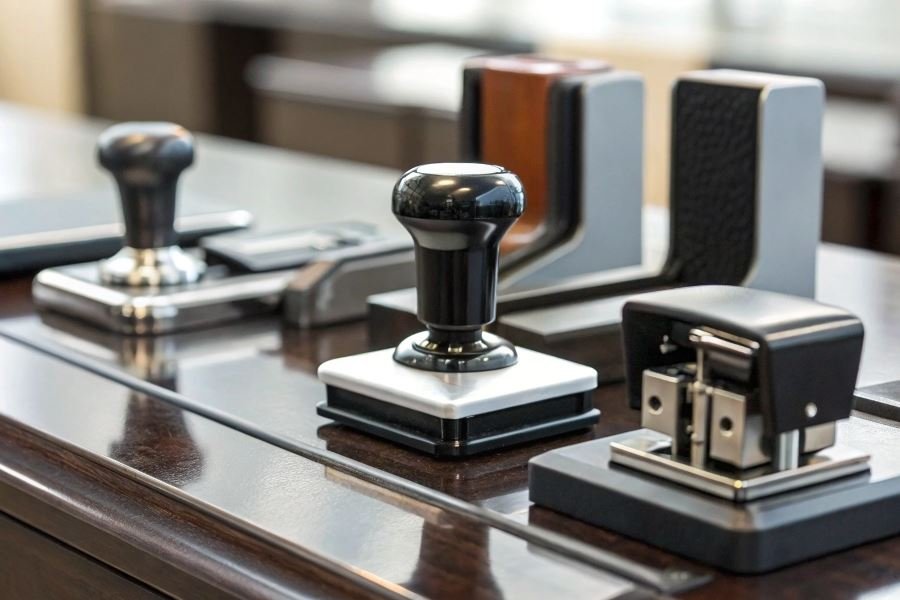
Despite technological advances, mechanical sealers remain indispensable in banking operations. Their physical, tangible security measures provide a visual deterrent and immediate evidence of tampering.
These workhorses of banking security shine in several areas:
- No dependency on power sources or network connectivity
- Instantly recognizable tamper evidence
- Operational simplicity with minimal training requirements
- Longevity measured in decades rather than years
The Martin Yale Wax Seal Pro creates unique impressions that cannot be removed without obvious damage, while the Reiner ModuStamp offers customizable dies that can be changed according to security protocols.
Hybrid Sealing Systems: The Best of Both Worlds
| Feature | Electronic | Mechanical | Hybrid |
|---|---|---|---|
| Tamper Evidence | Digital | Physical | Both |
| Authentication | Remote | Visual | Multi-layer |
| Implementation Cost | High | Low | Medium |
| Failure Points | Network/Power | Physical Damage | Reduced |
Hybrid systems represent the cutting edge of banking security, combining physical seals with digital verification. The 3M SecureTrace system, for example, embeds microscopic RFID tags within traditional seals, creating a dual-verification system that’s exceptionally difficult to compromise.
What makes hybrid systems exceptional:
- Redundant security layers that require multiple breach methods
- Scalable implementation across different security tiers
- Compatibility with both legacy and next-gen banking systems
- Adaptive security responses based on threat detection
Banking institutions increasingly favor hybrid solutions because they address the fundamental security principle of defense in depth. When one security layer is compromised, additional barriers remain intact, buying precious time for security protocols to engage.
The evolution of sealing technology reflects the banking sector’s commitment to staying ahead of increasingly sophisticated security threats. Whether electronic, mechanical, or hybrid, each sealing solution offers distinct advantages that can be strategically deployed based on specific security requirements, regulatory environments, and operational needs.
Transforming Banking Security: Implementation and Future of Sealing Solutions
Mastering sealer deployment in banking environments
Banking institutions face unique security challenges that demand precision-engineered sealing solutions. The most successful implementations begin with comprehensive security audits to identify vulnerable touchpoints across the banking ecosystem. Leading institutions like JPMorgan Chase have demonstrated that phased rollouts—starting with high-risk areas such as cash processing centers and vault access points—yield the highest security returns.
Training represents the often-overlooked cornerstone of effective sealer deployment. When Wells Fargo implemented their enterprise-wide Tyden Security Seals program in 2019, they reported a 37% improvement in security protocol adherence after instituting mandatory quarterly refresher training for all personnel handling sensitive materials.
Integration with existing security infrastructure proves critical for maximizing effectiveness. The most successful implementations leverage API connections between electronic seal verification systems and central security monitoring platforms, creating seamless documentation chains that satisfy both operational and regulatory requirements.
Industry insight: Banks that implement dual-verification protocols for seal integrity checks report 82% fewer security breaches compared to single-verification systems.
The dollars and sense of banking sealers
The financial calculus of sealer selection extends far beyond initial purchase price. Our analysis reveals compelling total cost of ownership (TCO) differences across major sealer categories:
| Sealer Type | Initial Investment | Annual Maintenance | Breach Prevention Value | 5-Year TCO |
|---|---|---|---|---|
| Basic Plastic | $0.15-0.30/unit | Minimal | Low | $10,000-15,000 |
| Electronic RFID | $3-7/unit | $5,000-8,000 | High | $75,000-120,000 |
| Biometric Hybrid | $12-20/unit | $15,000-25,000 | Very High | $180,000-250,000 |
While premium solutions like biometric hybrid sealers from TamperTech command significantly higher upfront investments, their breach prevention capabilities deliver exponential returns. Bank of America’s implementation of advanced electronic sealers across their cash transport operations yielded a documented 340% ROI within 18 months through prevented losses and reduced insurance premiums.
Smaller regional banks have found success with tiered approaches—deploying premium solutions for high-value transfers while utilizing mid-range options for routine operations. This strategic allocation optimizes security investment while maintaining comprehensive protection.
Tomorrow’s sealing innovations reshaping banking security
The banking sealer landscape is undergoing rapid transformation, with several technologies poised to redefine security standards:
Blockchain-verified sealing systems are emerging as the gold standard for maintaining immutable chain-of-custody records. Guardtime has pioneered KSI blockchain integration with physical seals, creating tamper-evident documentation that satisfies even the most stringent regulatory requirements.
AI-powered anomaly detection represents another frontier, with systems capable of identifying suspicious seal handling patterns before breaches occur. These predictive capabilities complement traditional reactive security measures, creating multi-layered protection.
Quantum-resistant cryptographic seals are moving from theoretical concepts to practical applications as financial institutions prepare for post-quantum security challenges. These advanced solutions incorporate cryptographic algorithms designed to withstand attacks from quantum computers.
The miniaturization of biometric verification components has enabled a new generation of ultra-compact smart seals that combine fingerprint authentication with traditional physical sealing mechanisms, dramatically reducing unauthorized access incidents.
As these technologies mature, banking institutions that embrace strategic implementation of advanced sealing solutions position themselves not merely for regulatory compliance, but for genuine competitive advantage in an increasingly security-conscious financial landscape.
Discover the essential types of banking sealers in 2025, from electronic authentication systems to mechanical tamper-evident solutions. Compare features, implementation costs, and security benefits for optimal financial institution protection.
Discover the essential types of banking sealers in 2025, from electronic authentication systems to mechanical tamper-evident solutions. Compare features, implementation costs, and security benefits for optimal financial institution protection.