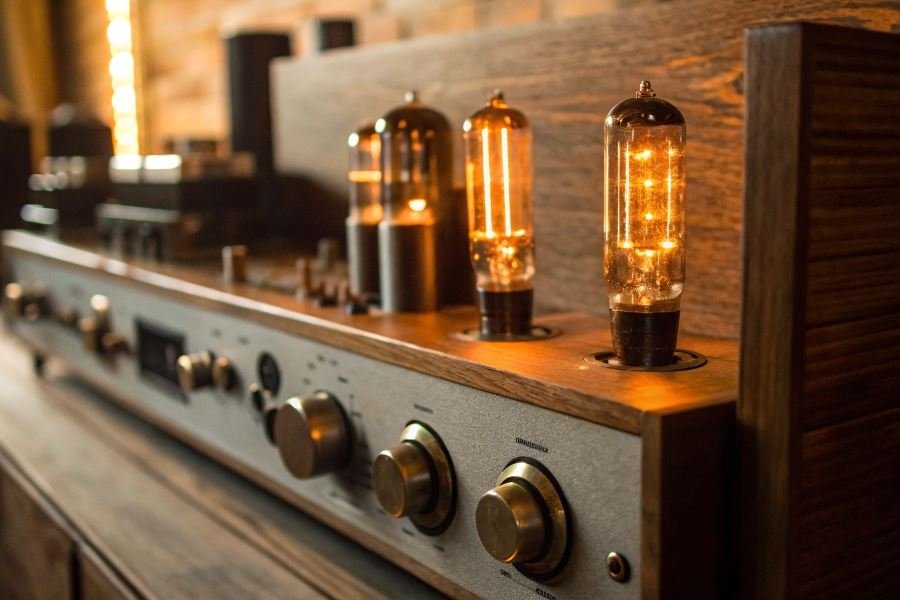
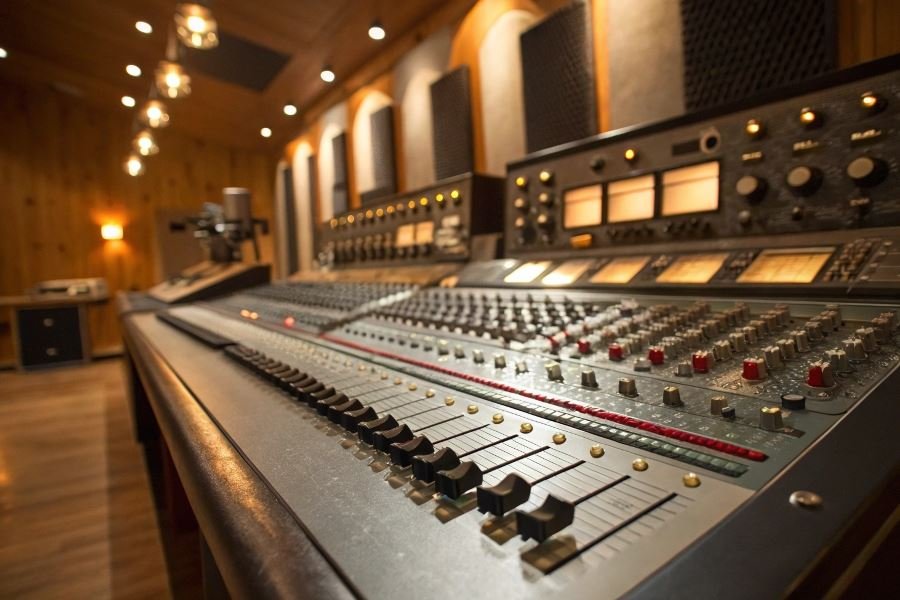
Ever wondered how professional sound engineers blend dozens of audio sources into one cohesive mix without distortion? The answer lies in a piece of equipment that rarely gets the spotlight: the multichannel summator.
Multichannel summators serve as the unsung heroes in audio processing chains, performing the critical task of combining multiple audio signals while maintaining signal integrity. Unlike simple mixers that can introduce phase issues and signal degradation, high-quality summators preserve the sonic character of each input while creating a mathematically precise sum of all channels.
What exactly is a multichannel summator?
At its core, a multichannel summator is an electronic device designed to combine multiple audio signals into a single output while maintaining proper impedance matching and signal levels. The fundamental principle involves summing voltages from different sources without creating unwanted interactions between channels.
The technology has evolved significantly since its introduction in professional audio during the 1960s. Early summators used passive resistor networks, while modern designs incorporate precision op-amps, transformers, and even digital processing to achieve transparent summation.
Key components that make or break performance
The heart of any quality summator includes:
- Summing amplifiers: Precision operational amplifiers that combine signals with minimal noise
- Input/output transformers: In high-end models, these provide galvanic isolation and subtle harmonic enhancement
- Impedance matching circuits: Essential for preventing signal loss when connecting multiple sources
- Gain staging controls: Allow for precise level adjustment to prevent overloading
The best multichannel summators don’t just combine signals—they enhance your entire audio chain through thoughtful engineering and component selection.
When Multichannel Summators Become Essential
Professional audio engineers know that signal routing can make or break a production. In complex audio environments, the ability to combine multiple signals efficiently isn’t just convenient—it’s critical. Multichannel summators serve as the unsung heroes in these scenarios, providing clean, transparent signal combination without the noise, phase issues, or signal degradation that can plague improvised solutions.
Understanding when multichannel summators are necessary and how to choose them requires familiarity with their applications across different audio environments. These specialized devices excel in situations where multiple audio sources need to be combined into fewer outputs while maintaining signal integrity. The right summator can transform a chaotic signal flow into a streamlined, professional setup that delivers consistently excellent results.
Professional Audio Production Environments
In professional recording studios and post-production facilities, multichannel summators prove indispensable when working with complex signal chains. Consider a scenario where you’re recording a drum kit with 12 microphones but only have an 8-channel interface. A quality summator allows you to combine certain elements (like overhead mics) before hitting your interface, preserving headroom and maintaining phase coherence.
Key applications include:
- Summing multiple microphone signals from a single instrument
- Creating custom monitor mixes for performers
- Combining stems during post-production
- Managing complex effects return paths
Studios using systems like Pro Tools or Logic Pro often integrate hardware summators to achieve that sought-after analog warmth while maintaining digital workflow efficiency.
Live Sound Reinforcement Scenarios
Live sound engineers face unique challenges that make multichannel summators particularly valuable. When managing front-of-house and monitor mixes simultaneously, the ability to combine signals intelligently becomes crucial.
In festival settings where multiple bands perform back-to-back, summators allow for quick transitions between acts by pre-configuring common input combinations.
| Application | Benefit | Typical Channel Count |
|---|---|---|
| Drum submixes | Simplified level control | 8-12 channels |
| Backing vocal groups | Cohesive processing | 3-6 channels |
| Orchestra sections | Streamlined mixing | 4-16 channels |
| IEM monitor mixes | Personalized monitoring | 8-16 channels |
Live sound professionals using digital consoles like the Yamaha CL Series or Allen & Heath dLive often incorporate summators to expand their mixing capabilities beyond console limitations.
Studio Recording and Mixing Applications
In the studio environment, multichannel summators shine during both tracking and mixing phases. During recording sessions, they allow engineers to create custom headphone mixes for performers while maintaining separate recording paths. During mixing, summators enable creative signal routing that digital-only workflows might constrain.
Notable studio applications include:
- Creating parallel processing chains
- Building custom reverb/effects combinations
- Implementing complex sidechain configurations
- Combining multiple synth outputs before processing
Many mixing engineers swear by analog summing through devices like the Dangerous Music 2-BUS+ or SSL Fusion to add depth and dimension that in-the-box mixing sometimes lacks.
The strategic implementation of multichannel summators across these environments demonstrates their versatility and importance in professional audio workflows. Whether you’re managing complex signal routing in a studio, creating monitor mixes for a live performance, or seeking that elusive analog character in your digital productions, the right summator can elevate your results from acceptable to exceptional.
Selecting the Perfect Multichannel Summator
When your audio setup demands precision, the right multichannel summator becomes your system’s unsung hero. These specialized devices combine multiple audio channels with minimal degradation, preserving the integrity of your sound while simplifying complex routing scenarios. Let’s dive into the critical factors that separate exceptional summators from merely adequate ones.
Signal integrity makes or breaks performance
The primary function of any summator is combining signals without compromising quality. Top-tier models maintain exceptional signal integrity through premium components and thoughtful circuit design.
Look for specifications that reveal the truth about performance:
- Total Harmonic Distortion (THD) below 0.005% indicates minimal signal coloration
- Signal-to-Noise Ratio (SNR) of 100dB or higher ensures quiet operation
- Frequency response of 20Hz-20kHz (±0.1dB) preserves the full audible spectrum
The difference between a mediocre and exceptional summator becomes immediately apparent when handling delicate acoustic instruments or complex mixes where transparency is non-negotiable.
Premium models like the Dangerous Music 2-BUS+ offer transformer-coupled outputs that add subtle harmonic enhancement while maintaining exceptional noise performance. Meanwhile, the Crane Song Trakker provides pristine summing with vanishingly low distortion figures that preserve every nuance of your source material.
Connectivity defines workflow possibilities
The most technically impressive summator becomes useless if it can’t integrate with your existing setup. Consider these connectivity factors:
| Connection Type | Advantages | Best For |
|---|---|---|
| Balanced XLR | Professional standard, noise rejection | Studio environments |
| TRS | Space-efficient, compatible with prosumer gear | Hybrid setups |
| DB25 | High-density connections, reduced cable clutter | Complex routing scenarios |
| Digital I/O | Direct DAW integration, no conversion losses | All-digital workflows |
Beyond connector types, evaluate:
- Channel count that accommodates your current and future needs
- Insert points for integrating outboard processing
- Monitoring options for auditioning summed signals
- Expansion capabilities for system growth
A summator with limited connectivity becomes a bottleneck rather than an enabler of creative possibilities.
Value assessment beyond the price tag
Budget considerations inevitably influence purchasing decisions, but value transcends mere cost. The SPL MixDream XP commands a premium price but delivers exceptional performance through proprietary 120V circuit technology that outperforms standard designs.
For those with more modest budgets, the Roll Music Folcrom offers remarkable performance at a more accessible price point without significant compromises in critical areas.
When assessing value:
- Calculate cost per channel to compare different models objectively
- Consider build quality and manufacturer support that extends lifespan
- Evaluate additional features like monitoring options or insert points
- Research reliability history through user reviews and forum discussions
The true cost of ownership extends beyond the initial purchase. A well-designed summator from a reputable manufacturer typically offers better long-term value through reliability, resale value, and performance that won’t become obsolete as your skills advance.
Remember that the ideal summator complements your specific workflow and sonic goals. The perfect choice balances technical performance, connectivity options, and budget considerations while enhancing rather than limiting your creative process.
Discover how to select the ideal multichannel summator for your audio setup. Learn essential technical specifications, applications in professional environments, and key quality factors to ensure optimal signal integrity and performance.
Discover how to select the ideal multichannel summator for your audio setup. Learn essential technical specifications, applications in professional environments, and key quality factors to ensure optimal signal integrity and performance.