The average professional loses 4.3 hours weekly searching for items buried in workspace clutter. Let that sink in. That’s more than half a workday vanishing into the abyss of scattered papers, misplaced tools, and the general chaos that has become the hallmark of modern desktops.
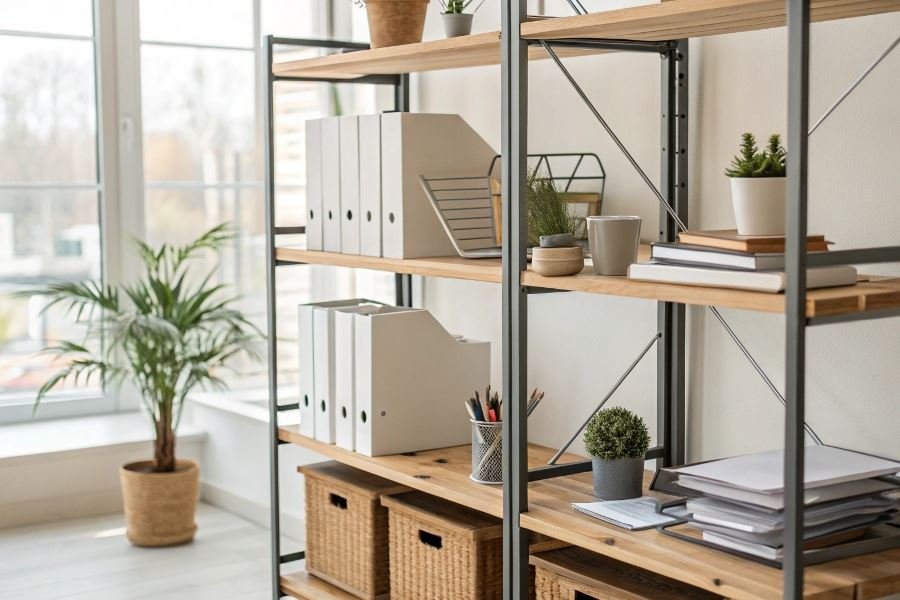
Multilevel desktop shelves have emerged as the unsung heroes of workspace optimization, transforming cluttered surfaces into strategic command centers. These vertical storage solutions leverage unused airspace above your desk, creating organized zones for everything from reference materials to tech accessories—all within arm’s reach but never in your way.
The workspace crisis isn’t just about aesthetics—it’s about cognitive load. Research from Princeton University’s Neuroscience Institute confirms that physical clutter competes for your attention, reducing your brain’s processing capacity and increasing stress hormones. Multilevel shelving systems create visual order that allows your brain to focus on what matters.
The productivity multiplier effect
When implemented thoughtfully, these systems deliver benefits beyond mere organization:
- Workflow enhancement: Items arranged by frequency of use and logical grouping
- Ergonomic advantages: Reduced reaching and twisting when essentials are properly positioned
- Psychological benefits: The documented “clear space, clear mind” phenomenon
The most compelling aspect? Adaptability. Unlike built-in solutions, quality desktop shelving systems can evolve with changing needs—expanding horizontally, vertically, or reconfiguring entirely as projects and priorities shift.
For professionals drowning in desktop disorder, multilevel shelving isn’t just furniture—it’s a fundamental productivity strategy that pays dividends with every reclaimed minute and completed task.
Essential Features That Define Superior Desktop Shelving Systems
When workspace real estate comes at a premium, the vertical dimension becomes your greatest ally. Multilevel desktop shelves: optimizing the workspace isn’t just about stacking things higher—it’s about creating an environment where everything has its place, within reach, without sacrificing efficiency or aesthetics.
Material Matters: Substance Behind the Style
The foundation of any quality shelving system begins with material selection. Each option brings distinct advantages to your workspace ecosystem:
Solid Wood Options deliver unmatched warmth and character. Cherry and walnut command premium prices ($150-300) but offer rich grain patterns that mature beautifully. Oak provides exceptional durability with prominent grain, while maple offers a lighter aesthetic with remarkable hardness.
Bamboo deserves special mention as a sustainable alternative that’s actually 30% harder than oak while carrying modern environmental credentials.
Metal Frameworks excel in structural integrity:
- Aluminum: Lightweight yet sturdy, resistant to corrosion
- Steel: Unmatched load-bearing capacity, often powder-coated for longevity
- Brass: Premium option offering distinctive patina development over time
Composite Materials bridge functionality and budget constraints:
- Engineered wood (MDF with veneer finishes)
- Acrylic/glass combinations for contemporary spaces
- Recycled materials for sustainability-focused setups
The material you select isn’t merely aesthetic—it fundamentally influences how your workspace functions and feels throughout your workday.
Architectural Intelligence: Vertical Mastery
The structural design of multilevel shelving determines both its stability and utility. Superior systems incorporate:
Cantilever Designs that eliminate support posts at the front, providing unobstructed access while maintaining structural integrity through rear-mounted brackets or wall attachment.
Modular Configurations allowing for expansion or reconfiguration as needs evolve. The Fully Jarvis system exemplifies this adaptability with components that can be added or repositioned without tools.
Graduated Depth Arrangements where upper shelves are shallower than lower ones, maintaining visibility while maximizing vertical storage capacity.
| Design Type | Weight Capacity | Ideal For | Typical Price Range |
|---|---|---|---|
| Fixed Height | 30-50 lbs per shelf | Stable, consistent setups | $75-150 |
| Adjustable | 20-40 lbs per shelf | Evolving workspace needs | $120-250 |
| Wall-Mounted | 15-30 lbs per shelf | Space-constrained areas | $90-180 |
Customization: Tailoring to Task
The most effective shelving systems adapt to specific workflow requirements rather than forcing adaptation from the user:
Adjustable Height Mechanisms using either:
- Notched track systems allowing 1-2″ incremental adjustments
- Infinitely adjustable clamp mechanisms for precise positioning
Integrated Cable Management solutions prevent the visual and functional chaos of tangled wires while protecting connections from strain.
Accessory Ecosystems extend functionality beyond basic shelving:
- Monitor arms that attach directly to the system
- Task lighting that mounts without consuming shelf space
- Drawer modules that slide beneath shelves
The Humanscale product line demonstrates how thoughtfully designed accessories can transform basic shelving into comprehensive workspace management.
When selecting a multilevel shelving system, prioritize features that specifically address your workflow challenges. The investment in quality materials, intelligent design, and customization options pays dividends in productivity and workspace satisfaction that far outweigh the initial cost difference.
Strategic Workspace Elevation Through Multilevel Shelving
Ergonomic Item Placement That Works
The science of workspace efficiency begins with a simple truth: items you reach for most should require the least effort. Multilevel desktop shelving transforms this principle into practice through strategic item placement.
Your primary work zone—the area directly in front of you extending to your natural reach radius—should remain relatively clear. Reserve your eye-level shelf for daily essentials: reference materials, project folders, or that inspiration piece that keeps your creativity flowing.
Position frequently accessed items at eye level or slightly below, where they require minimal neck movement and reaching effort.
The upper shelves work perfectly for:
- Visual references needed occasionally
- Decorative elements that inspire without distracting
- Ambient lighting that softens your workspace
Meanwhile, lower shelves should house:
- Heavier reference materials
- Technology that needs occasional access
- Storage containers for supplies
A study by the Ergonomics Research Society found that reducing unnecessary reaching by just 20% can decrease workplace fatigue by up to 30% over an eight-hour workday. Your shelf configuration isn’t just about aesthetics—it’s about preserving your energy for what matters.
Cable Management Mastery
The modern workspace battles an invisible enemy: cable chaos. Multilevel shelving systems offer a sophisticated solution when properly integrated with cable management.
The most effective multilevel shelves incorporate:
| Feature | Benefit | Implementation |
|---|---|---|
| Integrated channels | Conceals cables within the structure | Choose shelves with built-in routing paths |
| Cable clips | Prevents tangling and identifies lines | Attach to shelf undersides or backs |
| Power strip mounts | Centralizes connections | Secure to back of lower shelves |
The back of your shelving system is prime real estate for cable organization. Many premium shelving options from Fully or Uplift Desk include vertical channels specifically designed for cable routing.
For existing shelving, aftermarket solutions like cable sleeves and adhesive clips from Cable Matters transform chaotic connections into organized pathways. The goal isn’t just aesthetic—it’s functional. Every minute spent untangling cables is productivity lost.
When cables are properly managed, your workspace becomes more than organized—it becomes psychologically liberating.
Evolution-Ready Configurations
The most valuable workspace solutions grow with you. Your multilevel shelving system should adapt to changing projects, technologies, and work styles without requiring complete replacement.
Modular shelving components offer the highest adaptability value. Systems with adjustable heights, removable dividers, and interchangeable components provide flexibility as your needs evolve.
Consider these adaptability features when selecting your system:
- Adjustable shelf heights (minimum 1-inch increments)
- Removable or repositionable dividers
- Expansion capability with compatible add-ons
- Tool-free adjustment mechanisms
Maintenance matters too. Dust accumulation can transform an elegant solution into a workspace detractor. Select materials that resist fingerprints and can be quickly wiped clean—glass, treated wood, and certain metals maintain their appearance with minimal effort.
The best workspace solutions anticipate change rather than resist it.
Quarterly reassessment of your shelf configuration ensures your system evolves with your workflow. Ask yourself: “What items have I reached for most this quarter? What’s gathering dust?” Then adjust accordingly.
Your multilevel shelving isn’t just furniture—it’s a dynamic productivity partner that should adapt as seamlessly as you do to new challenges and opportunities.
Discover how multilevel desktop shelves can transform your cluttered workspace into an organized, productive environment. Learn about material options, ergonomic designs, and strategic placement techniques to maximize efficiency and minimize stress.
Discover how multilevel desktop shelves can transform your cluttered workspace into an organized, productive environment. Learn about material options, ergonomic designs, and strategic placement techniques to maximize efficiency and minimize stress.