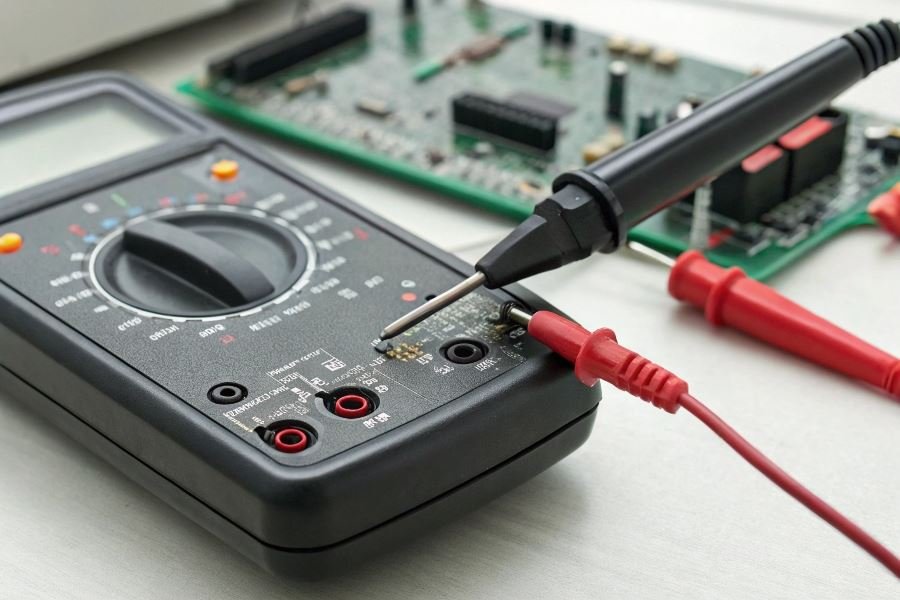
Ever picked up a multimeter and felt like you were holding a spaceship control panel? You’re not alone. This unassuming device might look intimidating at first glance, but it’s actually your best ally in understanding the invisible world of electricity that powers our lives.
A multimeter is essentially the Swiss Army knife of electrical testing—a single instrument that measures multiple electrical properties. Whether you’re troubleshooting a faulty appliance, working on a DIY electronics project, or simply trying to determine if a battery still has juice, a quality multimeter provides the answers you need without the guesswork.
What makes multimeters essential
Multimeters reveal what our senses cannot detect. Electricity is invisible, silent, and potentially dangerous when misunderstood. A multimeter transforms these invisible forces into readable measurements, allowing you to:
- Verify if circuits are live before touching them
- Diagnose electrical problems in vehicles and appliances
- Test batteries and power supplies
- Ensure your electrical projects are functioning correctly
Digital vs. analog: Choosing your perfect match
Digital multimeters dominate today’s market with their precise numerical readings, additional features, and ease of use. They display exact values on an LCD screen and often include helpful functions like data hold and auto-ranging.
Analog multimeters, with their sweeping needle displays, offer advantages for observing changing values and trends. While less precise than their digital counterparts, they excel at showing gradual changes in readings—perfect for adjusting circuits or watching fluctuating signals.
Anatomy of your electrical detective
Every standard multimeter includes these essential components:
- Display: Shows your measurement readings
- Selection dial: Rotary switch to choose what you’re measuring
- Ports: Where you connect your test leads
- Test leads: The probes you touch to the circuit (typically red for positive, black for negative)
The true power lies in understanding the core functions:
- Voltage measurement: Both AC (alternating current) and DC (direct current)
- Current measurement: How much electricity is flowing
- Resistance measurement: How much a component resists electrical flow
- Continuity testing: Verifies if a circuit is complete or broken
Mastering Multimeter Measurements
When you’re ready to dive into the world of electrical testing, knowing how to properly use a multimeter is like having a superpower in your toolbox. This essential device lets you peek into the invisible realm of electricity, revealing voltages, currents, and resistances that would otherwise remain mysteries. Let’s break down the step-by-step measurement techniques that will transform you from novice to confident multimeter user.
For anyone just starting their journey with electrical testing, learning how to properly use a multimeter: a guide for beginners should focus first on safety, then on mastering the core measurement techniques. With the right approach, you’ll be diagnosing electrical problems like a pro in no time.
Setting Up Your Multimeter Safely
Safety isn’t just a suggestion—it’s your top priority when working with electricity. Before taking any measurements:
- Inspect your multimeter for cracks, exposed wires, or damaged probes
- Verify the battery level to ensure accurate readings
- Select the appropriate function before connecting probes to a circuit
- Always start with the highest range when measuring unknown values
Remember that multimeters have category (CAT) ratings that indicate the environments they’re designed for. A CAT III or CAT IV rating is essential for working on household electrical systems.
The most dangerous mistake beginners make is measuring current directly across a power source. This creates a short circuit that can damage your meter or cause injury.
Measuring Voltage Like a Pro
Voltage measurements are among the most common tasks you’ll perform:
For DC Voltage:
- Set the dial to DC voltage (V with a straight line or V⎓)
- Connect the black probe to COM and red probe to V/Ω
- Place probes in parallel with the component being measured
- Read the display (positive reading means red probe is at higher potential)
For AC Voltage:
- Switch to AC voltage (V with a wavy line or V~)
- Maintain the same probe connections
- Measure in parallel across the circuit
- Note that AC readings show RMS (Root Mean Square) values
| Measurement Type | Symbol | Typical Ranges | Common Applications |
|---|---|---|---|
| DC Voltage | V⎓ | 200mV – 1000V | Batteries, electronics |
| AC Voltage | V~ | 200V – 750V | Wall outlets, appliances |
Measuring Current and Resistance
Current Measurement:
- Break the circuit where you want to measure current
- Set the dial to the appropriate current setting (A or mA)
- Place the multimeter in series with the circuit
- For higher currents, use the 10A socket (but only briefly)
Resistance Measurement:
- Power off the circuit completely
- Set the dial to resistance (Ω)
- Connect probes across the component
- Wait for the reading to stabilize
When measuring resistance, ensure the component is isolated from the circuit to prevent parallel paths from affecting your reading.
Testing Continuity and Diodes
Continuity Testing:
- Select the continuity function (usually marked with a sound wave symbol)
- Touch probes together to verify the beep works
- Test your circuit or component—a beep indicates a complete path
This function is invaluable for checking for breaks in wires or connections on a Fluke multimeter or similar quality instrument.
Diode Testing:
- Set the multimeter to diode test mode (diode symbol)
- Connect the red probe to the anode and black to the cathode
- A good diode shows a voltage drop (typically 0.6-0.7V for silicon diodes)
- Reverse the probes—a good diode shows “OL” (overload)
With these fundamental techniques mastered, you’ll be equipped to tackle most electrical troubleshooting tasks with confidence and safety. The multimeter truly is the Swiss Army knife of electrical work—versatile, precise, and indispensable.
Mastering Your Multimeter: Beyond the Basics
Common mistakes that can ruin your readings
Even experienced technicians occasionally slip up when using multimeters. The most frequent error? Using the wrong measurement mode. Connecting your Fluke multimeter to a circuit while in ohms mode when you intended to measure voltage can damage both your device and the circuit. Always verify your settings before connecting probes.
Another critical mistake is improper lead placement. When measuring current, your multimeter must be connected in series with the circuit—not in parallel as with voltage measurements. This distinction isn’t just technical; it’s the difference between getting accurate readings and potentially blowing a fuse.
Speaking of fuses, neglecting to check them is a costly oversight. Multimeters use specialized high-energy fuses that, when blown, render current measurements impossible while other functions appear normal. This “phantom functionality” leads many to mistakenly believe their meter is defective when a simple fuse replacement would solve the problem.
Never skip proper range selection. Starting with the highest range and working downward ensures protection against unexpected high readings that could damage your instrument.
Keeping your multimeter in prime condition
Your multimeter is precision equipment deserving proper care. Battery management tops the maintenance list—a weak battery can cause erratic readings long before it dies completely. Most quality meters like the Klein Tools MM600 include a battery indicator, but proactively replacing batteries every 6-12 months prevents unexpected failures during critical measurements.
Terminal cleanliness significantly impacts accuracy. Oxidation on probe tips or meter jacks introduces resistance that skews readings. A simple cleaning routine:
- Clean terminals with isopropyl alcohol and a cotton swab
- Inspect probe wires for cracks or exposed conductors
- Tighten any loose connections on probe handles
- Store with leads loosely coiled, never tightly wrapped
Calibration isn’t just for professionals. While laboratory-grade calibration requires specialized equipment, you can perform basic verification by measuring known values—like a fresh 1.5V battery or a precision resistor—to confirm your meter remains accurate.
Expanding your electrical testing arsenal
Once you’ve mastered basic multimeter operations, consider enhancing your capabilities with specialized testing tools:
| Tool | Primary Function | When You Need It |
|---|---|---|
| Clamp Meter | Non-contact current measurement | Measuring high currents without breaking circuits |
| Oscilloscope | Waveform visualization | Troubleshooting signal quality issues |
| LCR Meter | Component testing | Precise capacitor and inductor measurements |
For home electronics work, a logic probe complements your multimeter perfectly. While multimeters excel at analog measurements, logic probes detect digital signals and pulse patterns essential for troubleshooting microcontroller circuits.
Temperature measurement capabilities expand your diagnostic toolkit substantially. The Extech EX330 and similar models include temperature probes that help identify overheating components—often the first sign of impending electronic failure.
Consider investing in a multimeter with data logging capabilities. These instruments record measurements over time, revealing intermittent issues that spot checks might miss. For professionals and serious hobbyists, this feature transforms troubleshooting from guesswork to data-driven analysis.
By avoiding common mistakes, maintaining your equipment properly, and strategically expanding your testing capabilities, you’ll move beyond basic measurements to truly mastering electronic diagnostics. Your multimeter isn’t just a tool—it’s your window into understanding how circuits behave in the real world.
Learn how to properly use a multimeter with our comprehensive beginner's guide. Master voltage, current, and resistance measurements while avoiding common mistakes. Essential knowledge for DIY electrical projects and home repairs.
Learn how to properly use a multimeter with our comprehensive beginner's guide. Master voltage, current, and resistance measurements while avoiding common mistakes. Essential knowledge for DIY electrical projects and home repairs.