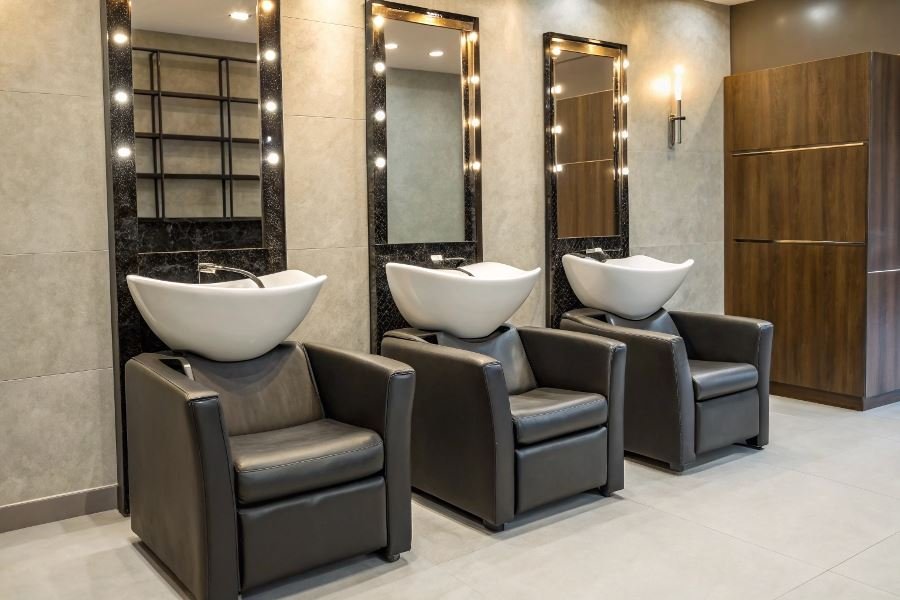
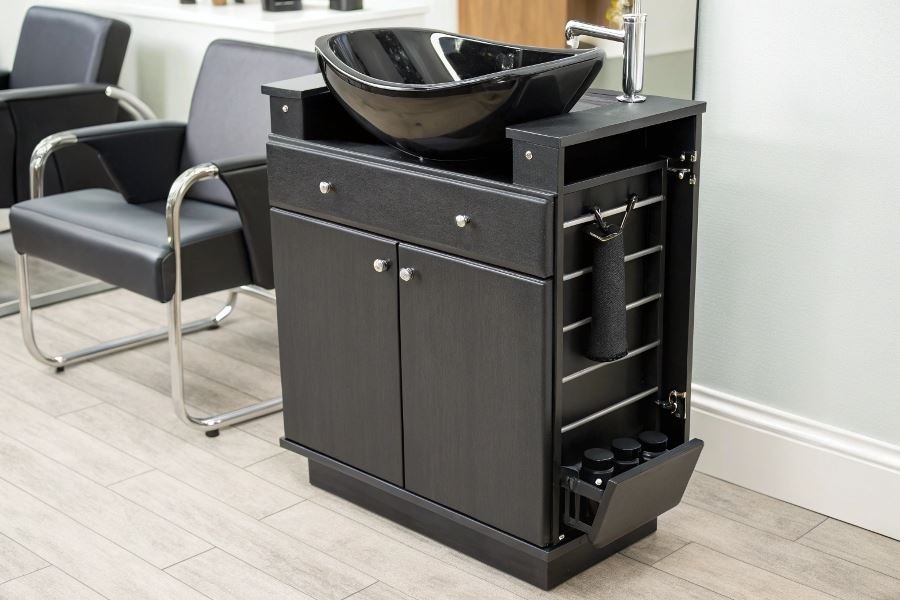
Ever walked out of a salon with a sore neck and wondered why that washing station felt like medieval torture? The washing area isn’t just a functional necessity—it’s the make-or-break touchpoint that clients remember long after their blowout fades.
The washing station serves as the silent ambassador of your salon’s commitment to excellence. When thoughtfully designed, it transforms a mundane hair wash into a signature experience that clients rave about. Beauty professionals know that design solutions for the washing area in a beauty salon directly impact both client satisfaction and operational efficiency—a well-designed station can reduce stylist fatigue by up to 40% while increasing service capacity.
Client comfort drives loyalty
Before investing in gleaming new basins or ergonomic chairs, consider the fundamentals: proper neck support, comfortable seating height, and adequate space between stations. The most successful salons prioritize customizable experiences—adjustable chairs and temperature-controlled water systems that accommodate everyone from petite clients to those with mobility challenges.
Efficiency fuels profitability
Smart layouts minimize stylist movement and maximize productivity. The difference between a poorly designed washing area and an optimized one? Up to 15 additional clients served per stylist each week.
Current design trends worth noting
The most forward-thinking salons are embracing:
- Sensory integration: Ambient lighting, aromatherapy diffusers, and sound-dampening materials
- Sustainability: Water-saving fixtures that reduce consumption by 65% without compromising experience
- Technology: Digital temperature controls and built-in massage functions
The washing area isn’t just where hair gets clean—it’s where client loyalty is silently cultivated with every rinse.
Ergonomic Excellence in Salon Washing Areas
The washing area of a beauty salon isn’t just a functional necessity—it’s the gateway to every transformative hair service. When designed thoughtfully, this space elevates the client experience while protecting stylists from the physical toll of repetitive movements. The strategic implementation of design solutions for the washing area in a beauty salon can dramatically impact both business efficiency and client satisfaction, making it a critical investment rather than an afterthought.
Sink and Chair Configurations That Work
The heart of any washing station is the relationship between sink and chair. Optimal height ratios between these elements can prevent stylist back strain while ensuring client neck comfort.
The ideal setup includes:
- Tilting basins with a 20° neck recession angle
- Adjustable chairs with hydraulic systems (like the Takara Belmont Yume series)
- 28-30 inch working height for stylists to maintain proper posture
A game-changing innovation is the forward-tilting basin that allows clients to face forward rather than backward. This configuration reduces neck strain by 60% compared to traditional backward-facing designs, according to ergonomic studies.
The most successful washing stations create a seamless experience where clients barely notice the transition between services—they only register the comfort.
Space-Maximizing Layouts for Any Salon
Square footage constraints shouldn’t compromise washing area functionality. Even compact salons can implement efficient designs through strategic planning.
| Salon Size | Recommended Layout | Minimum Space Required |
|---|---|---|
| Small (under 800 sq ft) | Linear wall configuration | 30 sq ft per station |
| Medium (800-1500 sq ft) | Island configuration | 40 sq ft per station |
| Large (1500+ sq ft) | Dedicated washing suite | 50+ sq ft per station |
For smaller spaces, dual-purpose stations that convert from styling to washing areas can increase utilization rates by up to 40%. The Gamma & Bross Wash Inn system exemplifies this approach with modular components that adapt to changing needs.
Medium-sized salons benefit from centralized washing islands that create natural workflow patterns and maximize stylist efficiency. This arrangement reduces walking distance between stations by an average of 15 steps per service—adding up to miles saved over a busy week.
Accessibility Beyond Compliance
Creating truly inclusive washing areas goes beyond meeting minimum ADA requirements—it’s about designing spaces where every client feels valued.
Essential accessibility features include:
- 30-inch by 48-inch clear floor space at each station
- At least one washing station with 27-inch knee clearance
- Lever-operated faucets requiring less than 5 pounds of force
- Non-slip flooring with coefficient of friction ≥0.6
The most forward-thinking salons incorporate adjustable-height basins like those from Pietranera that accommodate clients of all heights and mobility levels. These systems can be lowered for wheelchair users or raised for taller clients, ensuring everyone receives the same luxurious experience.
Thoughtful lighting design with 75-100 foot-candles at the washing area reduces eye strain for stylists while creating a relaxing atmosphere for clients. Dimmable options allow customization based on service type and client preference.
By prioritizing ergonomics, space efficiency, and accessibility, salon owners create washing areas that serve as both functional workspaces and comfort zones—a combination that builds client loyalty while protecting their most valuable asset: their staff.
Maximizing Your Salon’s Washing Area Investment
Budget-friendly vs premium approaches
The washing area represents a critical touchpoint in your salon’s client experience. When balancing costs against quality, smart salon owners recognize that certain elements demand premium investment while others allow for strategic savings.
Premium washing stations from brands like Takara Belmont can range from $3,000 to $10,000+ per unit, delivering exceptional comfort, durability, and aesthetic appeal. These high-end options typically feature:
- Fully electric reclining mechanisms
- Memory foam cushioning
- Integrated massage systems
- Ceramic basins with temperature control
- 10+ year warranties
Budget-conscious alternatives don’t necessarily mean compromising the client experience. Mid-range options from manufacturers like Collins ($1,200-2,500) deliver professional quality while economizing on non-essential features.
The washing area generates no direct revenue but influences every service that follows. Invest proportionally to your clientele’s expectations.
Where you absolutely shouldn’t cut corners:
- Plumbing infrastructure
- Ergonomic neck rests
- Water pressure/temperature systems
- Slip-resistant flooring
A strategic hybrid approach often yields the best results—premium chairs paired with budget-friendly storage solutions, or mid-range stations enhanced with luxury touches like premium towel warmers.
Professional designers vs DIY solutions
The design expertise spectrum offers distinct advantages at each level:
| Approach | Average Cost | Best For | Potential Drawbacks |
|---|---|---|---|
| Full-service design firm | $10,000-25,000 | New builds, complete renovations | Highest initial investment |
| Independent designer | $3,000-8,000 | Targeted redesigns, brand refreshes | May lack specialized salon knowledge |
| Manufacturer consultation | Often complimentary with purchase | Equipment-focused upgrades | Limited scope beyond product placement |
| DIY with planning tools | $0-500 | Budget constraints, minor updates | Potential ergonomic/workflow issues |
Working with specialized salon designers like Michele Pelafas brings industry-specific expertise that translates to optimized workflows and compliance with accessibility requirements. These professionals understand the unique demands of beauty environments—from water-resistant materials to proper drainage slopes.
DIY approaches work best when you have:
- Clear spatial understanding
- Defined aesthetic vision
- Realistic technical knowledge
- Manufacturer installation support
Many equipment suppliers offer complimentary space planning when purchasing multiple stations, providing a middle-ground solution that combines professional input with cost efficiency.
Measuring ROI through satisfaction and efficiency
The true value of washing area improvements manifests in both tangible and intangible returns:
Operational efficiency metrics:
- Reduced water consumption (smart fixtures can cut usage by 30%)
- Decreased stylist fatigue and related absenteeism
- Faster service turnaround times (properly positioned stations can save 2-3 minutes per client)
- Extended equipment lifespan through proper installation
Client satisfaction indicators:
- Direct feedback via post-service surveys
- Increased rebooking rates
- Social media mentions specifically highlighting comfort
- Higher service add-on acceptance rates
Implement systematic measurement through before/after comparisons of key metrics. Track stylist productivity in 30-day intervals following renovations to quantify workflow improvements.
The most successful salon owners recognize that washing area investments deliver compound returns—enhancing both the client experience and operational efficiency simultaneously. When executed thoughtfully, these improvements create a foundation for service excellence that elevates your entire salon offering.
Discover ergonomic washing area designs that maximize comfort and efficiency in beauty salons. Learn optimal layouts, space-saving strategies, and accessibility requirements to enhance client experience and salon productivity.
Discover ergonomic washing area designs that maximize comfort and efficiency in beauty salons. Learn optimal layouts, space-saving strategies, and accessibility requirements to enhance client experience and salon productivity.