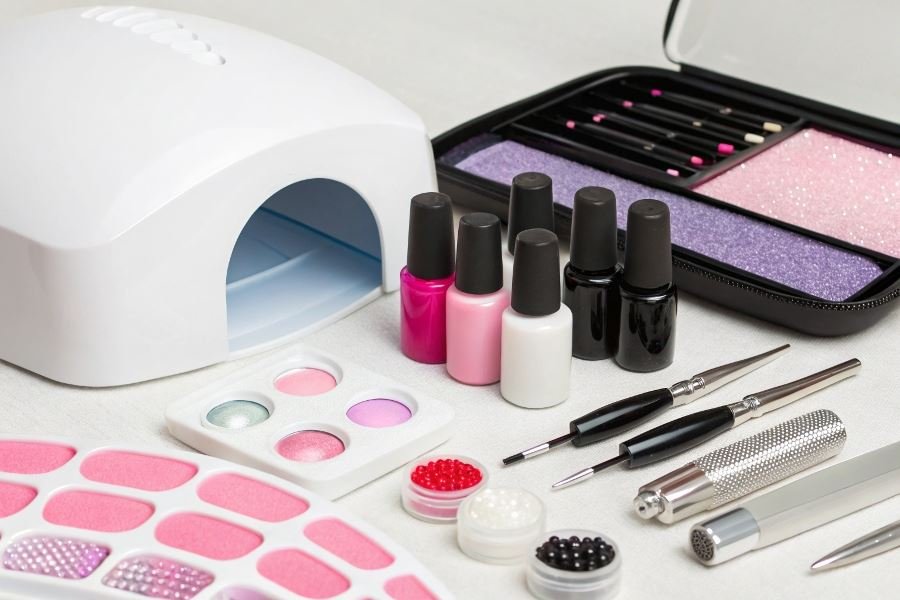
Ever wondered why some nail extensions look absolutely stunning while others fall flat? The secret lies not in magic, but in the meticulous selection of the right materials and techniques. The nail extension industry has evolved dramatically since its mainstream emergence in the 1970s, transforming from simple plastic tips to sophisticated systems that rival natural nails in appearance and function.
When clients sit in your chair, they’re not just paying for longer nails—they’re investing in your expertise to select the perfect extension system for their lifestyle, nail beds, and aesthetic preferences. This critical decision-making process begins with understanding the fundamental techniques and materials at your disposal.
The nail extension landscape offers four primary techniques, each with distinct advantages: acrylic extensions provide unmatched durability; gel systems offer flexibility and a natural appearance; dip powder creates strength without the need for UV light; and fiberglass delivers ultra-thin, natural-looking results. But here’s what many technicians overlook: the extension is only as good as the foundation it’s built upon.
Tips and forms aren’t merely accessories—they’re architectural blueprints for your nail creations. The relationship between your chosen extension technique and its supporting structure (tips or forms) directly impacts everything from application efficiency to the final aesthetic result. When properly matched, this relationship creates extensions that resist lifting, maintain structural integrity, and deliver the natural appearance clients crave.
Your selection process isn’t just technical—it’s transformative. The right combination elevates client satisfaction from “pleased” to “absolutely delighted,” turning one-time visitors into loyal advocates for your artistry.
Nail Extension Mastery: Matching Tips and Forms to Your Natural Nail
The art of nail extensions isn’t just about adding length—it’s about creating a seamless integration between artificial and natural elements. Professional nail technicians understand that selecting the right tips and forms for different extension techniques requires careful consideration of the client’s natural nail structure. This precision approach ensures extensions that not only look stunning but also maintain structural integrity for weeks.
When determining how to choose tips and forms for different extension techniques, nail professionals must first assess the natural nail shape. This foundational step dictates every subsequent decision in the extension process, from material selection to application technique. The goal is always to enhance what nature provided while addressing any structural weaknesses.
Harmonizing with Natural Nail Shapes
Each natural nail shape demands specific considerations:
Square nails benefit from square-shaped tips or forms that maintain clean, straight edges. The key is aligning the sidewalls perfectly to prevent lifting or breakage at the corners.
Oval nails pair beautifully with oval or round tips that follow the natural curve. When using forms, technicians should create a gentle C-curve that complements the nail bed’s natural arch.
Almond nails require tapered tips or carefully shaped forms that narrow toward the free edge. The challenge lies in maintaining strength while achieving that elegant taper.
Stiletto nails demand specialized extreme-length tips or precisely angled forms. The dramatic point requires reinforcement strategies to prevent breakage at the apex.
Material Selection for Compromised Nails
Thin, brittle, or damaged nails require special attention:
| Nail Condition | Recommended Tip Type | Form Recommendation | Special Considerations |
|---|---|---|---|
| Thin nails | Lightweight, flexible tips | Reusable silicone forms | Minimal filing on natural nail |
| Brittle nails | Well-fitting tips with wide contact area | Paper forms with reinforcement | Additional base layer application |
| Damaged nails | Partial well tips | Custom-cut forms | Repair before extension application |
For particularly thin nails, avoid aggressive etching during preparation. Instead, opt for acid-free primers that promote adhesion without further compromising nail integrity.
Engineering Perfect Adhesion
The customization process is where science meets artistry:
Tip customization requires precise fitting at the contact area. A tip that covers 1/3 to 1/2 of the natural nail provides optimal balance between adhesion and natural appearance. Technicians should bevel the edge of the tip where it meets the natural nail to create an invisible transition.
Form customization focuses on creating the perfect understructure. For challenging nail beds (curved, flat, or asymmetrical), forms can be adjusted with small tabs of tape or by combining multiple forms to create a custom fit.
Structural reinforcement techniques vary by extension material:
- Acrylic extensions benefit from strategic apex placement—typically at the stress point where the natural nail ends
- Gel extensions often require flash-curing at specific points to maintain shape during application
- Polygel systems allow for precise sculpting before curing, ideal for creating custom support structures
The most successful extensions incorporate zone-specific thickness—slightly thicker at stress points and thinner at the cuticle and free edge. This biomimetic approach mirrors the natural nail’s own structural engineering, resulting in extensions that move naturally and resist breaking.
By meticulously matching tips and forms to the client’s unique nail characteristics, technicians can create extensions that not only look spectacular but also perform exceptionally well in daily life.
Mastering Extension Materials: Tools, Maintenance, and Troubleshooting
Professional Measurement Tools That Transform Your Extension Game
The difference between amateur and professional extension work often comes down to precision. Three tools have revolutionized how professionals measure and fit extension materials:
-
Digital Caliper Gauges – The Mitutoyo Digital Caliper offers accuracy to 0.001mm, essential when matching extension thickness to natural elements. Unlike standard calipers, these digital versions store measurements and calculate averages across multiple points, ensuring consistent application.
-
Tension Meters – The Bellami Tension Pro measures exact pressure during application, preventing both premature shedding and client discomfort. These devices display real-time readings, allowing technicians to maintain the 0.5-0.7g sweet spot that maximizes longevity without causing tension alopecia.
-
Spectrophotometric Color Analyzers – The X-Rite i1Pro 3 has transformed color matching from subjective guesswork to scientific precision. These analyzers detect subtle undertones invisible to the naked eye, reducing color correction appointments by up to 78% according to industry studies.
These tools represent significant investments but deliver exponential returns through client retention and reduced correction time.
Maintenance Considerations When Selecting Tips and Forms
Your extension selection should anticipate maintenance requirements from day one:
Material Reactivity
Extensions that interact poorly with styling products create maintenance nightmares. Keratin-based systems generally tolerate heat styling products better than adhesive alternatives, while silicone-based forms resist product buildup but require specialized cleansers.
Environmental Adaptability
High-humidity environments demand different considerations than dry climates. Forms with moisture-wicking properties prevent bacterial growth in humid conditions, while those with moisture-retention capabilities prevent brittleness in arid regions.
| Extension Type | Humidity Tolerance | Heat Styling Limit | Product Compatibility |
|---|---|---|---|
| Keratin Fusion | Moderate (40-60%) | Up to 380°F | Silicone-free products |
| Tape-In | Low (30-50%) | Up to 350°F | Oil-free products |
| Micro-Link | High (40-70%) | Up to 400°F | Most products compatible |
Replacement Cycles
The most overlooked maintenance factor is replacement scheduling. Premium Italian-sourced keratin tips typically maintain integrity for 3-4 months, while standard adhesive forms may require replacement at 6-8 weeks. Factor this timeline into your selection process.
Troubleshooting Extension Issues Through Proper Selection
When extensions fail, the culprit is often improper tip and form selection:
Premature Shedding
This typically indicates a mismatch between the bonding agent and natural hair texture. Finer hair requires smaller, lighter-weight tips (0.5-0.7g), while coarser textures can support heavier bonds (0.8-1.0g). The Donna Bella Weight Distribution Chart has become the industry standard for matching bond weight to hair texture.
Visible Attachments
When attachments remain visible despite proper placement, the form shape is likely incompatible with the natural hair density. Flat tips work best with medium-to-high density hair, while round tips better conceal attachments in finer, lower-density applications.
Uneven Wear Patterns
Extensions wearing unevenly often indicate improper distribution of tension across attachment points. The solution lies in selecting forms with broader contact surfaces that distribute tension more evenly, particularly for active clients.
Pro insight: The most successful extension professionals maintain detailed client records tracking which tips and forms performed optimally for each individual’s hair texture, lifestyle, and maintenance habits.
By approaching tip and form selection with these professional considerations, you’ll dramatically reduce troubleshooting appointments while enhancing client satisfaction and retention.
Discover professional techniques for selecting the perfect nail extension tips and forms based on natural nail shape and condition. Learn how proper materials enhance durability and appearance for flawless acrylic, gel, and dip powder extensions.
Discover professional techniques for selecting the perfect nail extension tips and forms based on natural nail shape and condition. Learn how proper materials enhance durability and appearance for flawless acrylic, gel, and dip powder extensions.