Ever wondered why that nail glue you forgot about suddenly won’t work? The answer lies not in bad luck, but in chemistry and physics.
Nail adhesives aren’t just simple glues—they’re sophisticated chemical compounds primarily composed of cyanoacrylate, the same active ingredient found in super glue. This remarkable substance creates an almost instantaneous bond when exposed to moisture, even the microscopic amount present on your nail surface. This sensitivity to environmental factors is precisely why storage conditions dramatically impact performance and longevity.
When stored properly, unopened nail glue typically maintains its effectiveness for 12-24 months from manufacturing. However, once that seal is broken, the clock starts ticking much faster—most opened adhesives remain viable for only 4-6 weeks before noticeable degradation occurs.
The chemistry behind the shelf life
Temperature fluctuations are the primary enemy of nail adhesives. Storing your glue in a bathroom cabinet where hot showers create steam and temperature swings can reduce effectiveness by up to 70% in just weeks. The cyanoacrylate molecules begin polymerizing prematurely, thickening the formula and diminishing its bonding power.
Light exposure presents another threat, as UV rays catalyze chemical reactions that compromise adhesive integrity. Even more surprising? Refrigeration, while extending shelf life for many products, can actually crystallize nail adhesives, rendering them permanently unusable.
The difference between professional-grade results and frustrating application failures often comes down to one simple factor: how you’ve stored your nail glue.
Mastering Nail Glue Storage for Maximum Longevity
The difference between a nail enhancement that lasts for weeks and one that fails within days often comes down to one critical factor: the quality of your adhesive. Professional nail technicians understand that proper storage dramatically affects how nail glue performs. The shelf life and storage conditions of nail glue directly impact its viscosity, curing time, and bonding strength—three elements that determine whether your nail application will be a stunning success or a frustrating failure.
Temperature: The Primary Preservation Factor
Temperature control stands as the most crucial element in extending your nail adhesive’s usable life. Most premium nail glues maintain optimal performance when stored between 65-72°F (18-22°C). Exposure to temperatures outside this range triggers chemical reactions that compromise the glue’s integrity.
Heat acceleration effect: When stored above 75°F (24°C), cyanoacrylate adhesives—the active ingredient in nail glues—begin polymerizing inside the bottle. This premature reaction thickens the formula and reduces its effectiveness long before you’ve opened the container.
Cold storage myths: Contrary to popular belief, refrigeration isn’t universally beneficial. While it slows deterioration, repeatedly moving glue between cold storage and room temperature creates condensation inside the bottle, which can trigger premature hardening.
Humidity Control: The Silent Shelf-Life Killer
Moisture represents the natural enemy of cyanoacrylate adhesives. When exposed to humidity levels above 50%, nail glue begins absorbing atmospheric moisture, initiating the curing process while still in the bottle.
| Humidity Level | Effect on Nail Glue | Estimated Shelf-Life Reduction |
|---|---|---|
| Below 40% | Minimal impact | None |
| 40-60% | Gradual thickening | 25-30% |
| Above 60% | Rapid deterioration | 50-70% |
For professional environments, investing in a dedicated storage container with silica gel packets creates a controlled microclimate that shields adhesives from humidity fluctuations. This simple addition can extend shelf life by up to 8 months beyond manufacturer estimates.
Container Integrity: Sealing Techniques That Preserve Potency
The moment nail glue contacts air, the clock starts ticking on its usability. Even microscopic exposure accelerates hardening, which explains why that half-used bottle often becomes unusable long before it’s empty.
Nozzle maintenance protocol: After each use, wipe the applicator tip with acetone to remove residual adhesive. This prevents clogging and creates a better seal when recapped.
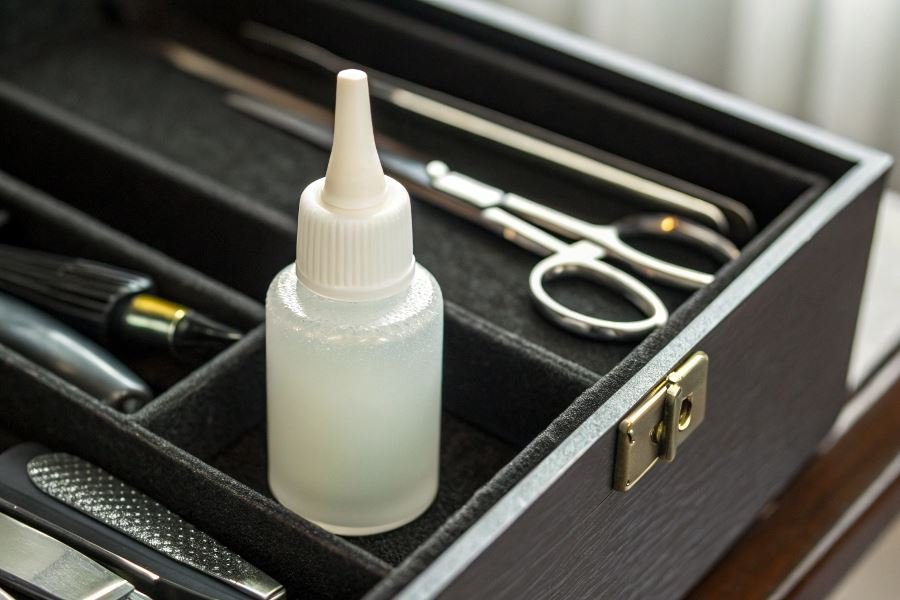
Strategic storage position: Store bottles upright, never on their side. Horizontal storage increases the surface area where glue contacts air inside the bottle and risks leakage around the cap seal.
The most effective sealing technique involves creating an “airlock” by gently squeezing the bottle before replacing the cap. This positive pressure inside the container minimizes air infiltration during storage.
For professional nail technicians and dedicated enthusiasts, these storage principles transform from mere recommendations into essential practices. By maintaining precise temperature control, managing humidity exposure, and ensuring container integrity, you’ll maximize every drop of your investment in professional-grade adhesives.
When Good Glue Goes Bad: Spotting and Safely Disposing of Expired Nail Adhesives
Telltale signs your nail glue has expired
Nail glue doesn’t last forever, even when it seems perfectly sealed. The first warning sign is typically a change in consistency—what was once smooth and fluid becomes thick, stringy, or develops a gel-like texture. This happens as cyanoacrylate, the active ingredient in most nail adhesives, begins to polymerize within the container.
Color changes are equally revealing. Fresh nail glue should be clear or slightly cloudy. When it turns yellowish or develops a milky appearance, it’s signaling the end of its useful life.
Performance issues are perhaps the most obvious indicators:
- Slow bonding time: Fresh adhesive bonds within seconds; expired glue might take minutes or fail entirely
- Weak adhesion: Nails that lift prematurely or pop off completely
- Uneven application: Clumping or difficulty controlling the flow
The nose knows, too. If your nail glue develops a sharp, acrid odor that’s significantly stronger than its normal scent, chemical degradation has likely begun.
Pro tip: Date your nail glue bottles when you open them. Most formulations remain effective for 12-18 months after first use, even if the manufacturer’s date is longer.
Safety first: Why expired adhesives pose risks
Using expired nail glue isn’t just ineffective—it can be genuinely hazardous. As cyanoacrylate breaks down, it can release formaldehyde and other irritants that may trigger:
- Skin irritation and contact dermatitis
- Respiratory sensitivity in enclosed spaces
- Increased risk of allergic reactions
The chemical instability of degraded adhesive also makes it unpredictable. What might seem like a harmless application could result in unexpected bonding to skin or unintended surfaces.
Never attempt to “revive” expired nail glue by adding acetone or other solvents. This creates unstable chemical compounds that can cause burns or damage natural nails.
Environmentally responsible disposal methods
Nail adhesives require thoughtful disposal due to their chemical composition. Here’s how to handle them responsibly:
- Allow complete hardening: Leave the cap off and let remaining glue fully cure and solidify
- Separate components: Remove plastic nozzles and caps for recycling
- Check local regulations: Some areas classify hardened cyanoacrylate as standard waste; others require special handling
For bottles with significant product remaining:
| Disposal Method | Best For | Environmental Impact |
|---|---|---|
| Hazardous waste collection | Full/partial bottles | Lowest impact |
| Hardening before disposal | Small amounts | Moderate impact |
| Commercial nail salon disposal | Multiple products | Varies by facility |
Many municipalities host quarterly hazardous waste collection events where nail adhesives can be properly processed alongside other household chemicals.
Never pour liquid nail glue down drains or toilets. The adhesive can harden in pipes, causing expensive plumbing damage while introducing chemicals into the water system.
By recognizing when your nail glue has reached the end of its useful life and disposing of it properly, you protect both your nail health and environmental well-being—a small effort that makes a significant difference in both the quality of your manicures and our shared ecosystem.
Discover expert tips for maximizing nail glue shelf life with proper storage techniques. Learn optimal temperature and humidity conditions to prevent hardening, identify expiration signs, and ensure your adhesives remain effective longer.
Discover expert tips for maximizing nail glue shelf life with proper storage techniques. Learn optimal temperature and humidity conditions to prevent hardening, identify expiration signs, and ensure your adhesives remain effective longer.