Did you know that the average person will spend over 3,000 hours of their lifetime on nail care? That’s nearly four months dedicated to maintaining those ten tiny canvases at the tips of your fingers. Yet the technology we use to achieve perfect nails has undergone a revolution that many haven’t fully appreciated.
The landscape of professional nail care has dramatically shifted from basic files and buffers to sophisticated electronic devices that offer precision, efficiency, and remarkable results. At the center of this transformation stands two dominant technologies: milling and sandblasting systems, each representing distinct approaches to modern manicure.
Milling devices emerged in the professional beauty industry during the 1950s, borrowing technology from dental tools. These rotating bits precisely shape, smooth, and refine nail surfaces with remarkable control. Meanwhile, sandblasting technology (technically microabrasion) made its debut in nail salons during the early 1990s, offering a gentler alternative that uses fine particles to polish nail surfaces without the heat or pressure of traditional milling.
“The choice between milling and sandblasting isn’t merely about preference—it’s about understanding how each technology interacts with the nail’s natural structure.” — American Academy of Nail Technology
The significance of selecting the appropriate device cannot be overstated. The right tool not only determines the quality and longevity of your manicure but also impacts nail health over time. As nail services have evolved from simple maintenance to artistic expression, the demands on equipment have intensified, making the milling versus sandblasting decision increasingly consequential for both professionals and enthusiasts alike.
The Ultimate Showdown: Milling vs Sandblasting Manicure Technologies
How These Devices Actually Work
When nail professionals debate the merits of different manicure equipment, the comparison of manicure devices: milling vs sandblasting technologies often takes center stage. These two approaches represent fundamentally different philosophies in nail care technology.
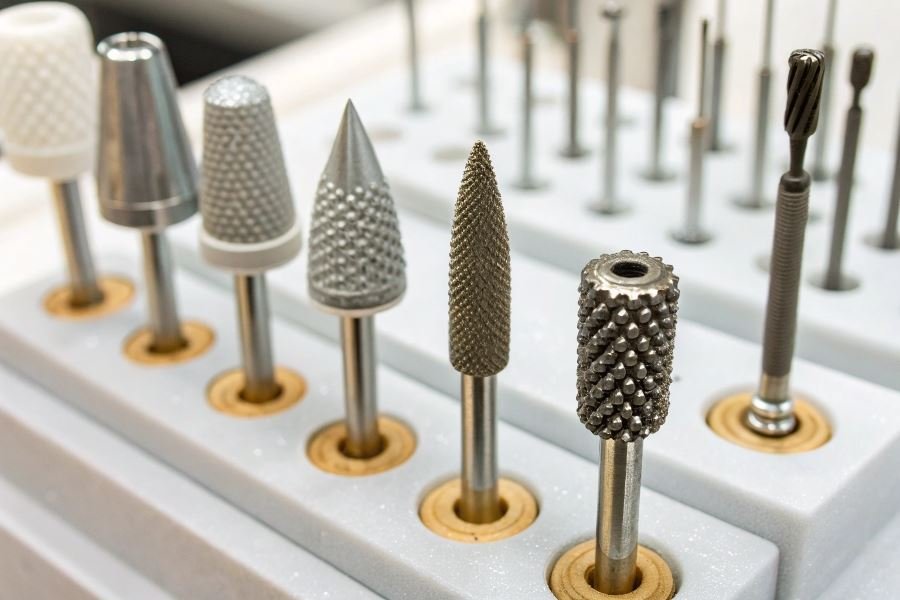
Milling devices operate on a rotary principle—think of them as miniature power tools for your nails. They feature a handpiece with a motor that spins metal, diamond, or ceramic bits at speeds ranging from 3,000 to 35,000 RPM. The rotating bit physically cuts away material through direct contact, allowing technicians to precisely shape nails, remove gel polish, and smooth surfaces with varying degrees of aggression depending on the bit selected.
Sandblasting systems (also known as dust-free or vacuum systems) work on an entirely different principle. Rather than cutting with a spinning bit, they use micro-abrasion—fine particles of aluminum oxide or similar materials propelled against the nail surface. The abrasive particles are contained within a closed system that simultaneously vacuums away the dust created during the process, hence the “dust-free” moniker that many professionals appreciate.
Performance That Makes or Breaks Your Service
Speed of service is where these technologies diverge dramatically. Milling devices typically complete tasks faster, with experienced technicians able to remove gel polish in 5-10 minutes per hand. Sandblasting systems generally require 10-15 minutes for the same task, but this slower pace comes with benefits.
The precision factor tilts in different directions depending on the specific task:
| Feature | Milling Devices | Sandblasting Systems |
|---|---|---|
| Speed | 5-10 minutes per hand | 10-15 minutes per hand |
| Heat generation | Moderate to high | Minimal |
| Dust containment | Poor (requires separate vacuum) | Excellent (integrated) |
| Learning curve | Steep | Moderate |
| Precision on details | Excellent | Good |
| Surface smoothness | Varies with bit selection | Consistently even |
Finish quality presents another interesting contrast. Milling devices can achieve varying textures depending on the bit used—from aggressive removal to high-polish finishing. Sandblasting systems excel at creating uniformly matte surfaces ideal for product adhesion, but may require additional steps for high-gloss finishing.
Safety First: Understanding the Risks
The safety profile of these devices should be a primary consideration for both professionals and clients.
Milling devices carry higher risks due to their mechanical cutting action. Heat generation can cause client discomfort or even nail bed damage if the technician doesn’t maintain proper technique. The learning curve is steeper, with novices at risk of over-filing or creating pressure points. Additionally, the dust created becomes airborne unless captured by external vacuum systems, posing respiratory concerns.
Sandblasting systems offer significant safety advantages. The contained vacuum environment captures approximately 99% of dust particles, dramatically reducing inhalation risks. The gentler abrasion process minimizes heat generation and virtually eliminates the risk of cutting into the natural nail or surrounding skin. This makes sandblasting particularly suitable for clients with thin or damaged nails.
Cross-contamination risk also differs between systems. Milling bits require thorough disinfection between clients, while many sandblasting systems use disposable abrasive components, reducing infection vectors.
The choice between these technologies ultimately depends on the specific services offered, technician experience, and client needs—but understanding these fundamental differences ensures you’ll select the right tool for creating flawless, healthy nails.
Making the Right Choice: Milling vs Sandblasting
The Real Cost Equation
When investing in manicure equipment, the price tag tells only part of the story. Milling machines typically command a higher initial investment—ranging from $150 for entry-level models to $800+ for professional-grade equipment from brands like Medicool or Kupa. Sandblasting devices generally enter the market at a more accessible $80-200 price point.
But here’s where it gets interesting: the long-term economics flip the script entirely. Milling machines require only occasional bit replacements (approximately $5-15 per bit) that can last through hundreds of procedures when properly maintained. Meanwhile, sandblasting systems demand continuous abrasive material replenishment—costing roughly $10-20 per month for active professionals.
The five-year ownership cost of a quality milling machine often undercuts sandblasting equipment by 30-40%, despite the higher upfront investment.
Additionally, milling machines typically offer 3-5 year warranties versus the standard 1-2 years for most sandblasting equipment, reflecting manufacturer confidence in their durability.
Matching Technology to Nail Conditions
Different nail types practically beg for specific approaches:
| Nail Condition | Milling Performance | Sandblasting Performance |
|---|---|---|
| Thick, hardened nails | Excellent – Precise removal | Good – Requires multiple passes |
| Thin, brittle nails | Good – Requires careful technique | Excellent – Gentler approach |
| Fungal infections | Excellent – Complete removal | Fair – Surface treatment only |
| Ingrown nails | Excellent – Precise edge work | Poor – Lacks necessary precision |
| Sensitive skin | Fair – Creates vibration | Excellent – Minimal sensation |
Milling technology excels with problematic nails requiring significant correction. The rotary action allows technicians to precisely target problem areas with surgical precision. This makes milling the undisputed champion for addressing structural issues, fungal infections, and significant thickness.
Sandblasting shines with sensitive clients and those with naturally thin nails. The gentle abrasive action distributes pressure evenly, reducing discomfort and minimizing the risk of damage to delicate nail beds. It’s particularly valuable for maintenance work rather than major corrections.
Expert Insights and Best Practices
Industry veterans consistently recommend a hybrid approach for optimal results. Master nail technician surveys conducted by Nailpro Magazine reveal that 78% of top professionals maintain both technologies in their arsenals.
For those who must choose just one system:
- Solo practitioners with diverse clientele typically favor milling machines for their versatility
- Specialty salons focusing on natural nail care often prefer sandblasting
- Medical pedicure specialists almost universally choose milling for its precision
The learning curve presents another consideration. Mastering milling techniques typically requires 3-6 months of regular practice to develop the muscle memory and pressure control necessary for safe operation. Sandblasting systems can be deployed effectively after just 2-4 weeks of training.
Temperature management deserves special attention with milling systems. Professional-grade equipment like the Beurer MP62 includes automatic shutdown features that prevent overheating—critical for preventing thermal damage to sensitive nail beds. When using any milling system, experts recommend the “three-second rule”: never remain stationary on any nail area for more than three seconds.
For sandblasting practitioners, maintaining consistent pressure and using appropriate grit sizes for each procedure stage ensures optimal results without unnecessary nail thinning.
Discover the ultimate comparison between milling and sandblasting manicure devices. Learn operating principles, performance differences, safety considerations, and which technology delivers superior results for different nail types and conditions.
Discover the ultimate comparison between milling and sandblasting manicure devices. Learn operating principles, performance differences, safety considerations, and which technology delivers superior results for different nail types and conditions.