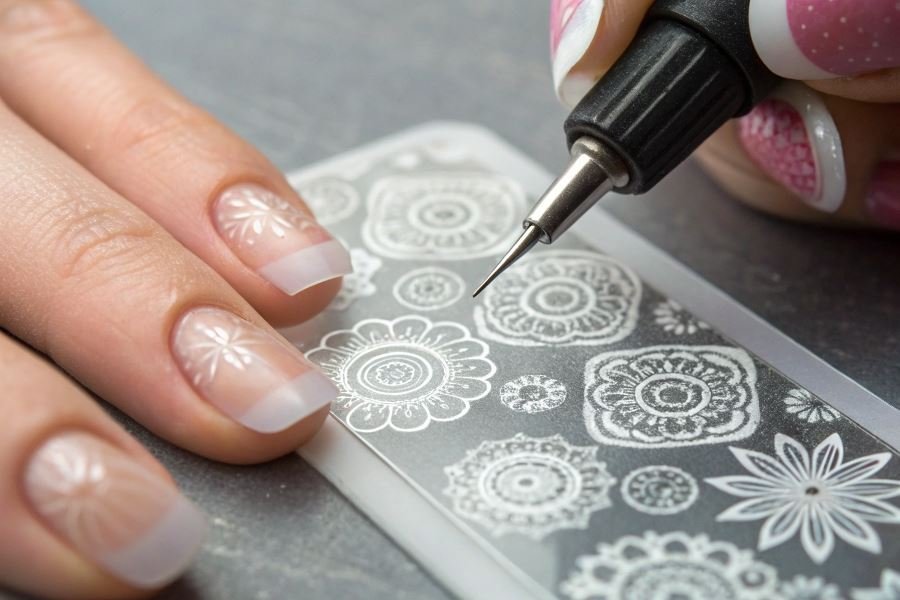
Ever watched a master craftsman press a perfect image onto metal and wondered what magic makes it possible? Behind every crisp stamped impression lies a critical decision: thick or liquid composition? This choice can mean the difference between stunning precision and costly mistakes.
The stamping world divides into two distinct camps, each with passionate advocates. Thick compositions—paste-like substances with high viscosity—offer stability and precision for detailed work. They maintain their position without running or spreading, making them ideal for vertical surfaces and intricate designs. Meanwhile, liquid formulations flow effortlessly into the smallest crevices, providing superior coverage and often faster application times.
The science behind the stamp
What truly separates these formulations goes beyond mere consistency. Viscosity stands as the primary differentiator, but other properties like adhesion strength, drying time, and temperature sensitivity play crucial roles in determining effectiveness. Thick compositions typically offer:
- Greater control during application
- Reduced risk of bleeding or smudging
- Enhanced durability for outdoor applications
Liquid compositions counter with:
- Superior penetration into porous surfaces
- Faster processing times
- Often lower cost per application
From automotive to artisanal
These compositions serve vastly different industries. Automotive manufacturers rely on thick formulations for precise part marking that must withstand harsh conditions. Electronics producers often prefer liquid compositions for their ability to mark components without adding significant weight. Jewelry makers and artisans might switch between both depending on the material being stamped and the desired effect.
The choice ultimately depends on your specific application—but understanding these fundamental differences ensures you’ll make that choice with confidence.
The Performance Battlefield: Thick vs. Liquid Stamping Compositions
When craftsmen debate the merits of stamping compositions, the conversation quickly becomes as detailed as a watchmaker discussing gear mechanisms. The fundamental differences between thick and liquid compositions create distinct performance profiles that can make or break your project’s success.
The comparison of thick and liquid compositions for stamping: which is more effective often hinges on three critical factors: image transfer quality, curing requirements, and long-term durability. Each composition type brings its own strengths to the table, making the “best” choice highly dependent on your specific application needs.
Viscosity’s Role in Image Precision
Viscosity isn’t just a technical specification—it’s the primary determinant of how faithfully your design transfers to the substrate.
Thick compositions (typically 20,000-50,000 cPs) excel at:
- Maintaining crisp edges on vertical surfaces
- Reducing bleed on porous materials
- Preserving fine detail in deep impressions
Thick formulations create a physical barrier that prevents unwanted spreading, particularly valuable when working with intricate designs.
Liquid compositions (typically 1,000-5,000 cPs) demonstrate superior:
- Flow into microscopic surface irregularities
- Self-leveling properties for smooth finishes
- Ability to capture subtle texture variations
| Composition Type | Detail Reproduction | Edge Definition | Surface Adaptability |
|---|---|---|---|
| Thick | Excellent for bold patterns | Superior on vertical surfaces | Limited on highly textured surfaces |
| Liquid | Superior for fine lines | Requires careful application | Excellent on varied textures |
The Time Factor: Drying and Curing Requirements
The efficiency of your production workflow often hinges on curing times.
Thick compositions typically require:
- Initial set time: 10-30 minutes
- Full cure time: 4-24 hours
- Often need heat acceleration (140-180°F)
Liquid compositions generally feature:
- Initial set time: 2-15 minutes
- Full cure time: 2-12 hours
- Many cure at ambient temperature
The productivity impact becomes significant in high-volume operations, where liquid compositions can reduce production cycles by up to 40%. However, thick compositions often deliver more predictable curing times across varying environmental conditions.
Durability: The Ultimate Test of Performance
The longevity of stamped impressions represents perhaps the most critical performance metric for many applications.
Thick compositions create impressions that typically demonstrate:
- Superior abrasion resistance (often 25-40% higher than liquid alternatives)
- Enhanced chemical resistance
- Better performance in outdoor applications
Liquid compositions generally provide:
- Superior flexibility (reducing cracking in dynamic applications)
- Better adhesion to non-porous substrates
- More consistent performance across temperature variations
When subjected to accelerated weathering tests, thick compositions often retain 85-95% of their original properties after the equivalent of 5 years of exposure, while liquid compositions typically maintain 75-90%.
The durability equation isn’t simply about which lasts longer—it’s about which maintains the specific properties most important to your application. For high-traffic commercial signage, thick compositions often prove more cost-effective despite higher initial costs, while liquid compositions frequently excel in applications requiring flexibility or frequent design changes.
The performance analysis ultimately reveals that effectiveness isn’t universal—it’s contextual to your specific stamping requirements, production constraints, and durability expectations.
Making the Right Choice: Stamping Composition Decision Factors
Material Compatibility Across Substrates
Selecting between thick and liquid stamping compositions requires a deep understanding of substrate compatibility. Different materials interact uniquely with stamping mediums, dramatically affecting your results.
Paper and cardstock typically work well with both composition types, but thick compositions often provide more defined impressions on textured papers. When working with coated papers, liquid compositions achieve better adhesion by penetrating the surface coating.
Metal surfaces present unique challenges. Aluminum, brass, and copper respond differently to stamping compositions:
| Substrate | Thick Composition Performance | Liquid Composition Performance |
|---|---|---|
| Aluminum | Good adhesion, may require heating | Excellent flow, potential running |
| Brass | Excellent definition, slower drying | Quick application, less defined edges |
| Copper | Superior durability, resistant to oxidation | Faster application, may require sealant |
For polymer surfaces like plastics and acrylics, liquid compositions typically outperform thick options due to their ability to form chemical bonds with the substrate. However, specialized thick compositions containing adhesion promoters have closed this gap in recent years.
Compatibility insight: Always test your chosen composition on a sample of your actual substrate before committing to a full production run.
Cost-effectiveness Analysis
The true value equation extends far beyond the initial purchase price of stamping compositions.
Thick compositions typically command a higher upfront investment but offer significant advantages:
- Lower waste rates (typically 5-8% versus 12-15% for liquids)
- Extended shelf life (18-24 months versus 6-12 for most liquids)
- Reduced need for specialized application equipment
Liquid compositions present a different value proposition:
- Lower initial cost per unit volume
- Faster application speeds (up to 40% quicker in production environments)
- Reduced labor costs due to easier application techniques
When calculating total project costs, consider these factors:
- Coverage efficiency: Thick compositions typically cover 25-30% more area per ounce
- Equipment investment: Liquid applications may require specialized dispensers
- Labor intensity: Thick compositions often demand more skilled application
- Rework costs: Error correction is typically easier with thick compositions
The cost analysis shifts dramatically based on project scale. For small runs under 500 impressions, thick compositions often prove more economical. For production runs exceeding 1,000 impressions, liquid compositions frequently deliver better value through efficiency gains.
Practical Project-Based Recommendations
Your specific project requirements should ultimately guide your composition choice:
Choose thick compositions when:
- Working with highly detailed or intricate designs
- Stamping on porous or uneven surfaces
- Operating in environments with variable humidity
- Requiring maximum durability without additional sealants
- Working on small-batch or custom projects
Opt for liquid compositions when:
- Speed of application is paramount
- Working with automated stamping equipment
- Stamping on non-porous or smooth surfaces
- Needing to achieve gradient effects or color blending
- Operating in high-volume production environments
Temperature considerations matter significantly. Thick compositions maintain consistent performance between 65-85°F, while liquid compositions often require narrower temperature ranges (70-78°F) for optimal results.
For projects requiring outdoor durability, specialized thick compositions containing UV stabilizers typically outperform standard liquid options by 2-3 years of weather resistance.
The most successful stamping professionals maintain both composition types in their arsenal, selecting the appropriate medium based on the specific requirements of each project rather than defaulting to a single solution for all applications.
Discover which stamping composition delivers superior results for your projects. Our comprehensive guide compares thick vs liquid formulations, analyzing viscosity, drying time, and durability to help you make the optimal choice for perfect impressions every time.
Discover which stamping composition delivers superior results for your projects. Our comprehensive guide compares thick vs liquid formulations, analyzing viscosity, drying time, and durability to help you make the optimal choice for perfect impressions every time.