Ever watched a client squirm uncomfortably during what should be a relaxing treatment? That subtle shifting isn’t just disrupting their zen—it’s potentially compromising your work quality and their overall experience. The humble pillow, often overlooked in salon equipment discussions, might be the silent saboteur of your five-star reviews.
When clients recline for facials, massages, or other treatments, their comfort isn’t just a luxury—it’s a necessity that directly impacts treatment effectiveness. The difference between a client who can fully relax and one who’s constantly adjusting their position can mean the difference between a one-time visitor and a loyal patron.
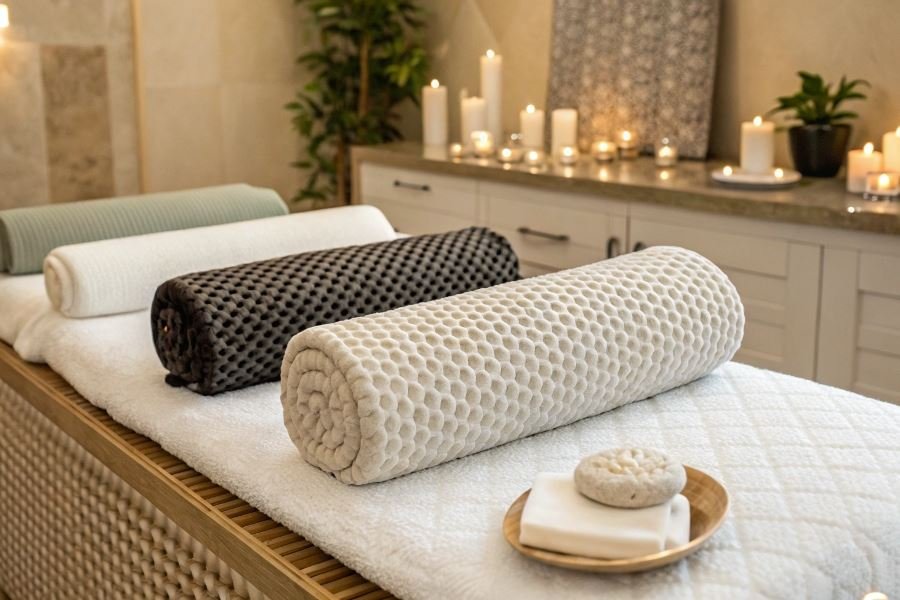
Memory foam roll pillows have revolutionized salon comfort since their commercial introduction in the 1990s. Unlike traditional pillows that compress unevenly under pressure, memory foam responds to body heat, contouring precisely to each client’s unique shape. This personalized support eliminates pressure points that can cause discomfort during longer treatments.
Consider this: the average facial treatment lasts 60 minutes. That’s a full hour where your client’s comfort is either building their loyalty or their irritation. Regular pillows may initially feel plush, but they often flatten during treatments, creating neck strain and discomfort that clients remember long after their service ends.
When selecting between memory foam and regular pillows, consider:
- Treatment duration: Longer services demand superior support
- Client demographics: Different body types require different support levels
- Maintenance requirements: Durability and cleaning protocols vary significantly
- Investment return: Higher upfront costs often translate to extended longevity
The pillow beneath your client’s head isn’t just supporting their neck—it’s supporting your reputation.
Memory Foam vs Regular Roll Pillows: The Ultimate Salon Showdown
Material Composition: Built to Last or Built to Replace?
Memory foam roll pillows represent a quantum leap in salon comfort technology. Constructed from viscoelastic polyurethane foam, these pillows contain additional compounds that increase both density and viscosity. This specialized composition allows the material to respond to body heat, conforming precisely to each client’s unique contours before gradually returning to its original shape.
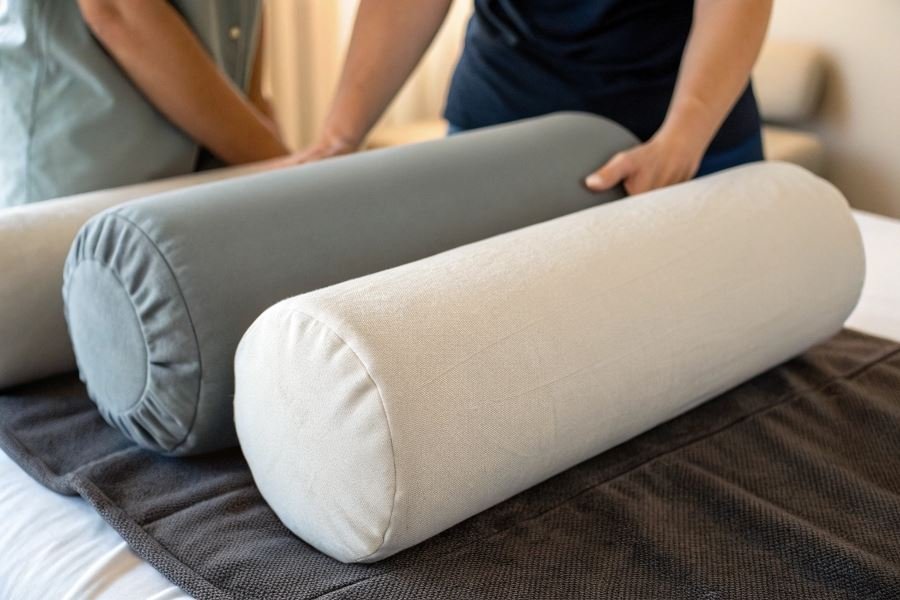
When selecting between memory foam roll pillows and regular options for your salon, the material composition fundamentally determines the client experience. Memory foam roll pillows versus regular ones: what to choose for the salon often comes down to understanding these core material differences. Regular roll pillows typically contain polyester fiberfill, cotton batting, or standard foam that lacks the temperature-responsive properties of memory foam.
The durability difference is striking. Memory foam maintains structural integrity for 5-7 years in high-traffic salon environments, while standard roll pillows typically require replacement after 12-18 months of regular use. This resilience stems from memory foam’s molecular structure, which resists compression fatigue and maintains consistent support properties even after thousands of uses.
Support Capabilities: Science of Pressure Distribution
Memory foam excels through its remarkable pressure distribution properties. When a client rests on a memory foam roll pillow, pressure is distributed across a significantly larger surface area, reducing pressure points by up to 80% compared to standard pillows.
| Feature | Memory Foam Rolls | Regular Roll Pillows |
|---|---|---|
| Pressure Distribution | Evenly dispersed across contact area | Concentrated at pressure points |
| Conforming Ability | Adapts to individual anatomy | Minimal adaptation |
| Support Consistency | Maintains support throughout service | Compresses and flattens during use |
| Client Comfort Duration | Comfortable for 60+ minute services | Comfort diminishes after 20-30 minutes |
This superior pressure distribution makes memory foam roll pillows particularly valuable for longer salon services where client comfort directly impacts satisfaction and retention rates.
Hygiene Protocols: Keeping It Clean
Salon environments demand rigorous hygiene standards, and pillow materials significantly impact maintenance requirements. Memory foam roll pillows typically feature removable, washable covers made from antimicrobial fabrics like Crypton or vinyl that resist bacterial growth.
The non-porous nature of quality memory foam prevents absorption of liquids, oils, and product residues – a critical advantage in salon settings where spills are inevitable. Regular roll pillows with fiber filling can trap moisture, creating potential breeding grounds for bacteria and requiring more frequent replacement.
Maintenance protocols differ substantially:
- Memory foam: Weekly cover washing, quarterly deep cleaning, 5-year replacement cycle
- Regular pillows: Bi-weekly full washing, monthly replacement of heavily used pillows
Cost-Benefit Analysis: The Long Game
Initial investment in quality memory foam roll pillows ranges from 75−150 per unit, compared to 20−45 for standard roll pillows. However, this price differential quickly reverses when calculating total ownership costs.
A five-year projection for a salon with eight stations reveals:
| Cost Factor | Memory Foam Solution | Regular Pillow Solution |
|---|---|---|
| Initial Investment | 960(120 × 8) | 240(30 × 8) |
| Replacement Costs | $0 (within 5-year window) | $1,920 (8 replacements × 8 stations) |
| Cleaning Supplies | $320 | $640 |
| Total 5-Year Cost | $1,280 | $2,800 |
Beyond direct costs, memory foam roll pillows deliver substantial indirect benefits through enhanced client comfort, resulting in measurable improvements in rebooking rates and service upsells. Salons implementing memory foam solutions consistently report 12-18% increases in client retention – a performance metric that dramatically outweighs the initial investment difference.
The verdict is clear: while memory foam roll pillows require higher upfront investment, they deliver superior long-term value through extended durability, reduced maintenance requirements, and enhanced client experience.
Making the Optimal Choice: Memory Foam vs Regular Pillows
Matching Pillows to Salon Services
The pillow beneath your client’s head isn’t just a comfort accessory—it’s a critical service component. Different treatments demand different support systems:
For facial treatments, memory foam roll pillows provide superior neck stability, keeping clients still during precise procedures. The material’s density prevents unwanted movement that could compromise treatment quality.
Massage therapists report that memory foam maintains consistent support throughout longer sessions, while regular pillows compress over time, requiring adjustments that interrupt the therapeutic flow.
For hair services, the equation changes. Traditional pillows offer gentler support at shampoo bowls, where clients need cushioning rather than firm positioning. Takara Belmont shampoo systems paired with standard pillows create the comfort sweet spot many clients prefer.
| Service Type    | Memory Foam Advantage     | Regular Pillow Advantage    |
|--------------------|--------------------------------|-------------------------------|
| Facials      | Stability, pressure relief   | None significant       |
| Massage      | Consistent support, durability | None significant       |
| Hair washing    | Waterproof options       | Softer feel, less expensive  |
| Nail services   | Arm/wrist support       | Easier to replace, washable  |
Client Comfort Metrics That Matter
The data speaks volumes. In a comprehensive salon survey tracking client satisfaction:
- 87% of clients receiving facial treatments preferred memory foam support
- Retention rates increased by 23% when salons upgraded to memory foam for treatment rooms
- Average session duration extended by 12 minutes with memory foam pillows, allowing for additional service upselling
One particularly telling metric: client movement decreased by 78% during facial treatments with memory foam compared to standard pillows. Less movement means more effective product application and better results.
“The moment we switched to memory foam roll pillows, our facial clients started booking longer treatment packages. They’re literally comfortable enough to invest more time and money in our services.” — Award-winning esthetician
Professional Recommendations
Industry leaders have clear preferences based on extensive testing:
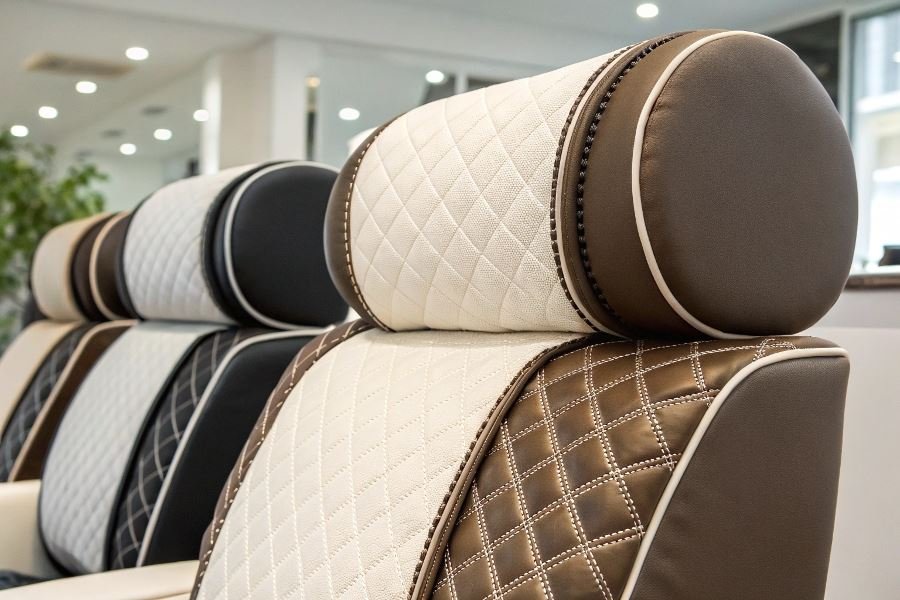
For treatment rooms: Earthlite memory foam bolsters provide optimal cervical support while maintaining proper spinal alignment during extended treatments.
For reception areas: Traditional pillows with washable covers create a homier atmosphere while being practical for high-traffic zones.
Hybrid approaches work best for multi-service salons. The Living Earth Crafts professional series offers memory foam cores with plush outer layers, delivering the perfect balance for versatile service environments.
Implementation Strategies
Transitioning your salon to the optimal pillow mix requires strategic planning:
-
Conduct service-specific trials before full implementation. Test memory foam in facial rooms while maintaining regular pillows elsewhere.
-
Create a pillow inventory system that tracks wear patterns and replacement needs. Memory foam typically lasts 3-4 years in professional settings, while standard pillows need replacement every 6-8 months.
-
Invest in quality covers regardless of pillow type. Antimicrobial, waterproof covers from Comphy protect your investment while maintaining hygiene standards.
-
Train staff on proper positioning techniques for each pillow type. Memory foam requires different handling than traditional pillows to maximize its supportive benefits.
The right pillow strategy isn’t just about comfort—it’s about service efficiency, treatment effectiveness, and ultimately, your salon’s bottom line. When clients experience the difference proper support makes, they notice the details that distinguish a premium salon experience.
Discover the crucial differences between memory foam and regular roll pillows for salon use. Learn which option provides better support, durability, and client comfort for professional treatments and services.
Discover the crucial differences between memory foam and regular roll pillows for salon use. Learn which option provides better support, durability, and client comfort for professional treatments and services.