Ever wondered what separates a $50 code reader from a $5,000 professional diagnostic system? The difference isn’t just price—it’s capability, accuracy, and the power to solve problems that would otherwise require hours of mechanical guesswork.
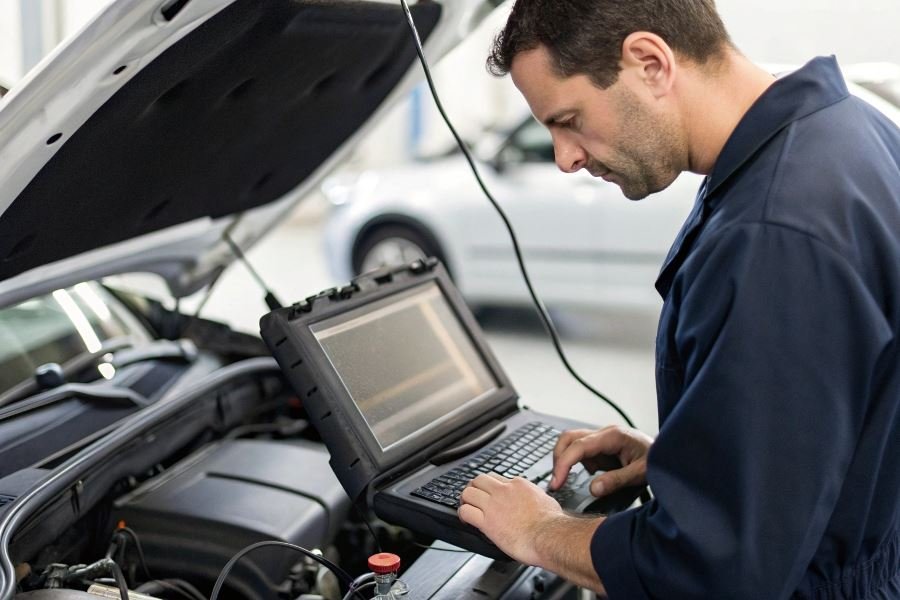
Multifunctional diagnostic scanners represent the intersection of automotive engineering and digital technology—sophisticated devices that communicate with your vehicle’s electronic control units (ECUs) to identify issues, monitor performance, and even reprogram systems. Unlike basic code readers that simply retrieve error codes, professional-grade scanners offer comprehensive testing capabilities across multiple vehicle systems, from engine management to advanced driver assistance systems (ADAS).
From simple readers to digital mechanics
The evolution of these devices has been remarkable. What began as simple OBD-I tools in the late 1980s has transformed into sophisticated diagnostic platforms. Modern scanners now feature high-resolution touchscreens, wireless connectivity, and cloud-based software updates that keep pace with rapidly evolving vehicle technology.
Today’s market offers options ranging from entry-level units around $200 to professional systems exceeding $10,000. The landscape includes established brands like Autel, Launch, and Snap-on alongside emerging players bringing innovative approaches to diagnostics.
Finding your diagnostic match
Selecting the right scanner requires understanding both your needs and the device’s capabilities. Consider:
- Vehicle coverage: Does it support the makes and models you work with?
- Depth of diagnostics: Basic code reading or advanced bidirectional controls?
- Software updates: How frequently is the scanner updated to cover new vehicles?
- Special functions: Do you need ADAS calibration, key programming, or diesel diagnostics?
The right diagnostic scanner isn’t necessarily the most expensive—it’s the one that addresses your specific diagnostic challenges while providing room for growth as your needs evolve.
Essential Features to Compare in Diagnostic Scanners
When evaluating multifunctional diagnostic scanners for your automotive toolkit, the difference between a good purchase and a great one often lies in the details. Professional mechanics and serious DIY enthusiasts understand that when comparing diagnostic scanners, certain features dramatically impact both immediate functionality and long-term value.
The process of selecting the right diagnostic tool requires careful attention to several critical factors. Multifunctional diagnostic scanners: what to pay attention to includes compatibility specifications, protocol support, and update policies that can make or break your investment. Let’s dive into the features that truly matter when making your selection.
Vehicle Compatibility Range
The breadth of vehicle coverage should be your first consideration. Top-tier scanners like the Autel MaxiSys and Launch X431 offer compatibility with 80+ vehicle brands, while mid-range options might support 40-50 manufacturers.
Compatibility considerations include:
- Year range coverage – Premium scanners typically cover vehicles from 1996 to present
- Domestic vs. import support – Some scanners excel with American makes but struggle with European or Asian vehicles
- Commercial vehicle compatibility – Heavy-duty truck diagnostics require specialized protocols
Remember that manufacturer-specific scanners often provide deeper diagnostics for their brand but zero functionality for others.
Diagnostic Depth and Protocol Support
The diagnostic capabilities determine what systems you can access and what problems you can identify.
| Feature Level | Typical Capabilities | Price Range |
|---|---|---|
| Basic | OBD-II standard codes, emissions | $50-150 |
| Intermediate | ABS, SRS, transmission, basic bidirectional control | $200-500 |
| Professional | All systems, advanced bidirectional controls, programming | $1,000-3,500+ |
Your scanner should support multiple protocols including:
- CAN (Controller Area Network)
- J1850 PWM and VPW
- ISO9141-2
- ISO14230-4 (KWP2000)
- ISO15765-4
Advanced diagnostic functions worth looking for include:
- Bidirectional control capabilities
- Adaptive relearns
- Component activation
- ECU coding and programming
- ADAS calibration support
Software Updates and Long-term Support
The automotive industry evolves constantly, making software update policies perhaps the most overlooked yet critical factor in scanner selection.
Key update considerations:
- Update frequency – Quality manufacturers like Snap-on release updates quarterly
- Update costs – Some require annual subscriptions ($100-500), while others offer lifetime updates
- Update method – Wi-Fi updates are more convenient than PC-based updates
The true cost of ownership extends beyond the purchase price to include years of potential update fees.
Look for manufacturers with proven track records of supporting older models. Some companies abandon support after 3-5 years, while premium brands maintain updates for 7+ years.
Technical support availability also varies dramatically:
- Phone support hours (business hours vs. 24/7)
- Response time for email inquiries
- Availability of training resources
- User community forums
When evaluating multifunctional diagnostic scanners, these three areas—compatibility, diagnostic capabilities, and long-term support—form the foundation of a wise purchasing decision that will serve your diagnostic needs for years to come.
Making the Final Decision on Your Diagnostic Scanner
When you’re inches away from investing in a multifunctional diagnostic scanner, the details matter more than ever. The right decision now saves headaches later—potentially thousands of dollars and countless hours of frustration. Let’s dive into the critical factors that separate a wise investment from an expensive paperweight.
Beyond the Price Tag
The sticker price is just the beginning of your relationship with a diagnostic scanner. The total cost of ownership often surprises even seasoned professionals.
Premium scanners like the Autel MaxiSys Ultra might command $4,500 upfront, but their value proposition extends beyond the initial purchase:
- Software updates: Some manufacturers charge $400-1,200 annually for critical updates, while others include 1-3 years with purchase
- Accessory costs: Additional modules for specific vehicle systems can add $200-800 each
- Battery replacements: Quality lithium batteries might need replacement every 2-3 years at $80-150
The cheapest scanner is rarely the most economical. Calculate five-year ownership costs before making your decision.
This table illustrates typical ownership costs over five years:
| Scanner Type | Initial Cost | Annual Updates | Accessories | 5-Year Total |
|---|---|---|---|---|
| Entry-Level | $300-800 | $100-200 | $100-300 | $900-2,300 |
| Mid-Range | $1,200-2,500 | $200-400 | $300-600 | $2,500-5,100 |
| Professional | $3,000-7,000 | $400-1,200 | $500-1,500 | $5,000-14,500 |
Interface and Learning Curve
A powerful scanner with an unintuitive interface becomes a frustrating obstacle rather than a time-saving tool.
User interface quality varies dramatically across brands. The Launch X431 series offers tablet-style interfaces with intuitive touchscreens, while some traditional scanners still rely on button navigation and monochrome displays.
Consider:
- Screen quality: Resolution, brightness, and responsiveness make a significant difference during long diagnostic sessions
- Navigation logic: How many clicks or taps to reach common functions?
- Learning resources: Are there built-in tutorials or reference materials?
The steepness of the learning curve directly impacts your productivity. Most technicians report 15-40 hours to achieve proficiency with professional-grade scanners. Some manufacturers offer online training programs that can cut this time in half.
Support When You Need It Most
Nothing reveals a scanner’s true value like the moment something goes wrong.
Warranty coverage varies significantly:
- Basic scanners: 90 days to 1 year
- Professional models: 1-3 years with extended options
But the quality of technical support matters more than warranty duration. Snap-on maintains a reputation for responsive phone support with minimal hold times, while some budget brands limit support to email with 48+ hour response windows.
The community ecosystem around your scanner can be equally valuable:
- Active user forums provide real-world solutions to specific vehicle issues
- YouTube channels dedicated to your scanner model offer visual tutorials
- Professional networks share specialized procedures and workarounds
When evaluating support, ask pointed questions: How quickly can you reach a human technician? What hours is support available? Is there a dedicated line for professional users?
Remember that the best diagnostic scanner isn’t necessarily the most expensive or feature-rich—it’s the one that consistently delivers results in your specific working environment with minimal frustration.
Discover what features matter most in multifunctional diagnostic scanners for your vehicle. Our comprehensive guide helps you navigate compatibility, protocols, and long-term value when selecting the perfect diagnostic tool.
Discover what features matter most in multifunctional diagnostic scanners for your vehicle. Our comprehensive guide helps you navigate compatibility, protocols, and long-term value when selecting the perfect diagnostic tool.