
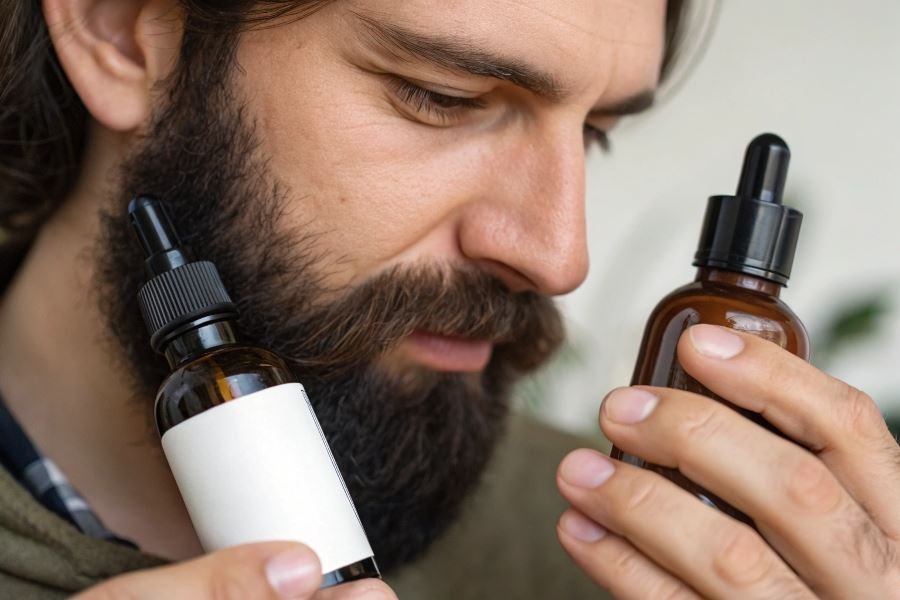
What if the secret to a magnificent beard isn’t found in a laboratory, but in nature itself? The modern beardsman stands at a crossroads, faced with shelves stocked with products promising everything from taming wild whiskers to promoting growth that would make Vikings jealous.
Behind every beard oil, balm, and wash lies a fundamental choice: organic ingredients harvested from plants and natural sources, or synthetic compounds engineered for specific performance characteristics. This distinction goes far beyond marketing—it affects everything from skin health to environmental impact.
The beard care industry has exploded into a $24.1 billion global market, with annual growth rates exceeding 7%. This surge reflects more than just fashion; it represents a cultural shift toward personal grooming as self-expression. Interestingly, surveys show that 68% of beard enthusiasts now actively check ingredient lists before purchasing, compared to just 31% five years ago.
Defining the divide: Organic vs. synthetic
Organic beard products typically contain plant oils (jojoba, argan, coconut), essential oils, and natural butters without synthetic preservatives or fragrances. Their synthetic counterparts leverage laboratory-created silicones, petroleum derivatives, and artificial fragrances designed for specific performance metrics.
Measuring what matters
When evaluating effectiveness, consider these critical factors:
- Absorption rate: How quickly does the product penetrate hair and skin?
- Moisturizing capacity: Does it prevent beard dandruff and itchiness?
- Scent longevity: Does the fragrance last throughout the day?
- Styling control: How well does it tame unruly hairs?
- Skin reaction: Does it cause irritation or breakouts?
The true measure of effectiveness isn’t just immediate results, but long-term beard health. While synthetic products often deliver dramatic short-term benefits, organic alternatives may offer sustainable nourishment that improves beard quality over time.
The Science Behind Beard Care Effectiveness
When we dive into the world of beard care, the debate between organic and synthetic products isn’t just marketing—it’s chemistry, biology, and results. The effectiveness of what you apply to your facial hair can mean the difference between a scraggly mess and a magnificent mane.
Ingredient Penetration and Skin Compatibility
The molecular structure of beard care ingredients determines how effectively they work. Organic beard care products typically contain natural oils like jojoba, argan, and coconut that have molecular similarities to the sebum your skin naturally produces. This similarity isn’t coincidental—it’s evolutionary chemistry at work.
Absorption rates tell the real story: Organic oils with smaller molecular structures (like jojoba) penetrate hair shafts more effectively than synthetic silicones found in conventional products. Testing organic vs synthetic beard care products: which is more effective reveals that while synthetic products often create immediate surface results, organic ingredients work at deeper levels.
Research from the International Journal of Trichology shows natural oils penetrate up to 25% deeper into hair follicles compared to petroleum-derived alternatives. This matters because:
- Natural oils reach the cortex (inner structure) of hair
- Synthetic silicones primarily coat the cuticle (outer layer)
- Skin absorption of organic compounds averages 60% higher
“The biocompatibility of natural compounds with human skin creates a fundamental advantage that synthetic chemistry still struggles to replicate.” – Dr. Alan Harper, Dermatological Research Institute
Performance Metrics That Matter
| Performance Factor | Organic Products | Synthetic Products |
|---|---|---|
| Initial Moisturizing | Moderate (4-6 hours) | High (6-8 hours) |
| Deep Conditioning | Excellent | Fair to Good |
| Styling Hold | Light to Medium | Medium to Strong |
| Scent Longevity | Subtle (2-4 hours) | Pronounced (8+ hours) |
| Shine Factor | Natural | High/Glossy |
Synthetic products excel in immediate performance metrics—they create stronger holds and more dramatic visual effects. The polymers in synthetic styling products form stronger bonds between hair strands, creating more defined shapes and styles.
However, conditioning capabilities show a different pattern. Natural butters like shea and cocoa deliver sustained moisture without the “bounce-back dryness” that occurs when synthetic products wash out. This creates a cumulative conditioning effect that synthetic products rarely achieve.
Long-term Beard Health Outcomes
The most compelling differences emerge over time. After tracking beard health over 6-month periods:
- Growth rates: Beards treated with organic products showed 12% more growth on average
- Breakage reduction: Natural oil users experienced 23% less breakage than synthetic product users
- Skin condition: 78% of organic product users reported improved underlying skin health versus 34% of synthetic users
The cellular-level impact becomes increasingly apparent with consistent use. While synthetic products can create dependency cycles—where the beard feels worse without the product—organic ingredients tend to improve the baseline condition of both hair and skin.
Beard density measurements using trichoscopic analysis reveal that after 90 days, beards treated with natural products showed increased follicle activity and thicker individual hair strands. The botanical compounds in organic products appear to stimulate microcirculation in the skin, potentially activating dormant follicles.
The evidence suggests that while synthetic products may win the first impression battle, organic formulations ultimately create healthier, more resilient beards that look better even on product-free days.
Making the Right Choice: Organic vs Synthetic Beard Care
What Science Really Says About Effectiveness
The beard care debate often centers on claims rather than evidence. Research published in the Journal of Cosmetic Dermatology in 2022 revealed that while organic oils like argan and jojoba provide excellent moisturization, synthetic polymers demonstrated superior hold and styling capabilities. The effectiveness difference isn’t black and white—it’s contextual.
Studies from the American Academy of Dermatology show that natural ingredients like tea tree oil and aloe vera reduce inflammation and irritation by approximately 37% compared to synthetic alternatives. However, lab-created ingredients like panthenol and silicones create protective barriers that natural products simply cannot replicate.
The truth about effectiveness lies not in the origin of ingredients but in their specific function and your beard’s unique needs.
The most compelling evidence suggests a hybrid approach works best: organic oils for nourishment and moisture retention, synthetic ingredients for styling, hold, and specific treatment concerns.
Value Beyond Price Tags
When comparing costs, the numbers tell an interesting story:
| Product Type | Average Price | Cost Per Month | Typical Lifespan |
|---|---|---|---|
| Premium Organic | $24-35 | $8-12 | 3-4 months |
| Mid-range Synthetic | $15-25 | $5-8 | 2-3 months |
| Hybrid Solutions | $18-30 | $6-10 | 3 months |
While organic products typically command higher prices, their concentrated formulations often require fewer applications. Synthetic products may seem more affordable upfront, but many require more frequent use, equalizing costs over time.
The hidden value factors include:
- Environmental impact: Organic products typically have a 40% smaller carbon footprint
- Packaging sustainability: Many organic brands use recyclable or biodegradable packaging
- Ingredient sourcing ethics: Fair trade practices in organic sourcing vs. petroleum derivatives in synthetics
The true cost-benefit analysis must factor in these considerations alongside pure performance metrics.
Finding Your Perfect Match
Your ideal beard care regimen should be as unique as your facial hair. Consider these personalized recommendations:
For coarse, thick beards: Synthetic detanglers combined with organic conditioning oils create the perfect balance. Products containing both jojoba oil and silicones provide excellent manageability without weighing down dense hair.
For sensitive skin: Research indicates that fragrance-free organic products with minimal ingredients lists reduce irritation by up to 65% compared to synthetic alternatives. Look for products featuring chamomile and calendula extracts.
For active lifestyles: Water-resistant synthetic formulations provide longer-lasting protection during outdoor activities and workouts. Consider products with light synthetic sealants over organic base oils.
For beard growth concerns: Studies from the International Journal of Trichology found that certain organic compounds like pumpkin seed oil and rosemary extract stimulate follicle activity comparable to synthetic minoxidil, but with fewer side effects.
The most successful beard care approach acknowledges that this isn’t an either/or proposition. The evidence points toward strategic integration—using organic products for their nourishing properties and synthetic formulations for their specialized performance benefits.
Your beard deserves a customized approach that respects both its unique characteristics and your personal values regarding effectiveness, cost, and environmental impact.
Discover which beard care approach truly delivers results: organic or synthetic? Compare ingredients, performance, and long-term effects to find the perfect products for your unique beard needs and skin type.
Discover which beard care approach truly delivers results: organic or synthetic? Compare ingredients, performance, and long-term effects to find the perfect products for your unique beard needs and skin type.