
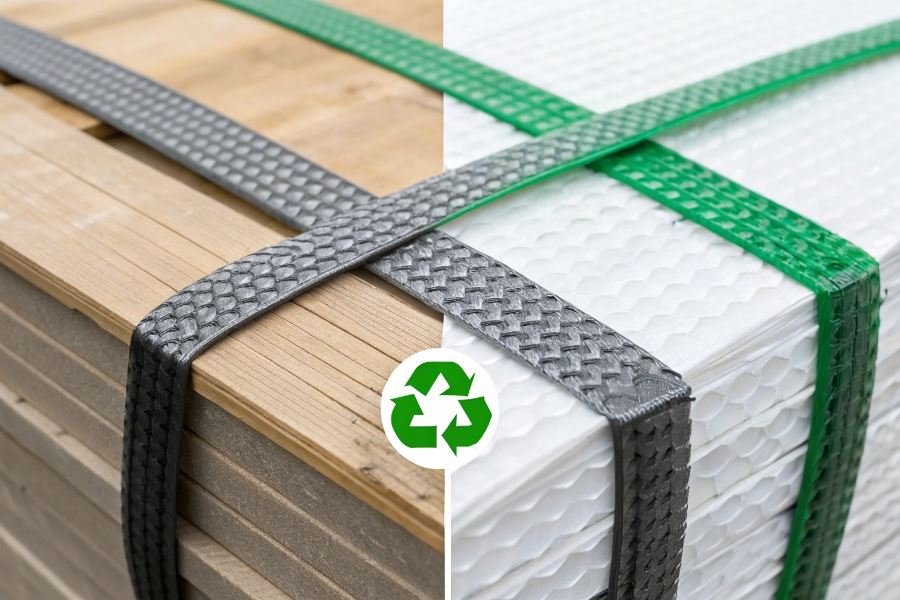
Ever wondered what keeps your garden hose neatly coiled or secures critical components in a jet engine? The humble banding ring—a seemingly simple device that plays a crucial role across countless industries, from aerospace to plumbing, packaging to automotive manufacturing.
Banding rings (sometimes called strapping rings or binding rings) serve as the unsung heroes of industrial fastening. These circular fasteners secure, bundle, and organize everything from wire harnesses in vehicles to cable assemblies in telecommunications equipment. Their primary function? Creating reliable, consistent tension around objects that need to stay put—often in challenging environments where failure isn’t an option.
The evolution of binding technology
The journey of banding technology traces back to the industrial revolution, when rudimentary metal straps were first used to secure wooden barrels and crates. By the 1940s, steel banding had become standardized for heavy-duty applications. The real transformation came in the 1970s with the introduction of high-performance polymers, creating a genuine alternative to traditional metal options.
Today’s banding rings represent decades of materials science advancement, with specialized formulations designed for specific environmental challenges—from caustic chemicals to extreme temperatures.
Choosing your champion: Metal vs. plastic
When selecting between plastic and metal banding rings, several factors demand consideration:
| Factor | Metal Considerations | Plastic Considerations |
|---|---|---|
| Strength | Superior tensile strength | Excellent for light/medium applications |
| Environment | Vulnerable to corrosion | Resistant to chemicals, moisture |
| Cost | Higher initial investment | More economical, especially at volume |
| Flexibility | Limited elasticity | Adapts to irregular shapes |
| Temperature | Performs in extreme heat | May degrade above certain thresholds |
The ideal choice ultimately depends on your specific application requirements—whether you need the unmatched strength of stainless steel or the chemical resistance and flexibility of advanced polymers like polyamide or PEEK.
The Ultimate Banding Ring Showdown
Material strength that stands the test of time
When selecting banding rings for industrial or commercial applications, material properties form the foundation of your decision-making process. Metal banding rings, typically crafted from stainless steel or aluminum, deliver exceptional tensile strength—often exceeding 800 MPa for stainless steel variants. This remarkable strength allows them to withstand extreme pressure, temperature fluctuations, and harsh environmental conditions without deformation.
The comprehensive comparison of plastic and metal banding rings reveals striking differences in durability profiles. While metal rings maintain structural integrity for decades with minimal degradation, their plastic counterparts face challenges with UV exposure, chemical interactions, and temperature extremes. High-quality polypropylene banding rings offer respectable tensile strength (70-80 MPa) but experience approximately 7-10% strength reduction annually when exposed to outdoor conditions.
Material memory represents another critical distinction. Metal rings, once properly tensioned, maintain their holding force indefinitely. Plastic variants, even premium polyamide compositions, exhibit creep behavior—gradually losing tension over time, particularly under fluctuating temperatures.
Budget considerations versus lifetime value
| Feature | Metal Banding Rings | Plastic Banding Rings |
|---|---|---|
| Initial Cost | 0.75−3.50 per unit | 0.15−0.85 per unit |
| Installation Equipment | 850−2,500 | 250−750 |
| Replacement Frequency | 8-15+ years | 2-5 years |
| Recyclability | 95%+ | 30-60% |
The initial investment difference is undeniable—plastic rings typically cost 70-80% less than their metal equivalents. However, this apparent cost advantage requires deeper examination. When factoring replacement frequency, labor costs, and potential system failures, metal banding rings often deliver superior return on investment for permanent installations.
For temporary applications lasting under 18 months, plastic rings present compelling economics. Their lower installation equipment costs and reduced training requirements translate to meaningful savings for short-term projects or low-stress applications.
Application-specific performance factors
Environmental resilience varies dramatically between materials. Metal rings, particularly 316 stainless steel, withstand temperatures from -80°F to 1000°F without compromising structural integrity. Premium plastic variants typically operate reliably between -40°F and 180°F before experiencing significant property changes.
Chemical compatibility presents another crucial consideration. While certain plastic formulations resist specific chemicals that would corrode metals, the broader chemical resistance profile of stainless steel remains unmatched for general-purpose applications. Industries handling diverse chemical compounds typically favor metal rings for their predictable performance across varying exposure conditions.
Weight-sensitive applications benefit from specialized solutions. Aerospace and automotive sectors often utilize lightweight aluminum banding rings, offering 65% weight reduction compared to steel while maintaining 70% of the tensile strength. For ultra-lightweight requirements, reinforced composite plastic rings provide the optimal strength-to-weight ratio, though at premium price points.
The vibration damping characteristics inherent to plastic rings make them ideal for noise-sensitive environments or applications where metal-on-metal contact could cause damage. This natural vibration absorption can extend equipment life in high-frequency movement scenarios.
For applications requiring frequent adjustment or removal, quick-release plastic banding systems from Panduit offer significant advantages, eliminating the need for cutting tools and reducing maintenance time by up to 75% compared to traditional metal banding methods.
Making the Right Banding Ring Choice
Industry Selection Criteria That Actually Matter
Choosing between plastic and metal banding rings isn’t just a materials decision—it’s a strategic business choice. In aerospace manufacturing, metal banding rings dominate because they withstand extreme temperature fluctuations (from -65°F to 450°F) while maintaining structural integrity. Meanwhile, food processing facilities overwhelmingly select plastic options due to their non-reactive properties and detection capabilities during quality control scans.
The telecommunications industry presents a fascinating case study. When AT&T switched from metal to specialized UV-resistant plastic banding rings for outdoor cable management in 2018, they reported a 37% reduction in installation time and significant cost savings despite the premium material price.
Decision factors typically follow this hierarchy:
| Selection Factor | Metal Advantage | Plastic Advantage |
|---|---|---|
| Load capacity | Up to 2,500 lbs | Up to 175 lbs |
| Temperature range | -65°F to 450°F | -40°F to 185°F |
| Chemical resistance | Specific alloys for specific environments | Broad resistance to acids/bases |
| Installation speed | Requires tools | Tool-free options available |
| Cost effectiveness | Higher upfront, longer lifespan | Lower initial investment |
Best practices suggest matching the banding ring material to the most extreme condition your application will face—not the average condition. This seemingly simple adjustment has prevented countless system failures.
Environmental Impact Beyond the Obvious
The sustainability conversation around banding rings has evolved dramatically. While metal rings boast recyclability rates exceeding 90% when properly collected, their production generates 3.5 times more carbon emissions than comparable plastic alternatives.
The environmental equation isn’t just about end-of-life recyclability, but the complete lifecycle impact from raw material extraction to disposal.
Stainless steel banding rings from Panduit require significant energy during production but can remain in service for decades. Conversely, biodegradable plastic options from HellermannTyton decompose within 5-10 years in industrial composting facilities but may not offer the same performance longevity.
The sustainability calculus becomes particularly interesting when considering specialized applications. In marine environments, certain metal bands corrode and release trace metals, while some plastic bands photodegrade into microplastics. Neither scenario is ideal, driving the development of application-specific materials.
Tomorrow’s Banding Technology Today
The innovation pipeline for banding rings is surprisingly robust. Composite materials combining the strength of metal with the flexibility and weight advantages of plastic represent the fastest-growing segment. Band-It has pioneered metal-reinforced polymer bands that deliver 80% of stainless steel strength at 40% of the weight.
Smart banding technology is emerging as a game-changer. Embedded RFID and NFC capabilities allow for inventory tracking, maintenance scheduling, and authentication verification. These intelligent bands can signal when tension changes indicate potential system failures.
Perhaps most exciting is the development of self-healing polymer bands that can repair minor damage through embedded microcapsules containing repair agents. While currently at premium price points, these technologies promise to dramatically extend service life in critical applications.
The future clearly favors specialized solutions over one-size-fits-all approaches, with material science advancements enabling banding rings precisely engineered for specific industry requirements rather than broad categories of “plastic” or “metal.”
Discover the key differences between plastic and metal banding rings for industrial applications. Our comprehensive comparison covers durability, cost-effectiveness, and performance to help you select the optimal solution for your specific needs.
Discover the key differences between plastic and metal banding rings for industrial applications. Our comprehensive comparison covers durability, cost-effectiveness, and performance to help you select the optimal solution for your specific needs.


