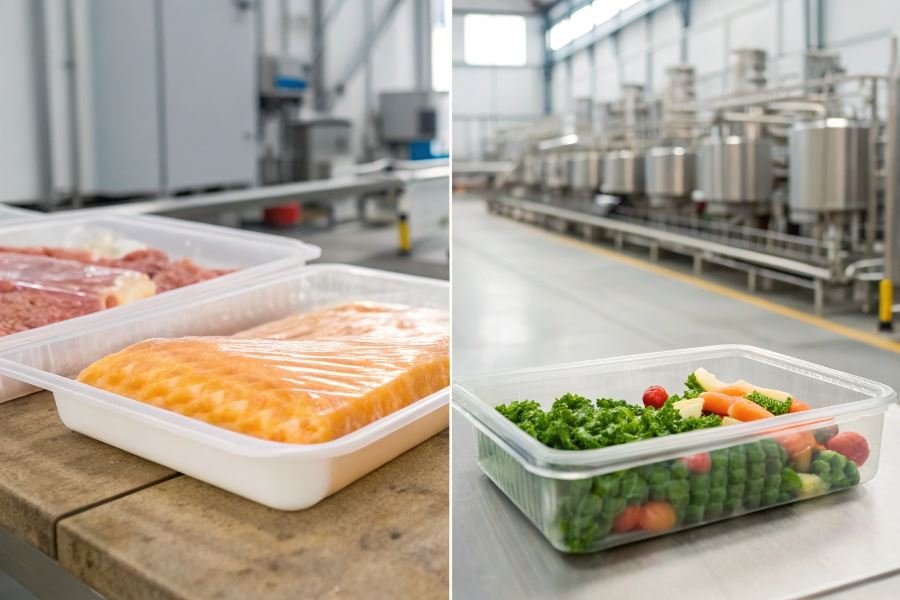
Ever wondered why that pre-packaged steak stays red for days while your butcher-wrapped cut browns overnight? The secret lies not in what you see, but in what you don’t: the invisible atmosphere surrounding your food.
Food preservation has evolved dramatically since our ancestors first dried meats in the sun. Today, two sophisticated technologies dominate the commercial packaging landscape: vacuum packaging and modified atmosphere packaging (MAP). These methods aren’t just extending shelf life—they’re transforming how we experience freshness, flavor, and food safety.
Vacuum packaging operates on a beautifully simple principle: remove the air, remove the problem. By extracting oxygen—the element that fuels bacterial growth and oxidation—vacuum sealing creates an inhospitable environment for spoilage organisms. The process involves placing products in specialized films and mechanically removing air, creating that characteristic “shrink-wrapped” appearance we associate with premium meats and cheeses.
Modified atmosphere packaging, by contrast, takes a more nuanced approach. Rather than removing all gases, MAP replaces the natural atmosphere with a precisely calibrated gas mixture—typically combinations of carbon dioxide, nitrogen, and minimal oxygen. This tailored environment can be customized for specific food types: high CO₂ levels for meat to inhibit bacteria, nitrogen for delicate chips to prevent crushing, or low oxygen for preserving vibrant produce colors.
These technologies have transformed everything from industrial meat processing to artisanal cheese production. While vacuum packaging dominates the premium protein market, MAP has revolutionized the fresh produce and ready-meal sectors, allowing for that perfect balance between preservation and presentation.
The Ultimate Showdown: Vacuum vs Modified Atmosphere Packaging
When it comes to preserving products and extending shelf life, packaging technology has evolved dramatically. The comparison between vacuum packaging and modified atmosphere packaging (MAP) reveals fascinating differences that impact everything from food quality to business operations. Let’s dive into what makes each method shine—and where they fall short.
Shelf-life Extension: The Numbers Game
Vacuum packaging and modified atmosphere packaging represent two distinct approaches to the same goal: keeping products fresh longer. While vacuum packaging removes air completely to inhibit aerobic bacterial growth, MAP replaces the natural atmosphere with a specific gas mixture tailored to each product type.
Vacuum packaging typically extends shelf life by 3-5 times compared to conventional packaging. For example, fresh beef might last 2-4 days in standard packaging but 10-15 days when vacuum sealed. The complete removal of oxygen creates an environment hostile to most spoilage organisms.
MAP takes a more nuanced approach. By customizing gas mixtures—often combinations of nitrogen, carbon dioxide, and minimal oxygen—MAP can extend shelf life even further for certain products:
| Product | Standard Packaging | Vacuum Packaging | Modified Atmosphere |
|---|---|---|---|
| Fresh pasta | 7-10 days | 25-30 days | 30-60 days |
| Sliced cheese | 7-14 days | 28-35 days | 45-60 days |
| Coffee beans | 1-2 weeks | 6-9 months | 12+ months |
Preserving What Matters: Texture, Color, and Flavor
The battle between vacuum packaging vs modified atmosphere advantages and disadvantages becomes most apparent when examining quality preservation. Each method offers distinct benefits depending on the product.
Vacuum packaging excels with:
- Dense products like cheese and cured meats
- Items where compression isn’t problematic
- Products where oxidation is the primary concern
MAP shines with delicate items that would suffer from compression. The cushioning effect of gases preserves:
- Structural integrity of bakery products and chips
- Visual appeal of fresh produce and berries
- Vibrant color in fresh meats (using minimal oxygen)
For example, vacuum-packed strawberries would be crushed, while MAP-packaged berries maintain their shape and appearance. Conversely, vacuum-sealed coffee beans retain flavor compounds better than those in MAP, which may allow subtle gas exchange.
The Investment Equation: Costs and Equipment
The financial considerations between these technologies vary significantly:
Vacuum packaging equipment from companies like Multivac typically requires:
- Lower initial investment ($5,000-30,000 for small to mid-sized operations)
- Simpler maintenance protocols
- Less specialized technical knowledge
MAP systems demand more upfront:
- Higher equipment costs ($15,000-100,000+)
- Gas mixing systems and analyzers
- Specialized film with specific gas permeability rates
Ongoing operational costs follow similar patterns. Vacuum packaging requires only electricity and packaging materials, while MAP adds the expense of food-grade gases and more complex quality control procedures.
Environmental Footprint and Sustainability
The sustainability profile of both technologies presents interesting contrasts:
Vacuum packaging generally uses:
- Less packaging material overall
- Simpler films that may be easier to recycle
- Lower energy consumption during operation
MAP systems typically involve:
- More complex multi-layer films that are harder to recycle
- Continuous gas consumption
- Higher carbon footprint from gas production and transportation
However, both systems significantly reduce food waste—perhaps their greatest environmental contribution. A product that stays fresh longer means less waste throughout the supply chain, from manufacturer to consumer kitchen.
The choice between these technologies ultimately depends on specific product requirements, budget constraints, and operational capabilities—each offering compelling advantages in the right application.
Making the Right Preservation Choice
The decision framework that matters
Choosing between vacuum packaging and modified atmosphere packaging (MAP) isn’t just a technical decision—it’s a strategic business move. The right preservation method directly impacts shelf life, product quality, and ultimately, your bottom line. Smart selection starts with three critical factors: product sensitivity to oxygen, moisture content, and texture vulnerability.
Oxygen-sensitive products like fresh meats and oily snacks typically benefit from vacuum packaging’s complete air removal. Meanwhile, delicate items such as bakery products and fresh produce often perform better with MAP’s cushioning gas mixture that prevents crushing while still extending shelf life.
The decision matrix below provides a streamlined approach to making this critical choice:
| Product Characteristic | Vacuum Packaging | Modified Atmosphere |
|---|---|---|
| High moisture content | ⚠️ May accelerate drip loss | ✓ Better moisture retention |
| Delicate structure | ⚠️ Risk of crushing | ✓ Protective gas cushion |
| High fat content | ✓ Prevents oxidation | ✓ Good with nitrogen flush |
| Cost sensitivity | ✓ Lower equipment investment | ⚠️ Higher ongoing gas costs |
| Retail visual appeal | ⚠️ Can appear compressed | ✓ Maintains natural appearance |
Industry applications that drive results
Different sectors have developed specialized approaches based on years of practical experience and research.
In the meat processing industry, vacuum packaging dominates for whole cuts and primal portions, extending shelf life from days to weeks. The National Meat Association reports processors achieving 2-3x shelf life extensions through proper vacuum techniques.
For bakery products, MAP has become the gold standard, with nitrogen/carbon dioxide blends that maintain crispness while preventing mold growth. Artisan bakeries particularly benefit from MAP’s ability to preserve that just-baked texture without freezing.
“The preservation method should enhance your product’s natural qualities, not just delay spoilage,” as industry experts consistently emphasize.
Tomorrow’s preservation landscape
The preservation technology landscape is rapidly evolving with several key innovations poised to reshape how businesses approach packaging:
- Smart packaging indicators that change color based on package integrity or product freshness
- Biodegradable MAP films addressing sustainability concerns while maintaining barrier properties
- Hybrid systems combining vacuum and MAP technologies for optimized preservation
The most promising development may be active packaging systems that incorporate antimicrobial or antioxidant compounds directly into packaging materials. These technologies don’t just passively protect products—they actively extend shelf life through continuous interaction with the food.
Research from food science institutes suggests these innovations could potentially double current shelf life expectations for many products while reducing preservative requirements. For businesses looking to stay competitive, monitoring these developments isn’t optional—it’s essential for maintaining market leadership in quality and freshness.
The ultimate decision between vacuum packaging and MAP should align with your specific product requirements, target market expectations, and operational capabilities. By applying this decision framework and staying informed about industry-specific best practices, you’ll make preservation choices that truly preserve both product quality and profit margins.
Discover the key differences between vacuum packaging and modified atmosphere packaging (MAP) for food preservation. Compare shelf-life benefits, quality retention, costs, and sustainability to determine which method best suits your specific product requirements.
Discover the key differences between vacuum packaging and modified atmosphere packaging (MAP) for food preservation. Compare shelf-life benefits, quality retention, costs, and sustainability to determine which method best suits your specific product requirements.