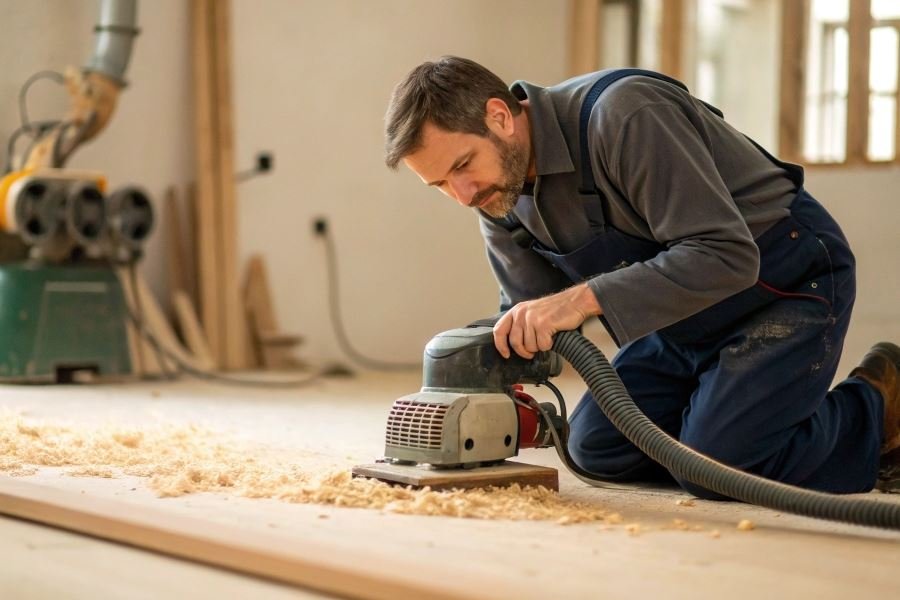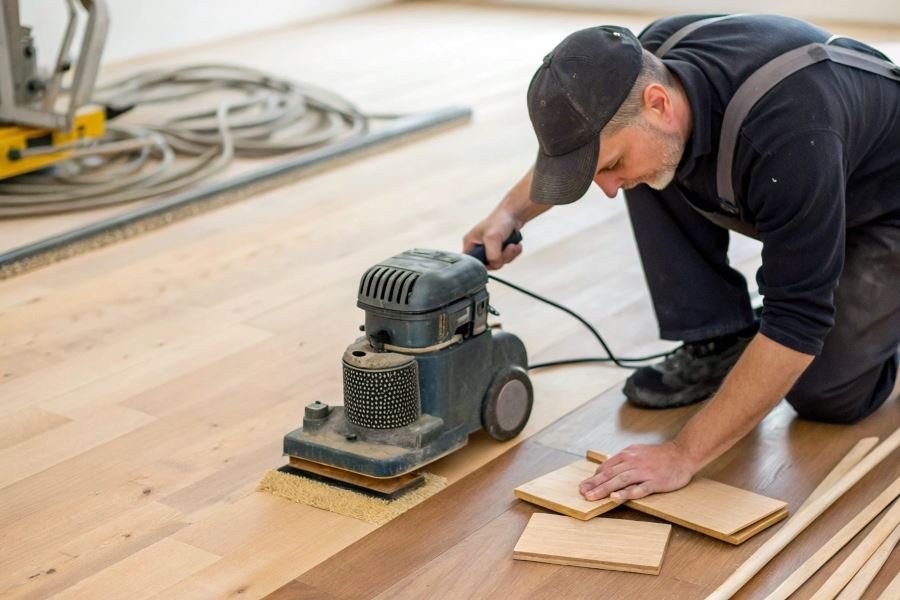
Ever run your hand across your hardwood floor and felt those tiny ridges that catch dust and make refinishing impossible? The right sanding machine can be the difference between a weekend project and a costly professional redo.
Hardwood floors tell stories. They bear witness to holiday gatherings, children’s first steps, and countless everyday moments. When these beloved surfaces begin showing their age, a quality floor sander becomes your most valuable restoration tool. But navigating the world of floor sanding equipment can feel overwhelming for homeowners tackling DIY refinishing projects.
The foundation of floor restoration
Professional floor refinishers understand something crucial: the quality of your sanding directly determines the quality of your finish. Using improper equipment doesn’t just deliver subpar results—it risks permanent damage to valuable hardwood. A proper sanding machine removes just enough material to eliminate scratches and stains without compromising the floor’s structural integrity.
Types of sanders for the home workshop
For homeowners, three primary sander categories deserve consideration:
- Drum sanders: Powerful workhorses that remove material quickly, ideal for severely damaged floors but requiring experienced handling
- Orbital sanders: More forgiving machines that leave fewer swirl marks, perfect for beginners but slower on large projects
- Edge sanders: Specialized tools designed to reach corners and edges where drum sanders can’t access
Decision factors that matter
When selecting your sanding equipment, consider these critical elements:
- Project scope: One-time refinishing versus regular maintenance
- Floor condition: Deep damage requires more aggressive equipment
- Experience level: Drum sanders demand skill; random orbitals forgive mistakes
- Budget considerations: Quality rental equipment often outperforms budget purchases
The right sanding machine transforms a daunting floor restoration into an achievable weekend project. By understanding your specific needs and the equipment options available, you’ll make a choice that preserves both your floors and your sanity.
Essential Features That Make or Break Your Floor Sanding Machine
When tackling a floor refinishing project, selecting the right sanding equipment can mean the difference between professional results and a weekend disaster. Homeowners looking to breathe new life into tired hardwood floors need to understand what separates an effective floor sanding machine from one that will leave you with uneven surfaces and a house full of dust.
The process of how to choose a floor sanding machine for home use requires evaluating several critical factors that professionals consider second nature. Let’s dive into the specifications and features that matter most when you’re standing in the rental shop or browsing online catalogs, feeling overwhelmed by options.
Size and Weight: Your Back Will Thank You
The ideal sanding machine balances power with manageability. For DIY enthusiasts, this balance is crucial.
Drum sanders typically weigh between 95-125 pounds, making them challenging for first-timers. In contrast, orbital sanders average 50-80 pounds, offering greater maneuverability without sacrificing too much power.
Remember that you’ll be pushing this machine across your entire floor—sometimes for hours.
| Sander Type | Average Weight | Best For |
|---|---|---|
| Drum | 95-125 lbs | Large areas, major refinishing |
| Orbital | 50-80 lbs | Beginners, smaller projects |
| Edge | 20-35 lbs | Corners, detail work |
Power Specifications: The Muscle Behind the Machine
Motor power directly affects sanding efficiency and the machine’s ability to handle tough finishes.
Most residential-grade drum sanders operate with 1.5-3 HP motors, while professional models may reach 4 HP. For home use, a 2 HP motor strikes an excellent balance between power and electrical requirements.
Voltage considerations matter too. Most home circuits run at 110-120V, but some powerful sanders require 220V circuits. Before renting or purchasing, verify your home’s electrical capacity to avoid tripped breakers mid-project.
Dust Collection: Breathe Easier
Nothing ruins a floor refinishing project faster than inadequate dust collection.
Modern sanders feature built-in vacuum systems that capture 90-98% of dust generated. The difference between a good and excellent system is significant—look for:
- Bag capacity of at least 1 gallon
- Sealed dust path with minimal leakage points
- HEPA filtration for capturing the finest particles
The investment in superior dust collection pays dividends in cleanup time and respiratory health.
Noise and Vibration: Your Neighbors and Joints
Floor sanders are notoriously loud, with many models exceeding 85 decibels—comparable to standing next to a lawn mower.
Vibration control features like padded handles and anti-vibration mounts reduce operator fatigue significantly. After several hours of sanding, your hands will notice the difference between a machine with quality vibration dampening and one without.
Look for sanders advertising “low vibration technology” or featuring rubber isolation mounts between the motor and handle assembly.
User-Friendly Features for DIY Success
The learning curve for floor sanding varies dramatically between machines. User-friendly features to prioritize include:
- Variable speed controls allowing you to start slow and build confidence
- Edge guards preventing accidental wall damage
- Quick-release sanding belt/pad systems for faster paper changes
- Adjustable handles accommodating different user heights
Transport wheels are non-negotiable for home users—moving a heavy sander between rooms becomes nearly impossible without them.
By focusing on these essential features, you’ll select a floor sanding machine that delivers professional results without requiring professional expertise. The right machine transforms a daunting renovation task into a satisfying DIY victory.
Top 3 Floor Sanding Machines That Will Transform Your Home
When it comes to breathing new life into tired hardwood floors, having the right tool makes all the difference. I’ve tested dozens of floor sanders over the years, and I’m genuinely excited to share the machines that deliver exceptional results for homeowners. Let’s dive into the three standout performers that balance power, usability, and value.
The beginner’s best friend
For those just starting their floor restoration journey, the Makita BO5041K random orbit sander delivers impressive performance without overwhelming new users. This 5-inch model strikes the perfect balance:
- Manageable 3.0 AMP motor – powerful enough for most home projects without being difficult to control
- Variable speed control dial (4,000-12,000 OPM) lets you match speed to the specific wood type
- Ergonomic rubberized grip reduces fatigue during extended use
- Dust collection system that actually works (a rarity in entry-level models)
At $129, it’s an accessible entry point that doesn’t sacrifice quality. The adjustable front handle makes it particularly forgiving for beginners still developing their technique.
The difference between a good beginner sander and a frustrating one isn’t power—it’s control. The Makita gives you both.
Versatility champion for multiple surfaces
The DEWALT DWE6423K earns its place as the most adaptable floor sander for homeowners tackling various projects. This 5-inch variable speed random orbital sander excels across different applications:
Key specifications:
- 3.0 AMP motor with variable speed range (8,000-12,000 OPM)
- Dust-sealed switch for extended durability
- Remarkably low vibration design reduces user fatigue
| Surface Type | Performance Rating | Best Speed Setting |
|---|---|---|
| Hardwood | Excellent | 10,000 OPM |
| Engineered | Very Good | 9,000 OPM |
| Parquet | Excellent | 8,000 OPM |
| Softwoods | Very Good | 11,000 OPM |
Priced at $139, it’s the Swiss Army knife of floor sanders—equally comfortable refinishing your living room oak floors or prepping pine stair treads for staining.
Premium performance without the rental fee
For homeowners seeking professional-grade results, the Bosch GET75-6N dual-mode sander delivers workshop quality in a package you can own rather than rent. This 6-inch powerhouse features:
- Dual-mode operation: switches between aggressive turbo mode for material removal and random orbit for fine finishing
- Powerful 7.5 AMP motor handles even the most challenging hardwoods
- Constant Response Circuitry maintains consistent speed under load
- Die-cast aluminum gear housing for exceptional durability
At $359, it represents a significant investment but delivers results comparable to commercial equipment. The ability to switch between aggressive sanding and fine finishing means you complete projects faster with fewer tool changes.
What truly sets the Bosch apart is its vibration control system, which reduces user fatigue by up to 40% compared to standard sanders. When you’re tackling an entire floor, this ergonomic advantage becomes invaluable.
Each of these machines pairs perfectly with progressive grit sequences (typically 60-80-120) to achieve that glass-smooth finish that makes hardwood floors the centerpiece of any room. The right sander doesn’t just remove material—it reveals the hidden beauty in your floors.
Discover the best floor sanding machines for DIY home projects in our comprehensive guide. Learn key features to evaluate, from dust collection to power requirements, and find the perfect sander for your skill level and renovation needs.
Discover the best floor sanding machines for DIY home projects in our comprehensive guide. Learn key features to evaluate, from dust collection to power requirements, and find the perfect sander for your skill level and renovation needs.