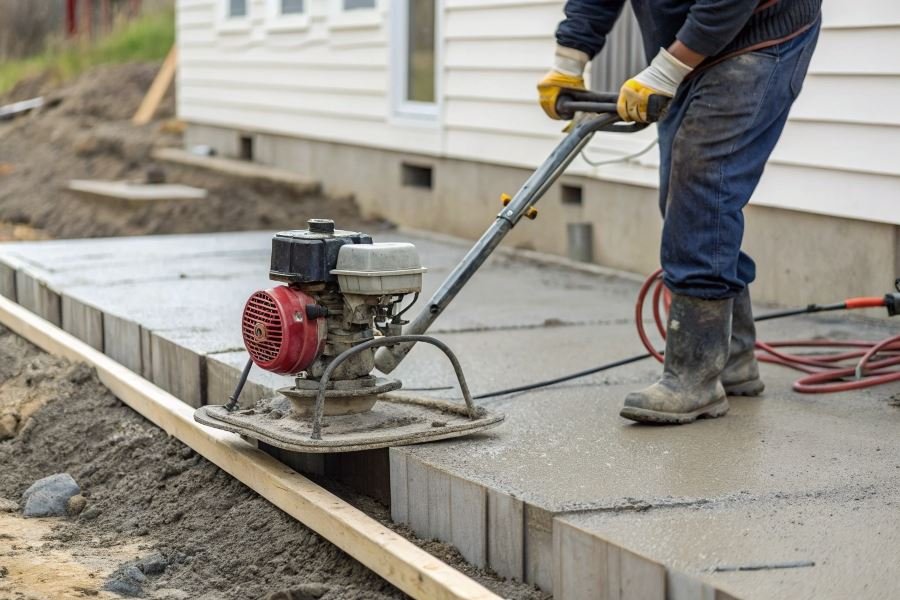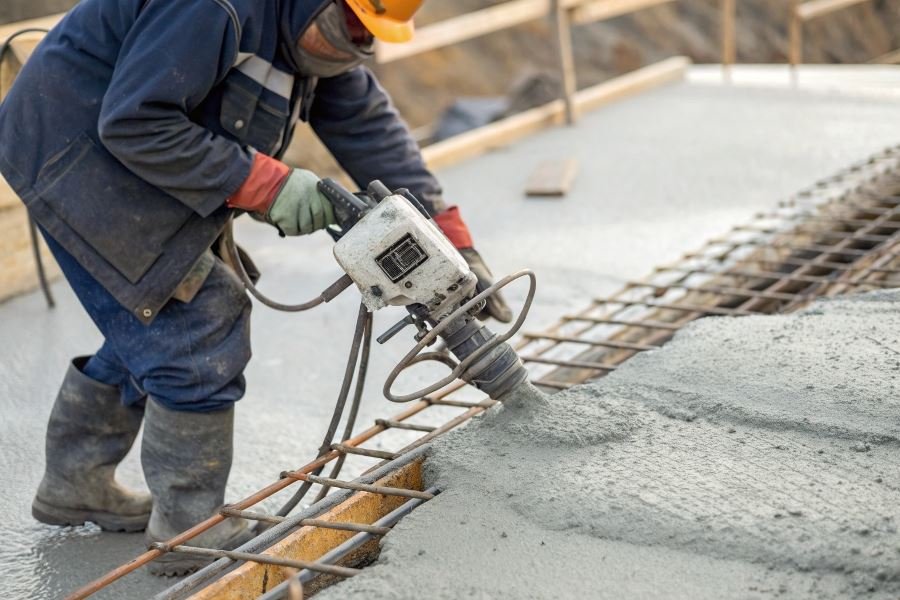
Ever watched a perfectly executed concrete pour transform from a sloppy mess into a rock-solid foundation? That magical transformation doesn’t happen by chance—it’s the result of proper compaction, the unsung hero of concrete durability.
Deep vibration isn’t just a technical requirement; it’s the difference between concrete that lasts generations and concrete that fails prematurely. When properly compacted, concrete can achieve up to 100% of its designed strength. Without it? You might be looking at a 50% strength reduction and a structure destined for early failure.
The science behind the shake
At its core, deep vibration technology works by eliminating air voids—those tiny pockets of trapped air that compromise concrete’s integrity. Modern vibrators come in several configurations:
- Electric vibrators: Ideal for precision work with consistent power output
- Pneumatic models: Perfect for heavy-duty applications where durability is paramount
- Hydraulic systems: The powerhouses for massive commercial projects
The vibration frequency (typically 8,000-12,000 vibrations per minute) creates a temporary liquefaction zone that allows air bubbles to escape while consolidating the aggregate and cement paste into a dense, homogeneous mass.
Safety first: Protecting yourself and your investment
Before firing up that vibrator, remember that you’re handling equipment that combines electricity, moving parts, and sometimes challenging environments. Always:
- Inspect power cords for damage before operation
- Wear appropriate PPE including vibration-dampening gloves
- Maintain proper footing on stable surfaces
- Take regular breaks to prevent hand-arm vibration syndrome
The difference between amateur and professional results isn’t just in the equipment—it’s in understanding the fundamentals that transform ordinary concrete into extraordinary structures.
Mastering the Art of Concrete Vibration
Achieving flawless concrete structures demands precision at every step, particularly during compaction. The difference between durable, void-free concrete and a compromised structure often comes down to vibration technique. When construction professionals approach concrete vibration with methodical expertise, they transform ordinary pours into extraordinary foundations that stand the test of time.
The proper use of deep vibrators for quality concrete compaction represents the cornerstone of superior construction practices. These powerful tools, when wielded correctly, eliminate air pockets and consolidate concrete to its optimal density—but technique matters tremendously. Let’s dive into the essential methods that separate amateur vibration from professional-grade compaction.
Insertion and Withdrawal: The Foundation of Vibration Success
The vibrator insertion process requires both speed and precision. Always insert the vibrator vertically and quickly to its full depth in the concrete layer. This vertical approach ensures the vibrator doesn’t bend or create unnecessary drag patterns in the mix.
When withdrawing the vibrator, patience becomes your ally. Pull the vibrator up slowly—approximately 3 inches per second—allowing concrete to flow naturally into the space created by the vibrator head. This methodical withdrawal prevents the formation of voids that could otherwise compromise structural integrity.
Critical mistake to avoid: Never use the vibrator to move concrete horizontally. This creates segregation where heavier aggregates separate from the cement paste, leading to weak points in the finished structure.
Timing and Spacing: The Science of Perfect Compaction
| Concrete Slump | Vibration Duration | Spacing Between Insertions |
|---|---|---|
| Low (1-3″) | 10-15 seconds | 12-18 inches |
| Medium (3-5″) | 5-10 seconds | 18-24 inches |
| High (5″+) | 3-7 seconds | 24-30 inches |
The vibration duration directly impacts concrete quality. Over-vibration can be as problematic as under-vibration, causing aggregate segregation and excessive bleeding. Watch for these visual cues that indicate sufficient vibration:
- The surface around the vibrator becomes glossy
- Large air bubbles stop emerging
- The concrete settles to a level position
For optimal results, establish a systematic pattern of insertions. Visualize a grid across your pour area and work methodically to ensure complete coverage without missed sections.
Adapting Techniques for Different Mixes and Elements
Different concrete formulations and structural elements demand customized approaches to vibration. High-strength mixes with lower water-cement ratios typically require more vigorous vibration than standard mixes. When working with these dense formulations, reduce the spacing between insertion points by approximately 25%.
For thin walls and columns:
- Use smaller diameter vibrators (1-2 inches)
- Maintain at least 6 inches clearance from formwork
- Insert at a slight angle when necessary to reach confined areas
For mass concrete pours:
“Layer vibration is essential—never exceed 18-inch lift heights, and ensure the vibrator penetrates approximately 6 inches into the previous layer to create proper bonding between sections.”
When working with heavily reinforced sections, exercise extra caution. Insert the vibrator between rebar rather than directly onto it, as vibrating against reinforcement can create voids underneath horizontal bars and potentially displace the reinforcement from its engineered position.
The Wacker Neuson M2000 and Husqvarna SMART series vibrators offer digital feedback systems that help operators maintain optimal vibration parameters across different applications.
By mastering these techniques, you’ll transform ordinary concrete into extraordinary structures—dense, strong, and built to endure decades of service with minimal maintenance requirements.
Mastering Concrete Vibration Challenges
Spotting and solving compaction issues
Concrete vibration problems can derail even the most carefully planned projects. The most common issue—inadequate consolidation—reveals itself through honeycombing, surface voids, and cold joints. When you notice these telltale signs, immediate action is required.
Vibration radius overlap is critical yet often overlooked. Professional contractors ensure 50% overlap between insertion points to eliminate air pockets. When working with a Wacker Neuson or Husqvarna vibrator, remember that effective radius varies with concrete slump and vibrator power.
Overvibration presents equally serious challenges. When concrete begins to segregate and excessive bleedwater appears on the surface, you’ve crossed into dangerous territory. The solution? Standardize vibration times based on concrete mix design and slump testing.
The difference between properly vibrated concrete and inadequately consolidated material can mean a 40% reduction in compressive strength and dramatically shortened service life.
Insertion spacing problems frequently plague projects. Use this quick-reference guide:
| Vibrator Diameter | Effective Radius | Maximum Spacing |
|---|---|---|
| 1″ (25mm) | 4″ (100mm) | 8″ (200mm) |
| 2″ (50mm) | 7″ (175mm) | 14″ (350mm) |
| 3″ (75mm) | 12″ (300mm) | 24″ (600mm) |
| 4″ (100mm) | 18″ (450mm) | 36″ (900mm) |
Equipment maintenance for peak performance
Vibrator maintenance isn’t just about longevity—it directly impacts concrete quality. The vibration frequency of a properly maintained unit remains consistent, while neglected equipment can drop below the critical 8,000 VPM threshold.
Daily maintenance checks should include:
- Inspecting flexible shafts for kinks or damage
- Checking vibrator heads for wear (replace when diameter reduces by 5%)
- Examining power cables for cuts or abrasions
- Verifying proper lubrication according to manufacturer specifications
Bosch and DeWalt equipment owners should pay special attention to carbon brush wear, as this commonly overlooked component can cause sudden equipment failure mid-pour.
Preventative maintenance schedules pay dividends. Track operating hours and implement a 100-hour service interval for professional-grade equipment. This approach has been shown to extend equipment life by up to 40% while maintaining optimal vibration characteristics.
Verification methods for proper compaction
Quality control shouldn’t be an afterthought. The most reliable verification method remains core sampling, providing irrefutable evidence of compaction quality. However, several field tests can provide immediate feedback:
The rod test involves inserting a thin metal rod into freshly vibrated concrete. When withdrawn, the hole should close naturally if proper consolidation has occurred.
Acoustic monitoring has emerged as an innovative approach. Experienced operators can detect the characteristic pitch change that occurs when entrapped air has been successfully removed—transitioning from a higher-pitched sound to a deeper, more muffled tone.
Visual inspection remains valuable but requires trained eyes. Look for:
- Uniform surface appearance
- Absence of large air bubbles
- Concrete flowing into corners and around reinforcement
- Slight sheen of cement paste at the surface
For critical infrastructure projects, consider employing FLIR thermal imaging technology to identify potential cold joints or inadequately vibrated sections before they become permanent problems.
By addressing these common challenges with systematic approaches, maintaining equipment rigorously, and implementing thorough verification methods, your concrete projects will achieve the structural integrity and surface finish that distinguish exceptional work from merely acceptable results.
Learn expert techniques for proper deep vibrator use in concrete compaction. Master insertion methods, vibration timing, and spacing patterns to eliminate air voids and achieve superior concrete strength and durability in your construction projects.
Learn expert techniques for proper deep vibrator use in concrete compaction. Master insertion methods, vibration timing, and spacing patterns to eliminate air voids and achieve superior concrete strength and durability in your construction projects.