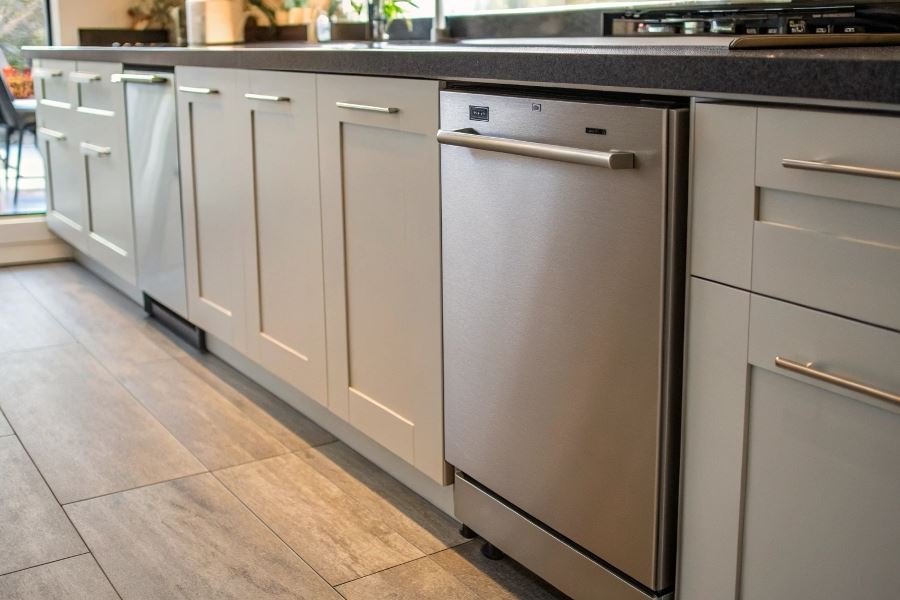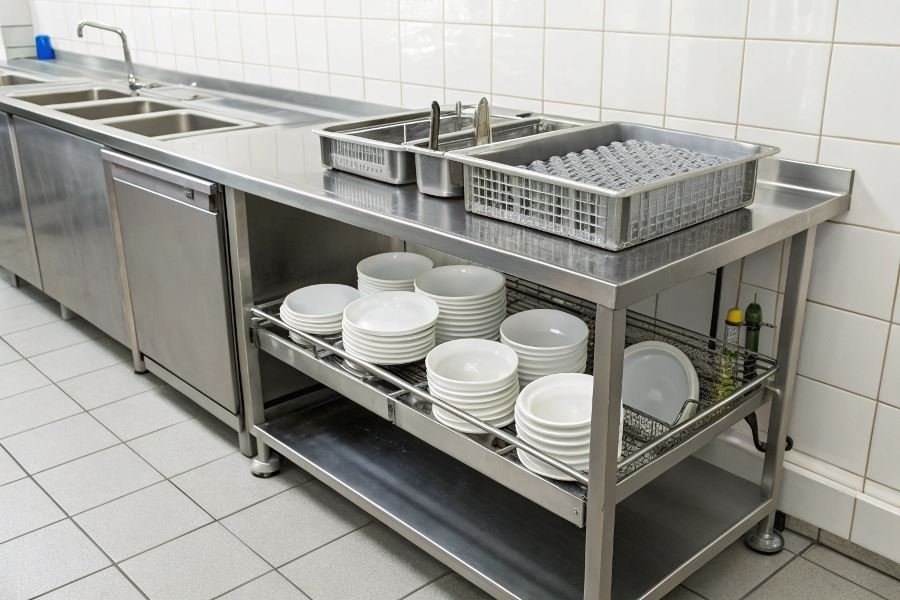
Ever watched a kitchen during peak service hours? The dishwashing station isn’t just a corner where dirty plates disappear—it’s the heartbeat of operational flow. Get it wrong, and your entire establishment could flatline during rush hour.
Commercial kitchens live or die by their ability to process dirty dishes efficiently. A properly designed dishwashing station with the right table setup can reduce labor costs by up to 30% while dramatically improving sanitation standards. Yet remarkably, this critical component is often an afterthought in kitchen design.
The table you select for your dishwasher isn’t a one-size-fits-all proposition. A bustling steakhouse serving 300 covers nightly on heavy china requires industrial-strength solutions with extended soiled dish tables, while a boutique café might thrive with a compact, L-shaped configuration. Your establishment’s unique rhythm dictates your dishwashing needs.
When evaluating dishwasher table options, three factors reign supreme:
- Volume and peak periods – How many dishes cycle through during your busiest hour?
- Space constraints – What’s your kitchen’s footprint, and how must workflow accommodate it?
- Dish types – Are you primarily handling delicate glassware or robust cookware?
The difference between a thoughtfully selected dishwasher table and a mismatched one isn’t just about efficiency—it’s about survival. In high-volume operations, a properly configured pre-rinse area alone can save thousands of gallons of water annually while extending the life of your dishwasher.
Your dishwashing station isn’t merely equipment; it’s the unsung hero ensuring everything else in your kitchen can shine.
Venue-Specific Dishwasher Table Requirements
Selecting the perfect dishwasher table isn’t just about measurements—it’s about understanding the unique operational rhythm of your establishment. The way dishes flow through a bustling steakhouse differs dramatically from a boutique hotel’s banquet service. When evaluating how to choose a table for a dishwasher based on the type of establishment, you’ll need to consider traffic patterns, peak service periods, and the specific dishware your venue handles daily.
High-Volume Restaurant Solutions
Restaurants with full-service dining face the most demanding dishwashing challenges. During peak hours, these operations might process upwards of 500 place settings per hour—requiring robust infrastructure.
Key requirements include:
- Tables with 14-16 gauge stainless steel construction (304 series preferred)
- Minimum 10″ backsplash height to protect wall surfaces
- Pre-rinse stations with high-pressure spray valves (1.15 GPM or lower)
- Undershelf reinforcement to support heavy dish racks
Full-service restaurants benefit from L-shaped or U-shaped configurations that create distinct soiled and clean zones. The Hobart WMBP-7 series tables offer integrated waste disposal systems that reduce food scraps handling by 40%, dramatically improving workflow efficiency.
“We installed a custom table with dual pre-rinse stations last year, and it cut our dish turnaround time by nearly 15 minutes during Saturday rushes,” notes executive chef Michael Harmon of Chicago’s Oak & Ember.
Space-Efficient Café Solutions
Cafés and quick-service restaurants operate in significantly tighter quarters while still requiring efficient dishwashing systems.
| Establishment Type | Recommended Table Width | Special Features |
|---|---|---|
| Coffee Shop | 24″-30″ | Mug/cup racks |
| Fast Casual | 30″-36″ | Tray slides |
| Food Truck | 18″-24″ | Folding options |
These venues benefit from compact Advance Tabco dishwasher tables with integrated shelving above the workspace. For extremely tight spaces, consider wall-mounted pre-rinse units that eliminate the need for separate rinse tables entirely.
Space-saving innovations include:
- Corner-designed soiled dish tables
- Vertical storage solutions for dish racks
- Mobile dish tables with locking casters
- Combination prep/dish tables with removable cutting boards
The Turbo Air TST series offers particularly clever configurations for establishments under 1,200 square feet, with nesting capabilities that can reduce footprint by up to 30% during non-peak hours.
Hotel and Catering Configurations
Hotels and catering operations present unique challenges—they must handle everything from delicate champagne flutes to massive serving platters.
These establishments require:
- Deeper sink compartments (minimum 14″ depth)
- Adjustable-height work surfaces (34″-38″ range)
- Specialized glass washing sections with rubber matting
- Heavy-duty undershelf capacity (minimum 400 lb rating)
The Eagle Group UNI-SERV series offers modular components specifically designed for banquet service, with interchangeable sorting stations that can be reconfigured based on event needs.
Specialized hotel considerations:
- Room service cart docking stations
- Silverware pre-soaking wells
- Oversized landing areas for banquet trays
- Dedicated glassware handling zones
For properties handling multiple simultaneous events, consider dual-sided tables that allow staff to work from both directions, effectively doubling processing capacity during peak periods.
The right dishwasher table configuration transforms kitchen efficiency, reduces labor costs, and extends the lifespan of your dishware investment. By matching your table specifications to your establishment’s unique operational demands, you’ll create a dishwashing system that performs flawlessly even under the most demanding service conditions.
Making the Final Decision: Your Dishwasher Table Investment Strategy
Balancing budget realities with operational demands
Selecting the perfect dishwasher table involves a delicate dance between financial constraints and your establishment’s daily operational requirements. The investment spectrum is broad—basic stainless steel soiled dish tables start around $500, while comprehensive custom solutions with integrated waste disposal systems can exceed $5,000.
The key is identifying your non-negotiable features versus your “nice-to-haves.” A busy restaurant processing 300+ covers nightly simply cannot compromise on durability and workflow efficiency, while a small café might prioritize space-saving designs over premium features.
Consider this practical approach: allocate 60-70% of your budget to the core table structure and material quality, reserving the remainder for specialized features that directly address your pain points. For example:
“The most expensive dishwasher table isn’t always the best—it’s the one that solves your specific operational challenges while respecting your financial boundaries.”
Many suppliers offer financing options that can transform a $4,000 premium solution into manageable monthly payments of $150-200, making higher-quality equipment more accessible for growing businesses.
Future-proofing your dishwashing station
The dishwashing station you install today should accommodate your business three years from now. This forward-thinking approach prevents costly retrofits and operational disruptions.
When evaluating growth potential, consider these critical factors:
- Modular expandability – Can additional sections be seamlessly integrated later?
- Adaptability to new dishwasher models – Will the table accommodate technology upgrades?
- Capacity scaling – How easily can the system handle a 30-50% increase in volume?
Hobart and Advance Tabco offer modular systems specifically designed for staged implementation as your business grows.
A strategic approach is implementing a phased investment plan:
| Phase | Timeline | Focus Area | Budget Allocation |
|---|---|---|---|
| Initial | Immediate | Core structure, essential workflow | 60-70% |
| Secondary | 12-18 months | Efficiency enhancements | 15-20% |
| Expansion | 24-36 months | Capacity increases | 15-25% |
This structured approach allows you to distribute costs while ensuring your dishwashing station evolves alongside your business.
Partnering with suppliers for customized solutions
The most successful dishwasher table implementations result from collaborative relationships with knowledgeable suppliers. Beyond simply selling equipment, top-tier suppliers serve as consultants who understand the unique challenges of your establishment.
When engaging suppliers, provide them with:
- Detailed spatial measurements – Including ceiling height, doorway clearances, and utility access points
- Peak volume statistics – Your busiest periods and maximum dish processing requirements
- Staff workflow patterns – How your team actually moves through the space during service
Many operators overlook the value of on-site assessments. Having a supplier representative physically visit your space can reveal optimization opportunities invisible on floor plans alone.
Eagle Group and John Boos have developed reputation for their willingness to create truly customized solutions rather than forcing standard configurations into unique spaces.
The most valuable customizations often focus on integration points between the dishwasher table and adjacent systems—waste management, clean dish storage, and staff movement patterns. These seemingly minor adjustments can yield dramatic efficiency improvements, sometimes reducing labor costs by 15-20% through optimized workflows.
Remember that the ideal dishwasher table isn’t just equipment—it’s a strategic operational asset that directly impacts your establishment’s efficiency, staff satisfaction, and ultimately, profitability.
Discover how to select the perfect commercial dishwasher table for your specific venue type. Learn essential considerations for restaurants, cafes, hotels, and catering facilities to optimize your kitchen workflow and efficiency.
Discover how to select the perfect commercial dishwasher table for your specific venue type. Learn essential considerations for restaurants, cafes, hotels, and catering facilities to optimize your kitchen workflow and efficiency.