Ever wondered why your feet ache after a long shift? The answer might be right under you. A staggering 80% of workers who experience foot injuries weren’t wearing appropriate footwear at the time of the accident. Your choice of work boots isn’t just about comfort—it’s about staying safe and productive.
The relationship between your boots and your workplace is more intimate than you might think. Whether you’re standing on a construction site, walking concrete floors in a warehouse, or navigating slippery surfaces in a commercial kitchen, your footwear needs to be as specialized as your skills.
Safety isn’t optional
Your work boots serve as the critical interface between you and potentially hazardous environments. Quality footwear provides essential protection against falling objects, punctures, electrical hazards, and slips. But protection goes beyond the immediate dangers—proper support prevents long-term musculoskeletal issues that can develop over years of standing and walking on hard surfaces.
Reading your workplace
Different environments demand different features:
| Working Condition | Critical Boot Features |
|---|---|
| Construction sites | Steel toes, puncture-resistant soles, ankle support |
| Electrical work | Non-conductive materials, no metal components |
| Cold environments | Insulation, waterproofing, traction on ice |
| Chemical exposure | Chemical-resistant materials, easy decontamination |
The foundation of your decision
When selecting work boots, prioritize these key factors:
- Safety ratings: Look for ASTM or OSHA certifications that match your workplace hazards
- Comfort features: Consider weight, flexibility, and cushioning for all-day wear
- Durability: Quality materials and construction mean better protection and value
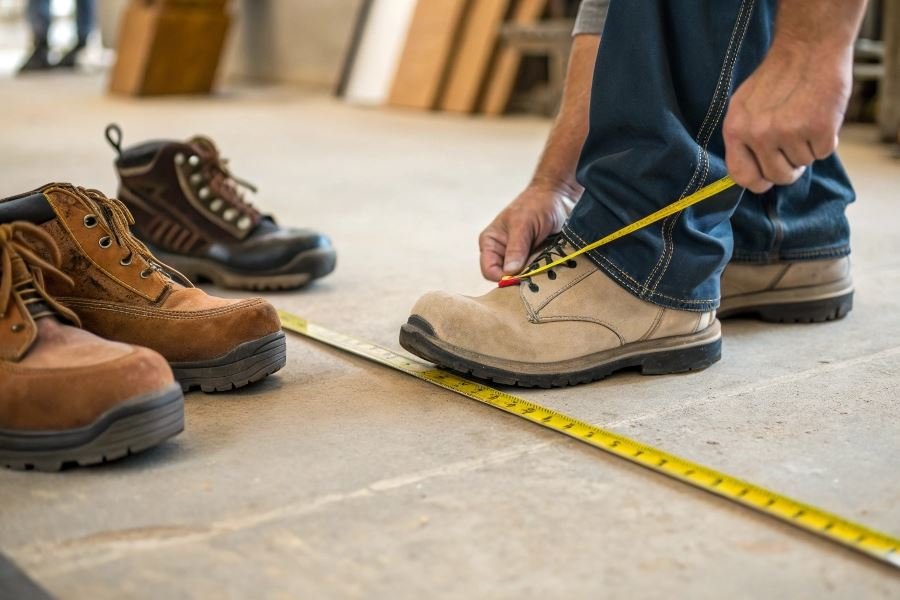
- Fit: The perfect boot with the wrong fit offers neither protection nor comfort
Remember that the most expensive option isn’t always the best for your specific needs. The ideal work boot balances protection, comfort, and durability in a package designed specifically for your working conditions.
Industry-Specific Work Boot Selection Guide
Construction and Heavy Industry Protection
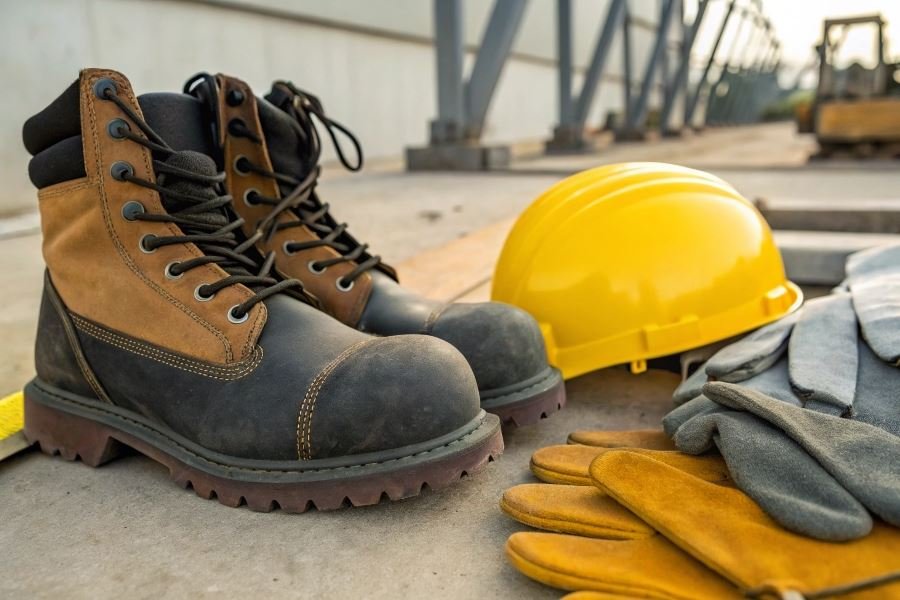
When safety meets durability, construction workers demand footwear that can withstand punishing conditions. The ideal construction boot features a steel or composite toe cap capable of withstanding impacts up to 75 pounds dropped from 3 feet—a standard established by ASTM International testing protocols.
Selecting appropriate work boots for different working conditions requires understanding the specific hazards of your environment. Construction professionals benefit from boots with puncture-resistant midsoles that prevent up to 1,200 Newtons of force from penetrating—essential when walking on sites with exposed nails or sharp debris. Look for models with oil-resistant outsoles offering a minimum coefficient of friction of 0.5 on wet surfaces to prevent dangerous slips.
Material matters significantly in heavy industry applications. Full-grain leather uppers provide the optimal balance of abrasion resistance and flexibility, typically lasting 2-3 times longer than split leather alternatives. For concrete workers, boots with alkaline-resistant treatments prevent premature deterioration from constant exposure to caustic materials.
| Feature | Construction Requirement | Heavy Industry Requirement |
|---|---|---|
| Toe Protection | ASTM F2413-18 Impact Rating | Minimum 75 ft-lbs impact resistance |
| Sole Type | Vibram® rubber with deep lugs | Heat-resistant to 300°F minimum |
| Ankle Support | 6-8″ height with padded collar | 8″+ height with reinforced stability |
| Weight | Under 4 lbs per boot | Under 5 lbs per boot |
Electrical and Hazardous Environment Safety
Electrical workers face unique dangers requiring specialized protection. EH-rated (Electrical Hazard) boots must withstand applications of 18,000 volts at 60 Hz for one minute with no current flow exceeding 1 milliampere—a literal lifesaver in high-voltage environments.
The difference between standard and electrical safety footwear lies in the details. True electrical hazard boots contain no exposed metal parts and feature specially formulated rubber compounds in the outsole and heel that provide a path of high electrical resistance. Thorogood and Red Wing manufacture boots meeting these exacting standards.
For chemical environments, look for boots with:
- Chemical-resistant materials like neoprene or PVC
- Sealed seams preventing liquid penetration
- Certification to ASTM F2413-18 standards for chemical resistance
- Quick-release features for emergency removal
Agricultural and Outdoor Considerations
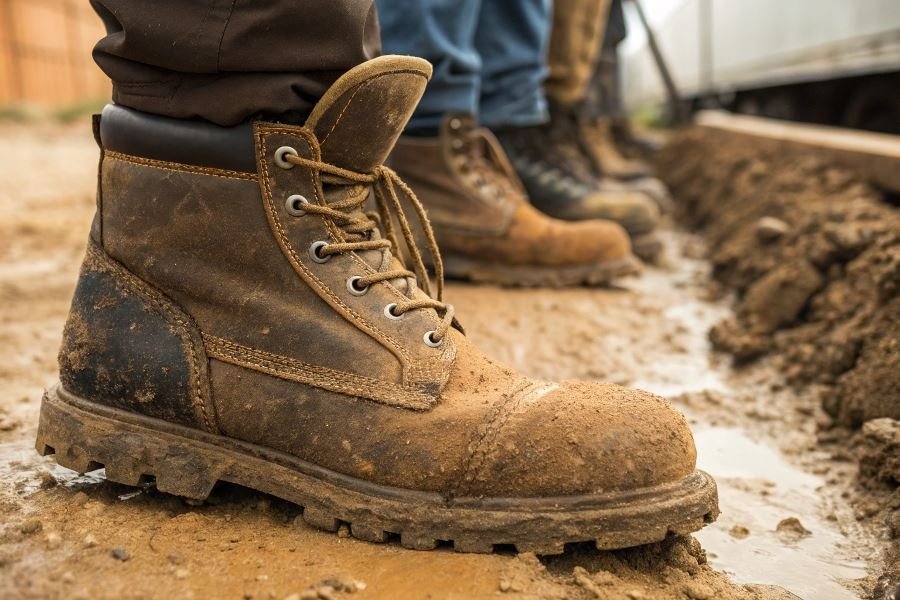
Agricultural work presents a combination of challenges from moisture to animal waste to uneven terrain. The ideal farm boot features waterproof membranes capable of keeping feet dry while allowing approximately 20,000 grams of moisture vapor to escape daily—balancing protection with comfort during long workdays.
Temperature regulation becomes critical in outdoor environments. Insulated boots with 400-600 grams of Thinsulate™ provide adequate warmth down to 0°F without excessive bulk, while summer models should prioritize breathable mesh panels and moisture-wicking liners.
Terrain-specific outsole designs make a measurable difference in stability:
| Terrain Type | Optimal Lug Pattern | Sole Material |
|---|---|---|
| Muddy Fields | Widely spaced 8mm+ lugs | Self-cleaning rubber compound |
| Rocky Ground | Multi-directional 5-7mm lugs | Vibram® Arctic Grip or equivalent |
| Wet Surfaces | Siped patterns with drainage channels | Slip-resistant rubber (SRC rated) |
For livestock handlers, boots with seamless toe boxes prevent manure and debris accumulation in crevices, while antimicrobial treatments combat odor-causing bacteria growth after repeated exposure to biological materials.
Selecting work boots tailored to your specific industry requirements isn’t just about comfort—it’s an investment in safety, productivity, and career longevity.
The Anatomy of Superior Work Boots
When your livelihood depends on your feet, choosing the right work boots becomes a critical decision rather than a casual purchase. The difference between mediocre and exceptional footwear isn’t just about comfort—it’s about safety, longevity, and performance under pressure.
Safety standards that actually protect you
Work boot safety isn’t subjective—it’s quantifiable through rigorous certification processes. The American Society for Testing and Materials (ASTM) established the F2413 standard which covers minimum requirements for impact, compression, and puncture resistance. When examining potential boots, look for the ASTM F2413-18 marking (the most current version) stamped inside.
These certifications aren’t just bureaucratic checkboxes—they represent real-world protection:
- Impact resistance (I): Protects toes from falling objects up to 75 pounds from 18 inches
- Compression resistance (C): Withstands compressive loads of 2,500 pounds
- Puncture resistance (PR): Prevents sharp objects from penetrating the sole
Beyond ASTM, specialized environments demand additional certifications. Electrical hazard (EH) protection provides secondary electrical shock resistance up to 18,000 volts, while static dissipative (SD) footwear reduces static electricity buildup in sensitive environments.
The right safety certification isn’t about overprotection—it’s about matching protection to your specific workplace hazards.
Material science meets workplace reality
The durability equation in work boots comes down to material selection and construction methods. Full-grain leather remains the gold standard for most applications, offering natural water resistance, breathability, and a 5-7 year lifespan with proper care.
For extreme conditions, consider these material innovations:
| Working Condition | Optimal Material | Key Benefits |
|---|---|---|
| Wet environments | Waterproof full-grain leather with Gore-Tex | Maintains waterproofing while allowing feet to breathe |
| Chemical exposure | Rubber or PVC | Chemical resistance, easy decontamination |
| Extreme heat | Kevlar-stitched leather | Fire resistance, structural integrity at high temperatures |
| Arctic conditions | Thinsulate-lined leather | Insulation without bulk, maintains flexibility in cold |
The connection between upper materials and outsoles creates a performance ecosystem. Vibram soles provide superior traction on uneven terrain, while polyurethane offers lightweight shock absorption for concrete floors. For oil rigs or chemical plants, nitrile rubber outsoles deliver exceptional chemical and slip resistance.
Ergonomics that prevent workplace injuries
The most protective boot becomes worthless if pain prevents you from wearing it. Modern work boots incorporate athletic shoe technology with industrial protection through these key comfort elements:
- Anatomical footbeds: Memory foam or polyurethane insoles that conform to your foot’s unique pressure points
- Shock absorption zones: Targeted cushioning at the heel and ball of foot where impact forces concentrate
- Flex points: Strategic material changes that allow natural foot movement while maintaining structural integrity
The weight-to-protection ratio has dramatically improved through composite materials. Composite toe caps provide ASTM-certified protection at 30-50% less weight than traditional steel, reducing fatigue during 12-hour shifts.
For those spending entire days on their feet, look for boots with removable orthotic-compatible insoles, allowing customization for your specific foot structure and gait pattern. This seemingly small detail can be the difference between productive comfort and chronic pain.
Discover how to select the perfect work boots for your specific job site needs. Learn essential safety features, industry-specific requirements, and comfort considerations to protect your feet in construction, electrical, or agricultural environments.
Discover how to select the perfect work boots for your specific job site needs. Learn essential safety features, industry-specific requirements, and comfort considerations to protect your feet in construction, electrical, or agricultural environments.