Ever stood for 10 hours straight in shoes that pinched your toes or rubbed your heels raw? For millions of workers, this isn’t just uncomfortable—it’s a productivity killer and safety hazard. The American Podiatric Medical Association reports that 77% of Americans experience foot pain, with ill-fitting footwear being a primary culprit.
Finding work sneakers that fit properly isn’t just about comfort—it’s about protecting your livelihood. When your feet hurt, everything hurts. The right size and width in work footwear creates a foundation for your entire body’s alignment, affecting everything from your ankles to your back. Workers who wear properly fitted shoes report 31% fewer foot-related injuries and significantly higher job satisfaction.
The science behind the perfect fit
The relationship between size, width, and fit is more complex than most realize. Your foot isn’t just a length measurement—it’s a three-dimensional structure with unique pressure points and movement patterns. Work sneakers must accommodate:
- Foot length: The standard measurement most people know
- Foot width: Often overlooked but equally crucial
- Arch height: Affects how weight distributes across your foot
- Heel-to-ball measurement: Ensures flex points align with your foot’s natural bend
Critical factors in finding your perfect match
Several variables influence how work sneakers fit, including:
- Material flexibility and how it adapts to your foot shape
- Job-specific requirements (steel toes compress space differently than composite)
- Foot swelling throughout the workday (feet can expand up to half a size!)
- Sock thickness variations between seasons
The perfect work sneaker doesn’t just fit—it performs with you through every step of your workday.
Finding Your Perfect Fit: The Ultimate Work Sneaker Sizing Guide
Measuring Your Feet Like a Pro
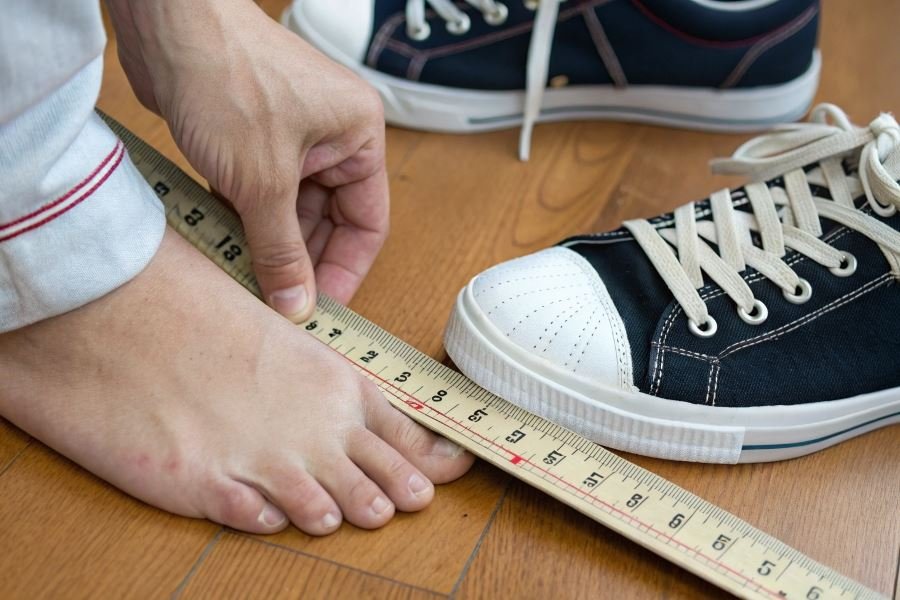
Getting the right size work sneakers starts with accurate measurements. Grab a piece of paper, a pencil, and a ruler—we’re going old-school accurate here. Place the paper against a wall, stand on it with your heel touching the wall, and mark where your longest toe ends. Measure this length in inches or centimeters. For width, measure the widest part of your foot (usually across the ball).
Pro tip: Measure both feet late in the day when they’re naturally more swollen. Your feet can expand up to half a size during a workday, especially if you’re on them constantly. Understanding how to choose work sneakers by size and width means accounting for these natural fluctuations to ensure all-day comfort.
Decoding Size Charts: US, EU, UK and Beyond
Work sneaker sizing can feel like learning a foreign language. Here’s your translation guide:
| Region | Size Example | How It’s Measured |
|---|---|---|
| US Men | 9 | Based on last length in inches |
| EU | 42 | Based on centimeters (×6.67) |
| UK | 8 | Similar to US but 1 size smaller |
Width designations are equally important but often overlooked:
- B: Narrow
- D: Medium/Regular (men’s standard)
- E: Wide
- EE/2E: Extra wide
- EEE/3E: Triple wide
Remember: A size 10D from Red Wing might fit differently than a 10D from Timberland. Each manufacturer uses slightly different lasts (foot molds) for their shoes.
The Width Factor: More Than Just Numbers
Width matters tremendously in work footwear. Too narrow, and you’ll experience painful pressure points and potential nerve damage. Too wide, and your foot will slide around, causing blisters and reducing stability.
When trying on work sneakers, your toes should have about 3/8″ to 1/2″ of space from the front (roughly a thumb’s width). The widest part of your foot should align with the widest part of the sneaker, with no pinching or bulging at the sides.
Special Considerations for Real-World Comfort
Sock thickness dramatically affects fit. If you wear thick work socks in winter and thinner ones in summer, you might need different sizes for different seasons.
Foot conditions require attention:
- High arches need extra instep room
- Bunions require wider toe boxes
- Plantar fasciitis benefits from excellent arch support
Time of day matters more than you think. Your feet can grow nearly half a size larger by evening. Always try on work sneakers at the end of your workday for the most accurate fit.
The Practical Test
Numbers and letters aside, the true test is how they feel. Walk around, squat, stand on your toes. Your work sneakers should feel immediately comfortable—the “breaking in” myth often leads to permanent discomfort.
The heel test: Your heel should stay firmly in place with minimal slippage when walking. More than 1/8″ of movement means they’re too big or the heel counter isn’t right for your foot shape.
Finding the perfect work sneaker size and width isn’t just about comfort—it’s about safety, productivity, and long-term foot health. When your feet feel good, everything else follows.
Sealing the Deal: Best Practices for Work Sneaker Selection
Foolproof Fit Verification Methods
Finding the perfect work sneakers isn’t just about grabbing your usual size—it’s about confirming that perfect fit before you commit. Here are three verification methods that separate the professionals from the amateurs:
The End-of-Day Test: Shop for work sneakers in the late afternoon or evening when your feet have naturally expanded. This mimics how your feet will feel during a long workday. Research from the American Podiatric Medical Association shows feet can swell up to 8% throughout a workday—a difference that can turn a “seems fine” morning fit into an unbearable afternoon squeeze.
The Thumb Rule: When trying on work sneakers, verify you have approximately a thumb’s width (3/8 to 1/2 inch) of space between your longest toe and the shoe’s end. This space isn’t wasted—it’s critical protection against toe compression during forward movements and squatting.
The often-overlooked side-to-side fit is equally crucial. Your foot should be secure without feeling pinched, with just enough room to slightly wiggle your toes.
The Weight-Bearing Assessment: Always test sneakers while standing, not sitting. Place equal weight on both feet and walk around for at least 5 minutes. Pay attention to pressure points, heel slippage, and arch support. If possible, simulate work movements—squat, pivot, and stand on the balls of your feet.
“The difference between an 8-hour comfortable shift and an 8-hour ordeal often comes down to those 5 minutes of proper testing before purchase.”
Breaking In Without Breaking Down
New work sneakers require a strategic break-in period to maintain their proper fit:
-
Gradual Introduction: Wear new work sneakers for 2-3 hours the first day, then increase by 1-2 hours daily. This allows the materials to conform to your feet without causing blisters.
-
Targeted Stretching: For specific tight spots, use a shoe stretcher or the freezer method—fill ziplock bags with water, place them in the tight areas, and freeze overnight. The expanding ice gently stretches the material.
-
Moisture Management: During break-in, your feet may sweat more than usual. Use moisture-wicking socks from brands like Darn Tough or Smartwool to prevent blisters from dampness.
When Standard Sizes Don’t Cut It
Sometimes, off-the-shelf options simply won’t work for unique foot requirements:
Custom Work Sneakers: Consider custom options if you have:
- Significant size discrepancies between feet (more than half a size)
- Extremely narrow (AA or narrower) or wide feet (EEE or wider)
- Structural foot issues requiring specialized support
Specialized Modifications: Companies like Red Wing offer modification services for their work footwear, adjusting width in specific areas without compromising safety features.
Orthotic Compatibility: If you require custom orthotics, look for work sneakers with removable insoles and adequate depth. Keen Utility and Thorogood offer models specifically designed with orthotic users in mind.
Remember that investing in properly fitted work sneakers isn’t just about comfort—it’s about preventing long-term foot health issues and maximizing productivity. The right fit is the foundation of every step you take on the job.
Discover how to find work sneakers that truly fit with our comprehensive size and width guide. Learn proper measurement techniques, understand sizing systems, and ensure all-day comfort and safety with perfectly fitted footwear for your workplace needs.
Discover how to find work sneakers that truly fit with our comprehensive size and width guide. Learn proper measurement techniques, understand sizing systems, and ensure all-day comfort and safety with perfectly fitted footwear for your workplace needs.