
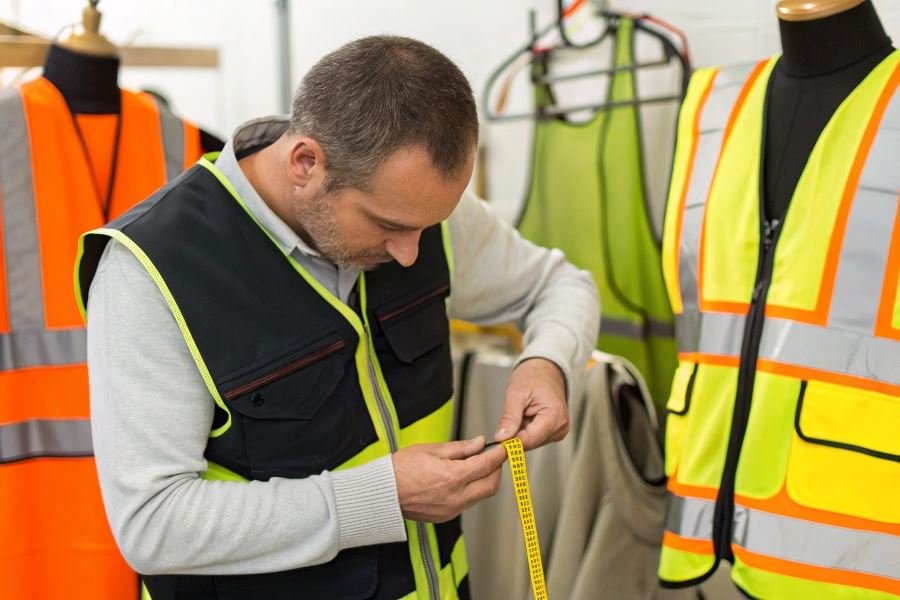
Ever watched a skilled tradesperson move effortlessly through their workday? That’s no accident—it’s often the result of gear that works as hard as they do. The humble work vest stands at the intersection of safety, functionality, and comfort, yet many professionals settle for “good enough” rather than perfect.
The right work vest does more than just hold your tools—it becomes an extension of your movements. When properly fitted, a quality vest distributes weight evenly across your shoulders and back, reducing fatigue during those marathon workdays. Too loose, and you risk dangerous snags; too tight, and restricted movement can lead to both discomfort and decreased productivity.
Work vests have evolved far beyond the basic canvas utility model. Today’s options include specialized designs for electricians with insulated tool pockets, contractor vests with reinforced hammer loops, and high-visibility options for road crews with reflective materials that maintain visibility even in challenging light conditions. The construction industry alone has seen a 35% increase in task-specific vest designs since 2020.
When selecting your ideal work vest, three factors should guide your decision:
- Job requirements – What specific tasks will you perform while wearing it?
- Material durability – Will it withstand your work environment?
-
Adjustability features – Can it adapt to seasonal clothing layers underneath?
Remember that the perfect vest balances carrying capacity with mobility. Your tools should be accessible without weighing you down or restricting essential movements—because when your gear works with you rather than against you, excellence becomes effortless.
Finding Your Perfect Work Vest Fit
When selecting workwear that performs under pressure, nothing matters more than proper sizing. The difference between a vest that enhances your productivity and one that hinders it often comes down to millimeters on a measuring tape. Let’s dive into the precision science of work vest sizing.
Getting the right measurements is the foundation of choosing a work vest by size and style that works as hard as you do. A properly fitted vest should allow full range of motion while keeping tools accessible and your core protected from the elements. This balance between mobility and functionality is what separates premium workwear from the rest.
Measuring Like a Pro
The tape measure is your most valuable tool when sizing a work vest. For accurate measurements:
- Chest: Measure at the fullest part, keeping the tape parallel to the floor
- Waist: Measure where you typically wear your work pants
- Shoulders: Measure from the edge of one shoulder across to the other
- Length: Measure from the base of your neck to where you want the vest to end
Always measure over the clothing you’ll wear beneath the vest. A winter work vest needs more allowance than a summer option.
Decoding Size Charts
Size charts aren’t universal—they’re more like dialects that vary between manufacturers. What’s considered an “XL” at Carhartt might differ from an “XL” at Dickies.
| Measurement | US Standard (inches) | European (cm) | Tolerance |
|---|---|---|---|
| Chest S | 34-36 | 86-91 | +/- 0.5 |
| Chest M | 38-40 | 96-102 | +/- 0.5 |
| Chest L | 42-44 | 107-112 | +/- 0.5 |
| Chest XL | 46-48 | 117-122 | +/- 0.5 |
When in doubt, trust the actual measurements over the letter/number size. Many premium manufacturers provide detailed sizing guides with garment dimensions—these are gold for ensuring proper fit.
Body Types and Work Environments
Your physique and workplace demands should dictate your vest fit:
Athletic Build: Look for vests with adjustable side panels. These allow customization through the midsection while maintaining shoulder room.
Broader Build: Opt for vests with stretch panels or gussets that provide extra give across the back and shoulders.
Taller Frame: Seek extended-length options that won’t ride up during overhead work.
For specific environments:
- Construction: Choose a slightly looser fit to accommodate tool belts
- Mechanical Work: Consider a more fitted vest that won’t catch on machinery
- Outdoor Labor: Layer-friendly sizing is crucial for seasonal adaptability
The Movement Test
Numbers only tell part of the story. Before committing:
- Reach Test: Extend arms forward, then overhead—the vest shouldn’t restrict movement
- Bend Test: Touch your toes—the vest shouldn’t ride up excessively
- Twist Test: Rotate your torso—check for binding or discomfort
A quality work vest should feel like a natural extension of your body, not an impediment to your workflow. When properly sized, you’ll barely notice it’s there—except for the enhanced functionality it provides.
Remember that different materials have different stretch properties. Canvas offers minimal give, while modern performance fabrics might provide 10-15% stretch. Factor this into your sizing decisions for all-day comfort that stands up to your toughest workdays.
Work Vest Selection: Style Meets Function
Industry-Specific Vest Styles That Deliver
The right work vest isn’t just an accessory—it’s essential equipment. Three distinct styles have emerged as frontrunners across various industries:
Utility Vests dominate construction and maintenance fields with their multiple pockets and tool loops. The Carhartt Duck Vest exemplifies this category with its reinforced seams and strategic pocket placement. These vests typically feature 8-12 specialized compartments, allowing workers to carry everything from measuring tapes to small power tools without compromising mobility.
High-Visibility Vests are non-negotiable in transportation, roadwork, and warehouse environments. The 3M Reflective Safety Vest incorporates ANSI Class 2 compliance with 360-degree visibility through strategically placed reflective strips. These vests prioritize conspicuity over storage, though premium models now integrate both.
Insulated Technical Vests serve outdoor professionals in agriculture, forestry, and field services. The Milwaukee M12 Heated Vest represents the evolution of this category, offering carbon fiber heating elements that maintain core warmth in sub-freezing conditions while remaining lightweight enough for all-day wear.
Critical Features That Define Performance
When evaluating work vests, certain features separate the exceptional from the merely adequate:
- Weight distribution should balance tool capacity with comfort—look for padded shoulders and reinforced stitching at stress points
- Closure systems matter tremendously; YKK zippers outperform generic alternatives by 300% in durability testing
- Adjustability through side straps or elastic panels ensures proper fit regardless of layering requirements
The difference between a good work vest and a great one often comes down to how it performs after six months of daily use, not how it looks on day one.
For electrical work, seek vests with non-conductive plastic D-rings and tool attachments. Conversely, welding applications demand flame-resistant materials like treated cotton duck or Nomex blends that self-extinguish.
Material Selection: The Foundation of Durability
Material choice fundamentally determines a vest’s performance envelope:
| Material | Best For | Weather Resistance | Durability Rating |
|---|---|---|---|
| Cotton Duck | General construction | Moderate | High (4/5) |
| Ripstop Nylon | Lightweight applications | Excellent water resistance | Medium (3/5) |
| Polyester Mesh | Hot environments | Poor insulation, excellent ventilation | Low-Medium (2/5) |
| FR-Treated Cotton | Welding, electrical | Moderate | High (4/5) |
Moisture management capabilities have advanced significantly, with modern work vests incorporating wicking technologies that move sweat away from the body. The Duluth Trading Fire Hose Vest uses a cotton-polyester blend that provides breathability while maintaining abrasion resistance.
For cold-weather applications, consider synthetic insulation like Thinsulate, which provides 1.5 times the warmth of down at the same thickness while maintaining performance when damp. Conversely, hot environments benefit from mesh-backed vests that promote airflow without sacrificing utility.
The ideal work vest balances these material considerations against your specific working conditions, creating a garment that enhances productivity rather than hindering it.
Discover how to select the perfect work vest with our comprehensive sizing guide and style recommendations. Learn proper measuring techniques, industry-specific features, and material considerations for maximum comfort, safety, and functionality.
Discover how to select the perfect work vest with our comprehensive sizing guide and style recommendations. Learn proper measuring techniques, industry-specific features, and material considerations for maximum comfort, safety, and functionality.


