
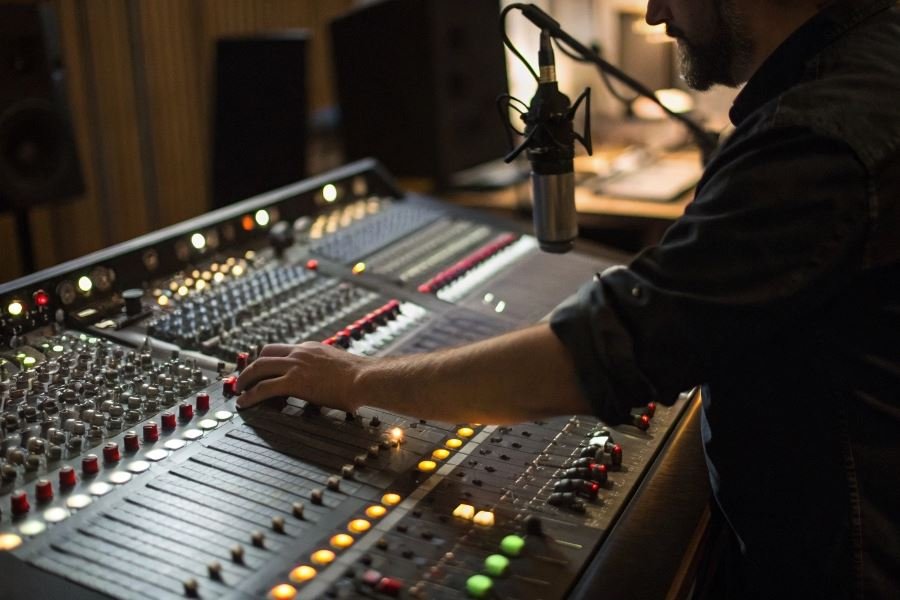
Ever wondered why some audio setups require those mysterious black boxes with multiple channels? Behind every crystal-clear podcast interview and immersive concert experience lies a critical yet often overlooked technology: phantom power. It’s the silent force that brings your premium microphones to life.
Phantom power is essentially a DC voltage (typically 48V) sent through balanced audio cables to power condenser microphones and other active audio devices. Unlike dynamic microphones that generate their own electricity through movement, condenser mics need external power to charge their internal components and amplify the delicate audio signals they capture.
The journey of multichannel phantom power systems began in the 1960s when Neumann introduced the first commercially available phantom power for their KM 84 microphone. What started as a single-channel solution has evolved into sophisticated multichannel systems capable of powering dozens of microphones simultaneously with pristine signal integrity.
Today’s multichannel phantom power units serve as the backbone in recording studios, broadcast facilities, and live performance venues. They’re essential when recording a drum kit with multiple overhead mics, capturing a string quartet, or running a conference with several presenters. The technology has become increasingly important as productions grow more complex and demand higher audio quality.
Professional audio engineers know: the right phantom power supply isn’t just a convenience—it’s the difference between capturing a magical performance and losing it forever to noise and interference.
When Multichannel Phantom Power Becomes Essential
Professional audio production demands precision tools that deliver consistent, high-quality results. In studios, concert venues, and broadcast facilities worldwide, condenser microphones have become the gold standard for capturing nuanced performances. These sensitive instruments require external power to operate their internal electronics, and that’s where phantom power enters the equation.
Understanding when multichannel phantom power is necessary and how to choose the right solution can dramatically improve your recording workflow. The ability to simultaneously power multiple condenser microphones through a single, reliable source represents a significant advantage for audio professionals working across various environments. Multichannel phantom power: when it is necessary and how to choose depends largely on your specific application, technical requirements, and budget constraints.
Studio Recording With Multiple Condensers
In professional recording studios, sessions frequently demand multiple microphone setups. Consider a drum recording scenario: a typical configuration might include condensers for overheads, hi-hats, and room ambience—easily requiring 4-6 phantom-powered mics simultaneously.
Orchestral and ensemble recordings present even greater demands. A string quartet alone might utilize 8+ condenser microphones to capture the perfect balance between instruments. Studios handling these sessions need robust multichannel phantom power solutions that deliver clean, consistent 48V to each microphone without interference or voltage sag.
The difference between budget and professional-grade phantom power becomes immediately apparent in these scenarios, where noise floor and power stability directly impact recording quality.
Live Sound Applications
Live performance environments present unique challenges for phantom power distribution:
| Scenario | Typical Phantom Power Needs | Key Considerations |
|---|---|---|
| Small Venue | 4-8 channels | Portability, reliability |
| Theater Production | 12-24 channels | Remote control, redundancy |
| Concert Hall | 24+ channels | Integration with digital networks |
Sound engineers working live events need phantom power solutions that integrate seamlessly with their mixing consoles while providing rock-solid reliability. Modern digital mixing systems from manufacturers like Behringer and Allen & Heath often include built-in phantom power across all channels, but dedicated external units from companies like ART provide additional flexibility and backup options.
Broadcast and Podcast Production
The broadcast industry has embraced multichannel phantom power solutions as essential infrastructure. News studios, sports commentary positions, and television production facilities all require multiple condenser microphones operating simultaneously.
The podcast revolution has similarly driven demand for reliable multichannel phantom power. Professional podcast studios frequently feature multiple guests, each requiring their own condenser microphone. A dedicated 4-8 channel phantom power distribution system ensures consistent audio quality throughout lengthy recording sessions.
Radio broadcasters particularly value phantom power solutions with redundant power supplies and status indicators that provide visual confirmation of proper operation.
For facilities handling multiple simultaneous productions, centralized phantom power distribution systems from manufacturers like Focusrite and PreSonus offer networked control and monitoring capabilities, allowing technical directors to manage phantom power resources across multiple studios from a single interface.
The right multichannel phantom power solution ultimately depends on your specific technical requirements, workflow needs, and reliability expectations—factors we’ll explore in greater detail in upcoming sections.
How to Choose the Right Multichannel Phantom Power Solution
Finding the perfect multichannel phantom power supply is like selecting a foundation for your audio ecosystem—get it wrong, and everything built on top becomes compromised. Let’s dive into what truly matters when selecting these critical components, with specifications that separate the exceptional from the merely adequate.
Voltage stability and why it matters
The heart of any phantom power supply is its ability to deliver consistent, clean 48V to your microphones. Voltage stability isn’t just a specification—it’s the difference between pristine audio and subtle distortion that compounds throughout your signal chain.
Look for supplies with voltage regulation better than ±0.5V under load. Lesser units might advertise “48V” but actually deliver anywhere from 44V to 52V depending on how many microphones are connected, causing inconsistent microphone performance and potential damage to sensitive capsules.
The most reliable units employ independent regulation circuits for each channel rather than a single shared regulator.
Channel count and configuration flexibility
When assessing channel count, think beyond your current setup:
| Budget Level | Recommended Channels | Future-Proofing |
|---|---|---|
| Entry-level | 4-8 channels | +2 channels |
| Mid-range | 8-12 channels | +4 channels |
| Professional | 16+ channels | Modular expansion |
The best units offer individual channel switching, allowing you to activate phantom power only where needed. This capability extends the life of ribbon microphones and other equipment that can be damaged by phantom power.
Noise floor considerations
A phantom power supply should be virtually invisible in your signal path. Premium units maintain a noise floor below -90dBu and feature robust shielding against electromagnetic interference.
The difference between a $100 and $300 unit often isn’t in the voltage delivery but in how silently they operate.
Compatibility and integration
Connectivity determines how seamlessly your phantom power solution integrates with existing gear. Consider these connection types:
- XLR pass-through: The most common and reliable
- DB25/D-Sub: Ideal for high-density studio installations
- TRS inserts: For integration with mixing consoles
The best units offer ground lift switches to eliminate potential ground loops when connecting to multiple pieces of equipment.
Top multichannel phantom power solutions
Entry-Level Excellence: ART Pro MPAII
- 8 channels of clean 48V
- Individual channel switches
- Surprisingly stable voltage regulation
- Around $159
Mid-Range Marvel: Behringer ADA8200
- 8 channels with ADAT digital outputs
- Integrated preamps with phantom power
- Excellent noise performance
- Approximately $249
Professional Powerhouse: Radial Engineering OX8
- 8 channels of ultra-stable phantom power
- Military-grade construction
- Transformer isolation on every channel
- Premium price point around $599
When making your final decision, prioritize voltage stability and noise performance over fancy features. A phantom power supply should do one thing exceptionally well: deliver clean, consistent power to your microphones without adding noise or coloration to your audio signal.
Remember that the best phantom power solution isn’t necessarily the most expensive—it’s the one that meets your specific needs while providing headroom for future expansion.
Discover how to select the ideal multichannel phantom power supply for your audio setup. Learn when you need it, critical specifications to consider, and top recommendations for studio recording, live sound, and broadcast applications.
Discover how to select the ideal multichannel phantom power supply for your audio setup. Learn when you need it, critical specifications to consider, and top recommendations for studio recording, live sound, and broadcast applications.

