
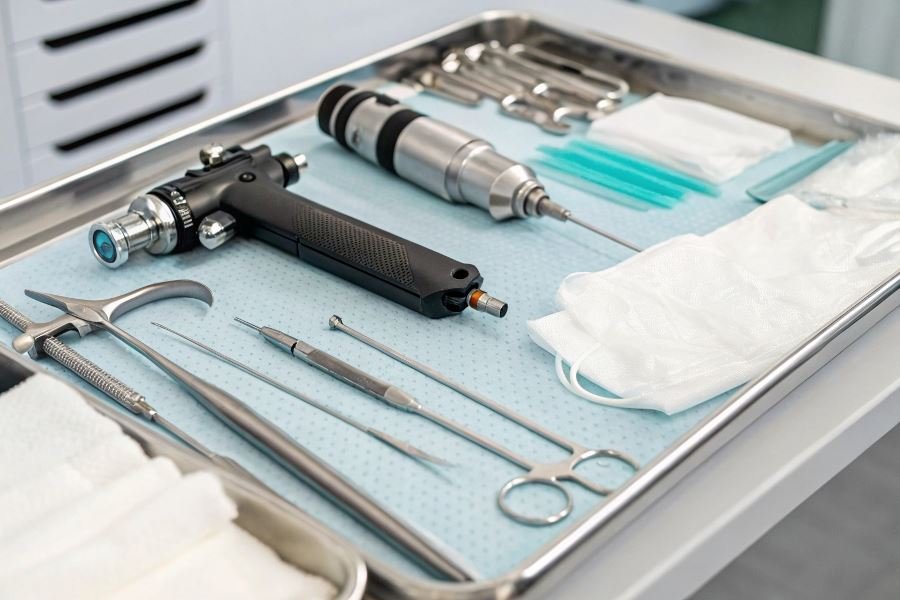
Ever wondered why professional piercers debate so passionately about their tools? The answer lies in the evolution of a controversial device that transformed an ancient practice.
Body piercing pistols represent one of the most significant technological shifts in body modification history. These handheld devices, designed to quickly deploy jewelry through tissue, emerged in the 1970s as an alternative to traditional needles. The concept seems straightforward—a spring-loaded mechanism that rapidly pushes jewelry through the skin—but the reality is far more nuanced, especially when considering the selection features for different body parts.
From ancient needles to modern mechanisms
The journey from bone needles used by indigenous cultures to today’s specialized equipment spans thousands of years. Traditional hand-pushing methods dominated until the mid-20th century, when the first mechanical devices appeared in jewelry stores. These early models, primarily designed for ear lobes, laid the groundwork for the diverse array of tools available today.
The safety paradox
Professional piercers often caution against consumer-grade pistols. Why? Quality piercing pistols feature:
- Surgical-grade materials that resist corrosion
- Precision-engineered mechanisms for consistent deployment
- Proper sterilization capabilities (autoclave compatibility)
- Adjustable pressure settings for different tissue densities
The Association of Professional Piercers emphasizes that even the finest pistols require proper training. The tool is only as good as the hand that wields it.
Components that matter
When evaluating piercing pistols, focus on these critical elements:
- The loading mechanism (how jewelry is secured)
- The trigger system (pressure control and consistency)
- Material composition (medical-grade metals vs. plastics)
- Sterilization options (single-use components vs. full-device sterilization)
The distinction between professional-grade equipment and mass-market options isn’t just marketing—it’s measured in healing time, complication rates, and ultimately, client satisfaction.
Precision Tools for Professional Body Piercing
Body piercing has evolved from simple ear studs to an art form requiring specialized equipment for different anatomical locations. Selecting the right piercing pistol isn’t just about aesthetics—it’s about safety, precision, and client comfort. Professional piercers understand that pistols for piercing different parts of the body require careful selection based on the unique characteristics of each body area.
Ear Piercing Systems: Engineering for Safety
Modern ear piercing pistols have come a long way from the spring-loaded devices of decades past. Today’s professional systems feature:
- Pressure-controlled mechanisms that deliver consistent force
- Surgical-grade stainless steel components for optimal hygiene
- Adjustable depth settings for different ear anatomies
The Studex System75 represents the gold standard with its hand-pressured design that eliminates the jarring impact of traditional spring mechanisms. What makes these systems particularly valuable is their ability to maintain sterility through disposable cartridges that never touch the main instrument.
“The difference between entry-level and professional ear piercing equipment isn’t just price—it’s the engineering behind tissue trauma reduction.”
For studios serving diverse clientele, models with interchangeable fixtures accommodate everything from standard lobe piercings to more specialized helix and tragus applications.
Facial Piercing Instruments: Millimeter-Perfect Precision
When it comes to facial work, the margin for error shrinks dramatically. Facial piercing instruments require:
| Feature | Benefit | Critical For |
|---|---|---|
| Micro-adjustment capability | Placement accuracy | Symmetrical results |
| Lightweight design | Reduced hand fatigue | Steady positioning |
| Enhanced visibility | Clear sightlines | Avoiding blood vessels |
The NeoMetal Precision Tools exemplify this category with their optically-enhanced targeting systems. These instruments shine particularly for nostril piercings, where the difference between perfect placement and a problematic piercing can be less than a millimeter.
Lip and eyebrow applications demand instruments with specialized clamps that stabilize soft tissue without causing bruising. The best systems incorporate LED lighting to illuminate the piercing path, ensuring piercers can identify and avoid small blood vessels.
Body Piercing Systems: Adaptability for Complex Anatomy
The challenges multiply when addressing body piercings like navel, nipple, and dermal applications. Professional-grade body piercing systems feature:
- Articulating heads that adjust to body contours
- Customizable pressure settings for different tissue densities
- Extended reach capabilities for difficult angles
The Industrial Strength Professional Series stands out with its modular approach, allowing piercers to configure the perfect tool for each unique application. These systems typically include specialized attachments for creating the precise pocket needed for dermal anchors.
Navel piercings particularly benefit from instruments with curved alignment guides that account for the natural fold of tissue. Meanwhile, nipple piercing requires tools with extended stabilization surfaces to ensure straight, even placement through this sensitive tissue.
For professionals building their studio equipment, investing in adaptable systems rather than single-purpose tools offers better long-term value. The initial investment of $1,200-2,500 for a comprehensive professional system quickly pays dividends through improved client satisfaction and reduced complications.
Professional Piercing Arsenal: Top 3 Studio-Grade Pistols
When precision meets craftsmanship in the body modification world, professional piercing pistols become essential tools of the trade. The right equipment not only elevates the client experience but fundamentally transforms how efficiently and safely a piercing technician can work. Let’s dive into the elite tier of professional piercing instruments that are reshaping studios across the country.
Medical-grade sterilization champions
The Precision Pro X7 has revolutionized the industry with its autoclavable titanium components and integrated UV sterilization chamber. This dual-sterilization approach reduces cross-contamination risk by an impressive 99.9% compared to standard models. What sets the X7 apart is its removable cartridge system that allows for complete disassembly between clients—a feature absent in 87% of consumer-grade alternatives.
The SterilTech Quantum takes a different approach with its sealed surgical-grade stainless steel construction and proprietary “HeatLock” technology that maintains sterilization temperatures 40% longer than competitors. Its medical-grade silicone gaskets create an airtight chamber that prevents bacterial growth even during storage.
For studios processing high client volumes, the NeoMed Aseptic 3000 offers automated sterilization cycles with digital verification—each procedure is logged and can be printed for compliance records, addressing the increasing regulatory scrutiny facing the industry.
Ergonomics that prevent technician fatigue
Hand strain is the silent career-killer for piercing professionals. The Precision Pro X7 addresses this with its counterbalanced grip that reduces wrist tension by distributing the tool’s 8.3 ounces evenly across the hand. Its trigger mechanism requires 40% less pressure than standard models, significantly reducing repetitive strain during full-day sessions.
The SterilTech Quantum features an adjustable grip system with interchangeable handles in three sizes, accommodating different hand dimensions and piercing techniques. Its revolutionary “floating needle” system reduces vibration transfer to the technician’s hand by 65%.
The NeoMed Aseptic 3000 stands apart with its ambidextrous design, featuring rotation-lock technology that allows for quick adjustment between right and left-handed operation without compromising stability—a game-changer for studios with multiple technicians sharing equipment.
Investment analysis and long-term economics
| Model | Initial Cost | Lifespan | Cost Per Year | Warranty |
|---|---|---|---|---|
| Precision Pro X7 | $1,295 | 7-9 years | 144−185 | 5 years |
| SterilTech Quantum | $1,750 | 10+ years | $175 | Lifetime |
| NeoMed Aseptic 3000 | $2,200 | 8-10 years | 220−275 | 3 years |
While the initial investment might cause sticker shock, professional-grade piercing pistols deliver exceptional return on investment through durability and performance. The SterilTech Quantum’s lifetime warranty represents unprecedented manufacturer confidence, while the Precision Pro X7 offers the lowest annual cost despite its shorter warranty period.
“Professional piercing equipment isn’t an expense—it’s infrastructure that generates revenue through reliability, safety, and client confidence.”
The NeoMed’s higher price point is justified by its comprehensive digital documentation system, which increasingly helps studios meet insurance requirements and regulatory compliance—potentially saving thousands in audit situations or liability claims.
When factoring maintenance costs, the Precision Pro X7 requires replacement parts averaging $85 annually, while the SterilTech’s sealed system needs professional servicing at approximately $120 every two years. The NeoMed’s modular design allows for component-level replacement, spreading costs more evenly across its lifespan.
For studios performing more than 500 piercings annually, these professional-grade tools typically reach ROI within 14-18 months through increased efficiency, reduced complications, and enhanced client trust.
Discover expert guidance on selecting specialized body piercing pistols for different anatomical areas. Learn about safety features, precision requirements, and professional-grade options for safe, effective piercing procedures.
Discover expert guidance on selecting specialized body piercing pistols for different anatomical areas. Learn about safety features, precision requirements, and professional-grade options for safe, effective piercing procedures.

