
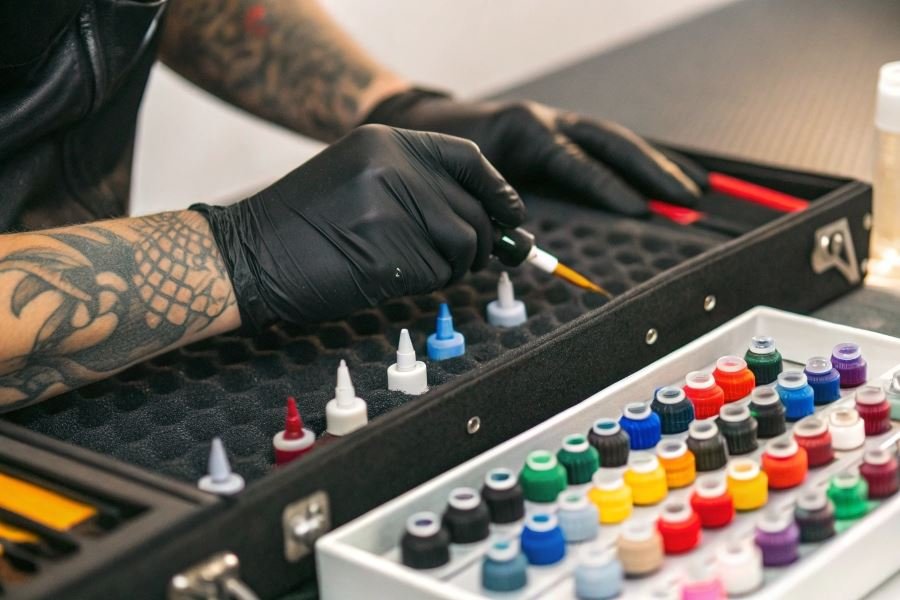
Ever watched a master chef meticulously arrange their ingredients before cooking? That’s exactly what proper pigment cap setup does for tattoo artists. The humble pigment cap—those tiny plastic containers holding your ink—might seem insignificant, but they’re the foundation of your workflow efficiency and ultimately, your client’s experience.
For beginners navigating the world of tattoo supplies, choosing the right pigment caps can feel overwhelming. Most newcomers focus exclusively on machines and needles while overlooking these essential components. Yet the size and type of caps you select directly impacts everything from color mixing to session length and even cross-contamination risk.
Pigment caps typically come in three standard size categories:
- Micro caps (5-10mm): Perfect for fine details and minimal ink usage
- Standard caps (15-20mm): The versatile workhorse for most applications
- Large caps (25-30mm): Ideal for color mixing and larger pieces
The difference between a smooth session and constant interruptions often comes down to having the right cap for the job. When working on detailed pieces, smaller caps prevent waste while larger ones eliminate the frustration of constantly refilling during bold color work.
Most professional suppliers use millimeter measurements for cap sizing, though you’ll occasionally encounter “small/medium/large” designations. Understanding these sizing systems isn’t just about organization—it’s about creating the foundation for professional-grade tattoo application from day one.
Pigment Cap Sizes: The Foundation of Every Tattoo Artist’s Setup
Starting your journey as a tattoo artist means making countless decisions about your equipment. Among these choices, determining what size of pigment caps should a beginner tattoo artist choose ranks among the most practical yet overlooked considerations. These small containers hold your liquid gold—the ink that brings your art to life—and selecting the right sizes can dramatically improve your workflow efficiency and reduce waste.
Let’s break down the essential pigment cap sizes that should be in every beginner’s arsenal, understanding when each size shines and where it might fall short.
Small Caps (8-13mm): Precision Work Champions
Small pigment caps (8-13mm) serve as the precision instruments in your tattooing toolkit. These compact containers excel in several key scenarios:
Detail Work Benefits:
- Perfect for fine linework requiring minimal ink
- Ideal for single-needle techniques and intricate shading
- Reduces ink waste when working with expensive pigments
- Essential for color testing and mixing custom shades
Limitations to Consider: Small caps require frequent refilling during longer sessions, potentially interrupting your workflow. They’re also prone to tipping over if not secured in a proper cap holder.
For beginners working on smaller designs or practicing line techniques, having a supply of 10mm caps is non-negotiable. These will likely become your most frequently used size during your early learning phase.
Medium Caps (15-17mm): The Versatile Workhorses
Medium-sized caps (15-17mm) represent the sweet spot for most beginner tattoo artists. Their balanced proportions make them incredibly versatile:
Everyday Advantages:
- Sufficient capacity for standard tattooing sessions
- Stable enough to resist accidental tipping
- Perfect for both lining and shading work
- Economical choice that balances capacity and waste reduction
Medium caps, particularly the 15mm size, should form the backbone of your initial setup. Most professional artists maintain a larger inventory of these sizes than any other, reflecting their utility across various tattooing scenarios.
Large Caps (20-30mm): The Session Sustainers
Large pigment caps (20-30mm) might seem excessive for beginners, but they serve specific purposes that become apparent as you progress:
| Size | Best Used For | Considerations |
|---|---|---|
| 20mm | Large areas of solid color | Reduces interruptions during fills |
| 25mm | Extended shading sessions | Minimizes refill frequency |
| 30mm | Black work and backgrounds | Maximum capacity for consistent work |
When to Incorporate Larger Sizes:
- For larger pieces requiring substantial ink volume
- When working with black ink (which you’ll use most frequently)
- During longer sessions where minimizing interruptions is crucial
- As your speed increases and you can utilize more ink before it dries out
While beginners might not immediately need the largest caps, having a small supply of 20mm caps is advisable for practice sessions involving larger areas of fill or black work.
Pro Tip: Rather than purchasing equal quantities of all sizes, consider a distribution of approximately 50% medium caps, 30% small caps, and 20% large caps for your starter kit. This ratio provides flexibility while acknowledging the practical realities of beginner work.
As your technique develops and you tackle more complex projects, you’ll naturally discover which cap sizes align with your personal tattooing style. The beauty of these simple tools is their affordability—experiment freely to find your perfect combination.
Building Your First Pigment Cap Collection
Starting your journey as a tattoo artist is exciting, but the sheer variety of equipment choices can be overwhelming. Pigment caps—those small containers that hold your ink during sessions—might seem like a minor detail, but they significantly impact your workflow, precision, and even client experience.
Essential starter kit sizes every beginner needs
The foundation of any tattoo artist’s pigment cap collection should include three key sizes:
- 15mm caps (1/2 oz) – Your workhorse size for primary colors and larger areas
- 9mm caps (1/4 oz) – Perfect for detail work and secondary colors
- 5mm caps (1/8 oz) – Ideal for fine lines, small details, and color testing
A proper starter kit should contain approximately 100 of the 15mm caps, 150 of the 9mm caps, and 50 of the 5mm caps. This distribution ensures you’re prepared for most client sessions without excessive waste.
The difference between professionals and amateurs often comes down to preparation. Having the right cap sizes ready means you’ll never interrupt your creative flow during a session.
Many suppliers offer Precision Starter Kits that include these essential sizes in appropriate quantities, often with a small discount compared to buying separately.
Storage strategies that maximize efficiency
Proper organization of your pigment caps isn’t just about tidiness—it directly impacts your workflow efficiency and ink contamination prevention.
Vertical storage solutions work best for most studio setups. Consider these proven options:
| Storage Type | Best For | Approximate Cost |
|---|---|---|
| Acrylic racks | Visible inventory, quick access | $25-45 |
| Drawer organizers | Dust protection, mobility | $15-30 |
| Magnetic systems | Space-saving, customizable | $30-60 |
The most efficient approach combines a primary storage system with a session setup strategy. Keep your main inventory in drawer organizers from TattooOrganizer, then transfer only what you need to an accessible rack during sessions.
Label your storage sections clearly by size rather than color—this prevents cross-contamination and makes restocking simpler. Many artists use color-coded sections: red for 15mm, blue for 9mm, and green for 5mm caps.
When to expand beyond the basics
Most beginners should master their craft with the standard sizes before expanding, but certain situations warrant adding specialized caps to your collection:
- When you begin specializing in portraits – Add 12mm caps for blending subtle skin tones
- After 15-20 completed tattoos – Consider 20mm caps for large-scale blackwork
- When offering color realism – Invest in micro caps (3mm) for extremely fine detail
The right time to expand typically comes after you’ve completed at least 10 full tattoos and have developed consistent techniques. Your equipment should evolve with your skill level.
Expansion doesn’t necessarily mean more sizes—it often means better quality. As you progress, consider upgrading to premium silicone-based caps from Quantum Ink that offer better ink stability and reduced evaporation during longer sessions.
Remember that your pigment cap collection should reflect your personal tattooing style. A minimalist black and gray artist needs a different setup than someone specializing in vibrant color realism.
Discover the optimal pigment cap sizes for beginner tattoo artists. Learn why medium caps (15-17mm) offer versatility, when to use small caps for detail work, and how proper cap selection improves workflow and efficiency in your tattoo practice.
Discover the optimal pigment cap sizes for beginner tattoo artists. Learn why medium caps (15-17mm) offer versatility, when to use small caps for detail work, and how proper cap selection improves workflow and efficiency in your tattoo practice.

