What if the secret to professional-grade skincare results wasn’t found in a jar, but in a device that fits in your palm—or perhaps one that commands its own corner in your bathroom?
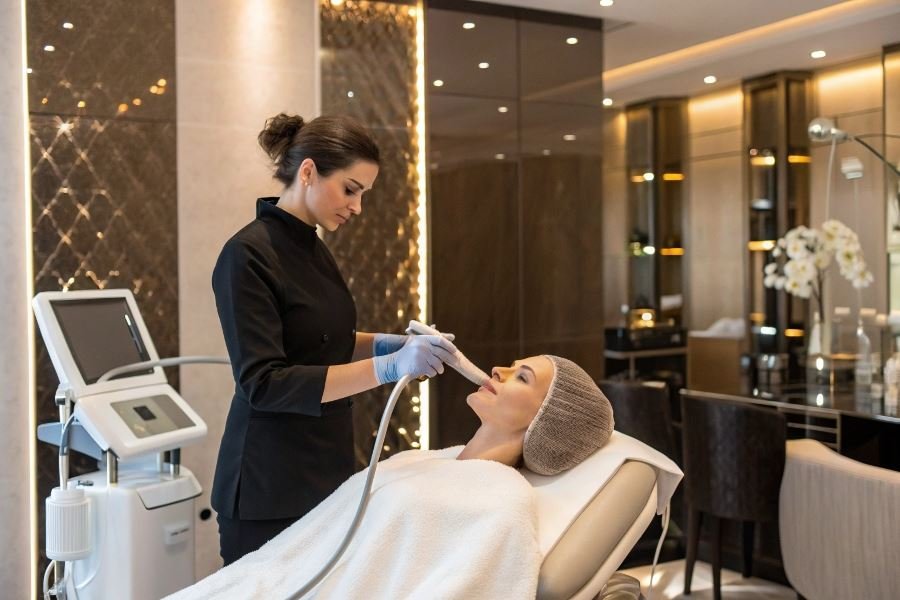
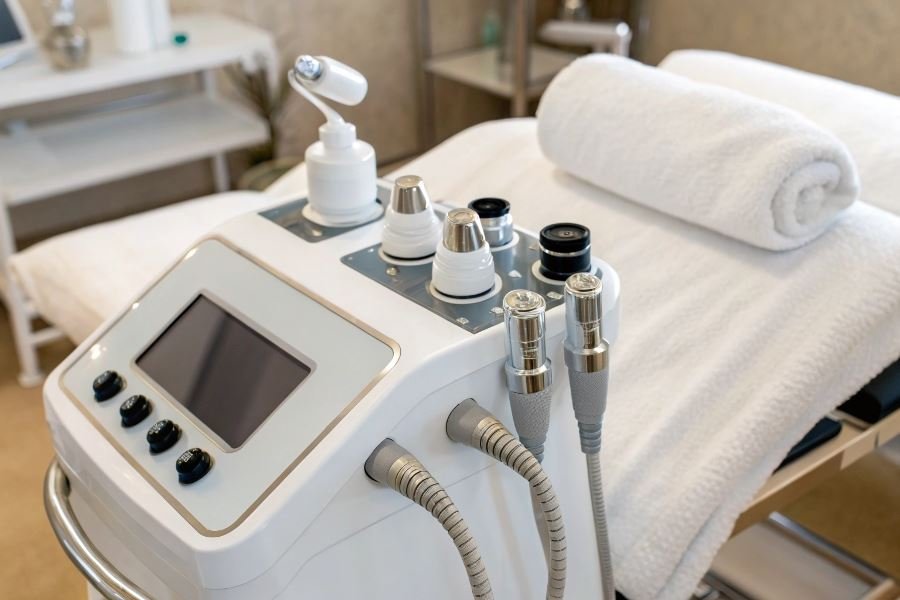
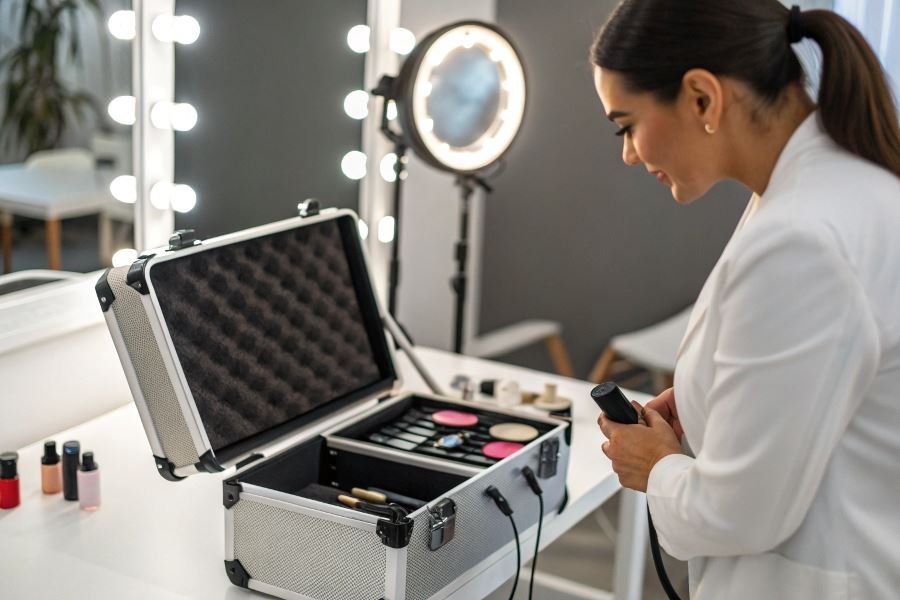
The landscape of beauty technology has undergone a remarkable transformation. Cosmetic devices—electronic tools designed to enhance skin appearance and health—now range from pocket-sized facial toners to sophisticated multi-function stations that rival professional equipment. These innovations fall into two distinct categories: portable devices designed for convenience and on-the-go treatments, and stationary systems built for comprehensive, clinic-quality results at home.
From clinical exclusivity to bathroom counter
The evolution of these technologies tells a fascinating story. What began in dermatologists’ offices has steadily migrated into consumer hands. LED therapy, once available only through expensive professional treatments, now comes in masks you can wear while answering emails. Microcurrent technology, previously requiring bulky machines operated by trained estheticians, now fits in devices smaller than a smartphone.
The market speaks: Consumers want options
Consumer adoption has accelerated dramatically, with the global beauty device market exceeding $50 billion. This growth reflects a fundamental shift in consumer behavior—people increasingly seek professional-level results without the recurring expense of salon visits. The pandemic only accelerated this trend, with at-home beauty tech sales jumping 40% when professional treatments became temporarily unavailable.
What’s particularly interesting is the dual-track development occurring: manufacturers are simultaneously creating more powerful stationary systems for dedicated users and more efficient portable options for those prioritizing convenience. This parallel evolution ensures that regardless of lifestyle, space constraints, or treatment goals, there’s likely a device engineered precisely for your needs.
The Ultimate Face-Off: Portable vs Stationary Cosmetic Devices
Treatment Power and Clinical Results
When evaluating cosmetic devices for your beauty arsenal, effectiveness stands as the non-negotiable priority. The comparison of portable and stationary cosmetic devices reveals a fascinating spectrum of capabilities that directly impacts results. Stationary professional-grade machines typically deliver higher energy outputs—up to 50-70 joules per cm² for laser treatments compared to 5-15 joules in portable alternatives. This translates to deeper penetration and more dramatic transformations.
Cutera’s professional-grade laser systems demonstrate this disparity perfectly. Their stationary Excel V+ system targets vascular concerns with precision impossible to replicate in handheld devices. Meanwhile, portable options like the FOREO Bear use microcurrent technology at significantly lower intensities—effective for maintenance but rarely producing clinic-level results.
Treatment versatility creates another dividing line. Professional stationary equipment often combines multiple technologies in one platform. The Venus Versa system, for instance, offers radiofrequency, IPL, and microneedling capabilities through interchangeable handpieces. Portable alternatives typically specialize in a single modality with limited adjustability.
Investment Economics: Upfront Costs vs Long-Term Value
The financial equation deserves careful consideration:
| Device Type | Initial Investment | Operational Costs | Lifespan | Cost Per Treatment |
|---|---|---|---|---|
| Professional Stationary | 15, 000−150,000 | Higher (maintenance, space) | 7-10 years | $10-30 (amortized) |
| Premium Portable | 300−2,000 | Lower (minimal maintenance) | 2-5 years | $1-5 (amortized) |
Stationary devices represent significant capital investments, often requiring financing options. However, their durability and treatment efficacy create compelling long-term economics. A professional Sciton laser platform might cost $85,000 upfront but deliver 10+ years of service with proper maintenance.
The value proposition shifts dramatically when considering treatment frequency. For daily or weekly use, portable devices offer unmatched convenience despite their limitations. The NuFACE Trinity, while delivering modest results compared to professional radiofrequency treatments, becomes cost-effective through consistent application.
Practical Realities: Space, Mobility and Usability
The physical footprint creates perhaps the most obvious distinction between these categories:
Stationary systems demand dedicated space—typically 15-50 square feet per unit plus operational clearance. They often require specialized electrical connections (220V circuits), ventilation considerations, and sometimes water lines. The Candela GentleMax Pro, a gold-standard laser system, weighs approximately 350 pounds and stands nearly 5 feet tall.
Portable alternatives prioritize convenience above all. The Tria Beauty hair removal laser weighs under 2 pounds and fits in a bathroom drawer. This mobility enables treatment anywhere—from home bathrooms to travel accommodations—without spatial commitment.
User experience further differentiates these categories. Professional equipment typically requires specialized training and certification, with interfaces designed for practitioners rather than consumers. Portable devices emphasize intuitive operation with simplified controls and automated safety features.
The ultimate decision hinges on your specific needs, budget constraints, and treatment goals. For professional aestheticians and medical spas, stationary equipment delivers the power and versatility clients expect. For individual users seeking maintenance between professional treatments, portable devices offer accessible results without the spatial or financial commitment of clinical alternatives.
Making the Smart Choice: Your Cosmetic Device Decision Framework
Aligning Devices with Skincare Objectives
The journey to radiant skin begins with understanding exactly what you’re trying to achieve. Portable and stationary cosmetic devices excel in different skincare territories, making your goals the perfect compass for selection.
Portable devices like the Foreo Luna and NuFACE Mini deliver targeted solutions for daily maintenance concerns. These handheld wonders excel at gentle exfoliation, improving circulation, and providing light therapy for mild discoloration. Their strength lies in consistency rather than intensity.
Stationary systems like the Hydrafacial MD and professional-grade Lumenis M22 platforms tackle more ambitious skin transformations. These powerhouses address deep wrinkles, significant hyperpigmentation, and advanced signs of photoaging through concentrated treatments that simply require more energy than a portable device can safely deliver.
The skincare rule of thumb: For maintenance and prevention, portable devices often suffice. For correction and significant transformation, stationary systems typically deliver superior results.
The decision matrix below helps match common skincare goals with the appropriate device category:
| Skincare Goal | Best Device Type | Why It Works |
|---|---|---|
| Daily cleansing | Portable | Convenient, gentle, promotes consistency |
| Mild acne | Portable | Targeted blue light therapy, easy spot treatment |
| Fine lines | Either | Depends on severity and treatment frequency |
| Deep wrinkles | Stationary | Higher power delivery, professional-grade results |
| Severe hyperpigmentation | Stationary | More intense energy delivery, clinical-grade results |
| Skin tightening | Stationary | Deeper tissue penetration, stronger RF capabilities |
Clinical Evidence and Expert Perspectives
The beauty industry’s claims often outpace scientific validation, making professional recommendations and clinical evidence crucial decision factors.
Dermatologists consistently point to devices with FDA clearance as starting points for consideration. The SkinMedica Pro system boasts five clinical trials demonstrating 62% improvement in skin elasticity after eight weeks—significantly outperforming most portable alternatives that typically show 15-30% improvement in similar studies.
Dr. Sheila Nazarian, renowned plastic surgeon, notes: “The energy delivery capabilities of stationary devices simply cannot be replicated in portable formats due to safety limitations. This translates to more dramatic results for concerns like deep wrinkles and significant laxity.”
However, dermatologist Dr. Whitney Bowe champions the value of consistency: “A portable device used daily often outperforms a professional treatment done once a quarter. The best device is the one you’ll actually use.”
Future-Proofing Your Skincare Investment
Technology obsolescence represents a genuine concern when investing in cosmetic devices, particularly premium options that can exceed $2,000.
Stationary systems from established medical-grade manufacturers like Cynosure and Cutera typically offer modular designs allowing for component upgrades rather than complete system replacement. Many provide software updates that enhance functionality without hardware changes—a significant advantage over most portable devices.
Portable innovations tend to follow consumer electronics cycles, with new generations rendering previous models outdated every 18-24 months. However, companies like ZIIP Beauty have pioneered app-based platforms that extend device relevance through digital updates and new treatment protocols.
When evaluating longevity potential, consider:
- Manufacturer track record for supporting older models
- Availability of replacement parts and accessories
- Software update history and connectivity options
- Warranty terms and service availability
The most future-proof investment often combines a quality stationary device for transformative treatments with a portable option for maintenance—creating a comprehensive skincare ecosystem that evolves with your skin’s changing needs.
Discover the key differences between portable and stationary cosmetic devices to make an informed investment. Compare effectiveness, cost, and practicality to find the perfect match for your skincare goals and home setup.
Discover the key differences between portable and stationary cosmetic devices to make an informed investment. Compare effectiveness, cost, and practicality to find the perfect match for your skincare goals and home setup.