Ever grabbed a pair of work gloves only to find your fingers swimming in excess material or your circulation cut off at the wrists? That frustration isn’t just about comfort—it’s a serious safety issue that affects millions of workers daily.
The difference between properly fitted work gloves and the wrong size can literally be measured in productivity, injury rates, and dollars lost. A comprehensive guide to determining work glove size isn’t just helpful—it’s essential for anyone who values their hands (which should be everyone!).
The sizing dilemma affects performance in ways most don’t realize. When gloves are too large, dexterity plummets by up to 30%, while too-tight gloves can reduce grip strength by as much as 25%. These aren’t just numbers—they translate to dropped tools, compromised precision, and increased fatigue.
Manufacturers typically use three main sizing systems:
- Numerical (7-12)
- Letter-based (S-XXL)
- Measurement-based (inches/centimeters)
This inconsistency creates confusion that leads to poor choices. The consequences extend beyond discomfort. Ill-fitting gloves contribute to hand fatigue, decreased productivity, and even long-term repetitive strain injuries. They also wear out faster, meaning you’re replacing expensive PPE more frequently.
“The right glove size isn’t a luxury—it’s the foundation of hand protection that actually works when you need it most.”
Understanding how to navigate these sizing systems isn’t just practical knowledge—it’s an investment in your safety, comfort, and work efficiency.
Precision Measurement Methods for Perfect Glove Fit
Finding work gloves that fit like a second skin isn’t just about comfort—it’s about safety, dexterity, and productivity. When gloves fit properly, you gain better grip control, reduce hand fatigue, and minimize the risk of accidents. Let’s dive into the science of getting those measurements exactly right.
The process of determining the size of work gloves through precise measurement techniques doesn’t need to be complicated, but it does require attention to detail. With the right approach, you’ll never struggle with ill-fitting hand protection again.
Measuring Hand Circumference Like a Pro
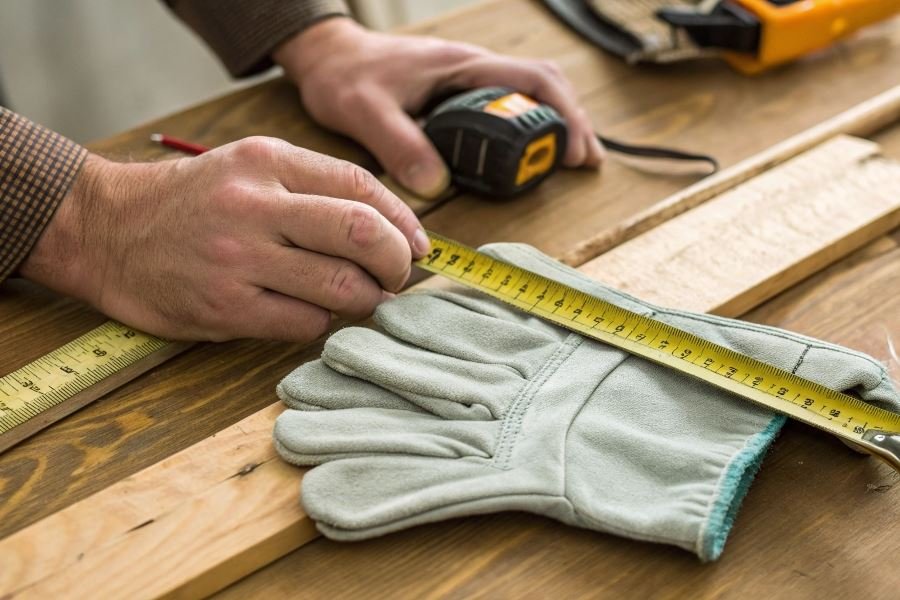
The primary measurement for glove sizing is hand circumference, and precision matters here. Grab a flexible measuring tape—fabric ones work best—and wrap it around your dominant hand at its widest point. This is typically just below the knuckles, excluding the thumb.
Key technique tips:
- Measure with your hand flat, fingers together but not stretched
- Keep the tape snug but not tight—you shouldn’t see skin compression
- Record the measurement in both inches and millimeters for universal compatibility
- Take the measurement twice to confirm accuracy
For those without a measuring tape, a string or strip of paper works in a pinch. Mark where it overlaps, then measure that length against a ruler.
Finger Length Measurement for Specialized Applications
While circumference gives you the basic size, finger length becomes crucial for specialized work gloves, particularly those used in precision tasks like electrical work or fine assembly.
Measure from the base of your palm to the tip of your middle finger for the most accurate results.
This secondary measurement helps when selecting gloves with articulated fingers or reinforced fingertips. Some high-performance gloves even offer different finger lengths within the same circumference size class.
| Measurement | Where to Measure | Why It Matters |
|---|---|---|
| Hand Circumference | Around palm below knuckles | Primary sizing metric |
| Finger Length | Base of palm to middle fingertip | Critical for dexterity |
| Hand Width | Across palm at widest point | Important for wide hands |
| Thumb Length | Base to tip | Key for trigger finger gloves |
Navigating Manufacturer Sizing Charts
Once you have your measurements, you’ll need to convert them to actual glove sizes. This is where manufacturer sizing charts become invaluable tools.
Different manufacturers use varying standards—some follow numerical sizing (7, 8, 9), others use letter designations (S, M, L, XL), and some use both. Ansell and Mechanix Wear offer particularly comprehensive sizing guides on their websites.
Pro tip: When between sizes, consider:
- The nature of your work (precision tasks benefit from snugger fits)
- Climate conditions (allow extra room if you’ll wear liners in cold weather)
- Duration of wear (slightly looser fits reduce fatigue during extended use)
Remember that materials matter too. Leather gloves typically stretch with use, while synthetic materials generally maintain their original dimensions. Some manufacturers recommend sizing down for leather gloves to account for this natural break-in period.
By following these measurement methods with care, you’ll find work gloves that protect your hands while enhancing your performance—because the best safety equipment is the kind you’ll actually want to wear.
Sealing the Deal on Perfect Glove Fit
Finding the right work glove size isn’t just about comfort—it’s about safety, productivity, and extending the life of your investment. After measuring your hand and consulting sizing charts, you’ve reached the critical final stage: ensuring your selection truly works for you in real-world conditions.
The Essential Try-Before-You-Buy Test
Never commit to work gloves without a proper fit test. When trying on gloves, make a fist, then spread your fingers wide. The material should flex naturally without excessive tightness or bunching. Perform typical hand movements relevant to your work:
- For construction workers: Grip a hammer or screwdriver
- For mechanics: Simulate turning a wrench
- For welders: Test dexterity with small components
The fingertips should reach approximately 1/8 inch from the end of the glove fingers—close enough for control but with enough room to prevent pressure points.
The most expensive gloves become worthless if they don’t fit properly. A proper fit test saves money and prevents workplace injuries.
Understanding Material Behavior Over Time
Different glove materials respond uniquely to use, making break-in periods an important consideration:
| Material | Break-in Characteristics | Size Adjustment |
|---|---|---|
| Leather | Stretches 5-10% with use | Consider sizing down slightly |
| Synthetic | Minimal stretch (1-3%) | Choose true-to-size |
| Cotton/Fabric | May shrink after washing | Size up if washing frequently |
| Nitrile/Latex | No significant change | Follow exact measurements |
Mechanix Wear gloves typically require 8-10 hours of wear before reaching optimal flexibility, while premium leather options from Tillman might need 15-20 hours to fully conform to your hand shape.
Troubleshooting Common Sizing Challenges
Even with careful measurement, you might encounter these common issues:
Between Sizes? Size up for bulky work or cold environments. Size down for precision tasks requiring maximum dexterity.
Different Finger Lengths? Look for gloves with articulated fingers like those from Ironclad that accommodate varying digit proportions.
Hand Width vs. Length Mismatch? Some manufacturers like Ansell offer “wide palm” options specifically designed for broader hands with shorter fingers.
Material-specific considerations can make or break your experience:
- Leather gloves: Too tight initially? They’ll stretch. Too loose? They’ll never provide proper protection.
- Cut-resistant gloves: Should fit snugly without restricting blood flow—a balance critical for both safety and comfort.
- Chemical-resistant gloves: Must have adequate cuff length and no pinch points where chemicals could enter.
Remember that seasonal changes affect hand size—hands typically swell slightly in summer heat and contract in winter cold. The perfect year-round glove might require seasonal adjustments, especially for outdoor work.
By taking these final steps seriously, you transform a simple hand covering into a precision tool that enhances rather than hinders your work performance.
Learn how to determine your perfect work glove size with our comprehensive guide. Discover measurement techniques, sizing charts, and fit testing methods to ensure optimal safety, comfort, and performance for any job or task.
Learn how to determine your perfect work glove size with our comprehensive guide. Discover measurement techniques, sizing charts, and fit testing methods to ensure optimal safety, comfort, and performance for any job or task.