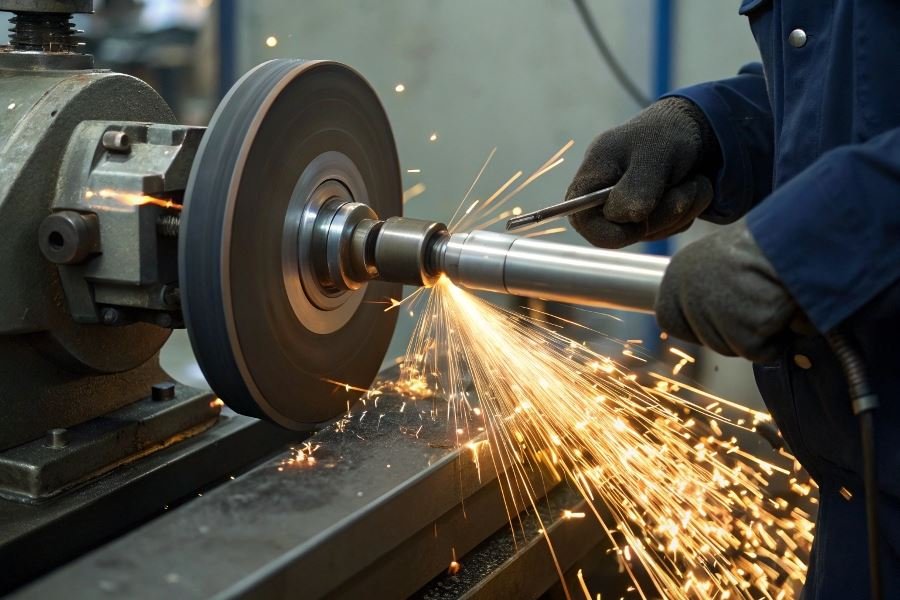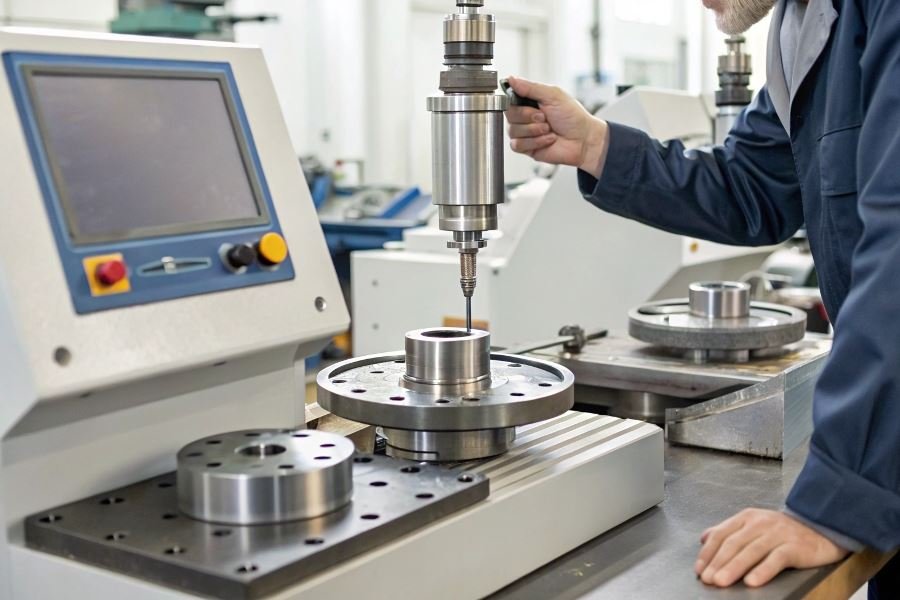
Ever wondered why some metal parts feel impossibly smooth to the touch? Behind that perfect finish lies the unsung hero of manufacturing precision: the grinding machine. These mechanical marvels remove material with abrasive wheels, achieving tolerances measured in microns—thinner than a human hair.
Grinding machines serve as the final arbiters of precision in manufacturing, transforming rough-cut components into perfectly dimensioned parts. Unlike their cutting-tool cousins, grinding machines excel at working hardened materials and achieving surface finishes that would make a mirror jealous. They’re the difference between “good enough” and “absolutely perfect” in industries where microns matter.
The grinding family tree
The world of grinding machines branches into several distinct categories, each with specialized capabilities:
- Surface grinders create flat, parallel surfaces with exceptional accuracy
- Cylindrical grinders perfect round components like shafts and bearings
- Centerless grinders handle high-volume production without workpiece mounting
- Tool and cutter grinders sharpen cutting tools with geometric precision
- Jig grinders tackle complex contours and intricate shapes
Choosing your grinding champion
When evaluating grinding machine types, several factors determine which will deliver the best results:
- Workpiece geometry – The shape dictates the appropriate machine type
- Material hardness – Some machines handle tougher materials better than others
- Production volume – High-volume needs may favor automated solutions
- Precision requirements – The tighter the tolerance, the more specialized the grinder
- Surface finish needs – Different machines achieve varying levels of smoothness
“The right grinding machine doesn’t just shape metal—it shapes possibilities in manufacturing.”
Grinding Machine Mastery: The Ultimate Performance Guide
When precision meets power in the manufacturing world, grinding machines take center stage. These workhorses deliver finishes measured in microns, transforming rough stock into components with mirror-like surfaces. Let’s dive into the fascinating world of grinding technology where advantages and disadvantages of different types of grinding machines determine which tool will deliver that perfect finish for your specific application.
Surface Grinding Machines: Precision Personified
Surface grinders represent the backbone of precision metalworking. These machines excel at creating perfectly flat surfaces with tolerances as tight as ±0.0001 inches—that’s thinner than a human hair!
Key Advantages:
- Exceptional flatness and parallelism capabilities
- Superior surface finish quality (often 16 Ra or better)
- Ideal for hardened materials that resist other machining methods
- Relatively straightforward operation for basic applications
However, these precision powerhouses come with limitations. Most notably, their work envelope restricts the size of workpieces you can process. Standard models typically accommodate pieces no larger than 24″ × 12″, though larger industrial models exist at significantly higher price points. Additionally, the initial investment for a quality surface grinder starts around $15,000 for basic models and climbs rapidly with automation features.
Cylindrical Grinding Machines: Versatility Champions
When it comes to processing round workpieces, cylindrical grinders shine brilliantly. These machines handle everything from precision shafts to complex tapered components.
Versatility Advantages:
- Process both external and internal cylindrical surfaces
- Handle straight, tapered, and profiled workpieces
- Achieve roundness tolerances within 0.0001″
- Many models offer both plunge and traverse grinding capabilities
The flip side? Setup complexity can be daunting. Properly aligning workpieces, particularly for internal grinding operations, requires significant expertise. A cylindrical grinding operation might take 30-45 minutes to set up properly compared to just 10-15 minutes for a surface grinder.
Notable Consideration:
The learning curve for cylindrical grinding is steeper than most realize. Expect 6-12 months before operators achieve true proficiency.
Tool and Cutter Grinding Machines: Specialized Brilliance
Tool and cutter grinders represent specialized technology designed specifically for sharpening and manufacturing cutting tools. These precision instruments maintain the complex geometries that make modern cutting tools so effective.
Specialized Capabilities:
- Create and maintain precise cutting geometries
- Process complex flute patterns and relief angles
- Maintain consistent edge quality across multiple tools
- Many modern systems offer 5+ axis control for complex tooling
| Feature | Basic Model | Advanced CNC |
|---|---|---|
| Axes | 3-4 | 5-7 |
| Automation | Limited | Full |
| Tool Library | Manual | 500+ profiles |
| Price Range | $25,000-45,000 | $75,000-250,000 |
The primary drawback? These machines demand extensive training. Operators need to understand not just grinding principles but cutting tool geometry, material properties, and programming logic. Most companies report 12-18 months before operators achieve full competency with advanced tool grinding systems.
Additionally, specialized grinding wheels and diamond dressers add to operational costs, with a typical shop spending $5,000-8,000 annually on consumables for a single tool grinding machine.
The right grinding machine transforms manufacturing capabilities—but choosing wisely means understanding both the brilliant advantages and practical limitations each type brings to your operation.
Making the Right Grinding Machine Choice: Matching Capability to Need
Aligning machine types with application demands
Selecting the optimal grinding machine requires a deep understanding of your specific application requirements. Surface grinders excel in precision flatwork with tolerances as tight as ±0.0001 inches, making them ideal for tool and die work. Meanwhile, cylindrical grinders shine when processing round components like shafts and bearings, maintaining concentricity within 0.00005 inches.
For complex contours and internal surfaces, tool and cutter grinders offer unmatched versatility. Their multi-axis capabilities allow them to handle everything from spiral flutes to complex tapers. As application complexity increases, so should the sophistication of your grinding solution.
The most expensive grinding machine isn’t always the best—it’s the one that precisely matches your specific manufacturing requirements while minimizing unnecessary features.
Material considerations also drive selection decisions. When working with hardened steels (above 60 HRC), conventional abrasives often fall short, making machines compatible with cubic boron nitride (CBN) or diamond wheels essential. For aerospace applications involving heat-sensitive materials like titanium, machines with advanced cooling systems and precise feed control prevent thermal damage.
Cost-benefit analysis across grinding platforms
Initial acquisition costs represent just the tip of the financial iceberg. A comprehensive cost-benefit analysis must consider:
| Cost Factor | Entry-Level | Mid-Range | Premium |
|---|---|---|---|
| Initial Investment | $15,000-30,000 | $50,000-150,000 | $200,000+ |
| Annual Maintenance | 5-8% of purchase | 3-6% of purchase | 2-4% of purchase |
| Power Consumption | Higher per unit | Moderate | Most efficient |
| Consumable Costs | Higher over time | Moderate | Lower long-term |
| Productivity | Lower | Moderate | Highest |
The total cost of ownership often reveals surprising insights. While premium CNC grinding centers from manufacturers like Studer command higher upfront investments, their superior precision, automation capabilities, and reduced setup times can deliver ROI within 18-24 months for high-volume operations.
For smaller shops or specialized applications, manual or semi-automatic grinders may offer better economics. A quality manual surface grinder from Kent provides excellent value when production volumes don’t justify full automation.
Emerging technologies reshaping grinding operations
The grinding landscape continues to evolve with technological advancements that address traditional limitations:
Integrated measurement systems are revolutionizing in-process quality control. Advanced machines now incorporate optical and contact measuring systems that provide real-time feedback, reducing scrap rates by up to 40% compared to traditional post-process inspection.
Sustainability improvements are gaining momentum through innovations in coolant filtration and energy efficiency. Modern grinding systems from Makino feature regenerative drives that can reduce energy consumption by up to 25% compared to conventional designs.
Perhaps most exciting is the integration of artificial intelligence into grinding operations. Adaptive control systems now analyze acoustic emissions, power consumption, and thermal signatures to automatically optimize grinding parameters in real-time, extending wheel life while improving surface finish quality.
The future belongs to connected grinding systems that communicate with upstream and downstream processes, creating seamless digital manufacturing environments where setup times approach zero and process optimization becomes continuous rather than periodic.
Explore the complete pros and cons of surface, cylindrical, and tool grinding machines to make informed equipment decisions. Learn how precision, versatility, and specialization factors impact manufacturing efficiency and quality.
Explore the complete pros and cons of surface, cylindrical, and tool grinding machines to make informed equipment decisions. Learn how precision, versatility, and specialization factors impact manufacturing efficiency and quality.