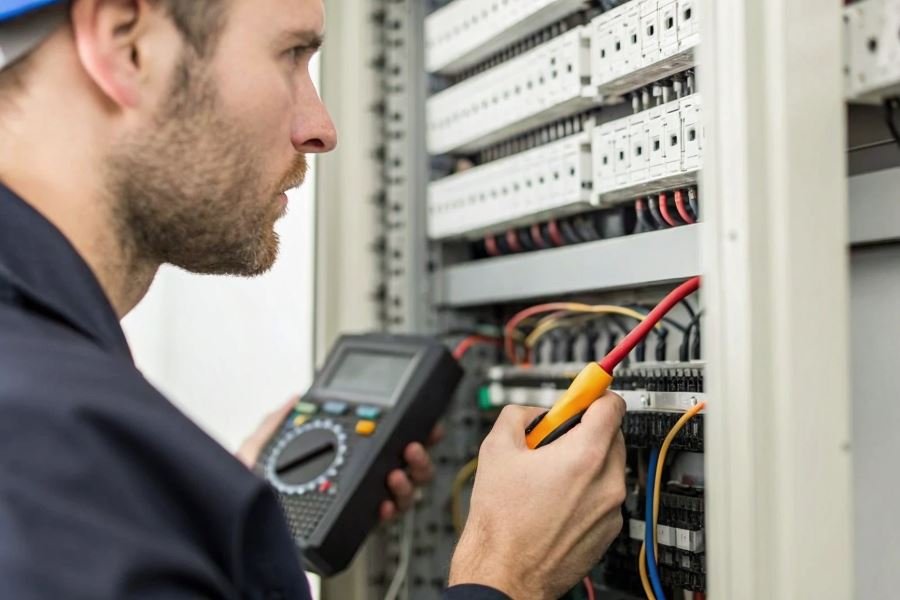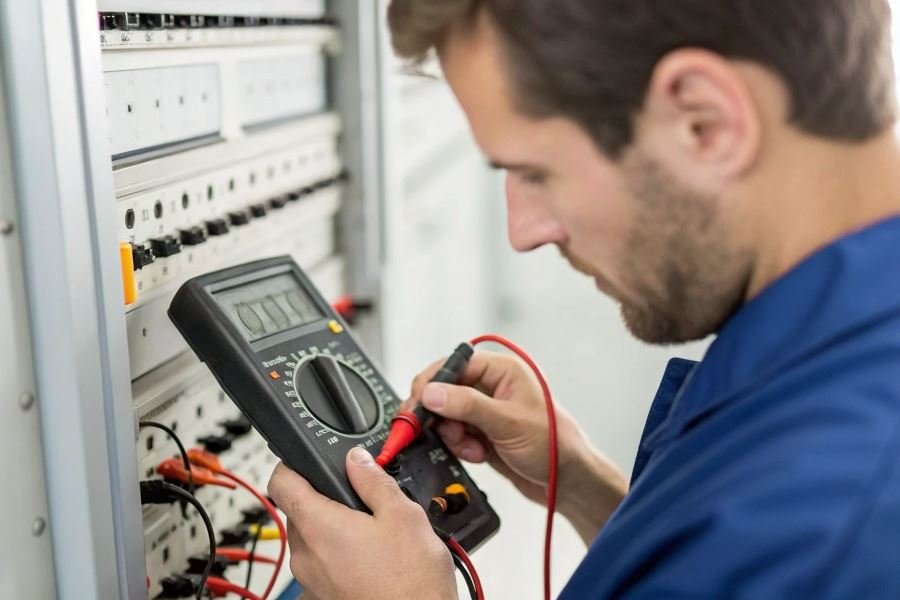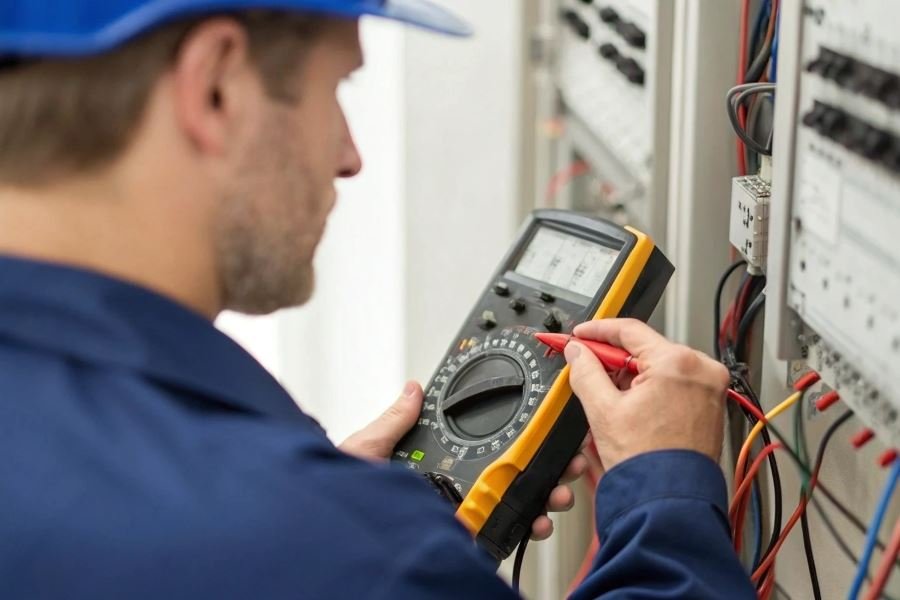
What if I told you the tool you’re using to diagnose electronic circuits might be giving you only half the story?
When troubleshooting electronic devices, the humble ammeter stands as your faithful detective, revealing the invisible flow of current that brings circuits to life. The choice between digital and analog ammeters isn’t merely about preference—it’s about matching the right tool to your specific diagnostic needs. Like choosing between a scalpel and a Swiss Army knife, each has distinct advantages that can make or break your troubleshooting success.
From moving needles to digital displays: A measurement revolution
The journey of electrical measurement tools began in the 1820s when André-Marie Ampère first quantified electrical current. Early ammeters used magnetic fields and moving coils to physically deflect needles—a principle that remained largely unchanged for over a century. The 1970s brought the digital revolution, transforming these mechanical marvels into precise electronic instruments with numerical displays.
How they work: The science behind the readings
Analog ammeters operate on electromagnetic principles—current flowing through a coil creates a magnetic field that moves a needle against a spring. This direct mechanical connection to the measured current provides:
- Real-time continuous response to fluctuations
- Visual indication of trends and patterns
- No need for power sources to operate
Digital ammeters, by contrast, convert current to voltage, then to digital signals processed by microcontrollers:
- Precise numerical readings with greater accuracy
- Multiple measurement ranges in a single device
- Additional features like data logging and connectivity
Choosing your diagnostic companion: What matters most?
When selecting between these technologies, consider these critical factors:
| Factor | Analog Advantage | Digital Advantage |
|---|---|---|
| Response time | Immediate visualization of fluctuations | Precise numerical readings |
| Accuracy | Better for trend observation | Superior for exact measurements |
| Durability | Fewer components to fail | Advanced features and functions |
| Application | Ideal for dynamic troubleshooting | Perfect for documentation and precision work |
The best diagnosticians know that sometimes the right tool isn’t about which is technically superior—it’s about which reveals the story your circuit is trying to tell.
Technical Showdown: Digital vs Analog Ammeters
Precision in every measurement
When diagnosing electronic circuits, the difference between a quick fix and hours of frustration often comes down to your measurement tools. Digital and analog ammeters represent two distinct approaches to current measurement, each with their own strengths and limitations. The ongoing debate about digital vs analog ammeters: which is better for diagnosing electronics continues to divide professionals across industries, from automotive repair to semiconductor manufacturing.
At the heart of this technical divide lies accuracy—the cornerstone of reliable diagnostics. Digital ammeters typically offer accuracy ratings between ±0.5% to ±0.1% of the reading, while most analog meters hover around ±1% to ±3%. This difference becomes critical when working with sensitive microelectronics where even minor current variations can indicate significant problems.
Digital multimeters like the Fluke 87V provide resolution down to 0.01μA in lower ranges, making them invaluable for detecting minute leakage currents. Analog meters, however, suffer from parallax errors—where readings change depending on viewing angle—and mechanical friction that can affect measurement consistency.
Response time that matters
| Meter Type | Typical Response Time | Transient Capture | Best Application |
|---|---|---|---|
| Digital | 2-3 updates/second | Limited without special features | Precise steady-state measurements |
| Analog | Instantaneous | Excellent visualization | Fluctuating signals, quick diagnostics |
One area where analog meters shine is response time. The needle of an analog ammeter responds instantly to current changes, making them superior for detecting quick transients and fluctuations. This immediate visual feedback allows technicians to spot intermittent issues that might be missed by the sampling rate limitations of standard digital meters.
The ability to observe real-time behavior without digital processing delay gives analog meters a distinct advantage when troubleshooting unstable circuits or components with rapidly changing characteristics.
Digital meters have evolved to address this limitation through peak hold functions and high-speed sampling modes, but these features often come at a premium price point. The Keysight U1282A handheld meter, for instance, offers 100,000 samples per second in its peak detection mode—approaching oscilloscope-like capabilities.
Measurement range and resolution
The practical measurement range of your ammeter directly impacts its utility across different diagnostic scenarios. Digital meters excel here with auto-ranging capabilities that can span from microamps to tens of amps in a single device. Most quality digital multimeters offer 3½ to 6½ digits of resolution, translating to the ability to display from 2,000 to 6,000,000 counts.
Analog meters, by contrast, typically offer a fixed range with accuracy that varies across the scale. They’re most accurate in the middle third of their range—a limitation that requires technicians to select the appropriate range manually.
Pro tip: For electronics troubleshooting, resolution at low current ranges is often more valuable than maximum capacity. A meter that can accurately distinguish between 1.5mA and 1.6mA will outperform one that simply measures “up to 10A” for component-level diagnostics.
When working with modern electronics featuring sleep modes and power-saving states, the ability to measure sub-milliamp currents becomes essential. Digital meters with dedicated low-current ranges, like the Brymen BM869s, can measure down to 0.01μA while maintaining reasonable accuracy—a feat impossible for most analog instruments.
The ideal approach often combines both technologies: digital precision for quantitative analysis and documentation, with analog responsiveness for qualitative troubleshooting and real-time behavior observation. This complementary strategy leverages the strengths of each measurement paradigm while minimizing their respective limitations.
Practical Applications: Choosing the Right Ammeter for Your Diagnostic Needs
Where digital ammeters shine brightest
Digital ammeters dominate in precision-critical scenarios where exact measurements make all the difference. When troubleshooting microcontroller circuits or working with sensitive components that operate in milliamp or microamp ranges, digital precision becomes non-negotiable. The Fluke 87V and similar professional-grade digital multimeters offer resolution down to 0.01μA—essential when diagnosing modern electronics with increasingly miniaturized components.
Digital instruments particularly excel in:
- Low-current measurements in battery-powered devices where power efficiency is critical
- Automated testing environments requiring data logging capabilities
- Intermittent fault detection where min/max recording functions capture anomalies
- High-voltage industrial applications where safety features like optical isolation protect both equipment and technicians
The ability to capture transient events makes digital ammeters indispensable when diagnosing switching power supplies. As one veteran technician put it: “You can’t fix what you can’t measure, and you can’t measure what you can’t see.”
When analog ammeters remain indispensable
Despite digital advancements, analog ammeters maintain distinct advantages in specific scenarios. Their instantaneous response to current fluctuations makes them superior for observing dynamic behavior in circuits—particularly valuable when diagnosing motor controllers, audio amplifiers, and power supply ripple issues.
Analog meters shine in:
| Scenario | Why Analog Excels |
|---|---|
| Trend observation | Real-time needle movement reveals patterns digital sampling might miss |
| Rapidly changing values | No sampling delay means capturing true peaks without aliasing |
| Harsh environments | Simpler construction often means greater durability in extreme conditions |
| Educational settings | Visual representation helps beginners understand current flow concepts |
The Simpson 260 remains a benchmark analog multimeter for good reason—its responsiveness to circuit behavior provides insights that numbers alone cannot convey.
The hybrid approach: Best of both worlds
The most comprehensive electronics diagnostics often employ both meter types strategically. This dual approach leverages the complementary strengths of each instrument.
Consider this workflow for troubleshooting a malfunctioning power supply:
- Initial assessment: Use an analog meter to observe startup behavior and identify irregular current draws
- Precise measurement: Switch to digital for exact current values at specific test points
- Load testing: Monitor with analog meter to observe real-time response to changing loads
- Documentation: Record final measurements with digital meter for maintenance records
Professional tip: When diagnosing complex automotive electronics, use a digital meter for accurate sensor readings while keeping an analog meter connected to monitor system current during testing procedures.
The choice between digital and analog isn’t about which is better—it’s about which is better for the specific diagnostic challenge at hand.
For comprehensive diagnostic capability, investing in both a quality digital multimeter with current measurement capabilities and a dedicated analog ammeter provides the versatility needed to tackle virtually any electronics troubleshooting scenario with confidence.
Explore the key differences between digital and analog ammeters for electronics diagnostics. Learn which tool offers better accuracy, response time, and measurement capabilities for your specific troubleshooting needs.
Explore the key differences between digital and analog ammeters for electronics diagnostics. Learn which tool offers better accuracy, response time, and measurement capabilities for your specific troubleshooting needs.